Windows Errors? Fix Them Before They Spread
Repair common Windows errors and clear accumulated junk for a smoother, more stable PC - no reinstall needed.Free scan · no reinstallOutdated Drivers Are Slowing You Down
One free scan finds every outdated or missing driver and matches the right update for your exact hardware.Free scan · exact hardware match“ The program can’t start because fm7fx.dll is missing from your computer.” You may also see “fm7fx.dll was not found,” “Error loading fm7fx.dll,” or “The specified module could not be found.”
The 60-second answer
fm7fx.dll is the FM7 plug-in file from Native Instruments FM7. It is not a Windows file, Microsoft runtime, driver, DirectX component, or normal file for System32 or SysWOW64.
As an Amazon Associate I earn from qualifying purchases.
The safest fix is to repair or reinstall the application that installed FM7 using its original, licensed installer. If a DAW, video editor, or launcher is merely scanning an old FM7 folder, remove that folder from the host’s plug-in scan path instead.
Do not download fm7fx.dll from a random DLL website and copy it into a Windows system folder. That can give you the wrong architecture, a damaged file, or malware while leaving the real installation problem untouched.
#1 Best Overall
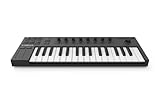
- 32 compact keys to control all your instruments and effects
- Sleek and solid design, fused with professional production features
- Comes with a powerful software package, including synths, basses, drums, effects – plus Ableton Live 10 Lite
- OLED display and touch-sensitive knobs to tweak your sound’s essential parameters in real-time
- Usb 2.0 bus powered
Native Instruments lists FM7 as a discontinued legacy product and identifies it as a 2002 product in its legacy-product information. That matters because current Native Access installation options may not be available for FM7.
Why Windows reports this error
FM7 is an old software synthesizer loaded by music and media applications as a plug-in. The program showing the error may therefore be:
- A digital audio workstation
- A video editor with VST support
- A project launcher or media application
- An older host that scans every folder listed in its VST preferences
- FM7 itself or a project that contains an FM7 instrument
You may never have opened FM7 deliberately. An old project can reference it, or a host can scan an orphaned plug-in directory during startup. A reported VEGAS case displayed an FM7 installation-CD message because VEGAS was encountering an old FM7 plug-in during its scan. Removing the stale plug-in from the scan path resolved that type of problem.
Quick wins for a faster PC:
Scan for outdated or missing drivers - takes under a minuteDriver Scan →Repair Windows errors before they cause bigger problemsFix Now →The timing of the failure is useful. Check whether it started after:
- Reinstalling Windows
- Reinstalling the DAW or video editor
- Cleaning or moving a VST folder
- Migrating to another drive or computer
- Running antivirus software
- Restoring an old project
- Updating the host application
- Changing from a 32-bit host to a 64-bit host
The exact Windows error also matters. “The specified module could not be found” can mean that fm7fx.dll is present but one of its dependencies is missing.
First identify the program calling FM7
Before changing files, find the application named in the error dialog or its title bar.
Check the dialog and Task Manager
- Read the title bar of the error window.
- If the title does not identify the caller, close the message.
- Press
Ctrl+Shift+Escto open Task Manager. - Select Processes and watch which program appears when the error returns.
- Right-click the program and choose Open file location if available.
You can also check Event Viewer:
- Press
Win+R. - Type
eventvwr.mscand press Enter. - Expand Windows Logs.
- Select Application.
- Look for an error at the time of the failure.
- Check Faulting application name and Faulting module name.
If the caller is a DAW or video editor, start with its VST settings. If it is FM7 itself, use the FM7 installer or remove its startup entry if you no longer need it.
Do these 3 things before closing this tab:
1Clear out junk files and repair common Windows errors2Fix the driver behind crashes, sound loss and screen glitches3Repair Windows errors before they cause bigger problemsFix 1: Repair or reinstall the legitimate FM7 installation
This is the correct repair when fm7fx.dll was deleted, damaged, or left behind without the rest of FM7.
If FM7 is available in Native Access
Native Instruments documents reinstall controls for currently supported products:
- Open Native Access.
- Select Library.
- Choose Installed.
- Find the relevant product.
- Select its three-dot menu.
- Choose Reinstall, if that option is available.
- Follow the installation prompts.
- Open your DAW or video editor and rescan the VST folder.
If the product was moved, open Native Access and select Preferences followed by File Management. Check whether the content or application path points to a drive that still exists. Native Instruments also provides a Repair or Relocate procedure.
Current Native Access controls do not generally reinstall discontinued legacy products. For FM7, use the original licensed installer, installation media, an account download that still provides the product, or the host application’s supported installer.
If you have an original FM7 installer
- Disconnect from unrelated installers and close your DAW or video editor.
- Locate the original FM7 installer or installation media.
- Right-click the installer.
- Select Run as administrator.
- Choose Repair if offered.
- Otherwise choose Install and select the same VST location used previously.
- Restart Windows.
- Open the host application.
- Confirm that the FM7 VST folder is included in the host’s plug-in paths.
- Run a plug-in rescan.
A successful repair normally means that the original host starts without the error and FM7 appears in the host’s plug-in list. If the host still reports a missing file, verify the actual installation folder rather than copying the DLL elsewhere.
Rank #2

- Unparalleled software integration with next-generation NKS technology ensures a direct and immersive connection to Kontakt and partner instruments, effects, and sounds
- 49 semi-weighted keys set in a Fatar keybed
- Polyphonic aftertouch as standard
- High-resolution full-color screen for intuitive browsing, tweaking, and mixing
- Beautiful, industrial design with metal and glass elements, manufactured to the highest quality
If you no longer use FM7
You do not need to restore an obsolete plug-in simply because a host remembers it.
- Open the host’s Preferences, Settings, or Plug-in Manager.
- Find VST, VST3, Plug-in Paths, or Scan Locations.
- Identify the folder that contains FM7 files.
- Remove that folder from the scan list if no other plug-ins depend on it.
- Apply the change.
- Run a rescan or reset the plug-in database.
- Restart the host.
If the host does not let you remove only the path, close it and move the FM7 files into a clearly named quarantine folder outside every VST directory. For example, use a folder named Old FM7 - Do Not Scan in your Documents folder. Do not delete the files until you know that no project needs them.
Fix 2: Correct a moved or incorrect VST folder
A host may still be looking at a drive letter or folder that no longer contains FM7.
- Open the affected DAW or video editor.
- Open Preferences or Options.
- Select Plug-ins, VST, or Plug-in Manager.
- Review every listed scan location.
- If FM7 was moved, add its legitimate current folder.
- If the old folder is empty or unavailable, remove it.
- Save the settings.
- Use Rescan, Rescan failed plug-ins, or Reset plug-in cache, depending on the host.
- Restart the host and test the project again.
Do not point the host at C:WindowsSystem32 or C:WindowsSysWOW64. Those are not general-purpose VST locations, and placing a plug-in there can cause conflicts.
If the error appears only when opening one old project, the project may contain an FM7 instrument reference. Open the project on a system with the correct licensed FM7 installation, render or replace the affected track, and save a new copy. If the project opens after FM7 is removed from scanning, the plug-in was being called by the project or host rather than by Windows.
Fix 3: Check 32-bit and 64-bit compatibility
FM7 is reported as a 32-bit plug-in and was never built as a native 64-bit plug-in. A 64-bit version of Windows does not automatically make an old 32-bit VST compatible with a 64-bit host.
Check the host architecture:
- Open Task Manager with
Ctrl+Shift+Esc. - Select Details.
- Right-click a column heading.
- Choose Select columns.
- Enable Platform, if available.
- Check whether the host is 32-bit or 64-bit.
You can also check the host’s About window or installation folder. A 32-bit host is commonly installed under C:Program Files (x86), although the folder alone is not definitive.
Your practical choices are:
- Use FM7 in a compatible 32-bit host.
- Use a reputable 32-bit-to-64-bit bridge supported by your host.
- Replace FM7 with a currently supported instrument.
- Remove FM7 from the scan path if you do not need it.
A bridge may allow an old plug-in to load, but it cannot correct a missing installation, missing dependency, or damaged file. Very old plug-ins can also behave unpredictably in modern hosts. If a 64-bit host reports that the module cannot load even after a legitimate reinstall, compatibility is more likely than a Windows DLL problem.
Fix 4: Check antivirus quarantine
Security software may have quarantined or deleted the file.
Windows Security
- Open Start and search for Windows Security.
- Open it.
- Select Virus & threat protection.
- Choose Protection history.
- Look for an event involving the FM7 installation folder.
- Open the event details.
- Choose Restore only if the file came from your known, licensed FM7 installation.
- Restart the host application and rescan its plug-ins.
Do not restore a copy found in System32, a temporary folder, or an unofficial download. If the file is suspicious, remove it and reinstall FM7 from a legitimate source instead.
If antivirus repeatedly removes the original file, check the detection details and contact the security vendor or Native Instruments support. Do not permanently disable protection just to force an old plug-in to load.
Recommended Free Tools
Fix 5: Check whether a dependency is missing
The message “The specified module could not be found” does not always mean that fm7fx.dll itself is absent. The DLL may exist while another library it needs is missing.
Rank #3

- Next-Gen Music Production and Beat Maker Essential - USB-powered MIDI keyboard controller with 25 mini velocity-sensitive keys, optimized for studio or beat production, piano-style performance, synth leads, sample triggering
- Real-Time Control and Navigation - 8x assignable 360° knobs, a vibrant full-color screen and push/turn encoder for hands-on access to settings, presets, and DAW functions, without reaching for a computer
- Iconic MPC Pads with RGB Feedback - 8 velocity- and pressure-sensitive MPC pads deliver an iconic finger-drumming experience, plus dynamic visual feedback to match your performance in studio or on the go
- Studio Instrument Collection Included - A powerful VST/AU and standalone virtual suite packing 1000+ pro-grade drums, keys, synths, bass, FX from AIR, Akai Pro and Moog, plus MPK Mini IV integrated controls
- Pre-Mapped DAW Integration - Get producing in under 15 minutes with Ableton Live Lite 12, Logic Pro, FL Studio and more; comes with an expanded DAW-mapped transport section for uninterrupted workflow
First, confirm the file location:
- Open File Explorer.
- Search the original VST folders for
fm7fx.dll. - Right-click the result and choose Open file location.
- Confirm that the folder belongs to a legitimate FM7 installation.
- Do not use a copy from a download archive as proof that the installation is repaired.
Do not install Visual C++ merely because a DLL error appears. fm7fx.dll is a Native Instruments plug-in, not a Microsoft runtime. Install or repair Visual C++ only when the error names a runtime such as MSVCP, MSVCR, VCRUNTIME, or api-ms-win-crt.
If that specific runtime is named:
- Note whether the host is 32-bit or 64-bit.
- Use Microsoft’s latest supported Visual C++ Redistributable downloads.
- Install the architecture required by the calling application. A 32-bit plug-in generally needs the x86 runtime even on 64-bit Windows.
- Restart Windows.
- Test the host again.
Installing both x86 and x64 packages can be correct on a mixed system, but it does not convert FM7 into a 64-bit plug-in.
Fix 6: Repair Windows components only when Windows has broader problems
SFC and DISM repair protected Windows components. They do not recreate a Native Instruments plug-in. Use them when Windows itself is unstable, installers fail broadly, or other protected system files are also damaged.
What’s actually slowing this PC down?
Pick the symptom - the matching free tool is one click away.
- Open Start.
- Type
Command Prompt. - Right-click Command Prompt.
- Select Run as administrator.
- Run:
DISM.exe /Online /Cleanup-Image /RestoreHealth
- Wait for DISM to finish.
- Then run:
sfc /scannow
- Wait until the scan reaches 100 percent.
- Restart Windows.
- Retry the FM7 installer or host application.
Microsoft recommends running DISM before SFC. If SFC reports that it repaired files, test the original application again. If it reports no integrity violations, Windows system files were probably not the cause. If the commands fail, copy the exact result and investigate the Windows servicing problem separately.
Repeating SFC and DISM will not replace fm7fx.dll. When manual repair means running system scans repeatedly and guessing which component changed, Outbyte PC Repair can scan for reported Windows issues; its free scan shows what it finds, while repair features require the full version. Reinstalling FM7 from its legitimate installer remains the definitive fix for this application file.
Fix 7: Do not treat FM7 as a driver
fm7fx.dll is not hardware software. Device Manager cannot reinstall FM7, and Windows Features cannot add it.
You may check drivers only if the same application also has audio-device problems:
Free tools Windows power users keep installed
One-click scans. No signup required.
- Right-click Start.
- Select Device Manager.
- Expand Sound, video and game controllers.
- Right-click the actual audio device.
- Choose Update driver.
- Select Search automatically for drivers.
- Restart Windows if a driver is installed.
Do not remove the audio device simply to fix fm7fx.dll. Update or reinstall the driver only when the host also reports missing audio hardware, failed playback, or device initialization errors.
Finding the correct driver manually can mean identifying the exact hardware, matching Windows architecture, and checking several vendor packages. Outbyte Driver Updater can scan for driver issues; its free scan shows the results, while driver installation through the full version is optional. A driver update will not restore FM7, so reinstalling or removing the plug-in remains the relevant repair.
Fix 8: Use System Restore only after a known recent change
System Restore can help if the error began immediately after a Windows update, application installation, or cleanup operation and a restore point exists.
- Press
Win+R. - Type
rstrui.exeand press Enter. - Select Next.
- Choose a restore point created before the problem began.
- Select Scan for affected programs.
- Review the changes.
- Select Next, then Finish.
- Allow Windows to restart.
System Restore is not a substitute for an FM7 installer. It may restore an old path or registry state without restoring every plug-in file, and it may remove later applications. Use it only when the timing is clear and the restore point is appropriate.
Why copying the DLL and using regsvr32 fail
Random DLL downloads
A downloaded DLL can be:
- The wrong architecture
- From a different FM7 release
- Modified or malicious
- Missing its companion files
- Incompatible with the host
- Unable to satisfy another missing dependency
It can also conceal the fact that the host is scanning an obsolete folder. Use the original licensed FM7 installer, Native Instruments account media when available, or the host’s supported installer.
System32 and SysWOW64
Copying fm7fx.dll into System32 or SysWOW64 is not an appropriate general repair. VST hosts normally load plug-ins from their configured plug-in directories. System-folder copying can create version conflicts, DLL hijacking opportunities, and 32-bit/64-bit loading errors.
regsvr32
regsvr32 is for self-registering components such as certain COM or ActiveX DLLs. FM7 is loaded by a music or media host as a plug-in. There is no evidence that fm7fx.dll should be registered with regsvr32.
Rank #4
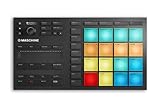
- Compact, music production instrument that integrates powerful software with tactile, responsive hardware
- Four ways to input sound using the 16 pads – drum in pad mode, play melodies in Keyboard mode, create chord progressions in Chord mode, and program in a classic step-sequencer style from Step mode
- Software - use on its own or as a VST, Audio Unit, or AAX plug-in in all major DAWs (including Ableton Live, Pro Tools, Logic Pro, and FL Studio)
- 1.6 GB MASCHINE Factory Selection with samples, one-shots, loops, sample instruments, presets, patterns, drum kits, and songs
- Powered via USB 2.0. System Requirements- macOS 10.12, 10.13, 10.14 (latest update), Intel Core i5, 4 GB RAM. Windows 10 (latest Service Pack, 64-bit only), Intel Core i5 or equivalent CPU, 4GB RAM. USB 2.0 Port, 3 GB free disk space for Maschine Essentials (full Maschine software plus 1.6 GB Maschine Factory Selection), 1 GB free disk space for Massive, Monark and Reaktor Prism
Do not run commands such as:
regsvr32 fm7fx.dll
unless the product’s own documentation specifically instructs you to do so. A registration error does not repair a missing VST installation.
The Tool Desk
Outbyte Driver Updater FREEScan for outdated or missing drivers - takes under a minuteDriver Scan →Outbyte PC Repair FREERepair Windows errors before they cause bigger problemsFix Now →What to do when FM7 cannot be reinstalled
Because FM7 is discontinued, an old installation may continue working while reactivation or reinstallation on a new computer is no longer supported. Check your original licensed media, Native Instruments account, backups, and the host’s supported installer.
If no legitimate installer is available:
- Back up projects that may reference FM7.
- Open the host’s plug-in settings.
- Remove the FM7 directory from the scan path.
- Move the FM7 files outside all plug-in folders if necessary.
- Reset the host’s plug-in database.
- Replace FM7 instruments with supported instruments or render affected tracks from an older working system.
Do not solve an unavailable legacy installer by downloading a single DLL. The file is only one part of the plug-in installation.
Quick decision tree
- FM7 was deliberately installed and the file is gone: reinstall FM7 from the original licensed source.
- A DAW or video editor reports the error during startup: remove the stale FM7 folder from its VST scan paths.
- The file exists but will not load: check host architecture, plug-in compatibility, and dependencies.
- The error began after antivirus action: inspect quarantine and restore only a known legitimate file.
- The message names a Visual C++ runtime: install the matching Microsoft x86 or x64 runtime.
- Several Windows components are failing: run DISM, then SFC.
- The error began after a known recent system change: consider System Restore.
- The file is in System32 without a real FM7 installation: treat it as suspicious and do not use it.
FAQ
Is fm7fx.dll a Windows file?
No. It belongs to Native Instruments FM7 and should not normally be stored in System32 or SysWOW64.
Is it safe to download fm7fx.dll separately?
No. A standalone download may be malicious, incomplete, the wrong architecture, or incompatible with your FM7 installation. Use a legitimate installer or remove the obsolete plug-in from the host’s scan path.
Free tools Windows power users keep installed
One-click scans. No signup required.
Why does VEGAS or my DAW mention FM7 when I never installed it?
The application may be scanning an old VST folder, opening a project that references FM7, or finding files left after a migration. Identify and remove the stale scan path if FM7 is not needed.
Can I fix this with regsvr32?
Usually not. FM7 is a host-loaded VST plug-in, not an ordinary self-registering Windows component.
Will SFC restore fm7fx.dll?
No. SFC and DISM repair Windows components. They cannot reinstall a Native Instruments plug-in.
Does a 64-bit version of Windows support FM7?
Windows may run old 32-bit software through compatibility layers, but FM7 is reported as a 32-bit plug-in. A 64-bit host may require a bridge or may not load it reliably.
Should I install Visual C++?
Only when the actual error identifies a Visual C++ runtime dependency. Installing it does not replace fm7fx.dll or make FM7 64-bit.
What if the file is present but the error says “specified module could not be found”?
Check the plug-in path, host architecture, antivirus history, and any dependency named in the error. The missing module may be a dependency rather than fm7fx.dll itself.
Quick Recap
Product prices and availability are accurate as of the date/time indicated and are subject to change. Any price and availability information displayed on Amazon at the time of purchase will apply.




