Real-time strategy is no longer the dominant PC genre it was in the 1990s, but it has not disappeared. Legendary composer Frank Klepacki argues that continuing releases prove the RTS is still alive; what the genre needs now is more unusual design and a healthier funding tier between small indie projects and blockbuster productions.
Klepacki made the comments in the latest issue of Edge, as reported by PC Gamer on October 14, 2026. His view answers the familiar question—“Is the RTS genre dead?”—with a qualified no: attention has moved elsewhere, popularity runs in cycles, and the surviving games need room to take bigger creative risks.

As an Amazon Associate I earn from qualifying purchases.
Why Klepacki rejects the “RTS is dead” argument
Klepacki recalled the “doom-and-gloom talk” from roughly a decade ago, when developers were asked why they continued making games in a supposedly disappearing genre. His response is straightforward: “Obviously, if there are games coming out, [the genre is] not going away.”
That does not mean RTS has retained its 1990s scale. It means a smaller release ecosystem should not be confused with extinction. Klepacki says other types of games have taken the forefront of attention, changing where players, press and publishers focus their time rather than eliminating demand for strategic games.
#1 Best Overall
The evidence available for this claim is qualitative. The report does not provide sales totals, player counts, market share or a release-count trend, so it cannot establish the size of an RTS revival numerically. It does establish that recognizable series are active, returning or in development.
From 1990s dominance to a smaller, continuing ecosystem
| Period | What defined RTS visibility | Examples cited |
|---|---|---|
| 1990s peak | Real-time strategy occupied a much larger share of mainstream PC-game attention, with major franchises establishing the genre’s conventions. | Command & Conquer, Warcraft and Dune 2 |
| Current landscape | Fewer releases command broad attention, but established series, revivals and new projects continue to appear. | Age of Empires, Age of Mythology, Company of Heroes, Ruse, Tempest Rising and a Game of Thrones RTS project |
The distinction matters. A genre can lose its position at the center of the market while remaining creatively and commercially viable in a narrower field. Klepacki describes that movement as cyclical: “Everything runs in cycles, you know? That’s how it always is.” A period in which action games, live-service games or other formats dominate attention does not permanently determine what players will want next.
Rank #2
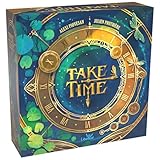
- COOPERATIVE TIME-THEMED CHALLENGE: Work together to strategically place cards around a clock, solving unique puzzles with evolving difficulty.
- 40 INCREASINGLY CHALLENGING TESTS: Progress through 10 chapters, each with 4 unique tests, requiring communication, planning, and logical thinking.
- UNIQUE CARD PLACEMENT MECHANIC: Players must arrange Solar and Lunar cards face down around the clock while following specific rules to succeed.
- HIGHLY REPLAYABLE WITH TEAM STRATEGY: Plan, discuss, and adapt to new challenges as you play through multiple sessions, aiming to complete all 40 tests.
- PERFECT FOR FAMILIES & PUZZLE LOVERS: Designed for 1-4 players, ages 10 and up, offering engaging, thought-provoking gameplay for groups and solo play.
What Klepacki wants publishers to change
More original concepts at major budgets
Klepacki’s main criticism is not that developers lack ideas. He says, “I would love to see more unique ideas that are allowed to be triple-A titles.” In practice, that means treating an unconventional RTS premise, structure or setting as worthy of large-scale production rather than funding only familiar sequels.
Free tools Windows power users keep installed
One-click scans. No signup required.
A missing middle tier
He sees indie developers taking creative chances, while the biggest publishers concentrate on safer blockbuster bets. “A lot of indie titles are taking those creative chances, but a lot of the middle ground has gone,” he says. That middle ground could support projects with substantial production values without requiring the scale, sales expectations and risk profile of the largest releases.
Rank #3

- HISTORICAL TIMELINE CHALLENGE: Engage in this fun and educational party game where your goal is to build a timeline of historical events; perfect for history buffs and educational trivia enthusiasts.
- QUICK AND EASY SETUP: Simple rules mean you'll be playing in minutes; however, with 800 unique true events, even seasoned history lovers will find themselves using their brain power to secure points. The first player to build a timeline of 10 cards wins!
- UPDATED CONTENT: Includes brand new cards, spanning 2,000 years of history, now through 2024. On your turn, someone will read you a historical event from a card. You decide where that event falls in your timeline. If you are right, you keep the card, and your timeline grows.
- DIVERSE GAMEPLAY OPTIONS: Suitable for 2 to 8 players; ideal for small gatherings or as a trivia party game for adults, seamlessly fitting into any game night or family event.
- EDUCATIONAL AND FUN: Combines learning with entertainment, helping players enhance their historical knowledge while providing hours of competitive fun; suitable for ages 14+.
For RTS, the gap is especially significant. The genre often combines complex simulation, interface design, artificial intelligence, campaign content and multiplayer infrastructure. An experimental idea may need more resources than a small team can provide, yet appear too uncertain for a publisher seeking a proven mass-market formula.
Is RTS making a comeback?
“Comeback” is an attractive headline, but the available evidence supports a narrower conclusion: RTS is experiencing continued activity and renewed visibility, not a measured return to 1990s dominance. The projects named in the report show that publishers and developers still see value in the form, while Klepacki’s comments explain why individual releases matter to the genre’s future.
Rank #4

- A giant desert whirlpool has dragged you down to a forgotten underground temple, and the only way back to the surface is to disable all 21 traps of... the Quicksand!
- A real-time cooperative game where you work to deactivate a dangerous trap, preventing any sand timer in play from running out!
- Play cards strategically to keep sand timers running! Coordinate with the other players to escape the deadly trap... together!
- EASY TO LEARN & PLAY: Cooperative game, learn the rules and start playing in under 5 minutes! Great for game nights, for families and adults: 1-7 players, ages 8+, 15 minutes playing time.
A comeback would require comparable evidence across several years—such as verified player populations, sales, release volume or market share. None of those statistics appears in the report, so claims of a quantified revival would go beyond what is established.
Do these 3 things before closing this tab:
1Clear out junk files and repair common Windows errors2Fix the driver behind crashes, sound loss and screen glitches3Repair Windows errors before they cause bigger problemsThe RTS legacy extends beyond traditional strategy games
RTS design ideas have also migrated into hybrid genres. The report points to MOBAs as carrying RTS DNA, particularly through real-time decision-making, unit control, map objectives and resource-aware strategy, even though MOBAs do not reproduce the full base-building and army-management structure of a conventional RTS.
Best Value

- Unleash the laughter and challenge stereotypes like never before! CP Time is the game that celebrates Black culture with a hilarious twist. Get ready for mind-bending questions and unpredictable time limits that will put your knowledge to the ultimate test.
- New & Improved with the CP Time App! In CP Time, every second counts—and now it’s better than ever with the free CP Time Game companion app! The unpredictable timer still keeps players on edge, giving you anywhere from 3 to 10 seconds to answer. But with the app, gameplay is louder, smoother, and more interactive—with automatic scoring, turn tracking, and the option to mirror the timer on your TV for the whole room to see. It’s everything you love, now supercharged for the culture.
- Gather your friends and family for a truly unforgettable game night experience. Delve into the vibrant world of black culture, challenge your assumptions, and celebrate the rich heritage that makes us who we are. CP Time is the perfect blend of education and entertainment, making learning about black culture a joyous and captivating experience for all.
- Are you up for the challenge? Test your knowledge, laugh uncontrollably, and embrace the spirit of CP Time!
- With 100s of questions this game is guaranteed to provide hours of fun. Some answers are going to be group specific making each game night a truly different experience.
This broader influence complicates any simple alive-or-dead judgment. Some players encounter strategic systems through descendants and hybrids rather than through a classic command-and-economy game. The genre’s identity can therefore persist even when its most recognizable format is less prominent.
Independent reader supportYour contribution helps us test, update, and keep practical guides available for everyone.Classic and returning RTS games to watch
- Command & Conquer: a defining 1990s series that represents the lineage Klepacki helped shape.
- Age of Empires and Age of Mythology: long-running historical and mythological strategy series included among the report’s active or returning examples.
- Company of Heroes: a modern military RTS series cited as part of the continuing ecosystem.
- Ruse: another named example showing that the genre’s recent history includes experiments with presentation and battlefield deception.
- Tempest Rising: a forthcoming project cited in the report as evidence of ongoing development.
- A Game of Thrones RTS project: a licensed strategy project named by the report; the available information does not establish its release timing or final feature set.
Readers who want a direct way to revisit the classic lineage can play Command & Conquer Remastered Collection, which packages the foundational style associated with the era Klepacki is discussing.
What would a more creative RTS future look like?
Klepacki’s position points toward experimentation in more than setting. Developers could challenge assumptions about campaign structure, combine real-time and turn-based systems, build around unfamiliar economies or make diplomacy and storytelling as central as combat. The defining requirement is not novelty for its own sake; it is giving unusual ideas enough budget and development time to become fully realized games.
That approach would also make the market less dependent on a binary choice between tiny experiments and enormous sequels. A stronger middle tier could let teams test distinctive mechanics at a sustainable scale, while giving players more than incremental updates to established formulas.
The practical answer for players
If you are asking whether RTS is dead, the answer is no. If you are asking whether it has returned to its 1990s position, that has not been demonstrated. Klepacki’s case is that the genre survives through new releases, cycles in public attention and the strategic ideas that continue to influence hybrids such as MOBAs. Its next major opportunity is creative: publishers need to let more original RTS concepts receive serious production support.
Quick Recap
Product prices and availability are accurate as of the date/time indicated and are subject to change. Any price and availability information displayed on Amazon at the time of purchase will apply.




