Verdict: The GPD Win 5 is an unusually powerful Windows gaming handheld, but it is not a lightweight Steam Deck alternative. Its Ryzen AI Max platform can deliver excellent 1080p performance at 55–85W, while the detachable 80Wh battery, near-1kg travel weight, high price and lack of a physical keyboard make it a specialist product.
Buy it if maximum integrated-PC performance, large unified-memory configurations and docked use matter more than value, OLED image quality or portability. Skip it if you want quiet 15–25W gaming, several hours of high-performance play or a simple console-like experience.
As an Amazon Associate I earn from qualifying purchases.
What is the GPD Win 5?
The GPD Win 5 is a Windows 11 handheld gaming PC built around AMD’s Strix Halo platform. The flagship configuration uses the 16-core, 32-thread Ryzen AI Max+ 395 with integrated Radeon 8060S graphics. A less expensive version uses the eight-core Ryzen AI Max 385 and Radeon 8050S.
Unlike earlier GPD Win models such as the Win 4 and Win Mini, the Win 5 has no built-in physical keyboard. That makes it more conventional as a gaming handheld, but less convenient for command-line work, quick text entry and laptop-style productivity.
#1 Best Overall

- Next-Gen ZEN 5 Performance: Choose your power with the efficient Ryzen 395 (16-core). Both processors deliver desktop-class performance in a portable package, easily handling the latest AAA titles.
- Built-in AI Acceleration: Experience a new level of efficiency and speed with integrated XDNA 2 AI acceleration, providing up to 126 TOPS of AI compute power that enhances both gameplay and creative workflows.
- Desktop-Class Graphics: The powerful Radeon 8060S GPU (40 CUs) are built on RDNA 3.5 architecture, ensuring stunning visuals, high frame rates, and full support for AMD FreeSync Premium and FSR 3.1.
- Extensive Memory Options: The GPD WIN 5, built to be a leading handheld gaming PC, 64GB LPDDR5X RAM at 8000 MT/s. With unparalleled bandwidth, this high-speed memory ensures seamless multitasking and quick loading across all games and operating systems, eliminating bottlenecks for a truly smooth and efficient portable gaming experience.
- Immersive High-Refresh-Rate Display: Game on a vibrant, high-resolution display with a smooth refresh rate, bringing every frame to life with exceptional clarity and reduced motion blur for a truly competitive gaming experience.
Its defining feature is the detachable 80Wh external battery. It can attach to the rear of the handheld or connect through a cable, allowing the console itself to be used without carrying the battery directly on its back. The trade-off is weight: the handheld is listed at roughly 565–590g, while the battery adds approximately 350g.
Specifications and marketing claims vary by configuration, retailer and firmware. The figures below therefore distinguish official specifications from claims made by retailers or independent coverage.
See GPD’s technical specifications.
GPD Win 5 specifications
| Category | Specification |
|---|---|
| Operating system | Windows 11 Home 64-bit; GPD’s technical page specifies Windows 11 25H2 |
| CPU options | Ryzen AI Max+ 395: 16 cores/32 threads, up to 5.1GHz; Ryzen AI Max 385: 8 cores/16 threads, up to 5.0GHz |
| GPU | Radeon 8060S on the 395 model; Radeon 8050S on the 385 model |
| Display | 7-inch 1920×1080 LTPS panel, 120Hz, 10-point touch |
| Display features | Variable refresh rate, AMD FreeSync Premium, claimed 500 nits, 100% sRGB and 6ms response time |
| Memory | LPDDR5X-8000 unified memory; configurations vary, with GPD listing up to 128GB |
| Internal storage | PCIe 4.0 M.2 2280 NVMe slot; capacity varies by seller |
| Additional storage | Mini SSD slot and UHS-I microSD slot |
| Wireless | Wi-Fi 6E and Bluetooth 5.3 |
| Ports | USB4 Type-C, USB 3.2 Gen 2 Type-C and Type-A, HDMI 2.1, 3.5mm audio, microSD and DC input |
| Battery | Detachable 80Wh external battery, approximately 350g |
| Power adapter | Dedicated 180W DC adapter |
| Cooling | Dual fans and four heat pipes |
| Controls | Capacitive analog sticks, Hall-effect triggers, switchable trigger modes, rear controls and gamepad/mouse toggle |
| Sensors | Six-axis accelerometer and gyroscope |
| Device weight | GPD lists 590g; retailer and review material commonly lists approximately 565g |
| Availability | GPD technical material identifies October 2025; retailer and editorial pages contain differing launch dates |
Important: do not assume every Win 5 has the same processor, memory, storage, firmware or weight. A review result from the Ryzen AI Max+ 395 model should not be applied directly to the Ryzen AI Max 385 version.
Free tools Windows power users keep installed
One-click scans. No signup required.
CPU, GPU and unified memory
The Ryzen AI Max+ 395 is what separates the Win 5 from conventional 15–30W handhelds. Its 16 Zen 5 cores and 32 threads provide unusually high CPU capacity for a handheld, while the Radeon 8060S has 40 compute units and access to the system’s unified LPDDR5X memory.
Unified memory can be allocated between ordinary system RAM and graphics memory. This is useful for games with large texture requirements, content creation, virtual machines and local AI workloads. It also means that a 64GB or 128GB configuration is not simply a luxury specification: users running several demanding applications can benefit from having more memory available to both CPU and GPU.
GPD quotes up to 126 TOPS of total processor AI performance and 50 TOPS of NPU performance. Those are AI-compute metrics, not gaming benchmarks. Actual AI performance depends on numerical precision, software support, model size and whether a workload uses the NPU, GPU or CPU.
Design, weight and ergonomics
The Win 5 has a conventional landscape handheld shape with integrated controls and a 7-inch screen. Independent coverage lists the device at approximately 565g, while GPD’s technical page lists 590g. The battery weighs about 350g, putting the normal handheld-plus-battery setup close to 940g before a charger, case or accessories.
That distinction is central to the buying decision. Without the battery, the Win 5 is relatively manageable for a high-performance PC. With the battery attached, it is substantially heavier than a Steam Deck OLED, ROG Ally X or similar mainstream handheld. It is more comfortable on a lap or couch than while standing, commuting or holding it for several hours in the air.
Cable mode offers a useful compromise. The battery can be connected away from the console, reducing the weight in the player’s hands, although the cable remains part of the setup. Buyers should not treat the detachable battery as a free portability improvement: it makes capacity and replacement possible, but the complete system remains heavy.
Rank #2

- Next-Gen ZEN 5 Performance: Choose your power with the efficient Ryzen 395 (16-core). Both processors deliver desktop-class performance in a portable package, easily handling the latest AAA titles.
- Built-in AI Acceleration: Experience a new level of efficiency and speed with integrated XDNA 2 AI acceleration, providing up to 126 TOPS of AI compute power that enhances both gameplay and creative workflows.
- Desktop-Class Graphics: The powerful Radeon 8060S GPU (40 CUs) are built on RDNA 3.5 architecture, ensuring stunning visuals, high frame rates, and full support for AMD FreeSync Premium and FSR 3.1.
- Extensive Memory Options: The GPD WIN 5, built to be a leading handheld gaming PC, 32GB LPDDR5X RAM at 8000 MT/s. With unparalleled bandwidth, this high-speed memory ensures seamless multitasking and quick loading across all games and operating systems, eliminating bottlenecks for a truly smooth and efficient portable gaming experience.
- Immersive High-Refresh-Rate Display: Game on a vibrant, high-resolution display with a smooth refresh rate, bringing every frame to life with exceptional clarity and reduced motion blur for a truly competitive gaming experience.
Display: fast and practical, but not OLED
The 7-inch 1920×1080 display runs at 120Hz and supports variable refresh with AMD FreeSync Premium. GPD also specifies 500-nit brightness, 100% sRGB coverage and a 6ms response time. The native landscape orientation is helpful in Windows, where some handhelds use panels designed primarily for portrait operation.
Compared with the 6-inch 60Hz display associated with the GPD Win 4, the Win 5’s panel offers more usable space, smoother scrolling and a better chance of matching frame rates to refresh rate. A 120Hz panel is not a promise that demanding games will reach 120 frames per second, however. Modern AAA games will often require reduced settings, upscaling or a lower frame-rate target.
The Tool Desk
Outbyte Driver Updater FREEScan for outdated or missing drivers - takes under a minuteDriver Scan →Outbyte PC Repair FREEClear out junk files and repair common Windows errorsFree Scan →The main drawback is panel technology. The Win 5 uses an LTPS/IPS-type display rather than OLED. OLED alternatives generally provide deeper blacks, stronger contrast and a more striking image in dark games and video. The Win 5’s screen is better suited to fast 1080p gaming and Windows usability; an OLED competitor may be preferable if image quality matters more than peak performance.
The quoted brightness, color coverage, response time and VRR range are specifications rather than independent measurements. Buyers who require accurate color, strong outdoor visibility or minimal ghosting should look for measurements from the specific review unit and firmware revision.
Controls and Windows usability
The Win 5 includes capacitive analog sticks, Hall-effect triggers, a D-pad, face buttons, rear controls and haptic motors. Hall-effect components are designed to resist the mechanical wear associated with traditional potentiometers, but a short review cannot establish long-term reliability or guarantee that drift will never occur.
Its switchable trigger modes are more unusual and potentially useful. Analog mode suits racing games that need variable throttle and brake input. The shorter switch-style setting is better for shooters and action games where fast actuation matters more than graduated control.
Quick wins for a faster PC:
Repair Windows errors before they cause bigger problemsFix Now →Scan for outdated or missing drivers - takes under a minuteDriver Scan →Clear out junk files and repair common Windows errorsFree Scan →A gamepad/mouse toggle and optical finger-mouse control make Windows navigation less frustrating. The fingerprint reader and on-screen keyboard shortcut are also useful. Even so, Windows remains less polished on a handheld than a console-oriented operating system. Initial setup, scaling, launcher updates, controller mapping, driver management and sleep/resume behavior can all require manual attention.
Steam, Xbox, Epic, GOG, Battle.net and Game Pass are available through Windows, but individual games can still differ in controller support, anti-cheat compatibility and launcher behavior. The absence of a physical keyboard is particularly noticeable when entering passwords, troubleshooting drivers, using a terminal or working with text-heavy applications.
The detachable 80Wh battery
The battery system is both the Win 5’s most distinctive feature and its largest compromise. GPD estimates approximately two hours of intensive use, three to four hours of moderate use and up to six hours of light use. Those figures depend heavily on screen brightness, power limit, game, frame rate, fan profile and background activity.
Rank #3

- Equipped with the powerful AMD Ryzen 7 8840U processor, the GPD WIN Mini 2025 handheld gaming PC boasts 8 cores and 16 threads, reaching up to 5.1GHz. This cutting-edge CPU ensures that the device delivers unparalleled performance for gaming, multitasking, and productivity on the go, setting a new standard for handheld gaming PCs.
- The device features an AMD Radeon 780M GPU with 12 Compute Units, clocking up to 2700MHz. This high-performance graphics processor offers stunning visual fidelity and smooth frame rates, making the GPD WIN Mini 2025 handheld gaming PC ideal for playing the latest AAA titles and enjoying rich multimedia content.
- Sporting a 7-inch LTPS touchscreen with a resolution of 1920x1080 and a high refresh rate of 60Hz/120Hz, the GPD WIN Mini 2025 handheld gaming PC provides crisp, vibrant visuals and responsive touch control. The 315 PPI screen ensures that every detail is sharp, enhancing the gaming and viewing experience.
- With 16GB LPDDR5X RAM and 1TB m.2 PCIe 4.0 NVMe SSD storage, the GPD WIN Mini 2025 handheld gaming PC offers ample space and lightning-fast load times. This generous memory and storage configuration allows for extensive game libraries and seamless application performance.
- Comprehensive connectivity options include Wi-Fi 6E for fast, reliable internet connections, Bluetooth 5.3 for wireless peripherals, USB4 and USB 3.2 Gen 2 Type-C ports for high-speed data transfer, and a Micro SD card slot for expandable storage. The device’s versatile I/O supports a wide range of accessories and external devices.
Independent reporting gives a clearer picture of maximum-performance use. PC Gamer cited approximately 42 minutes at 80W and full brightness in testing, with average runtime around two to three hours depending on the workload. An 80Wh battery is large for a handheld, but the Win 5 can consume that capacity rapidly when its processor and integrated GPU operate far above the power envelope of ordinary handhelds.
What’s actually slowing this PC down?
Pick the symptom - the matching free tool is one click away.
At 15–20W, the Win 5 should be judged on efficiency and battery-per-frame rather than maximum performance. At 28–35W, it becomes a more practical high-performance handheld. At 55–85W, it can deliver its defining advantage, but fan noise, heat and battery drain rise sharply.
Do not describe the Win 5 as an all-day gaming device. Its battery is substantial, replaceable and cable-capable, but high-wattage AAA gaming is a short-session activity unless the player carries spare batteries or stays near an outlet.
Battery questions buyers should verify
- Whether the device can boot from the 180W adapter without the battery.
- Whether a standard USB-C power bank can sustain the desired performance.
- What wattage is required for maximum performance.
- Whether a lower-wattage charger automatically reduces power.
- Whether spare batteries are sold in the buyer’s region.
- Whether the battery can be changed while the system is running.
Do not call the battery hot-swappable unless the specific hardware and firmware have been verified to support replacement without shutdown.
Power limits: the numbers are not interchangeable
Published Win 5 power figures are inconsistent. GPD’s technical page lists a 45–75W TDP range, while GPD Store marketing refers to up to 85W. Early coverage discusses 80W and an update to 85W, while another GPD page refers to a 120W thermal-load or operating claim.
Do these 3 things before closing this tab:
1Fix the driver behind crashes, sound loss and screen glitches2Repair Windows errors before they cause bigger problems3Scan for outdated or missing drivers - takes under a minuteThese may describe different things: APU power, package power, system power, peak power or thermal design capacity. A 120W thermal-load claim should not be interpreted as sustained 120W gaming. Likewise, an 85W setting is not necessarily the same as 85W measured at the wall.
For meaningful comparisons, a review should report BIOS and control-software versions, observed package and wall power, plugged-in status, fan mode, game settings and performance after thermal saturation. The most useful operating points are 15–20W, 28W, 35W, 55W and the maximum sustained setting available on the tested firmware.
Gaming performance
The Win 5’s performance advantage is clearest when it is allowed to operate above the 15–30W range typical of conventional handheld PCs. At lower limits, the gap narrows and efficiency becomes more important.
PC Gamer reported more than 70 frames per second on average in Cyberpunk 2077 for a high-power Win 5 comparison, versus just under 50fps for a GPD Win 4 with the Ryzen HX 370 in the cited test. The same coverage reported 216fps in Forza Horizon 5 at 80W. These are useful directional results, not universal guarantees: game settings, resolution, upscaling, drivers and power behavior determine the outcome.
Windows Errors? Fix Them Before They Spread
Repair common Windows errors and clear accumulated junk for a smoother, more stable PC - no reinstall needed.Free scan · no reinstallCrashes, No Sound, or Screen Glitches?
Random freezes, missing sound and display glitches usually trace back to one bad driver. Find and replace yours safely.Free scan · under a minuteRank #4

- AMD Ryzen AI 9 HX 370 (12-Core, 24-Thread, up to 5.1 GHz) with AMD Radeon 890M GPU (RDNA 3.5, 16 CUs) – 30% faster gaming than the 2024 8840U model
- 10.1-Inch IPS Touchscreen, 1920x1200 Native (2560x1600 Max), 16:10, 450 Nits; AMD XDNA 2 NPU at 50 TOPS for AI-Accelerated Workloads
- 32GBGB LPDDR5X 7500 MT/s RAM and 2TB M.2 NVMe SSD – maximum configuration for the most demanding games and applications
- Dual USB4 40 Gbps Ports, OcuLink (SFF-8612) eGPU Port (GPD G1 Compatible), Wi-Fi 6E, Bluetooth 5.3, Windows 11 Home
- Hall Effect Joysticks, Full Gamepad Controls, Backlit Keyboard, Trackpad, 67 Wh Battery, Optional 4G LTE – The Ultimate WIN Max 2
In demanding modern games, 1080p high settings may be more realistic than native 120Hz output. Ray tracing can require substantial compromises, while upscaling and frame generation can improve smoothness at the cost of image quality or latency. Games such as Cyberpunk 2077, Black Myth: Wukong and later sections of Baldur’s Gate 3 are better tests of sustained performance than a short menu benchmark.
A useful test suite should include Cyberpunk 2077, Forza Horizon 5, Baldur’s Gate 3, a demanding Unreal Engine 5 game, Elden Ring, Final Fantasy VII Remake, an esports title and an older or indie game. Results should include average FPS, 1% lows, frame-time behavior, temperature, fan noise and power draw at multiple wattages.
Thermals and fan noise
GPD uses dual fans and four heat pipes, but cooling capacity is not the same as silent or comfortable operation. At 55–85W, the relevant questions are whether sustained performance remains stable after 20–30 minutes, how loud the fans become, where hot air exits and whether the grips remain comfortable.
The attached battery also changes the physical experience. It may affect grip comfort and rear ventilation, while cable mode can reduce the weight in the hands but introduces a cable to manage. Marketing claims about high thermal capacity or no throttling should be treated as claims until supported by sustained measurements.
Storage and expansion
Storage flexibility is one of the Win 5’s strongest practical features. It supports a full-size M.2 2280 PCIe 4.0 NVMe drive, a Mini SSD slot and a microSD card slot. This gives owners more options than many compact handhelds, especially for large PC game libraries.
The M.2 2280 format is comparatively easy to source and replace. The Mini SSD is potentially convenient, but its value depends on actual availability, pricing, compatibility and sustained performance. Retailer material has described approximately 1,600MB/s speeds and convenient swapping, but those claims should be verified before treating the format as a mainstream upgrade path.
Before buying a storage upgrade, check whether both internal slots can operate simultaneously, which Mini SSD format is supported, whether the included drive throttles under sustained writes and whether the seller’s advertised capacity is for the exact processor and memory configuration.
Independent reader supportYour contribution helps us test, update, and keep practical guides available for everyone.Ports, monitors and eGPU use
The Win 5 includes USB4, USB 3.2 Type-C and Type-A ports, HDMI 2.1, 3.5mm audio, microSD and a dedicated DC input. That makes it well suited to docked use as a compact desktop PC, particularly when paired with an external keyboard, mouse and monitor.
Recommended Free Tools
USB4 also makes external GPU use possible in principle, but performance depends on enclosure compatibility, bandwidth, drivers and the graphics card. A serious evaluation should test 4K and ultrawide displays, multiple monitors, dock charging, USB4 eGPU bandwidth and whether external output affects the internal screen.
Best Value
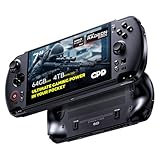
- Next-Gen ZEN 5 Performance: Choose your power with the efficient Ryzen 395 (16-core). Both processors deliver desktop-class performance in a portable package, easily handling the latest AAA titles.
- Built-in AI Acceleration: Experience a new level of efficiency and speed with integrated XDNA 2 AI acceleration, providing up to 126 TOPS of AI compute power that enhances both gameplay and creative workflows.
- Desktop-Class Graphics: The powerful Radeon 8060S GPU (40 CUs) are built on RDNA 3.5 architecture, ensuring stunning visuals, high frame rates, and full support for AMD FreeSync Premium and FSR 3.1.
- Extensive Memory Options: The GPD WIN 5, built to be a leading handheld gaming PC, 64GB LPDDR5X RAM at 8000 MT/s. With unparalleled bandwidth, this high-speed memory ensures seamless multitasking and quick loading across all games and operating systems, eliminating bottlenecks for a truly smooth and efficient portable gaming experience.
- Immersive High-Refresh-Rate Display: Game on a vibrant, high-resolution display with a smooth refresh rate, bringing every frame to life with exceptional clarity and reduced motion blur for a truly competitive gaming experience.
Retailer support information describes USB-C charging up to 100W, but charging behavior should be measured on the specific unit. A lower-wattage charger may cause the Win 5 to reduce its power target rather than provide maximum performance. The included 180W adapter is the safer choice for demanding plugged-in use.
Emulation and productivity
The 16-core configuration has considerable headroom for emulation, compiling, rendering, virtual machines and browser multitasking. Older systems should be straightforward, while PlayStation 3, Xbox 360, Switch and other demanding emulation workloads remain dependent on the emulator, renderer, operating system and individual game.
The large unified-memory configurations may also appeal to local-AI enthusiasts and creators. However, “126 TOPS” does not mean that every model or AI application will run at that speed. Software support, precision and memory requirements matter more than a single headline number.
As a productivity machine, the Win 5 is powerful but awkward. It can become a capable desktop replacement when docked with a keyboard and monitor, yet the lack of a built-in keyboard makes mobile text entry far less convenient than on the GPD Win 4, Win Mini or Win Max.
How the Win 5 compares
| Alternative | Why choose it instead | What the Win 5 does better |
|---|---|---|
| Steam Deck OLED | Lower price, OLED contrast and a more console-like software experience | Much higher peak performance and Windows compatibility |
| ROG Ally X | More mainstream support, accessories and a conventional internal battery | Higher performance ceiling and larger unified-memory options |
| Lenovo Legion Go or Go S | Larger-screen options and different ergonomics | More compact display and substantially stronger Strix Halo performance |
| GPD Win 4 or Win Mini | Smaller designs and, depending on model, a physical keyboard | Much stronger CPU/GPU performance and 1080p capability |
| Other Ryzen AI Max handhelds | Potentially different prices, displays, batteries or support | Depends on configuration; compare at the same wattage and memory capacity |
The Win 5 can be the fastest option in this class while still being poor value for someone who mainly plays at 15–25W. Absolute performance and value are separate judgments.
Pros and cons
Pros
- Exceptional peak integrated-graphics performance at high wattage.
- 16-core Ryzen AI Max+ 395 option.
- 120Hz variable-refresh 1080p display.
- Up to 128GB of unified memory listed by GPD.
- Detachable 80Wh battery.
- M.2 2280, Mini SSD and microSD expansion.
- USB4, HDMI 2.1 and strong dock potential.
- Flexible analog and short-travel trigger modes.
Cons
- Expensive compared with mainstream handhelds.
- Near-1kg setup with the battery attached.
- Short runtime at maximum power.
- No physical keyboard.
- Windows handheld setup and troubleshooting remain less polished than SteamOS.
- LTPS/IPS display lacks OLED contrast.
- Power, weight and configuration information varies between sources.
- Proprietary battery and less-common storage accessories may add cost.
Who should buy the GPD Win 5?
Buy the Win 5 if you want one of the fastest handheld PC platforms available, regularly play demanding AAA games, value 1080p output, need unusually large unified-memory configurations or plan to use the device as a docked computer. It also makes sense for enthusiasts willing to tune power limits, fan profiles and graphics settings.
Avoid it if your priority is low price, OLED quality, light travel, quiet 15–25W gaming, long unplugged sessions or console-like simplicity. The ROG Ally X or Legion Go may be more practical for mainstream Windows support, while the Steam Deck OLED remains a better value for buyers who do not need Windows or maximum performance.
Check the exact CPU, memory, storage, seller, warranty region and delivered price before ordering. GPD Store describes itself as operated by DROIX, and warranty and repair arrangements can differ between GPD, DROIX and regional sellers. Current prices and promotions are also configuration-specific and volatile. See the GPD Store listing and DROIX product page for current availability.
Quick Recap
Product prices and availability are accurate as of the date/time indicated and are subject to change. Any price and availability information displayed on Amazon at the time of purchase will apply.




