
The Tool Desk
Outbyte PC Repair FREEClear out junk files and repair common Windows errorsFree Scan →Outbyte Driver Updater FREEScan for outdated or missing drivers - takes under a minuteDriver Scan →The fastest way to reduce Xbox Remote Play lag is to connect the Xbox directly to your router with Ethernet, connect the phone, tablet, PC, TV, or headset to a stable 5-GHz Wi-Fi network, stop other heavy network traffic, and test the connection from the Xbox. If lag continues, determine whether you are dealing with packet loss, bufferbloat, upload limitations, controller delay, display processing, or a NAT problem—because each requires a different fix.
Xbox lists a 5-GHz Wi-Fi or mobile-data connection and at least 10 Mbps download speed as Remote Play requirements. That 10 Mbps figure is a minimum, not a guarantee of smooth play or low input latency. See the current Xbox Remote Play requirements for supported consoles, devices, software versions, and regional limitations.

As an Amazon Associate I earn from qualifying purchases.
First, identify what “lag” means
Remote Play sends video from your Xbox to another device and sends your controller input back to the console. Problems anywhere along that path can feel like lag, but the symptoms are different:
| Symptom | Most likely cause |
|---|---|
| The image freezes, then catches up quickly | Packet loss, Wi-Fi interference, congestion, or bufferbloat |
| Controls feel delayed while video remains smooth | Network latency, controller Bluetooth delay, display processing, or the client device |
| The image becomes blurry or resolution drops | Unstable or insufficient bandwidth, often involving the Xbox’s upload path |
| The session disconnects | Weak Wi-Fi, unstable upload, mobile-network problems, or NAT/router reachability issues |
| Lag appears only when others stream or download | Bufferbloat or a saturated connection |
| Remote Play works at home but not away | Xbox upload speed, ISP routing, CGNAT, double NAT, or the remote network |
| Only one game behaves badly | Game-specific performance, an online-game server, or a problem with that game |
Test locally first, with the Xbox and client on the same home network. A local test largely isolates your console, router, Wi-Fi, controller, and display. An away-from-home test adds the ISP, internet route, NAT, cellular network, or public Wi-Fi.
Rank #2
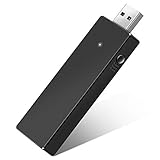
- Manufactured by CIPON: This Wireless Adapter manufactured by a third-party company , not by Microsoft; Our Adapter chip and program is the same as official, and quality as good as official
- Widely Compatibility: For use with X One Wireless Controller on PCs and Tablets running Windows 7/8/8.1/10 with USB 2.0/3.0; Not compatible with Xbox 360 controllers; (Note: You may need to download a driver for the first use)
- Play with Others: Supports up to 8 wireless controllers; Also supports the use of wired chat headsets on the controllerr (Note: The headsets only supported under WIN10 system, and not supports wireless connection headsets)
- Designed for PC: Play your Wireless Controller on Windows/ laptops/ tablets; Simply bind the Adapter to your Wireless Controller to enable the same gaming experience you are used to on Xb One, including in-game chat and high quality stereo audio
- What You Will Get: 1 x Wireless adapter, 1 x User manual, 1 x Elegant packaging
Try these fixes in order
- Exit Remote Play and restart the client. Fully close the Xbox app or browser, then restart the phone, tablet, PC, TV, or headset.
- Restart the Xbox. Make sure no large game download or update is running.
- Reboot the modem and router. Unplug the router, then the modem. If the modem has a backup battery, remove it where applicable. Wait about 30 seconds, power the modem back on, wait for it to reconnect, then power on the router and wait for it to stabilize.
- Connect the Xbox to the main router with Ethernet. This is usually the highest-value first change, especially for play away from home.
- Move the client to 5-GHz Wi-Fi. Use the 5-GHz network name rather than 2.4 GHz when the device is within reliable range. For local play, Ethernet on the client is even better.
- Stop competing traffic. Pause downloads, console updates, video streaming, cloud backups, photo synchronization, torrents, and large file transfers.
- Disable a VPN temporarily. A VPN can add routing distance, processing overhead, or instability. Re-enable it later if you need it for another reason.
- Test again locally before changing advanced router settings. Change one thing at a time so you know which fix helped.
Confirm Remote Play settings and run Xbox tests
On the console, open Settings > Devices & connections > Remote features. Menu names can move with Xbox software updates, so use Settings search if the wording differs.
Confirm that Remote features are enabled and that the console is configured for the supported standby behavior. The console must be an Xbox One or Xbox Series X|S, the game must be installed on it, and the client must use a supported Xbox app, browser, TV, Fire TV device, Meta Quest headset, phone, tablet, or Windows PC. Sign in with the Microsoft account that has the relevant Xbox profile.
Run the available Test Remote Play or Remote Play network test. Also open Settings > General > Network settings and run the network and multiplayer connection tests. Open detailed network statistics where available.
Outdated Drivers Are Slowing You Down
One free scan finds every outdated or missing driver and matches the right update for your exact hardware.Free scan · exact hardware matchPC Slower Than It Used to Be?
A free scan shows the junk files, broken settings and background clutter dragging Windows down - then fixes them in one click.Free scan · Windows 10 & 11Record the following before changing anything:
- Download speed
- Upload speed
- Latency
- Packet loss, if shown
- NAT type
- Warnings about unavailable services, double NAT, or blocked connections
Take a screenshot of the results. Xbox’s public requirement specifies at least 10 Mbps download for the connection, but it does not define one universal “good” latency or upload number. A connection with adequate speed can still feel poor if it has packet loss, jitter, or high loaded latency.
Wire the right device first
There are two important links:
- Xbox to router: the console uploads the game video and receives your input.
- Remote device to router or internet: the client receives video and sends controller input.
If you can wire only one side:
- Playing away from home: wire the Xbox first. This removes the console’s Wi-Fi variability and gives the stream a more reliable upload path.
- Playing locally: wire the weaker side first. If the Xbox is already wired but the phone or laptop has a poor Wi-Fi signal, improve the client connection instead.
- For a controlled diagnosis: wire both devices temporarily.
A console connected by Ethernet to a weak wireless extender, powerline adapter, or wireless bridge is not equivalent to a direct Ethernet cable to the main router. Cat5e or newer is normally sufficient for a home connection; an expensive “gaming” Ethernet cable will not lower internet latency.
For a Windows computer without an Ethernet port, Microsoft recommends considering a USB-to-Ethernet adapter. See Microsoft’s Ethernet troubleshooting guide for adapter, cable, restart, and Windows network-reset guidance.
Rank #3
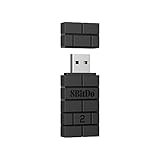
- Controller compatibility: Xbox Series X Controller, Xbox Series S Controller, Xbox One Bluetooth Controller, PS5/PS4/PS3 Controller, Switch Pro, Wii Mote, Wii U Pro.
- 8BitDo Controller compatibility: all 8BitDo Bluetooth Controllers and arcade stick.
- System compatibility: Switch, Windows, macOS, Steam Deck & Raspberry Pis and more. USB Wireless Adapter 2 is compatible with Steam Deck now.
- Support 6-axis motion on Switch and Vibration on X-input mode.
- Supports ultimate software - customize button mapping, adjust stick & trigger sensitivity, vibration control and create macros with any button combination.
Improve Wi-Fi without buying a new router
- Use the 5-GHz SSID where range permits. It is generally faster and less congested, but it has shorter range and penetrates walls less effectively than 2.4 GHz.
- Move the phone, tablet, or laptop closer to the access point.
- Keep the client out from behind a television, inside a cabinet, or beside a large metal object.
- Leave automatic channel selection enabled as a starting point, or test a clearer channel if nearby networks are crowded.
- Temporarily disable crowded mesh nodes or test near the primary access point. Roaming between nodes can cause interruptions.
- Avoid guest Wi-Fi, captive-portal networks, hotel Wi-Fi, school networks, and office networks while troubleshooting.
- Keep the client stationary. Phones moving between access points or switching between Wi-Fi and cellular data can look like Remote Play lag.
Wi-Fi 6 or Wi-Fi 7 is not required by Xbox’s listed Remote Play requirement. A stable 5-GHz connection can be sufficient; placement and consistency matter more than the Wi-Fi generation printed on the router box.
Check the Xbox’s upload speed
Download speed is only half the picture. When you play remotely, the Xbox continuously uploads the video stream. A high-download internet plan can still have inadequate or unstable upload capacity.
Interpret the results this way:
- Low but stable upload: video quality may drop or the session may disconnect.
- Adequate speed but high latency: the picture may look acceptable while controls feel slow.
- Adequate speed but packet loss or jitter: the image may freeze, stutter, or catch up.
For that reason, away-from-home Remote Play can work well locally yet fail over the internet. Cellular home internet, satellite connections, and some cable plans can have variable upload performance, higher latency, or carrier-grade NAT.
Fix congestion and bufferbloat
If Remote Play is smooth while the household network is idle but becomes nearly unplayable when someone downloads, uploads, or streams, the likely problem is bufferbloat. The connection may have excellent headline speed, but the router queues packets for too long when the link is saturated.
Run a quick test
- Stop all downloads, updates, streaming, backups, and large transfers.
- Play through Remote Play for a few minutes.
- Repeat while another device performs a substantial download or upload.
- Compare freezes, input delay, and quality changes.
If lag appears only under load, look in the router for device prioritization, gaming QoS, or SQM (smart queue management/active queue management). SQM can reduce queueing delay when correctly configured, but it is not magic and poor settings can reduce throughput or make things worse.
Set shaping values from measured real-world upload and download speeds, not the advertised plan maximum. Prioritize the Xbox only if the router’s implementation is reliable, and retest with QoS disabled if performance deteriorates. Vague “gaming mode” features do not automatically fix bufferbloat.
Rank #4

- 𝐋𝐨𝐧𝐠 𝐑𝐚𝐧𝐠𝐞 𝐀𝐝𝐚𝐩𝐭𝐞𝐫 – This compact USB Wi-Fi adapter provides long-range and lag-free connections wherever you are. Upgrade your PCs or laptops to 802.11ac standards which are three times faster than wireless N speeds.
- 𝐒𝐦𝐨𝐨𝐭𝐡 𝐋𝐚𝐠 𝐅𝐫𝐞𝐞 𝐂𝐨𝐧𝐧𝐞𝐜𝐭𝐢𝐨𝐧𝐬 – Get Wi-Fi speeds up to 200 Mbps on the 2.4 GHz band and up to 433 Mbps on the 5 GHz band for upgraded web surfing, gaming, and streaming. Performance varies by conditions, distance to devices, and obstacles such as walls.
- 𝐃𝐮𝐚𝐥-𝐛𝐚𝐧𝐝 𝟐.𝟒 𝐆𝐇𝐳 𝐚𝐧𝐝 𝟓 𝐆𝐇𝐳 𝐁𝐚𝐧𝐝𝐬 – Dual-bands provide flexible connectivity, giving your devices access to the latest routers for faster speeds and extended range. Wireless Security - WEP, WPA/WPA2, WPA-PSK/WPA2-PSK
- 𝟓𝐝𝐁𝐢 𝐇𝐢𝐠𝐡 𝐆𝐚𝐢𝐧 𝐀𝐧𝐭𝐞𝐧𝐧𝐚 – The high gain antenna of the Archer T2U Plus greatly enhances the reception and transmission of WiFi signal strengths.
- 𝐀𝐝𝐣𝐮𝐬𝐭𝐚𝐛𝐥𝐞, 𝐌𝐮𝐥𝐭𝐢-𝐃𝐢𝐫𝐞𝐜𝐭𝐢𝐨𝐧𝐚𝐥 𝐀𝐧𝐭𝐞𝐧𝐧𝐚: Rotate the multi-directional antenna to face your router to improve your experience and performance
When Remote Play works locally but not away from home
Start with the Xbox’s upload result, then examine the internet path:
- ISP routing: the route between your home and the remote network may add distance or instability.
- CGNAT: the ISP may share one public IPv4 address among customers, limiting inbound connections.
- Double NAT: both an ISP gateway and your personal router are routing traffic.
- Remote-network restrictions: public or mobile networks may block, throttle, or frequently change routes.
Cellular signal bars do not measure latency or packet loss. 5G can fluctuate because of congestion and handoffs, and a phone hotspot may work for a short test without being stable enough for a full session. Mobile-data limits and carrier policies may also apply.
Compare the same client on home Wi-Fi, cellular data, and another known-good network. If the problem follows one network rather than the device, contact that network provider or try a different connection. Turn off the VPN during the comparison.
What’s actually slowing this PC down?
Pick the symptom - the matching free tool is one click away.
When NAT changes or port forwarding are justified
NAT primarily affects reachability and multiplayer connectivity; it is not a direct measure of input lag. Open NAT does not guarantee a fast connection, while Strict or unavailable NAT can prevent Remote Play from connecting or make access unreliable.
- Check the NAT status in Xbox network settings.
- If Xbox reports double NAT, put the ISP gateway into bridge/modem mode, or configure the second router as an access point when that fits your home network.
- Try UPnP if your router supports it and you trust its configuration.
- Use manual port forwarding only when the diagnostics indicate a reachability problem, and assign the rules to the correct, reserved Xbox IP address.
- If the ISP uses CGNAT, ask whether it offers a public IPv4 address or an IPv6 option.
Do not put the Xbox in a DMZ as a casual fix. Do not copy port numbers from PlayStation guides: PlayStation’s Remote Play figures and ports are platform-specific. Use Xbox’s official Xbox Live ports reference, along with its guidance for unavailable NAT and double NAT.
Independent reader supportYour contribution helps us test, update, and keep practical guides available for everyone.If video is smooth but controls feel delayed
Do not immediately change router settings. Isolate the local input and display chain:
Best Value

- Seamless Compatibility: Our wireless USB gaming receiver adapter is the perfect solution for connecting your Microsoft Xbox 360 controllers to your Windows PC, offering effortless compatibility for an enhanced gaming experience.
- Easy Setup: Simply plug in the Xbox wireless adapter to your desktop PC or laptop and start gaming instantly, without the hassle of complex installations or driver downloads.
- Versatile Connectivity: This Xbox controller adapter for PC allows you to use your Xbox controllers wirelessly, providing flexibility and convenience for gaming on Windows platforms.
- Compact and Portable: With its compact design, our Xbox USB adapter is portable and easy to carry, allowing you to enjoy gaming on the go with your favorite Xbox controllers.
- Lag-Free Gaming: Experience smooth and responsive gaming sessions with our Xbox Bluetooth adapter, ensuring minimal latency for an immersive gaming experience.
- Connect the controller with a USB cable if the client device supports it.
- Re-pair Bluetooth and remove unused nearby Bluetooth devices.
- Keep the controller close to the phone, tablet, or PC.
- On a TV, enable Game Mode and disable motion smoothing and unnecessary image processing.
- Compare the same session on a phone, computer monitor, and TV.
- Test another compatible controller or client device.
A wired controller removes one possible local wireless link, but it cannot eliminate the unavoidable network and display delay of Remote Play. A TV can also add processing delay even when the stream itself is stable.
Check the Xbox, game, and client device
Try another installed game. If only one title stutters, the cause may be that game’s performance, an online-game server, or unsupported behavior rather than Remote Play.
Also try another client and compare the Xbox app with a supported browser where available. On phones, tablets, and PCs, disable battery saver, close screen recording and overlays, and stop unnecessary background apps. Older devices, TVs, or browsers may struggle to decode the video even when the network is healthy.
If Remote Play is poor even when the Xbox and client are nearby on a wired or strong local connection, focus on the console-to-router link, client decoding, controller, display, or game performance—not internet speed alone.
What hardware is worth buying?
Troubleshoot before replacing equipment. The most defensible upgrades are:
Free tools Windows power users keep installed
One-click scans. No signup required.
- Ethernet cable: the cheapest way to remove Xbox Wi-Fi variability.
- USB-to-Ethernet adapter: useful for a compatible laptop, tablet, or handheld without Ethernet.
- Better access-point placement: often more useful than a new router.
- Wired access point: preferable to a wireless extender when you can run cable.
- Router with SQM: worthwhile only when testing proves that congestion causes the lag.
A premium gaming router, expensive Ethernet cable, or new Wi-Fi standard will not fix ISP upload instability, CGNAT, poor routing, packet loss outside your home, or controller/display delay.
Final troubleshooting checklist
- Test locally before testing away from home.
- Wire the Xbox directly to the main router.
- Use stable 5-GHz Wi-Fi or Ethernet on the client.
- Stop downloads, streaming, backups, VPNs, and other heavy traffic.
- Record Xbox download, upload, latency, packet loss, and NAT results.
- Repeat the test while the network is busy to check for bufferbloat.
- Investigate double NAT, CGNAT, or ports only when reachability tests indicate a problem.
- Test a wired controller and enable TV Game Mode when video is smooth but inputs lag.
- Try another game and another client device.
- Change one setting at a time and retest.
Remote Play cannot be completely latency-free. Physical distance, ISP routing, Wi-Fi interference, mobile networks, and the client’s controller and display pipeline all add delay. If a stable local and remote connection still does not meet your expectations, playing directly on the console or using a different streaming path such as Xbox Cloud Gaming—where the title, region, account, and subscription support it—may be more suitable.
Quick Recap
Product prices and availability are accurate as of the date/time indicated and are subject to change. Any price and availability information displayed on Amazon at the time of purchase will apply.

