What’s actually slowing this PC down?
Pick the symptom - the matching free tool is one click away.
For a standard Unity Android project, install these three components for the same Unity Editor version through Unity Hub: Android Build Support, Android SDK & NDK Tools, and OpenJDK. Unity bundles versions that match the Editor, so this is usually safer than installing separate SDK, NDK, or JDK packages.
The exact dependency versions are Editor-specific. Do not treat the versions for Unity 6.0—or any other release—as universal. Check the documentation for the Editor version you are using.
As an Amazon Associate I earn from qualifying purchases.
What each Android dependency does
- Android Build Support: Adds Unity’s Android platform support and the Editor integration needed to build Android applications.
- Android SDK: Provides the Android platform packages and build tools used to package and target an Android app.
- Android NDK: Supplies native development tools used by Unity’s native Android components and workflows such as IL2CPP.
- OpenJDK: Provides the Java tools required by Android build processes.
Unity documents these components together in its Android development setup guide.
The Tool Desk
Outbyte Driver Updater FREEScan for outdated or missing drivers - takes under a minuteDriver Scan →Outbyte PC Repair FREEClear out junk files and repair common Windows errorsFree Scan →Before you start
- Install or open Unity Hub.
- Know which Unity Editor version your project requires.
- Have a reliable internet connection and enough free disk space for the Editor and Android modules.
- Make sure you are signed in or licensed as required by your current Unity Hub setup.
Install the modules for the exact Editor version that will open the project. Installing them for a different Unity version does not automatically make them available to your project.
#1 Best Overall

- The Anker Advantage: Join the 50 million+ powered by our leading technology.
- Massive Expansion: Equipped with a USB C PD-IN charging port, 2 USB-A data ports, 2 HDMI ports, an Ethernet port, and a microSD/SD card reader, giving you an incredible range of functions—all from a single USB-C port.
- Dual HDMI Display: Stream or mirror content to a single device in stunning 4K@60Hz, or hook up two displays to both HDMI ports in 4K@30Hz. Note: For macOS, the display on both external monitors will be identical.
- Power Delivery Compatible: Compatible with USB-C Power Delivery to provide high-speed pass-through charging up to 85W. Please note: 100W PD wall charger and USB-C to C cable required.
- Compatibility: Supports USB-C, USB4, and Thunderbolt connections. Compatible with Windows 10 and 11, ChromeOS, and laptops equipped with DP Alt Mode and Power Delivery. Note: This device is not compatible with Linux.
Install Android support with a new Unity Editor
- Open Unity Hub.
- Select Installs in the left sidebar.
- Select Install Editor, then choose the Unity release you need.
- On the modules or components screen, select all three options:
- Android Build Support
- Android SDK & NDK Tools
- OpenJDK
- Continue through the installer and wait for the Editor and modules to finish downloading.
- Open the project with that Unity Editor version.
Do not install Android Studio merely to obtain these components. Hub can install Unity’s recommended Android toolchain directly.
Add the modules to an existing Unity installation
If the Editor was installed through Unity Hub, use this path:
- Open Unity Hub and select Installs.
- Find the relevant Unity Editor installation.
- Select Manage.
- Select Add modules.
- Enable Android Build Support, Android SDK & NDK Tools, and OpenJDK.
- Select Install.
- Monitor the download in Hub’s Downloads window.
See Unity’s current Add modules documentation if the labels differ in your Hub version.
Windows Errors? Fix Them Before They Spread
Repair common Windows errors and clear accumulated junk for a smoother, more stable PC - no reinstall needed.Free scan · no reinstallCrashes, No Sound, or Screen Glitches?
Random freezes, missing sound and display glitches usually trace back to one bad driver. Find and replace yours safely.Free scan · under a minuteCheck that Unity is using the bundled tools
- Open the project in the intended Unity Editor.
- Open Edit > Preferences > External Tools on Windows or Linux.
- On macOS, the path may be Unity > Settings > External Tools or Unity > Preferences > External Tools, depending on the Editor release.
- In the Android section, leave the Unity-installed options enabled. Their labels may include:
- JDK Installed with Unity
- Android SDK Tools Installed with Unity
- Android NDK Installed with Unity
Unity normally stores bundled tools beneath the Editor installation in locations similar to:
<Unity installation>/Editor/Data/PlaybackEngines/AndroidPlayer/SDK
<Unity installation>/Editor/Data/PlaybackEngines/AndroidPlayer/NDK
<Unity installation>/Editor/Data/PlaybackEngines/AndroidPlayer/OpenJDK
The installation root varies by operating system and by the location selected in Hub. The important check is that Unity is using the bundled paths rather than an old or incomplete custom installation.
Rank #2

- USB C Docking Station 8 IN 1: HoDo USB C Docking Station with Dual HDMI 4K (1*60HZ & 1* 30HZ), 1*4K@60HZ DisplayPort, 1*1080P VGA,3* USB 2.0,USB C Power Charging Port (max 100W). Please Note: on MacOS system, the screens of external monitors are the same, no matter they are displayed in mirror mode or extended mode
- Docking Station 4K Display Adapter: The Laptop Docking Station with 4 video output ports: 2 HDMI+DP+VGA, can output up to 4K Dual/Triple Display videos; For quadruple display Dual HDMI, DP, and VGA all are 1080@60Hz. Please make sure your laptop specification support DP1.4 signal output. If the VGA port is connected, it will affect the resolution of all displays up to 1080P only
- 100W USB C PD Charging Port: Computer Docking Station for Dell Hp laptop supports up to 100W input & 87W(safe)output into your laptop. Please Note: please ensure your laptop's USB C port supports power delivery protocol and please use at least 65W power adapter(not included) when charging with this usb c hub,using a lower wattage power charger may cause a system warning. Note: The power cord is not included
- USB C Hub Multiport Adapter: This USB C Dock with 3 usb 2.0 ports, allows your conveniently connect keyboard,mouse, usb flash driver, usb c hard disks, transfer speeds up to 480Mbps, USB 2.0 allows you to connect keyboard or mouse without any lag
- Extensive Compatibility: This USB-C dongle only works with full-featured USB-C ports that support DisplayPort Alternate Mode for video output. It is not compatible with USB-C ports that only support data transfer and charging without video function, such as Dell Gaming Laptop Model, Dell Latitude 3440 / 3340, ThinkPad X1 Carbon Gen 7/ThinkPad X1 Carbon Gen 8, Lenovo Yoga, Support HP EliteBook 855 G8/G7,HP Envy 16 inch Laptop, Surface pro 7 8. If you experience any issues while using this USB C Hub, please reach out to us through the order page and we will solve the problem for you within 24 hours
Which SDK, NDK, and JDK versions should you use?
Use the versions supplied for your Unity Editor release. “Recommended” means the versions Unity provides and configures for that Editor—not necessarily the newest standalone packages available elsewhere. Unity’s documentation says it officially supports the OpenJDK, SDK, and NDK versions supplied through Hub.
These examples are illustrative and version-dependent:
| Unity release | NDK example | JDK example |
|---|---|---|
| Unity 2020.3 | r19 | OpenJDK 8 |
| Unity 2021.3 LTS | r21d | OpenJDK 8 or 11, depending on the specific documentation and release |
| Unity 2022.3 LTS | r23b | OpenJDK 11 |
| Unity 6.0 | r27c | OpenJDK 17 |
For Unity 6.0 specifically, Unity lists Android SDK 15/API 35, NDK r27c, and OpenJDK 17, with Android player support for Android 6.0/API 23 or newer. Confirm current requirements in the Unity 6.0 system requirements or the documentation matching your own Editor version.
Verify Android support in the project
- Open the project with the Editor for which you installed the modules.
- Open File > Build Settings, or the current equivalent such as Build Profiles.
- Select Android.
- Confirm that Unity allows you to switch the project to Android and exposes Android build options.
- Make a development build before working on release signing, Play Store settings, or other publishing configuration.
If Android is unavailable, the most likely cause is that Android Build Support is missing or that the project is open in a different Editor installation.
If “Add modules” is missing
Hub can add modules only to Editor installations that were installed through Hub. A manually installed Editor may appear in the Installs list but lack the Add modules option.
Rank #3

- Powerful 7-in-1 Hub: Designed for the multitasker, this 7-in-1 USB-C hub features everything from ultra-fast data transfer to high-definition video output.(No Ethernet port is included.)
- See More, Do More: Easily extend your workspace across two screens with 1080p@60Hz resolution, ideal for enhancing productivity and multitasking capabilities.
- Blazing-Fast 10Gbps Data Transfer: Dramatically reduce transfer times with a 10Gbps port that quickly moves large files and boosts work productivity.
- 100W Fast Charging: Cut down on charging time with the powerful 100W input and 85W output, suitable for all your high-demand technology. (Note: Wall charger not included.)
- Compatibility: Supports USB-C, USB4, and Thunderbolt connections. Compatible with MacBook (macOS 12 and newer), Windows 10 and 11, ChromeOS, and laptops equipped with DP Alt Mode and Power Delivery. Note: This device is not compatible with Linux.
- Confirm that you selected the Editor version required by the project.
- Check whether that installation was originally created by Unity Hub.
- If it was installed manually, uninstall it and reinstall the same release through Hub, then select the Android modules during installation.
- If the release is archived or no longer supported by the current Hub, follow Unity’s release/archive process rather than assuming Hub can modify every historical installation.
Fix missing SDK, JDK, or NDK errors
Work through these checks in order:
- Check the Editor version. The project may be opening with a different Unity installation from the one where the modules were added.
- Check Android Build Support. Installing only SDK or NDK files is not enough; the Android platform module is also required.
- Recheck External Tools. Enable the Unity-installed SDK, NDK, and JDK options.
- Remove invalid custom paths. A deleted, partial, or incompatible custom toolchain can override the bundled one.
- Restart Unity. Restart the Editor after changing tool paths or adding SDK packages.
- Retry Hub’s installation. A sleeping computer, lost connection, or interrupted download can leave a module incomplete.
- Check Hub logs. In Hub, use Account > Help and Support > Logs. Common log directories are
%UserProfile%AppDataRoamingUnityHublogson Windows,~/Library/Application Support/UnityHub/logson macOS, and~/.config/UnityHub/logson Linux.
When the target API is missing
The Android target API is separate from the NDK and JDK. If a project requests an API level that is not installed, Unity may ask to update the SDK or use the highest installed level. Android and Google Play requirements change over time, so follow the requirements for your Unity release and current Android platform. In some older Unity workflows, the missing package must be installed with Android’s sdkmanager, followed by selecting the correct SDK directory in External Tools.
Should you install Android Studio?
Usually not for a basic Unity Android setup. Unity Hub provides the recommended SDK, NDK, and OpenJDK components without Android Studio.
Android Studio becomes useful when you also develop native Android applications, need to manage standalone SDK packages with sdkmanager, inspect Android build tools, or maintain a shared toolchain for a team or CI system. A separately installed JDK or NDK can also be appropriate for a plugin or company requirement, but it introduces risks such as an incompatible Java version, wrong NDK revision, incomplete SDK packages, and different local and CI configurations.
If you do use custom tools, select their paths deliberately in External Tools. After testing the custom setup, return to the Unity-installed options unless the project genuinely requires the alternative.
Independent reader supportYour contribution helps us test, update, and keep practical guides available for everyone.Using one toolchain for multiple Unity versions
Separate bundled dependencies can consume more disk space when several Unity Editors are installed. Sharing an SDK, NDK, or JDK may be possible when the Editors have compatible requirements, but do not assume one NDK or JDK works safely across every release. Check each Editor’s Android dependency documentation first. Unity’s bundled, per-Editor setup is the lower-risk choice.
Quick wins for a faster PC:
Clear out junk files and repair common Windows errorsFree Scan →Scan for outdated or missing drivers - takes under a minuteDriver Scan →Repair Windows errors before they cause bigger problemsFix Now →Rank #4
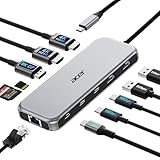
- 【All in one Docking Station】This Acer laptop docking station includes 2 HDMI(4K@60Hz), 1 DP(8K@30Hz), 2 USB-C (10Gbps), 2 USB-A (5Gbps), Ethernet(1 Gbps), PD charging(100W) , and SD/MicroSD slots (104Mbps)-enabling seamless multi-display setup and efficient device connectivity for work and entertainment. 📌𝐍𝐨𝐭𝐞: 𝐏𝐥𝐞𝐚𝐬𝐞 𝐞𝐧𝐬𝐮𝐫𝐞 𝐲𝐨𝐮𝐫 𝐥𝐚𝐩𝐭𝐨𝐩 𝐡𝐚𝐬 𝐚 𝐭𝐡𝐮𝐧𝐝𝐞𝐫𝐛𝐨𝐥𝐭 𝟑/𝟒/𝟓 𝐩𝐨𝐫𝐭 𝐨𝐫 𝐚 𝐟𝐮𝐥𝐥-𝐟𝐞𝐚𝐭𝐮𝐫𝐞𝐝 𝐔𝐒𝐁-𝐂 𝐩𝐨𝐫𝐭
- 【Brilliant Triple Display Expansion】This docking station 3 monitors supports single display up to 8K@30Hz on DP or 4K@60Hz on HDMI. For triple-display, it supports up to 4K@60Hz + 4K@60Hz + 1080P@60Hz. 📌𝐍𝐨𝐭𝐞 𝐅𝐨𝐫 𝐌𝐚𝐜 𝐮𝐬𝐞𝐫𝐬: 𝐦𝐚𝐜𝐎𝐒 𝐜𝐚𝐧 𝐨𝐧𝐥𝐲 𝐦𝐢𝐫𝐫𝐨𝐫 𝐭𝐡𝐞 𝐬𝐚𝐦𝐞 𝐜𝐨𝐧𝐭𝐞𝐧𝐭 𝐚𝐜𝐫𝐨𝐬𝐬 𝐚𝐥𝐥 𝐞𝐱𝐭𝐞𝐫𝐧𝐚𝐥 𝐦𝐨𝐧𝐢𝐭𝐨𝐫𝐬.
- 【Super-Fast 10Gbps Data Transfer】This usb c hub multiport adapter includes 2 USB-C for 10Gbps, 2 USB-A for 5Gbps, and SD/MicroSD slots for 104Mbps high-speed file transfers. Perfect for photographers, designers, and data-intensive professionals.
- 【Reliable 100W Charging】This USB C docking station supports up to 100W input and safely delivers 85W to your laptop, keeping you powered while you work. 📌 Note: Make sure your laptop’s USB-C port supports charging and keep the docking station connected to a 100W power adapter for stable operation. 𝐏𝐨𝐰𝐞𝐫 𝐚𝐝𝐚𝐩𝐭𝐞𝐫 𝐚𝐧𝐝 𝐜𝐚𝐛𝐥𝐞 𝐚𝐫𝐞 𝐧𝐨𝐭 𝐢𝐧𝐜𝐥𝐮𝐝𝐞𝐝.
- 【1000Mbps Stable Ethernet】Equipped with a 1000Mbps RJ45 Ethernet port, this docking station dual monitor delivers a fast, stable, and low-latency network connection. Experience low-latency connections.
Optional command-line installation
For most developers, the graphical Hub workflow is the best option. Unity also documents experimental command-line methods for automation and headless systems.
The Hub CLI can install an Editor and the Android modules:
/Applications/Unity Hub.app/Contents/MacOS/Unity Hub -- --headless install
  --version 6000.3.7f1
  --module android android-sdk-ndk-tools android-open-jdk
To add modules to an existing Hub-managed Editor:
/Applications/Unity Hub.app/Contents/MacOS/Unity Hub -- --headless install-modules
  --version 6000.3.7f1
  -m android android-sdk-ndk-tools android-open-jdk
The example is macOS-specific and uses Unity Editor version 6000.3.7f1; replace both the executable path and version for your system. Unity marks this Hub CLI workflow as experimental.
Unity’s newer standalone CLI documents equivalent commands:
Do these 3 things before closing this tab:
1Scan for outdated or missing drivers - takes under a minute2Repair Windows errors before they cause bigger problems3Fix the driver behind crashes, sound loss and screen glitchesunity install lts -m android android-sdk-ndk-tools android-open-jdk
unity install-modules -e 6000.3.7f1
-m android android-sdk-ndk-tools android-open-jdkThis CLI is also experimental and is mainly relevant to CI or automated installations. The module IDs are android, android-sdk-ndk-tools, and android-open-jdk.
Final check
Once the modules are installed, open the project with the matching Unity Editor, verify the bundled paths under External Tools, select Android in the build configuration screen, and create a development build. If that succeeds, the SDK, NDK, JDK, and Unity Android platform support are connected correctly; remaining release issues are more likely to involve signing, Gradle configuration, permissions, or project-specific plugins.
Quick Recap
Product prices and availability are accurate as of the date/time indicated and are subject to change. Any price and availability information displayed on Amazon at the time of purchase will apply.




