Short answer: Xbox 360 “jailbreaking” usually means installing a hardware-based JTAG or Reset Glitch Hack (RGH) modification. It is not a universal, one-click software jailbreak. Most persistent installations require opening the console, dumping and writing its NAND, and soldering modification hardware or wires.
Before doing anything, identify the exact motherboard. Older phat consoles may support JTAG or an RGH variant; Trinity and Corona systems are common RGH candidates; and Winchester Xbox 360 E consoles are generally unsupported by standard JTAG/RGH methods. A modified console should be treated as an offline homebrew machine: there is no guaranteed safe way to use Xbox Live after modification.
| # | Preview | Product | Price | |
|---|---|---|---|---|
| 1 |

|
Xbox 360 250GB Slim Console - (Renewed) | $187.60 | Buy on Amazon |
| 2 |
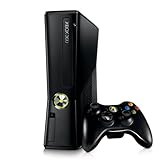
|
Xbox 360 4GB Console | $620.00 | Buy on Amazon |
| 3 |

|
Microsoft Xbox 360 S 250GB System (Renewed) | $184.99 | Buy on Amazon |
| 4 |

|
Microsoft Xbox 360 Elite System Console Only - Black (Renewed) | $135.99 | Buy on Amazon |
| 5 |

|
Xbox 360 500GB Console Bundle (Tomb Raider & Halo 4) | $249.99 | Buy on Amazon |
As an Amazon Associate I earn from qualifying purchases.
What “jailbreaking” an Xbox 360 means
“Jailbreak” is informal terminology. The relevant Xbox 360 modification categories are:
- JTAG/SMC hack: An older permanent exploit limited mainly to early phat consoles with an eligible dashboard and bootloader.
- RGH: A hardware modification that manipulates the console’s boot process to run an altered NAND image.
- RGH1.2 and RGH3: Later RGH approaches for different motherboard families. RGH3 can be chipless on some boards, but it still requires NAND work and soldering.
- BadUpdate or BadAvatar-style exploits: Temporary or transitional methods available on some systems, not universal permanent softmods.
- DVD-drive flashing: A drive firmware modification that is not equivalent to a full homebrew jailbreak.
- Dual NAND: A two-NAND installation intended to provide separate retail and modified environments.
The distinction matters: DVD flashing does not provide the same unsigned-code, emulator, and custom-dashboard capabilities as JTAG or RGH, while “chipless” RGH3 is still a physical modification.
#1 Best Overall
ConsoleMods’ Xbox 360 getting-started guide provides the community’s broader technical overview.
What a full JTAG or RGH installation can do
A successful persistent modification can enable legitimate offline and homebrew uses, including:
- Running unsigned homebrew applications.
- Using custom dashboards such as Aurora or FreeStyle.
- Running supported emulators and Linux-related projects.
- Managing legally owned game content from local storage.
- Running offline utilities and game modifications.
- Using system-link alternatives such as LiNK or XLink Kai, subject to those services’ rules.
- Supporting lawful personal-preservation workflows where permitted by local law.
These capabilities do not make downloading or distributing copyrighted games, DLC, or software lawful. Pirated content, cheating, achievement manipulation, mod menus, and attempts to evade Xbox enforcement are separate issues and can violate both copyright law and platform rules.
Check the exact Xbox 360 motherboard first
The product name alone is not enough. “Slim” can mean different motherboard revisions, and Xbox 360 E systems can contain materially different hardware. Check the shell, power connector, manufacturing information, motherboard revision, NAND size/type, dashboard version, and whether the console is already modified. A 4 GB Corona configuration may require special handling.
Use the Xbox 360 hardware-identification documentation rather than guessing from the console’s appearance.
Rank #2
- Sleek New Design
- 4GB internal memory.Built-in Wi-Fi
- Whisper Quiet
- Part Number: XBX4GBCNTRBUN
- This item is non returnable.
| Console family or board | Typical route | Important qualification |
|---|---|---|
| Xenon, Zephyr, Falcon, Opus, Jasper phat | JTAG if eligible; otherwise an RGH variant | Dashboard and bootloader history determine JTAG eligibility. |
| Tonasket and related Jasper revisions | RGH variants are commonly used | Confirm the exact board before selecting a method. |
| Trinity Xbox 360 S | RGH1.2 or RGH3 | Usually a strong RGH candidate, but installation remains board-specific. |
| Corona Xbox 360 S/E | RGH1.2 or RGH3 | NAND and RAM details matter; some 4 GB systems need additional handling. |
| Winchester Xbox 360 E | Standard JTAG/RGH generally unsupported | Do not assume every Xbox 360 E can be permanently modified. |
See the current community compatibility guidance for board-specific qualifications.
JTAG vs. RGH vs. RGH3
JTAG
JTAG was the original widely known permanent Xbox 360 exploit. It is mainly relevant to older phat consoles that have an eligible dashboard/kernel—traditionally at or below dashboard 2.0.7371. A later dashboard generally cannot be made JTAG-compatible simply by downgrading; later bootloaders and efuses blocked the original exploit.
Free tools Windows power users keep installed
One-click scans. No signup required.
JTAG is not automatically “better” than RGH. It is useful only when the specific older console qualifies. The ConsoleMods JTAG reference explains the eligibility limitations.
RGH and RGH1.2
RGH uses glitch timing to influence the Xbox 360’s boot process and launch a modified NAND image. It supports substantially more hardware than JTAG but requires NAND access and soldering. Depending on the board and method, the installation uses a dedicated glitch chip.
RGH3
RGH3 can be chipless on supported motherboards. That does not mean it is software-only or risk-free. The NAND must still be read and written, and board-specific soldering is required. Boot behavior depends on the motherboard, wiring quality, timing configuration, and installation choices. Do not apply a Slim or E wiring diagram without confirming the exact board.
Is there a software-only Xbox 360 jailbreak?
There is no universal, permanent, consumer-friendly software jailbreak for every Xbox 360. Persistent JTAG/RGH modification normally requires physical access, NAND programming, and soldering.
BadUpdate and related exploit paths can provide temporary or transitional access on some consoles. They may need to be repeated after power cycles, require a compatible dashboard or exploit environment, or serve as part of a later hardmod conversion. They should not be described as a universal permanent softmod. See the getting-started documentation and the community’s BadUpdate-to-hardmod discussion for the limitations.
What a self-install requires
A self-install is an electronics project, not a routine USB update. Typical equipment includes:
- Torx/security screwdrivers and an ESD-aware work area.
- A fine-tip soldering iron, flux, wire, solder, and insulation materials.
- A compatible NAND programmer or flasher, computer, and USB connection.
- J-Runner with Extras or another trusted, current NAND-building tool.
- A reliable USB drive.
- Board-specific diagrams, files, and recovery documentation.
The exact solder points, wire lengths, timing files, resistor values, and procedures vary by motherboard and tool version. Using guessed values from an old guide can cause unstable boots, lifted pads, or a dead console, so this article intentionally does not provide a universal wiring diagram.
High-level installation workflow
- Identify the board and NAND: Confirm the motherboard, NAND size/type, dashboard, and existing modification status.
- Open and inspect the console: Look for corrosion, previous soldering, lifted pads, and other damage.
- Read the NAND at least twice: Compare the dumps byte-for-byte. Do not proceed with mismatched or incomplete reads.
- Preserve the original data: Store verified retail NAND dumps and console-specific information in multiple locations away from the console.
- Build the correct image: Select the exact board and exploit in the trusted NAND tool. Never use another console’s NAND, CPU key, or keyvault.
- Install the glitch hardware or wiring: Follow current, board-specific documentation and inspect every joint under magnification.
- Write and verify the NAND: Follow the flasher’s required power sequence. The xFlasher guide, for example, specifies that the console is connected but not powered on during programming.
- Test recovery before customization: Confirm the modified boot environment works before adding dashboards, plugins, or extra storage.
Backups are your most important safety measure
Before modification, preserve:
- At least two matching original NAND dumps.
- The CPU key and other console-specific data when legitimately obtained.
- The original keyvault information.
- DVD key information where relevant.
- The current dashboard and console identity information.
- Photographs of the board and any existing solder work.
- Any working custom NAND image if the console was already modified.
Keep copies offline and in more than one location. Never download or flash another person’s NAND image, CPU key, or keyvault. The recommended setup documentation covers the importance of preserving NAND and keyvault information.
PC Slower Than It Used to Be?
A free scan shows the junk files, broken settings and background clutter dragging Windows down - then fixes them in one click.Free scan · Windows 10 & 11Outdated Drivers Are Slowing You Down
One free scan finds every outdated or missing driver and matches the right update for your exact hardware.Free scan · exact hardware matchAfter a successful installation
First confirm reliable booting before making the system elaborate. Keep a known-good recovery path and a way to access the Microsoft dashboard when needed. Then, from trusted sources:
- Install a homebrew dashboard such as Aurora.
- Keep a backup dashboard or file manager.
- Avoid unnecessary plugins and launch configurations.
- Test storage, fans, temperatures, and boot consistency.
- Use offline updates and local-content workflows appropriate to the setup.
- Use system-link alternatives instead of official online services where appropriate.
These are community-supported tools, not Microsoft-supported software. Storage capacity can help with lawful homebrew and locally owned content, but a larger drive does not legitimize pirated material.
Xbox Live: assume the modified console is unsafe
Important: Microsoft has stated that unauthorized Xbox 360 modification can violate Xbox Live terms, void the warranty, and result in a console ban. Microsoft’s current Community Standards prohibit using Xbox services with modified or tampered hardware.
A modified console may be banned immediately or later. Stealth services, spoofing, modified profiles, and similar tools do not guarantee safety and should not be used to evade detection. There is no guaranteed safe way to take an RGH or JTAG console onto Xbox Live.
The Tool Desk
Outbyte PC Repair FREERepair Windows errors before they cause bigger problemsFix Now →Outbyte Driver Updater FREEScan for outdated or missing drivers - takes under a minuteDriver Scan →Dual NAND can separate a retail NAND from a modified NAND and reduce the chance of accidentally using the modified environment for official services. It does not make the modified NAND safe online, remove ban risk, or turn a banned keyvault into a valid retail identity. See the community’s Xbox Live guidance for the risks.
Best Value
- Xbox 360 E console
- Xbox 360 250GB Hard Drive
- Two amazing games included for Free
Legal and copyright boundaries
Homebrew software and independently developed applications are distinct from pirated games and DLC. Personal backups and circumvention rules vary by jurisdiction, ownership status, and the method used. Downloading or distributing copyrighted games is unlawful in many places, while online cheating and service abuse violate platform rules regardless of the hardware setup.
Microsoft’s Digital Goods Rules describe digital goods as licensed rather than sold and limit how they may be used. Consult the law in your jurisdiction before making personal-backup or access-control decisions.
Self-install, professional service, or stock console?
| Choice | Best for | Main trade-off |
|---|---|---|
| Self-install | People experienced with fine-pitch soldering, NAND validation, and recovery | Lowest service cost, but real risk of board damage or an unbootable console. |
| Professional installation | Owners who want homebrew without learning console electronics | Reduces installation risk but does not remove compatibility, hardware, ban, or data-loss risk. |
| Temporary exploit | Experimentation or a possible bridge to a hardmod | Less permanent and narrower; may need to be repeated. |
| DVD flashing | Readers specifically interested in drive behavior | Not a full homebrew jailbreak. |
| Stock console | Official updates, services, and multiplayer | No unsigned code or custom dashboards. |
| Pre-modded console | Buyers who want to avoid installation work | Seller quality, hidden faults, banned identities, warranty, and support require careful checking. |
Self-install only makes sense if you can identify the board confidently, read and validate a NAND, solder reliably, and accept the possibility of a dead console. A reputable installer is preferable for a rare, sentimental, or undocumented console.
Quick wins for a faster PC:
Repair Windows errors before they cause bigger problemsFix Now →Scan for outdated or missing drivers - takes under a minuteDriver Scan →Buying a pre-modded Xbox 360
Ask for the exact motherboard, RGH version, original NAND backup, boot-time expectations, return terms, and information about the DVD drive, storage, fans, and shell. Confirm whether the console is banned and whether its keyvault is suspect. No seller should promise “undetectable,” “ban-proof,” or guaranteed Xbox Live access.
Send-in services are another option, but prices and compatibility change. For example, Modchip Central has listed a supported phat/Slim JTAG/RGH service at a sale price of $90, with the displayed price and eligibility subject to confirmation at checkout: vendor service page. RGH Nation advertises send-in RGH3 or RGH1.2 work for Xbox 360 S and E systems: vendor page. These are commercial examples, not guarantees or endorsements.
Troubleshooting and recovery
Common problems include a bad or mismatched NAND read, selecting the wrong motherboard, 4 GB Corona complications, lifted solder pads, poor wiring, long or inconsistent boot times, a console that reaches Xell but not the dashboard, corrupt plugins, and accidental official updates.
Use this recovery order:
- Stop applying random updates or flashing random images.
- Disconnect unnecessary USB devices and plugins.
- Try the known-good alternate boot path, if one exists.
- Re-read the NAND and compare the dumps.
- Use the console’s own retail NAND and console-specific data.
- Use the appropriate hardware flasher for the exact board.
- Inspect solder joints and board damage under magnification.
- For a valuable console, stop repeated power cycles and use a specialist.
Do not update a modified console casually
Do not accept an official system update on an RGH/JTAG console unless the exact update path has been verified for that modification. Keep both the working modified NAND and original retail NAND backed up. “Supports the latest dashboard” claims are time-sensitive and must be checked against the exact image and tool versions in use.
What’s actually slowing this PC down?
Pick the symptom - the matching free tool is one click away.
Quick Recap
Should you jailbreak your Xbox 360?
- Want official online play and digital services? Leave the console stock.
- Want offline homebrew, emulation, and customization? Consider an RGH installation through a reputable specialist.
- Own a Winchester Xbox 360 E? Do not assume standard JTAG/RGH compatibility.
- Have no soldering or NAND experience? Do not self-install.
- Only want disc-drive changes? DVD flashing is a different, narrower modification.
Product prices and availability are accurate as of the date/time indicated and are subject to change. Any price and availability information displayed on Amazon at the time of purchase will apply.




