Paid modded Minecraft hosting is worth the monthly fee when you need an always-on server, straightforward modpack installation, reliable backups, public access and someone else to handle the technical work. It is usually poor value for two to four friends running a light pack when one person already has a capable, always-on computer and is willing to manage Java, port forwarding, updates, security, backups and outages.
Godlike.Host offers modded Minecraft server hosting with one-click modpacks, a built-in mod installer and up to three free backups a day.
Expect current published plans to cost roughly $7.50 to $36 per month for small-to-medium servers, with larger or managed configurations costing more. The price buys convenience and operational reliability, not guaranteed smooth performance: mod behavior, single-core CPU speed, player activity and geographic latency can matter as much as RAM.
As an Amazon Associate I earn from qualifying purchases.
The Tool Desk
Outbyte Driver Updater FREEFix the driver behind crashes, sound loss and screen glitchesFind Drivers →Outbyte PC Repair FREEClear out junk files and repair common Windows errorsFree Scan →What paid hosting actually buys
A hosted server runs in a data center instead of on a player’s gaming PC. That changes the practical experience in five ways:
- Availability: the world can remain online when the owner is asleep or away.
- Networking: players connect to a public endpoint rather than relying on a home router and port-forwarding rule.
- Deployment: supported panels can install Vanilla, Fabric, Forge, Quilt, NeoForge and named modpacks without manually assembling every file.
- Recovery: scheduled or pre-update backups give you a way to roll back a broken mod or world.
- Operations: a console, file manager, SFTP access, scaling controls and support reduce the amount of system administration the group must do itself.
These benefits matter most when several players live in different locations, the world is intended to be public, or nobody wants one person’s home computer and internet connection to be the server’s single point of failure.
#1 Best Overall
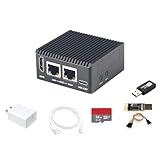
- [Light NAS Video Play Router] NanoPi R76S (as “R76S”) is an open-sourced mini IoT gateway device with two PCIE 2.5G ethernet ports designed and developed. It is integrated with a Rockchip RK3576 CPU. It supports booting with TF cards and works with operating systems such as FriendlyWrt or OpenMediaVault etc. NanoPi R76S is a router featured with multiple Ethernet ports, light NAS and video playing. It is a cannot-miss platform with infinite possibilities for geeks, fans and developers.
- [Bandwidth Increased by 50%] NanoPi R76S mini router multi-core score exceeds the same class of products by more than 30%, supports 6TOPS NPU, optional - LPDDR4X (2GB/4GB) and 16GB LPDDR5 RAM memory, built-in 32GB/6GB eMMC, bandwidth increased by 50%, suitable for 4K video transcoding, multi-virtual machine parallel, real-time data analysis and other high-performance needs.
- [Octa-Core Rockchip RK3576 CPU] NanoPi R76S mini router's RK3576 processor features an octa-core architecture, comprising four Cortex-A72 cores operating at 2.2GHz and four Cortex-A53 cores at 1.8GHz, delivering a computing performance of up to 58,000 DMIPS. Additionally, it integrates an NPU with 6 TOPS of AI processing power. It is also an ideal portable drive for saving images and videos.
- [4K H.265/H.264 Videos Decoder] NanoPi R76S portable mini router boots up the system in as fast as 5 seconds, supports wide temperature operation from -25°C to 85°C, and pre-loaded systems, supports out-of-the-box, making it an ideal storage solution for soft routing, edge AI development, and industrial applications.It supports decoding 4K60p H.265/H.264 formatted videos.
- [Running AI Applications] NanoPi R76S mini router supports local deployment and execution of a wide range of AI models such as TinyLLAMA, ChatGLM3 and more. The various models have corresponding performance on the device and can be used to develop offline voice assistants, build FAQ bots, implement offline translation, help develop development boards, and create chatbots.
What current plans cost
The following are published 2026 examples. Prices can change, and the effective amount depends on billing cadence, tax, region, renewal pricing and add-ons.
| Provider and plan | RAM | Published price | Published positioning or inclusions |
|---|---|---|---|
| Modrinth | 4 GB | $10/month, billed quarterly | Positioned for 1–5 friends; integrated mod and modpack installation, 15 off-site backups, SFTP and DDoS protection are listed platform features. |
| Modrinth | 6 GB | $15/month, billed quarterly | Positioned for 6–15 players. |
| Modrinth | 8 GB | $20/month, billed quarterly | Positioned for 15–25 players or heavy modding. |
| Loothost High Performance | 8 GB | $24/month | Unlimited player slots, off-site backups and 10 GB of NVMe storage per GB of RAM. |
| Loothost High Performance | 12 GB | $36/month | Designed for larger packs; upgrades are available at any time. |
| Loothost High Performance | 16 GB | $48/month | Higher-capacity option with the same listed storage and backup model. |
| SudoSecurity | 6 GB | $7.50/month | Listed as a light-pack tier. |
| SudoSecurity | 12 GB | $15/month | Listed as a mid-pack tier. |
| SudoSecurity | 20 GB | $25/month | Listed as a kitchen-sink tier; DDoS, premium support and managed technician help can add to the monthly total. |
A low headline price is not automatically the cheapest usable service. Check whether a plan includes the backup frequency you need, the desired server region, migration help, DDoS protection, support response and the ability to resize without rebuilding the world.
Quick wins for a faster PC:
Repair Windows errors before they cause bigger problemsFix Now →Scan for outdated or missing drivers - takes under a minuteDriver Scan →Clear out junk files and repair common Windows errorsFree Scan →How much RAM a modded server needs
RAM is a starting point, not a player guarantee. Published guidance gives these practical ranges:
| Workload | Typical RAM guidance | Player or pack example |
|---|---|---|
| Light Fabric or performance-focused pack | 4 GB | About 2–6 players. |
| Medium Forge pack or content-heavy pack | 8 GB | Create, Vault Hunters or similar packs with about 5–12 players. |
| Large pack | 12 GB | Packs with 250 or more mods are commonly placed here. |
| Kitchen-sink pack | 16 GB | All the Mods-style workloads with roughly 10–20 players. |
| Large community modded SMP | 24 GB | About 20–40 players, depending on exploration and automation. |
Loothost states that most modpacks run on 8 GB, while packs with at least 250 mods often want 12 GB and public communities or the largest packs may need 16 GB. SudoSecurity’s ranges put light packs at 4 GB, medium packs at 8 GB, kitchen-sink packs at 16 GB and a 20–40-player community server at 24 GB. These are planning figures, not a promise that every pack will perform identically.
Why more RAM may not fix lag
A Minecraft server advances its world primarily on one main thread. Loothost describes this as, “A Minecraft server ticks its world on one main thread,” while SudoSecurity calls modded servers “single-thread bound.” In practice, a server can have unused memory and still suffer low tick rate if its main CPU thread cannot finish world simulation on time.
CPU speed and contention
Compare single-core performance and the host’s CPU contention, not only the advertised RAM. Two plans with 8 GB can behave differently if one places your instance on a faster processor or gives it more consistent CPU time. Ask whether the listed resources are dedicated, shared or subject to overselling.
Free tools Windows power users keep installed
One-click scans. No signup required.
Mod behavior and world activity
Automation-heavy machines, chunk loading, mob farms, redstone contraptions, frequent exploration and large numbers of entities can create tick pressure. Modrinth cautions that actual performance depends on the specific mods, data packs, plugins and user behavior, even with high-end hardware.
Client performance is separate
A server upgrade cannot cure a player’s low frame rate, shader load or insufficient client memory. It can improve world ticks and connection stability, but each player still needs a suitable client configuration.
When paid hosting is worth the money
You need the world online without the owner
If the server should be available while its usual operator is at work, asleep or traveling, an always-on host removes the requirement that a particular home PC remain powered and connected.
Your players are geographically dispersed
A data-center location can provide a more predictable route than a residential upload connection. Select a region near most players and test latency before committing to a long billing term.
The pack is medium or heavy
Once a pack needs about 8–16 GB or more, hosting provides an easier path to resize than replacing a home machine. This is especially useful when a group starts with a moderate pack and later adds dimensions, automation or players.
Rank #2

- OFFICE & GAMING MINI PC : GMKtec Nucbox M5 Ultra equipped with the AMD Ryzen 7 7730U, 8 Cores/ 16 Threads.With Turbo Boost up to 4.50GHz. Based on the ZEN 3+ architecture, this small but robust mini PC excels in productivity tasks, daily office work, and smooth 1080p gaming, 35%+ higher performance compared to previous AMD Ryzen 5 7430U / Ryzen 7 5700U/5600U/5560U models.
- 16GB DDR4 RAM & 1TB SSD: Pre-installed with 16GB DDR4 RAM in Dual-Channel(2×8GB), the supporting expansion up to 64GB. Equipped with a 1TB M.2 2280 PCIe 3.0 SSD that offers fast storage access and supports dual-slot expansion for up to 16TB(8*2) total SSD(Upgrades not included).
- DUAL 2.5G LAN FOR HIGH-SPEED NETWORKING: Experience ultra-fast 2500Mbps and stable wired connections with two 2.5G RJ45 ports, Ideal for lag-free working, competitive gaming, or setting up as a router/firewall system (e.g., pfSense, Untangle) or server office mini PC.
- 4K TRIPLE DISPLAY: The mini desktop computer integrated AMD Radeon Graphics with 8 cores 2000 MHz provides strong graphical performance for design software, 4K@60Hz UHD video editing. Connect up to triple monitors (via HDMI 2.0 and DP and type C ports )simultaneously for an multi-screen workspace-perfect for stock traders, remote workers, and content creators.
- WI-FI 6E & BT5.2 FOR WIRELESS FREEDOM: GMKtec M5 Ultra stay connected with the latest Wi-Fi 6E, supporting triple-band (2.5G/5G/6GHz) for faster speeds and reduced latency. Bluetooth 5.2 ensures quick and stable pairing with wireless devices (headset, mouse, keyboard, etc.)The unit also includes a versatile selection of ports: 2*USB 3.2, 2*USB 2.0, 1*HDMI 2.0 (4K@60Hz), 1*USB-C (PD/DP/Data), 1* DisplayPort, 1* 3.5mm Audio, and 1* DC Power Port.
No one wants to be the administrator
Installing the correct Java version, matching loader and mod versions, opening ports, securing accounts, taking backups and recovering a corrupted world are recurring duties. A panel with one-click pack installation, SFTP, a web file manager and console access makes those duties less specialized. SudoSecurity also advertises automated backups before updates and managed mod-conflict help; Modrinth lists integrated pack installation and 15 off-site backups.
The cost of downtime is higher than the subscription
For a community server, a failed home disk or accidental update can affect every player. Off-site backups, a support channel and the ability to resize without rebuilding the world can justify the recurring fee even when raw hardware cost would be lower at home.
What’s actually slowing this PC down?
Pick the symptom - the matching free tool is one click away.
When self-hosting is better value
Self-hosting is a sensible choice for two to four friends on a light pack when all of the following are true:
- Someone already owns a reliable computer that can remain on for the required hours.
- The home internet connection has adequate upload capacity and a stable route for the players.
- The operator is comfortable with port forwarding, firewall rules, Java and the selected loader.
- The group has a tested backup routine stored somewhere other than the server’s disk.
- Everyone accepts that maintenance, outages and recovery are the operator’s responsibility.
In that situation, the marginal hosting cost may exceed the value of convenience. The trade-off is administrative time and responsibility rather than a simple “free versus paid” calculation: electricity, hardware wear, backup storage and the operator’s time are real costs even when no monthly invoice arrives.
How to compare hosts before buying
Use the following checklist instead of choosing solely by the largest RAM number.
| Comparison point | Questions to answer |
|---|---|
| Effective memory | How much RAM is assigned to the server process, and can it be increased without a rebuild? |
| CPU behavior | What processor generation and single-core performance are used? Is CPU time dedicated or shared? |
| Compatibility | Does the panel support your loader, Minecraft version and exact modpack source? |
| Backups | Are backups off-site, how many are retained, are they automatic before updates, and can you restore individual files or the whole world? |
| Access and control | Are live console, file manager and SFTP available when you need to diagnose a problem? |
| Networking | Where are the data centers, what DDoS protection is included, and is the region suitable for your players? |
| Scaling | Can you upgrade or downgrade while keeping the same world and IP, and are there migration fees? |
| Slots and storage | Are player slots unlimited, capped or charged separately? Is NVMe storage sufficient for the world, logs and backups? |
| Support and refunds | What support is included, what costs extra, and what is the refund window? |
| Total price | What will you pay after tax, add-ons, renewal pricing and the required billing term? |
A practical buying and setup process
- Inventory the workload. Write down the Minecraft version, loader, modpack release, expected peak players, exploration style and any known chunk loaders or automation.
- Choose a starting tier. Use about 4 GB for a light 2–6-player pack, 8 GB for many mainstream packs, 12 GB for very large packs and 16–24 GB for kitchen-sink or community workloads. Leave room to grow rather than buying the maximum tier without evidence.
- Confirm technical compatibility. Verify the exact loader—Fabric, Forge, Quilt or NeoForge—and the pack’s required Java version. A host that supports a loader in general may not support every modpack release.
- Select a nearby region. Favor the data center closest to most players, then test latency from the locations that matter.
- Configure protection before inviting players. Enable account security, whitelist or permissions, automatic backups and a retention policy. Do not treat a host’s backup feature as a substitute for a separate copy you control.
- Install and test privately. Start the pack, join with two or more players, explore new chunks, trigger the heaviest machines and watch tick behavior before opening the address publicly.
- Record recovery steps. Document the panel login path, SFTP location, backup restore procedure, modpack version and who is authorized to change files.
- Reassess after real usage. Review memory use, tick time, storage growth and player peaks after a week. Upgrade for measured pressure, not marketing claims.
Common problems and how to handle them
The server runs out of memory
Symptoms include crashes during startup, repeated garbage-collection pauses or logs reporting an out-of-memory condition. First remove unused mods and confirm that the host allocated the advertised memory. If the pack genuinely exceeds the tier, increase RAM and test again. Keep a recent backup before changing the pack.
Tick rate is poor despite free RAM
Inspect the main-thread workload: chunk generation, entities, automation, dimensions and chunk-loading mods are common causes. Reduce the offending activity, pregenerate terrain where the pack supports it, or move to a plan with stronger single-core performance. Simply adding memory may not change the tick rate.
An update breaks the world
Stop the server, preserve the current files, restore the pre-update backup and verify the mod and loader versions as a set. Automated pre-update backups are valuable because they shorten this rollback path.
Players cannot connect
Check that the server is running, the address and port are correct, the whitelist is configured properly and the client has the identical modpack version. If only distant players are affected, investigate region choice and network routing rather than increasing RAM.
Storage fills unexpectedly
World exploration, backups, logs and generated dimensions can grow faster than expected. Review retention settings, remove obsolete backups only after confirming a current restore point, and choose a plan with enough NVMe capacity for the world and its recovery copies.
Crashes, No Sound, or Screen Glitches?
Random freezes, missing sound and display glitches usually trace back to one bad driver. Find and replace yours safely.Free scan · under a minutePC Slower Than It Used to Be?
A free scan shows the junk files, broken settings and background clutter dragging Windows down - then fixes them in one click.Free scan · Windows 10 & 11The bottom-line decision
Choose paid hosting when availability, shared access, backups, support and simple modpack management are worth a recurring bill. A light private server can often be self-hosted economically if a capable machine and a willing administrator already exist. For medium and heavy packs, begin around 8 GB, move to 12–16 GB when the mod count or player activity demands it, and reserve 24 GB for genuinely large community workloads. Judge the final choice by CPU behavior, backup and restore controls, compatibility, region and total cost—not RAM alone.
Quick Recap
Product prices and availability are accurate as of the date/time indicated and are subject to change. Any price and availability information displayed on Amazon at the time of purchase will apply.




