The quickest way to change a Minecraft Java skin is through the Minecraft Launcher: open Minecraft: Java Edition → Skins → New Skin, select Wide or Slim, upload the PNG, and choose Save & Use. If you are already playing in Lunar Client, press Right Shift, open the Cosmetic Locker, and use Skin Changer. The best Lunar settings depend on your Minecraft version, renderer, hardware, and whether you value FPS, image quality, or input latency.
Short answer: You can change a Minecraft Java skin without Lunar Client by using the Minecraft Launcher: open Minecraft: Java Edition → Skins → New Skin, choose the Wide or Slim model, upload a valid PNG, and select Save & Use. Lunar Client also has an in-game Skin Changer inside its Cosmetic Locker, which lets you preview and apply a skin without leaving your world or server.
As an Amazon Associate I earn from qualifying purchases.
Quick wins for a faster PC:
Repair Windows errors before they cause bigger problemsFix Now →Fix the driver behind crashes, sound loss and screen glitchesFind Drivers →Clear out junk files and repair common Windows errorsFree Scan →Lunar Client is not required for a Minecraft skin change. Its advantage is convenience, while its performance settings need to be adjusted for your Minecraft version, rendering profile, hardware, and priorities. The settings below are practical starting points—not a universal FPS preset.
How to change your Minecraft skin in the official Java Launcher
Use this method when you want to upload a custom skin to your Minecraft Java Edition profile or when Lunar Client’s in-game Skin Changer is unavailable.
#1 Best Overall

- CREEPIN’ IT REAL — Truly live the block life with Razer’s officially licensed gaming mouse for Minecraft
- 58G LIGHTWEIGHT DESIGN — Built to fit most grip styles, the mouse allows for fast, precise control and feels comfortable to use during long gaming sessions
- GEN-3 OPTICAL MOUSE SWITCHES — Unrivalled durability and speed with switches that have an extended 90-million click lifecycle and eliminate double-clicking issues, boasting a blistering 0.2 ms actuation time without debounce delay
- CHROMA LIGHTING WITH GRADIENT UNDERGLOW — Customize the mouse with 16.8 million colors and countless lighting effects, creating a more immersive gaming experience as the lights react dynamically with hundreds of Chroma-integrated games
- PRECISE SENSOR ADJUSTMENTS — Fine-tune the mouse's sensitivity with precise adjustments in 50 DPI increments to achieve a truly tailored play style
- Prepare a valid Minecraft skin PNG. The skin should use either the standard wide-arm model or the slim-arm model.
- Open the official Minecraft Launcher and select Minecraft: Java Edition.
- Open the Skins tab.
- Select New Skin.
- Enter a name for the skin.
- Choose the correct model:
- Wide: the standard arm model.
- Slim: the narrow-arm model.
- Select Browse, locate the skin PNG on your computer, and open it.
- Select Save & Use.
After saving, launch Minecraft and join a world or server to check the result. If the arms look unusually wide, narrow, or visually incorrect, return to the Skins tab and try the other model. The PNG may be valid while still being assigned to the wrong arm type.
Browser alternative: upload the skin from your Minecraft profile
If the Launcher’s Skins tab is not working or you would rather manage the skin from a browser, use Minecraft’s profile-based skin upload page. Choose Classic for the standard wide-arm model or Slim for the narrow-arm model, select the custom skin file, and upload it.
Free tools Windows power users keep installed
One-click scans. No signup required.
This is still a Minecraft account and Java Edition profile change. It is not a separate Lunar Client skin file, and you do not need to install Lunar Client to use it.
How to change your skin inside Lunar Client
Lunar Client’s Cosmetic Locker includes an integrated Skin Changer. Menu names and icons can change between Lunar Client releases, Minecraft versions, and profiles, but the usual process is:
- Launch Lunar Client and enter a Minecraft world or server.
- Press Right Shift to open the Lunar Client interface.
- Open the cosmetics or Cosmetic Locker area. Lunar’s interface represents this area with a clothing or cosmetics control.
- Open Skin Changer.
- Preview or select the skin you want to use.
- Apply the skin, then close the interface and continue playing.
The useful difference is that Lunar’s integrated Skin Changer is designed to work without making you leave the current server or world. However, do not assume that every player sees the update instantly. Lunar documents that other players may need to relog or reconnect before the new appearance is visible to them.
Skin Changer versus Lunar cosmetics
A Minecraft skin changes the appearance of your player model. It is different from a Lunar Client cloak, emote, hat, wings, or another cosmetic. Those items are client cosmetics and should not be confused with the PNG skin uploaded through Minecraft’s Java profile workflow.
Windows Errors? Fix Them Before They Spread
Repair common Windows errors and clear accumulated junk for a smoother, more stable PC - no reinstall needed.Free scan · no reinstallOutdated Drivers Are Slowing You Down
One free scan finds every outdated or missing driver and matches the right update for your exact hardware.Free scan · exact hardware matchRank #2

- ICONIC ERGONOMIC DESIGN WITH THUMB REST — PC gaming mouse favored by millions worldwide with a form factor that perfectly supports the hand while its buttons are optimally positioned for quick and easy access
- 11 PROGRAMMABLE BUTTONS — Assign macros and secondary functions across 11 programmable buttons to execute essential actions like push-to-talk, ping, and more
- HYPERSCROLL TILT WHEEL — Speed through content with a scroll wheel that free-spins until its stopped or switch to tactile mode for more precision and satisfying feedback that’s ideal for cycling through weapons or skills
- 11 RAZER CHROMA RGB LIGHTING ZONES — Customize each zone from over 16.8 million colors and countless lighting effects, all while it reacts dynamically with over 150 Chroma integrated games
- OPTICAL MOUSE SWITCHES GEN 2 — With zero unintended misclicks these switches provide crisp, responsive execution at a blistering 0.2ms actuation speed for up to 70 million clicks
If the skin appears correctly in your own preview but another player still sees the old one, first ask that player to reconnect. You can also leave and rejoin the server yourself. Server state, client caching, and the other player’s refresh timing can affect when the update becomes visible.
Wide versus Slim: which Minecraft skin model should you choose?
| Launcher label | What it means | Use it when |
|---|---|---|
| Wide | Standard-width arms | Your skin was designed for the classic or standard player model. |
| Slim | Narrow arms | Your skin was designed for the Alex-style slim-arm model. |
The model choice is not a graphics setting. Changing render distance, RAM allocation, or Lunar performance options will not correct a skin that uses the wrong arm model. If the hands or arms look wrong, check the model selection and the skin file first.
Best Lunar Client settings for modern Minecraft versions
There is no single “best” Lunar Client configuration. A competitive player seeking lower input latency may prefer different settings from someone who wants distant terrain, higher visual quality, or a stable experience on a laptop. The following is a performance-first baseline for newer profiles using Sodium-style video settings.
| Setting | Performance-first starting point | What to change if needed |
|---|---|---|
| Render Distance | 4–6 chunks | Raise it if you need to see farther and have stable performance; lower it in busy areas or on weaker hardware. |
| Simulation Distance | 4–6 chunks, usually no higher than render distance | Keep expectations realistic in multiplayer: the server controls much of the simulation. |
| VSync | Off for lower input latency | Turn it on if you prefer synchronized frames and less visible tearing. |
| Max Framerate | Unlimited or capped to a stable value | A stable cap can feel smoother than a maximum that fluctuates constantly. |
| Improved Transparency | Off | Turn it on if the visual improvement matters more than the rendering cost. |
| See-Through Leaves | Off | Enable it if clearer foliage is worth the additional workload. |
| Particles | Minimal | Increase them if combat effects and environmental detail are more important than FPS. |
| Entity Distance | About 75% | Lower it in crowded scenes; raise it when distant entities are important. |
| Entity Shadows | Off | Enable them for visual quality if performance remains stable. |
Keep performance-oriented options such as entity culling, fog occlusion, and block-face culling enabled unless they cause a visible rendering problem. Texture-animation controls can also be reduced or disabled when you need to cut visual workload, although the result will look less animated.
Adjust the settings in the right order
- Choose a stable frame-rate target. Do not judge a setting only by the highest number shown for a moment.
- Reduce Render Distance and Simulation Distance first if the game struggles in large worlds.
- Reduce particles, entity distance, transparency effects, and shadows if busy scenes remain slow.
- Test VSync both on and off. Off often favors latency, while on can make tearing less noticeable.
- Change one or two settings at a time, then test in the same type of scene. A quiet underground area is not a useful comparison for a crowded spawn or redstone-heavy base.
Best settings for legacy OptiFine Lunar profiles
Older Minecraft versions—including common 1.7.10, 1.8.9, and 1.12-era profiles—may use OptiFine rather than a modern Sodium-style video menu. Do not copy every modern recommendation into an OptiFine profile: some settings will be named differently, unavailable, or ineffective.
| OptiFine setting | Performance-first starting point | Trade-off |
|---|---|---|
| Graphics | Fast | Reduces visual quality compared with Fancy. |
| Smooth Lighting | Off | Lighting looks less polished but requires less work. |
| Render Distance | About 2–8 chunks | Use the lower end on weaker systems and the higher end when performance allows. |
| VBOs | On, where available | Usually a sensible legacy performance starting point. |
| Smooth FPS | Off | Test it separately if frame pacing is unusual on your system. |
| Fast Render | On | Can disable or alter some visual effects. |
| Fast Math | On | Use the legacy performance-oriented option when available. |
| Chunk Updates | 1 | Can improve frame pacing, but new chunks may appear more slowly. |
| Antialiasing and anisotropic filtering | Off | Edges and textures may look less refined. |
If more performance is needed, selectively disable unnecessary weather, sky, star, and animation effects. The correct choice depends on whether your problem is low average FPS, stutter during chunk loading, or slow frame delivery during combat. Those are not always fixed by the same option.
Rank #3

- Pentakill, 5 DPI Levels - Geared with 5 redefinable DPI levels (default as: 500/1000/2000/3000/4000), easy to switch between different game needs. Dedicated demand of DPI options between 500-8000 is also available to be processed by software.
- Any Button is Reassignable - 11 programmable buttons are all editable with customizable tactical keybinds in whatever game or work you are engaging. 1 rapid fire + 2 side macro buttons offer you a better gaming and working experience.
- Comfort Grip with Details - The skin-friendly frosted coating is the main comfort grip of the mouse surface, which offers you the most enjoyable fingerprint-free tactility. The left side equipped with rubber texture strengthened the friction and made the mouse easier to control.
- 5 Decent Backlit Modes - Turn the backlit on and make some kills in your gaming battlefield. The hyped dynamic RGB backlit vibe will never let you down when decorating your gaming space, it would be better with other Redragon accessories with lights on.
- Fatigue Killer with Ergonomic Design - Solid frame with a streamlined and general claw-grip design offers a satisfying and comfortable gaming experience with less fatigue even though after hours of use.
Lunar Client performance settings
Lunar’s client-level options are separate from Minecraft’s ordinary video settings. Open them with Right Shift → Mods → Settings → Performance. The options shown depend on the Minecraft version and profile.
- HUD Caching: On.
- Use Particle Physics: Off for a performance-focused setup.
- Max Unfocused FPS: On, so the game does not render unnecessarily fast when it is not focused.
- Max Main Menu FPS: Set it lower—60 is a reasonable example—to reduce GPU use while sitting in the menu.
- Lazy Chunk Loading: On applicable legacy versions; Medium is a practical performance-oriented starting point.
- Entities and Tile Entities: Lower values can reduce rendering work on supported legacy profiles.
- Turbo Entity Mode: On when available for newer versions.
- Fast Present: Use only when the option is available for your supported Vulkan configuration.
- Memory Savings: Use only when your version and operating system expose the option.
These controls should not be treated as universal switches. If an option is missing, that usually reflects the active Minecraft version, renderer, operating system, or Lunar profile rather than a broken installation.
Do these 3 things before closing this tab:
1Repair Windows errors before they cause bigger problems2Fix the driver behind crashes, sound loss and screen glitches3Clear out junk files and repair common Windows errorsHow much RAM should Lunar Client use?
More allocated RAM is not automatically better. Excessive allocation can increase garbage-collection pauses, leave too little memory for Windows and other applications, and contribute to stutter or crashes.
| Total system RAM | Approximate Lunar starting point |
|---|---|
| 8 GB | About 3 GB |
| 16 GB | About 4 GB |
| 32 GB or more | About 6 GB if your setup genuinely needs it |
A standard Lunar Client installation rarely needs more than 6 GB. Heavy modpacks, high-resolution resource packs, background applications, and system memory pressure can change the appropriate value. As a general safety rule, avoid assigning more than half of your total system RAM to Minecraft without a specific reason.
GPU selection, drivers, and fullscreen fixes
Make sure Lunar uses the dedicated GPU
On a laptop or desktop with integrated and dedicated graphics, Windows may assign Lunar’s Java process to the integrated GPU. That can reduce performance even when the computer has a capable graphics card.
Use Windows Graphics settings to assign Lunar’s Java process to the High performance GPU. The exact executable shown can vary by installation, so identify the Java process used by your Lunar profile rather than selecting an unrelated Java installation. Restart Lunar after changing the preference and test the game again.
Rank #4

- The next-generation optical HERO sensor delivers incredible performance and up to 10x the power efficiency over previous generations, with 400 IPS precision and up to 12,000 DPI sensitivity
- Ultra-fast LIGHTSPEED wireless technology gives you a lag-free gaming experience, delivering incredible responsiveness and reliability with 1 ms report rate for competition-level performance
- G305 wireless mouse boasts an incredible 250 hours of continuous gameplay on just 1 AA battery; switch to Endurance mode via Logitech G HUB software and extend battery life up to 9 months
- Wireless does not have to mean heavy, G305 lightweight mouse provides high maneuverability coming in at only 3.4 oz thanks to efficient lightweight mechanical design and ultra-efficient battery usage
- The durable, compact design with built-in nano receiver storage makes G305 not just a great portable desktop mouse, but also a great laptop travel companion, use with a gaming laptop and play anywhere
Update graphics drivers from the manufacturer
Outdated or corrupted graphics drivers can contribute to stutter, rendering errors, and inconsistent performance. Check the support site for your GPU manufacturer first. A third-party utility is not required to perform an official driver update.
If you are a Windows user who still has graphics or input-device problems after checking the manufacturer’s driver support and Lunar’s settings, an optional driver troubleshooting tool such as Outbyte Driver Updater may help identify devices and available driver updates. It is optional, is not a Lunar Client requirement, and should not be presented as a guaranteed FPS boost or a replacement for official GPU support.
Fix fullscreen failures
If Lunar launches to a black screen, refuses fullscreen, or returns to the desktop, try changing the game resolution in the Lunar launcher to a display mode your monitor supports. If that does not help, disable launch fullscreen, start the game in a window, and switch to fullscreen from inside Minecraft after it loads.
The Tool Desk
Outbyte Driver Updater FREEFix the driver behind crashes, sound loss and screen glitchesFind Drivers →Outbyte PC Repair FREERepair Windows errors before they cause bigger problemsFix Now →Mouse polling rate and input settings
Lunar’s performance guidance notes that lowering a typical gaming mouse’s polling rate from 1000 Hz to 500 Hz can reduce measurable overhead on older PCs. This is an optional troubleshooting step—not a guaranteed improvement in FPS, aim, or latency.
If your mouse software supports it, test 500 Hz and 1000 Hz in the same Minecraft scene. Keep the setting that gives you the most consistent frame pacing and input response. A gaming mouse with adjustable polling rate and DPI can make this kind of testing easier, but it will not fix a weak GPU or automatically increase Minecraft’s frame rate. Choose based on comfort, sensor behavior, available controls, and your own preference rather than assuming a particular specification is always superior.
Quick troubleshooting checklist
- Skin uploads but looks wrong: confirm the PNG is assigned to the correct Wide or Slim model.
- You see the new skin but friends do not: have them relog or reconnect.
- The Skin Changer is missing: check that you are in the Lunar in-game interface, that the profile supports the feature, and that Lunar is up to date.
- FPS is low everywhere: lower render distance, particles, entity distance, and visual effects; then check GPU selection.
- FPS is acceptable but the game stutters: use a stable frame cap, review RAM allocation, close background applications, and check drivers.
- Chunk loading causes spikes: test the legacy Chunk Updates setting where available and compare different Lazy Chunk Loading values.
- Fullscreen does not work: select a supported resolution or launch windowed first.
- A setting is unavailable: identify whether the profile uses modern Sodium-style settings or legacy OptiFine settings before troubleshooting further.
What to use for different priorities
| Priority | Start here |
|---|---|
| Maximum stability on weaker hardware | Render Distance 4–6, Simulation Distance 4–6, Minimal particles, Entity Shadows off, lower entity distance, stable FPS cap, and modest RAM allocation. |
| Competitive play and lower latency | Test VSync off, use a stable or high frame-rate cap, reduce distracting effects, and test mouse polling rate rather than assuming 1000 Hz is best. |
| Better visuals | Raise render distance and particles gradually, enable shadows or transparency effects one at a time, and stop when frame pacing becomes unstable. |
| Legacy PvP profile | Use the OptiFine-specific controls for the active version; do not assume modern Sodium settings exist. |
The most reliable tuning method is iterative: change one setting, reproduce the problem, and keep the change only if it improves the result without creating a new visual or stability issue.
Frequently Asked Questions
Do I need Lunar Client to change my Minecraft skin?
No. Minecraft Java Edition lets you upload and use a skin directly through the official Launcher’s Skins tab or the browser-based Minecraft profile workflow. Lunar Client adds an in-game convenience layer.
Recommended Free Tools
Best Value
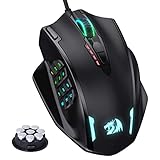
- Professional Gaming Mouse - Redragon M908 optical gaming mouse is designed with up to 12400 DPI, 5 adjustable DPI levels (500/1000/2000/3000/6200 DPI) meet your multiple needs, either for daily work or gaming. DPI can be adjusted freely by ±100 from 200 to 12400 via software. 1000 Hz polling rate, 30G acceleration and high-precision Pixart PAW3327 Sensor giving you a greater edge over your competition.
- RGB Backlight & Programmable Buttons - 16.8 million RGB LED color options (LED Backlight can be disabled). 18 programmable buttons, 5 memory profiles each with a dedicated light color for quick identification. Comes with 8-piece weight tuning set (2.4g x8), easy to change the weight to suit your games.
- Comfort & Precision At Your Hands - Redragon M908 gaming mouse is an essential computer accessory for die-hard with its aggressive design for hands! You will be amazed by the unmatched comfort, lethal accuracy and killer precision of our durable, desktop and laptop pro gaming mouse!
- High-end Design - Redragon M908 Mouse features 6 buttons and 12 MMO programmable side buttons. Durable smooth TEFLON feet pads for ultimate gaming control. 6ft braided-fiber cable with gold-plated USB connector ensures greater durability.
- Die-hard Players Choice - Whether you are targeting, aiming, slashing or attacking, a professional gaming mouse is your basic weapon! The mouse will be your ideal partner. Compatible with Windows 2000/ME/XP/03/VISTA/7/8/10 system for programmable using and Mac OS for normal using.
Why can I see my new skin but other players still see the old one?
Usually, no. Lunar documents that other players may need to relog or reconnect before they see the new skin. Client refreshes and server state can affect visibility.
What is the difference between Wide and Slim skins?
Choose Wide for the standard arm model and Slim for the narrow-arm model. If the arms look incorrect, edit the skin entry and try the other model.
Why do Lunar Client settings differ between Minecraft versions?
First identify the Minecraft version and rendering profile. Newer profiles may use Sodium-style settings, while older 1.7.10, 1.8.9, and 1.12-era profiles commonly expose OptiFine settings. The controls and useful values are not interchangeable.
Should I allocate as much RAM as possible to Lunar Client?
No. Excessive RAM allocation can cause garbage-collection pauses, stutter, or crashes. Approximate starting points are 3 GB on an 8 GB computer, 4 GB on a 16 GB computer, and up to about 6 GB on systems with 32 GB or more, depending on the setup.
What’s actually slowing this PC down?
Pick the symptom - the matching free tool is one click away.
The Bottom Line
For the skin itself, use Minecraft: Java Edition → Skins → New Skin → Wide/Slim → Browse → Save & Use. If you are already playing through Lunar Client, open its interface with Right Shift and use the Cosmetic Locker’s Skin Changer. For performance, identify whether the profile uses modern Sodium-style settings or legacy OptiFine, start conservatively, and tune render distance, effects, RAM, GPU selection, and frame caps for your own hardware.
Quick Recap
Product prices and availability are accurate as of the date/time indicated and are subject to change. Any price and availability information displayed on Amazon at the time of purchase will apply.




