Windows Errors? Fix Them Before They Spread
Repair common Windows errors and clear accumulated junk for a smoother, more stable PC - no reinstall needed.Free scan · no reinstallOutdated Drivers Are Slowing You Down
One free scan finds every outdated or missing driver and matches the right update for your exact hardware.Free scan · exact hardware matchSpecial offer. See more information about Outbyte and uninstall instructions. Please review EULA and Privacy policy.“This application failed to start because overdrive.dll was not found.”
The overdrive.dll error usually points to a missing or damaged Cubase plug-in, not a missing Windows component. The safest solution is to identify the Cubase installation that owns the file and repair it from the original installer or Steinberg’s official legacy software source.
As an Amazon Associate I earn from qualifying purchases.
Which fix applies to you
Use the path that matches what you see:
- Cubase or Nuendo displays the error when starting: repair or reinstall the affected Steinberg installation.
- The error appears when opening one project: that project probably references the old Overdrive effect. Restore the correct plug-in or open the project in a compatible legacy environment.
- Windows Security recently quarantined the file: inspect Protection history before restoring anything.
- The file exists, but Cubase cannot load it: check the plug-in folder, file properties, architecture, and dependencies.
- Several unrelated programs report missing DLLs: investigate Windows corruption, malware, disk problems, or a broader profile issue.
- The file is found in a game, utility, or Python package folder: do not assume it is the Cubase plug-in. Several unrelated products use an
OverDrive.dlloroverdrive.dllfilename.
Do not begin by copying a downloaded DLL into System32. That can create an architecture mismatch, leave the real installation incomplete, and introduce an untrusted file.
Recommended Free Tools
What is overdrive.dll
The known legacy Cubase file is an application plug-in named Overdrive, associated with Cubase and developed by Spectral Design GmbH. Historical Cubase documentation describes Overdrive as a distortion effect that emulates a guitar amplifier.
#1 Best Overall
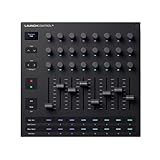
- Powerful integration with all major DAWs: Launch Control XL 3 features deep integration with Ableton Live, Logic Pro, FL Studio, Cubase, HUI and more
- Connect all your hardware: MIDI In, Out, and Out2/Thru ports enable custom-mapped control for all your hardware synths and effects — no computer needed
- Perfect for hybrid setups: Combine your external gear, DAW, and essential plugin parameters into one intuitive Custom Mode for the ultimate hybrid setup
- The creative control surface: Redesigned with eight faders, 24 endless encoders, 16 customisable buttons, and a crisp OLED display for real-time feedback
- Create your own mappings: Effortlessly map MIDI parameters with Components. Store up to 15 Custom Modes for any software, hardware, or hybrid workflow
It is not a normal Windows system file. The legacy Cubase VST version is also unsupported software, so a current Cubase installation may not include it.
The filename alone does not prove identity. Check these details:
- Right-click the file.
- Select Properties.
- Open the Details tab.
- Review File description, Product name, Copyright, and Original filename.
- Open Digital Signatures, if that tab is present.
- Note the complete folder path.
A file inside the old Cubase VST plug-in directory is more plausible than one in C:WindowsSystem32. A file labeled for Smart Game Booster, a Python package, or another unrelated application is not interchangeable with the Cubase effect.
Free tools Windows power users keep installed
One-click scans. No signup required.
Fix 1: Repair the Cubase installation
This is the most likely and most reliable fix.
Identify the affected installation
First determine which program is calling the DLL.
- Write down the exact application name in the error window.
- Note whether the error appears:
- while Cubase starts,
- while a project opens,
- when a track or effect is loaded, or
- when you insert an effect manually.
- Check Settings > Apps > Installed apps.
- Search for Cubase, Nuendo, or another Steinberg host.
- If more than one version is installed, record which one produces the error.
If only one project fails, the project may contain a reference to an obsolete effect even though the main program starts normally.
Reinstall from trusted media
Use the original Cubase installer, installation media, or Steinberg’s official legacy download. Do not use a DLL-only download.
- Back up your Cubase projects and personal presets.
- Close Cubase and any Steinberg background processes.
- Open Settings > Apps > Installed apps.
- Select the affected Cubase installation.
- Choose Uninstall.
- Restart Windows.
- Run the original installer.
- Install the same Cubase generation that created the project, where possible.
- Apply the latest update available for that legacy installation.
- Start Cubase and allow it to rescan its normal plug-in folders.
A reinstall should restore the plug-in to the application’s intended directory. It should not place it in a Windows system folder.
If the installer offers repair
Some installers provide Repair, Modify, or Change instead of requiring a full removal.
- Open Settings > Apps > Installed apps.
- Select Cubase.
- Choose Modify, Change, or Repair, if available.
- Select the audio effects or VST components.
- Complete the wizard.
- Restart Windows.
- Test the same Cubase project again.
If repair does not restore the file, uninstall and reinstall from the complete installer instead.
Fix 2: Check whether antivirus quarantined the file
Security software can remove or isolate a plug-in. Do not immediately label a detection as a false positive, particularly if the file came from an unknown location.
Check Windows Security
- Open Start.
- Type Windows Security and open it.
- Select Virus & threat protection.
- Select Protection history.
- Look for an event involving
overdrive.dll. - Expand the event and review:
- the detected file path,
- the detection name,
- the action taken, and
- the date of the event.
Restore or allow the file only when all of these are true:
Rank #2

- Next-Gen Music Production and Beat Maker Essential - USB-powered MIDI keyboard controller with 25 mini velocity-sensitive keys, optimized for studio or beat production, piano-style performance, synth leads, sample triggering
- Real-Time Control and Navigation - 8x assignable 360° knobs, a vibrant full-color screen and push/turn encoder for hands-on access to settings, presets, and DAW functions, without reaching for a computer
- Iconic MPC Pads with RGB Feedback - 8 velocity- and pressure-sensitive MPC pads deliver an iconic finger-drumming experience, plus dynamic visual feedback to match your performance in studio or on the go
- Studio Instrument Collection Included - A powerful VST/AU and standalone virtual suite packing 1000+ pro-grade drums, keys, synths, bass, FX from AIR, Akai Pro and Moog, plus MPK Mini IV integrated controls
- Pre-Mapped DAW Integration - Get producing in under 15 minutes with Ableton Live Lite 12, Logic Pro, FL Studio and more; comes with an expanded DAW-mapped transport section for uninterrupted workflow
- the file came from your legitimate Cubase installation,
- the path belongs to that installation,
- the installer source is trusted,
- the Cubase license and media are legitimate, and
- the file’s properties match the expected plug-in.
If the file was found in a temporary folder, a download directory, or an unexpected application folder, leave it quarantined and reinstall Cubase from trusted media instead.
What’s actually slowing this PC down?
Pick the symptom - the matching free tool is one click away.
Microsoft explains Protection history and its restore controls in its Windows Security Protection History documentation.
After restoring a legitimate file, add an exclusion only if you understand the security trade-off and the exclusion is limited to the trusted Cubase folder. A broad exclusion for the entire drive is unsafe.
Fix 3: Verify the plug-in folder and architecture
The known legacy Cubase file is reported as a 32-bit plug-in. A 64-bit Cubase process may not load an old 32-bit VST directly, while an old 32-bit Cubase installation may require the 32-bit version of the effect.
Check the host architecture
- Open Settings > System > About.
- Review System type.
- This describes Windows, not always the architecture of the Cubase executable.
- Open the Cubase installation folder.
- Right-click the Cubase executable.
- Select Properties > Details and review the product information.
- Check the documentation or installer options for whether that Cubase release is 32-bit or 64-bit.
Do not substitute a similarly named 64-bit DLL for a missing 32-bit plug-in. The correct fix is to reinstall a Cubase and plug-in generation that matches the project.
Check the configured VST paths
Cubase may be looking in a folder that was moved, renamed, or removed.
- Start Cubase if it opens.
- Open Studio > VST Plug-in Manager.
- Review the listed plug-in paths.
- Confirm that the folder containing the legitimate Overdrive plug-in is included.
- If the folder was moved, restore the original location or add the correct existing folder.
- Rescan the plug-ins.
- Restart Cubase.
If Cubase cannot start far enough to show the plug-in manager, temporarily remove custom VST folders from the configuration or move third-party plug-ins out of those folders. Then start Cubase and determine whether the host itself works.
Do not move random copies of overdrive.dll into every VST folder. That makes it harder to identify which file Cubase is actually loading.
Fix 4: Determine whether the file is missing or a dependency is missing
The message “The specified module could not be found” does not always mean that overdrive.dll itself is absent. Windows may be unable to load a dependency required by the plug-in.
Check the difference:
- File not found: the expected DLL is absent from the Cubase plug-in directory.
- File present but cannot load: the DLL may be blocked, corrupted, incompatible, or missing a dependency.
- Only one project fails: the project may reference an unavailable historical effect.
- Many programs fail: the problem may affect Windows, storage, security software, or system libraries.
Right-click the file and select Properties. If Windows shows an Unblock checkbox on the General tab, use it only when the file came from a trusted installer. Then test Cubase again.
Rank #3

- Low-profile, multi-function control surface
- New track select and marker advance parameters
- Supports numerous software titles including major DAW programs
Do not install a particular Visual C++ package merely because a DLL error appears. Microsoft provides Visual C++ Redistributable packages for different application architectures, but there is no verified evidence that this specific legacy Spectral Design plug-in requires one particular package.
If the Cubase installer includes its own runtime components, use those components first.
Fix 5: Update Windows, then repair Windows components
Windows Update and system repair are relevant when other applications also fail, Windows features are damaged, or the problem began after a system failure. They normally do not recreate a third-party Cubase plug-in.
Quick wins for a faster PC:
Scan for outdated or missing drivers - takes under a minuteDriver Scan →Clear out junk files and repair common Windows errorsFree Scan →Fix the driver behind crashes, sound loss and screen glitchesFind Drivers →Install pending updates
- Open Settings.
- Select Windows Update.
- Select Check for updates.
- Install available updates.
- Restart Windows.
- Test Cubase again.
Run DISM and SFC
Open an elevated Command Prompt:
- Open Start.
- Type
cmd. - Right-click Command Prompt.
- Select Run as administrator.
- Run this command:
DISM /Online /Cleanup-Image /RestoreHealth
- Wait for it to complete.
- Then run:
sfc /scannow
- Restart Windows after both commands finish.
- Test the application again.
Microsoft documents this order in its System File Checker and DISM instructions.
DISM and SFC repair protected Windows components. They should not be expected to restore overdrive.dll because the Cubase plug-in belongs to a third-party application.
Repeating these commands without knowing whether Windows files were repaired rarely helps with a missing VST. If you need help interpreting system repair results without hunting through several Windows tools, Outbyte PC Repair can scan for reported system problems; its free scan shows what it found, while repair is handled by the full version. Reinstalling Cubase remains the definitive fix for this application-owned file.
Fix 6: Update drivers only when symptoms point to drivers
A graphics, audio, or storage driver does not normally replace overdrive.dll. Driver work is relevant if Cubase crashes alongside audio-device failures, distorted playback, missing interfaces, or problems that began after a hardware or driver change.
Check Device Manager
- Right-click Start.
- Select Device Manager.
- Expand Sound, video and game controllers.
- Expand Display adapters.
- Look for a warning icon.
- Right-click the affected device.
- Select Update driver.
- Choose Search automatically for drivers.
- Restart Windows if prompted.
For an audio interface, use the driver supplied by the interface manufacturer when Windows does not find a suitable driver. Do not remove a working audio driver solely because overdrive.dll is missing.
When manually comparing audio, graphics, and chipset drivers, Outbyte Driver Updater can reduce the work of hunting through versions; its free scan identifies reported driver issues, while installation is handled by the full version. A driver update is not a substitute for reinstalling the Cubase plug-in.
Independent reader supportYour contribution helps us test, update, and keep practical guides available for everyone.Fix 7: Use System Restore for a recent change
System Restore can help when the error began immediately after a software installation, driver change, or security configuration change.
- Open Start.
- Type Create a restore point.
- Open the result.
- Select System Restore.
- Choose a restore point from before the error began.
- Select Scan for affected programs.
- Review the results.
- Continue only if the restore point is appropriate.
- Complete the wizard and restart Windows.
Microsoft says System Restore rolls back system files, registry settings, and installed programs while normally leaving personal files unchanged. Details are available in the System Restore documentation.
Do these 3 things before closing this tab:
1Fix the driver behind crashes, sound loss and screen glitches2Clear out junk files and repair common Windows errors3Scan for outdated or missing drivers - takes under a minuteSystem Restore is not a replacement for reinstalling Cubase. It may undo a change that removed or blocked the plug-in, but it is not guaranteed to restore the correct application files.
Rank #4
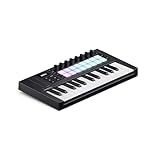
- The Creative Controller: Launchkey is an all-in-one DAW controller with premium keybeds and 16 responsive FSR pads for drumming, clip launching, and more
- Seamless DAW Integration: Launchkey works with all major DAWs, offering intuitive workflows for Ableton Live, Logic, Cubase, Reason, Reaper, FL Studio, and Ardour
- Go Beyond Finger Drumming: Launchkey’s FSR drum pads with polyphonic aftertouch also serve as step sequencers, clip launchers, chord triggers, and more
- Everything in the box: Ableton Live Lite, Cubase LE, Novation Play, sounds from GForce, Klevgrand, Orchestral Tools, Native Instruments, and free Melodics lessons
- Powerful Creative Tools: Never hit a wrong note with Scale Mode, trigger lush chords from a single key or drum pad, and create and mutate wild arpeggios
Why regsvr32 is usually wrong
Do not routinely run:
regsvr32 overdrive.dll
regsvr32 is intended for DLLs that expose a registration interface such as DllRegisterServer. A VST effect is normally discovered by the audio host from its plug-in directory. It is not normally registered as a global Windows COM component.
Running regsvr32 can produce another error without repairing the plug-in. Microsoft documents the command’s purpose and syntax in its regsvr32 documentation.
Do not copy overdrive.dll into System32
C:WindowsSystem32 and C:WindowsSysWOW64 are not general-purpose plug-in folders. Copying the file there can:
- hide the original installation problem,
- cause Windows to load the wrong copy,
- create a 32-bit or 64-bit mismatch,
- trigger security software, or
- leave Cubase still unable to find its expected plug-in.
Restore the file to the folder used by the correct Cubase installation, and let Cubase discover it through its configured VST paths.
If reinstalling Cubase does not fix the error
Work through this escalation path:
- Confirm that the error names Cubase or Nuendo.
- Check the exact file path in Windows Security and File Explorer.
- Verify the file’s product details and architecture.
- Confirm that the affected project actually uses Overdrive.
- Temporarily disable custom VST scanning paths and test the host.
- Reinstall the matching legacy Cubase version from original media.
- Test with a new empty project.
- If only the old project fails, replace or render the historical effect in a compatible environment.
- If no legitimate installer exists, migrate the project without sourcing an unverified DLL.
If several unrelated applications report missing DLLs, scan for malware, check disk health, review recent software changes, and investigate Windows corruption. Treating every missing-DLL message as a request for a downloaded file is unsafe.
Prevention
- Keep the original Cubase installer and license information with your project backups.
- Do not delete old VST folders until projects using them have been opened and migrated.
- Record whether each legacy host is 32-bit or 64-bit.
- Keep project audio renders so an obsolete effect can be replaced if necessary.
- Review antivirus quarantine before assuming a plug-in vanished.
- Keep custom VST folders organized and avoid duplicate DLL copies.
- Use the application’s installer for repairs rather than copying DLLs between computers.
FAQ
Is overdrive.dll part of Windows?
No evidence supports the legacy Cubase file being a Windows component. It is an application plug-in associated with Cubase.
Which program installed it?
The known legacy file is associated with Cubase and attributed to Spectral Design GmbH. The filename is not unique, so verify the path and file properties.
The Tool Desk
Outbyte PC Repair FREEClear out junk files and repair common Windows errorsFree Scan →Outbyte Driver Updater FREEScan for outdated or missing drivers - takes under a minuteDriver Scan →Should I download overdrive.dll separately?
No. Random DLL downloads can contain malware, the wrong version, or the wrong architecture, and they do not repair an incomplete Cubase installation.
Should I run SFC or DISM?
Run them when Windows itself or several unrelated applications show corruption. They normally will not restore a missing Cubase plug-in.
Can a 64-bit Cubase load this old effect?
Not necessarily. The known legacy file is reported as 32-bit. Use a compatible Cubase and plug-in generation rather than forcing an arbitrary DLL into a 64-bit installation.
What if Windows Security detects the file?
Leave it quarantined until you verify the installer source, path, publisher, and file identity. Restore it only when the legitimate installation can be confirmed.
What’s actually slowing this PC down?
Pick the symptom - the matching free tool is one click away.
What if only one project reports the error?
That project may reference the obsolete Overdrive effect. Restore the matching legacy plug-in or open the project in a compatible environment and render or replace the effect.
Quick Recap
Product prices and availability are accurate as of the date/time indicated and are subject to change. Any price and availability information displayed on Amazon at the time of purchase will apply.




