Quick wins for a faster PC:
Repair Windows errors before they cause bigger problemsFix Now →Fix the driver behind crashes, sound loss and screen glitchesFind Drivers →Clear out junk files and repair common Windows errorsFree Scan →The Samsung Odyssey G5 LC32G55T was a good 2022 budget choice for immersive, dark-room PC gaming, but its headline specifications overstated its motion performance. Its 32-inch 1440p VA panel delivered deep blacks, a 1000R curve and a useful 144Hz refresh rate. However, slow pixel transitions caused visible dark smearing, while HDR was weak and the stand offered only tilt adjustment.
It made sense at a substantial discount, especially for cinematic games, racing games and RPGs. It was much harder to justify near the price of faster IPS alternatives, and it was a poor fit for competitive shooters, serious HDR use or buyers needing ergonomic flexibility.
As an Amazon Associate I earn from qualifying purchases.
Samsung Odyssey G5 LC32G55T: specifications
| Feature | Specification |
|---|---|
| Screen | 32-inch, 16:9 |
| Resolution | 2560×1440 (QHD) |
| Panel | VA |
| Refresh rate | 144Hz maximum |
| Curve | 1000R |
| Brightness | 250 cd/m² typical; 200 cd/m² minimum listed |
| Contrast | 2,500:1 typical |
| HDR | HDR10 signal support |
| Variable refresh rate | AMD FreeSync Premium; reported G-SYNC compatibility |
| Inputs | 1× DisplayPort 1.2, 1× HDMI 2.0 |
| USB | None |
| Stand | Tilt only, approximately −2° to 18° |
| Mounting | 75×75mm VESA |
Samsung’s advertised “1ms” figure is 1ms MPRT, not a guarantee of 1ms gray-to-gray pixel transitions. That distinction matters because independent testing found the G55T’s response behavior slow, with obvious black smearing. Samsung’s specifications are available on its official product page.
Do these 3 things before closing this tab:
1Fix the driver behind crashes, sound loss and screen glitches2Clear out junk files and repair common Windows errors3Scan for outdated or missing drivers - takes under a minuteModel identification: which Odyssey G5 is this?
This review covers the 32-inch LC32G55T, commonly listed in North America as LC32G55TQWNXZA and in Europe as LC32G55TQWUXEN. It is the 2020-generation G55T with 2560×1440 resolution, 144Hz refresh rate and a 1000R VA panel.
#1 Best Overall

- QHD Resolution (2560 x 1440) has 1.7 times the pixel density of Full HD for incredibly detailed pinsharp images
- HDR10 provides brighter highlights and nuanced shadow for added depth - making every scene feel more vivid and realistic
- The 180Hz refresh rate minimizes lag for gameplay with ultra-smooth action. Plus, the 1ms response time helps capture your moves in real-time, allowing you to react fast for gaming precision
- AMD FreeSync reduces choppiness, screen lag and image tearing, ensuring that your fast-paced, complex in-game action is stable with minimal stutter
- Ergonomic stand allows for tilt, pivot and height adjustments to maximize gaming comfort
Do not confuse it with the 27-inch LC27G55T, the 34-inch LC34G55T ultrawide, the newer G55A or G55C models, or the IPS-based G50D family. The 34-inch model has a different resolution and refresh rate, while later G5 generations can have substantially different panels and features. RTINGS’ G55T review identifies these product-line differences and says its 27-inch findings apply to the 32-inch version, although that is an extrapolation rather than a separately tested 32-inch sample.
Design, curve and ergonomics
The 1000R curve is the defining physical feature. On a desk at a sensible viewing distance, it can make a large 32-inch screen feel more enveloping, particularly in first-person games, racing games and flight simulators. It also brings the outer edges into the viewer’s field of vision.
It is not universally comfortable. Straight lines and spreadsheets can look unusual, the display needs careful positioning, and the curve is a poor choice for frequent shared viewing. Samsung-style claims that a curve reduces eye strain should be treated as marketing rather than a guarantee; comfort depends on viewing distance, lighting, brightness and personal preference.
The stand is a more objective weakness. It tilts but does not provide height, swivel or pivot adjustment. Samsung lists 75×75mm VESA mounting, so a compatible monitor arm is the practical fix. Check the arm’s weight rating and mounting hardware before buying.
There is one DisplayPort 1.2 input, one HDMI 2.0 input and a headphone output, but no USB hub, USB-C, speakers or KVM. DisplayPort is the safest connection for a PC using the full 144Hz mode.
Image quality: strong contrast, ordinary sharpness
32-inch 1440p
2560×1440 is a sensible resolution for a large gaming monitor. Games look considerably sharper than 1080p at this size, and the screen provides room for two moderately sized windows. However, 32-inch 1440p is less pixel-dense than 27-inch 1440p. Text and fine interface elements are good enough for ordinary use, but they are not as crisp as on a 27-inch 1440p or 32-inch 4K display.
VA contrast and viewing angles
The VA panel’s main advantage is contrast. Its listed 2,500:1 static contrast ratio and deep blacks suit dark-room gaming and films better than many conventional IPS displays. Dark scenes look more convincing when the room is not brightly lit.
Rank #2

- Samsung’s 27” Odyssey G5 QHD Gaming Monitor delivers brilliant visuals for exhilarating gameplay that’s more immersive than ever before.
- QHD resolution (2560 x 1440) boasts incredibly detailed, pin-sharp images.
- With a wide 178° viewing angle, the IPS panel consistently delivers crisp, clear hues from various viewpoints.
- 180Hz Refresh Rate and 1ms response time (GtG) allow fast reactions for ultra-smooth gaming, plus G-Sync compatibility syncs the GPU and panel to reduce choppiness, screen lag, and image tearing.
- HDR10 provides brighter highlights and nuanced shadows for added depth.
The trade-off is narrower viewing angles. Move significantly off-axis and blacks and colors can look washed out. Backlight bleed and uniformity can also vary between individual samples, so one unit should not be treated as a guarantee of another unit’s panel quality.
Brightness and HDR
The monitor’s 250 cd/m² typical brightness is adequate for many indoor rooms but not ideal in strong sunlight. HDR10 support means the display can accept HDR content; it does not make the display a high-quality HDR monitor.
With limited brightness and no local-dimming system, highlights do not become sufficiently bright and HDR lacks the contrast and color impact expected from a genuinely capable HDR display. Treat HDR10 here as a compatibility feature, not a reason to buy the monitor.
Gaming performance
144Hz and input lag
Moving from 60Hz to 144Hz can make mouse movement, camera pans and scrolling feel substantially smoother when a PC can produce high frame rates at 1440p. The G5 also has low input lag according to independent testing, so controls feel responsive.
But input lag, refresh rate and pixel response are different measurements:
- Refresh rate is how often the panel can update.
- Input lag is the delay between an input and the displayed result.
- Response time is how quickly pixels change from one color to another.
The G5 scores well on the first two but struggles with the third.
Slow response and black smearing
RTINGS found the G55T’s response time poor enough to create visible black smearing, particularly when dark objects move across darker backgrounds. This can make a nominally 144Hz image look less clear than the refresh-rate number suggests.
Rank #3

- Samsung’s 32” Odyssey G5 QHD Gaming Monitor delivers brilliant visuals for exhilarating gameplay that’s more immersive than ever before.
- QHD resolution (2560 x 1440) boasts incredibly detailed, pin-sharp images.
- With a wide 178° viewing angle, the IPS panel consistently delivers crisp, clear hues from various viewpoints.
- 180Hz Refresh Rate and 1ms response time (GtG) allow fast reactions for ultra-smooth gaming, plus G-Sync compatibility syncs the GPU and panel to reduce choppiness, screen lag, and image tearing.
- HDR10 provides brighter highlights and nuanced shadows for added depth.
The problem is most noticeable in competitive shooters, dark games and high-contrast motion. It is less distracting in slower-paced or cinematic games. A high refresh rate improves the cadence of new frames; it cannot make slow VA transitions physically faster.
Recommended Free Tools
FreeSync and G-SYNC compatibility
AMD FreeSync Premium is designed to synchronize the monitor’s refresh rate with a game’s frame rate, reducing tearing and stutter. Independent testing also identifies the G55T as G-SYNC compatible.
That does not guarantee flawless behavior with every graphics card, driver, cable or refresh-rate setting. Adaptive sync does not remove black smearing, and users should test their own system for flicker, blanking or intermittent synchronization problems.
Console compatibility
The LC32G55T has HDMI 2.0, but PC use over DisplayPort is the clearest route to its full 144Hz capability. Console support should not be inferred simply from the presence of FreeSync.
RTINGS reported a PS5 VRR compatibility problem during testing because the console used HDMI Forum VRR rather than the adaptive-sync path supported by the display at that time. This does not establish that the monitor cannot display a PS5 image; it means buyers should not purchase it primarily for guaranteed PS5 VRR. Verify the console’s supported 1440p modes and VRR behavior with the exact setup.
The same caution applies to Xbox consoles: check the console’s resolution, refresh-rate and VRR handshake rather than assuming every advertised monitor feature carries over from PC.
Was it good value in 2022?
In 2022, the G5’s value came from combining a large 32-inch screen, 1440p resolution, 144Hz refresh rate, deep VA contrast and an aggressive curve at a budget-oriented price. At a deep discount, that combination was compelling for immersive PC gaming.
Rank #4
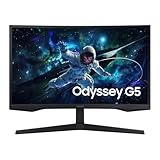
- QHD resolution: Your gaming world, more lifelike than ever before. Packing in 1.7 times the pixel density of Full HD, QHD resolution boasts incredibly detailed, pin-sharp images. Experience a fuller view with more space to take in all the action.
- 1000R curvature: Vivid scenes wrap even more tightly around you. Experience the next level of heart-pounding gaming that's superior to anything you've seen before. The 1000R display fills your peripheral vision and draws you into the character's shoes.
- 165Hz refresh rate 1ms response time(MPRT): Speed through scenes. 165Hz refresh rate eliminates lag for exhilarating gameplay with ultra-smooth action. Jump on enemies right when you see them with a 1ms response time(MPRT) for frames with minimal blur.
- AMD FreeSync: Superfluid entertainment experience. AMD Radeon FreeSync" keeps your monitor and graphics card refresh rate in sync to reduce image tearing. Watch movies and play games without interruptions. Even fast scenes look seamless and smooth
- HDR10: Awe-inspiring graphics with HDR10. A kaleidoscope of shades brings game scenes to life with incredible vibrancy. Uncover the secrets hiding in the shadows with deep dark blacks, luminous whites, and outstandingly detailed resolution.
The price threshold was important. Near the cost of faster 1440p IPS monitors, the G5’s motion smearing, weak HDR and limited stand made it difficult to recommend. A faster 27-inch IPS display could offer cleaner motion, wider viewing angles and often better brightness, although it would not provide the same large curved VA experience.
Independent reader supportYour contribution helps us test, update, and keep practical guides available for everyone.Who should buy it?
Buy the LC32G55T if:
- You want a large, immersive 16:9 1440p screen.
- You mostly play in a dark or moderately lit room.
- You value deep blacks more than wide viewing angles.
- Your games are cinematic, slower-paced or less sensitive to dark smearing.
- You find it substantially cheaper than newer, faster alternatives.
- You can accept a tilt-only stand or plan to use a VESA arm.
Skip it if:
- You play competitive shooters and are sensitive to motion blur.
- You expect the “1ms” label to mean consistently sharp 1ms transitions.
- You want convincing HDR.
- You need height adjustment, swivel, USB-C or a USB hub.
- The monitor will often be viewed from the side or shared by several people.
- PS5 VRR is your main reason for buying.
- A newer IPS monitor is available at a similar price.
Buying a used or refurbished LC32G55T in 2026
Samsung’s regional product page currently marks this model “Not for sale,” so remaining stock, used units and refurbished examples are the relevant sources now. Before buying, confirm that the listing includes the correct stand or compatible VESA hardware, power supply and cables.
Free tools Windows power users keep installed
One-click scans. No signup required.
Test the panel for dead or stuck pixels, uneven backlighting, excessive bleed, HDMI and DisplayPort operation, headphone output, adaptive sync and the ability to select 144Hz. Also inspect the hinge and stand, since the original stand has limited adjustment and replacement parts may be difficult to find. Do not pay a premium merely because the monitor says “1ms” or “HDR10”; those labels do not solve its core weaknesses.
Alternatives
A faster 27-inch IPS monitor such as the Gigabyte M27Q is the better direction for competitive gaming, wider viewing angles, brightness and features, but it is not a like-for-like replacement for the G5’s 32-inch curved VA format.
The ViewSonic VX2758-2KP-MHD is another older 27-inch alternative identified by RTINGS as brighter, faster and wider-viewing than the G55T. Newer Samsung G55A, G55C and G50D models may offer updated specifications, but the G5 name covers different products; check the exact model number, panel type, resolution, refresh rate and curve before comparing them.
Verdict
The Samsung Odyssey G5 LC32G55T was a reasonable 2022 budget monitor, not a high-performance 144Hz display. Its large 1440p image, deep VA contrast and 1000R curve made it enjoyable for dark-room and cinematic gaming, while low input lag and variable refresh rate added genuine value.
Its slow pixel transitions were the decisive compromise. Add weak HDR, narrow viewing angles and a tilt-only stand, and the G5 becomes a monitor to buy for its size and contrast—not for its “1ms” badge. Buy it only when the price is clearly below faster modern alternatives and you are comfortable with its limitations.
Quick Recap
Product prices and availability are accurate as of the date/time indicated and are subject to change. Any price and availability information displayed on Amazon at the time of purchase will apply.




