Free tools Windows power users keep installed
One-click scans. No signup required.
sbcht16.dll is a legacy Creative AudioPCI driver resource associated with Sound Blaster PCI128 hardware. If Windows says it is missing, the safest repair is usually to restore the complete Creative driver package, not to download the DLL by itself.
Start with this diagnostic checklist
Before changing files, note:
- Which program reports the error: an old game, audio application, Windows startup item, or installer
- When it appears: immediately after sign-in, only when launching one program, or whenever Windows detects the sound card
- Whether the PCI128 card is still installed: check Device Manager before reinstalling anything
- Your Windows architecture: open Settings > System > About and check System type
- Whether the problem started after a scan, cleanup, driver change, or Windows reinstall
These details determine whether you need a Creative driver, an application repair, or removal of an obsolete startup entry.

As an Amazon Associate I earn from qualifying purchases.
What is sbcht16.dll?
sbcht16.dll is identified as AudioPCI Driver Resources, a file associated with the Sound Blaster PCI128 driver software from Creative Technology Ltd.
What’s actually slowing this PC down?
Pick the symptom - the matching free tool is one click away.
It is not:
- A Windows system DLL
- A Microsoft Visual C++ runtime
- A DirectX component
- A .NET Framework file
- A general-purpose audio library for every Sound Blaster card
Historical PCI128 driver packages contain related resource files with similar names. The 16 in sbcht16.dll should not be treated as proof that the file is a 16-bit Windows DLL. The filename belongs to a legacy resource-file naming family, while public inventories identify the related files as 32-bit-era driver components.
#1 Best Overall

- HIGH-RESOLUTION AUDIO - Delivers ultra-clear playback with 32-bit / 384 kHz and up to 120 dB SNR
- SURROUND SOUND - Supports discrete 7.1-channel analog output for immersive multi-channel audio on your PC
- VERSATILE CONNECTIVITY - Connects effortlessly to multi-channel PC speaker systems, SPDIF output and headset outputs, mic-in, as well as line-in sources
- ALL-NEW CREATIVE NEXUS APP - AutoEq customization that allows users to simulate the frequency response of various headphones for a tailored listening experience
- COMPACT LOW-PROFILE DESIGN - The card is 10.5 cm in length and comes with a half-height bracket to ensure compatibility with smaller cases and different build needs
That distinction matters on modern Windows. A 32-bit legacy driver resource may be usable by an older 32-bit application, but the PCI128 driver itself may still be incompatible with a 64-bit version of Windows.
Fix 1: Identify the card and reinstall the Creative driver
This is the most likely solution when the error began after reinstalling Windows, removing Creative software, replacing a hard drive, or cleaning old drivers.
Creative’s archived PCI128 packages were separated by model and operating system. The archive includes packages for Windows 9x, Windows NT 4.0, and Windows 2000, Me, and XP. Package names include:
Do these 3 things before closing this tab:
1Scan for outdated or missing drivers - takes under a minute2Clear out junk files and repair common Windows errors3Fix the driver behind crashes, sound loss and screen glitchesSBPCI128Setupus_w9x.exeSBPCI128Setupus_wnt.exeSBPCI128Setupus_w2k.exe- Older model-specific PCI128 installers
Do not select a package merely because its filename contains “PCI128.” Different cards can use different drivers.
Check the exact hardware model
- Press Windows key + X.
- Select Device Manager.
- Expand Sound, video and game controllers.
- Look for a Sound Blaster or AudioPCI entry.
- If it is missing, expand Other devices and look for Multimedia Audio Controller or an item with a yellow warning icon.
- Open the device’s Properties.
- Select the Details tab.
- Choose Hardware Ids from the Property list.
- Record the displayed identifiers before downloading a driver.
The physical card may also show a model number such as CT4700, CT4750, or CT4751. Use the exact model and the operating system named by the archived Creative package.
Install the package
- Obtain the installer from Creative’s archived support pages or original installation media.
- Right-click the installer and select Properties.
- Open the Compatibility tab.
- If the package is intended for an older Windows release, select Run this program in compatibility mode for and choose the closest supported version.
- Select Run this program as an administrator.
- Click Apply, then OK.
- Run the installer.
- Allow it to install the device driver and its associated applications or resources.
- Restart Windows.
- Return to Device Manager and confirm that the audio device no longer has a warning icon.
A successful repair means the original program starts without the missing-file message and the sound card appears normally in Device Manager. If the installer refuses to run, reports that it cannot find compatible hardware, or leaves the warning icon in place, do not copy sbcht16.dll into a Windows folder. The driver package or hardware is probably incompatible with that Windows installation.
When the manual process means hunting through old packages and guessing which of several Creative drivers is appropriate, Outbyte Driver Updater can scan for outdated or missing drivers and identify what needs attention. Its free scan shows the detected issues, while driver installation and repair are handled by the full version; it is optional, and a matching Creative package remains the preferred source for this specific legacy device.
Fix 2: Repair the application or game that reports the error
If the PCI128 card works and only one old application reports sbcht16.dll, the application may have its own incomplete installation.
Try these steps:
- Restart Windows and launch another audio program.
- If other programs play sound normally, focus on the application named in the error.
- Open Settings > Apps > Installed apps.
- Select the affected program.
- Choose Advanced options, if available.
- Select Repair.
- If Repair is unavailable or does not help, uninstall the program.
- Restart Windows.
- Reinstall the program from its original installer or trusted distribution source.
For a game installed through a launcher, use the launcher’s Verify, Repair, or Verify integrity of files command before reinstalling the entire game.
Rank #2
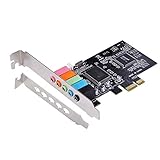
- PCIe sound card, 5.1 stereo audio card.
- Easily convert the PC into a cinematic entertainment system by providing a 5.1 3D stereo surrounding sound.
- With low profile bracket for 2U case, your best choice of sound card for PC desktop.
- 16-bit multimedia digital signal editing decoder inside, Supports 32/64-bit audio processing, recording and playback.
- Supports direct sound, A3D and EAX, HRTF 3D tone. Supports Windows XP / 7 / 10.
Do not assume the missing DLL belongs beside the game. It may be part of the Creative driver installation, an old application directory, or an abandoned startup component. The correct location can only be established from the original installer and the executable that requests it.
If several DLLs are missing from the same program, reinstall the complete application or driver package. Replacing files individually usually creates a chain of new dependency errors.
Quick wins for a faster PC:
Scan for outdated or missing drivers - takes under a minuteDriver Scan →Clear out junk files and repair common Windows errorsFree Scan →Fix 3: Check Windows Security quarantine
An antivirus scan can remove or quarantine a legitimate legacy driver resource, particularly after a cleanup or security scan.
- Open Start.
- Type Windows Security.
- Open the app.
- Select Virus & threat protection.
- Click Protection history.
- Review recent detections.
- Expand any item that identifies the Creative installer or
sbcht16.dll. - Check the file path and source carefully.
Prefer reinstalling the complete driver from Creative’s archived package rather than restoring an isolated DLL. Restore a quarantined file only when you have confirmed that it came from a legitimate, unchanged Creative installer. Do not disable antivirus protection to force an unknown DLL into Windows.
If Windows Security repeatedly removes the file after reinstalling it, stop and investigate the installer source and file signature. A repeated detection is not evidence that the file should be excluded from protection.
Fix 4: Remove an obsolete startup reference
The PCI128 card may no longer be installed. In that case, restoring sbcht16.dll can hide the real problem rather than solve it.
The Tool Desk
Outbyte Driver Updater FREEScan for outdated or missing drivers - takes under a minuteDriver Scan →Outbyte PC Repair FREEClear out junk files and repair common Windows errorsFree Scan →If the error appears during sign-in but no current application needs the card:
- Press Ctrl + Shift + Esc to open Task Manager.
- Select Startup apps.
- Look for an old Creative, AudioPCI, or unknown audio entry.
- Right-click a clearly obsolete entry and select Disable.
- Restart Windows.
Also check Settings > Apps > Installed apps for obsolete Creative software. Uninstall it if the PCI128 card has been removed and no legacy program still depends on it.
Rank #3
If the startup entry is not visible in Task Manager, identify the executable named in the error or inspect Event Viewer:
- Right-click Start.
- Select Event Viewer.
- Open Windows Logs > Application.
- Look for an error at the time the message appeared.
- Record the application or executable name.
Do not delete random registry entries based only on the DLL filename. If the message comes from an abandoned application, uninstalling that application is safer than restoring its old dependencies.
Recommended Free Tools
Fix 5: Check compatibility with Windows 10 or Windows 11
Creative classifies Sound Blaster PCI128 as End of Service Life. Its archived packages target older Windows releases, including Windows 9x, NT 4.0, Windows 2000, Me, and XP.
That means an XP-era installer may not work reliably on Windows 10 or Windows 11, especially on a 64-bit installation. Compatibility depends on the exact card model, driver package, Windows build, and hardware environment.
If Windows rejects the driver:
- Confirm that the card is physically installed.
- Check the hardware ID in Device Manager.
- Try the correct archived package only if it matches the card.
- Use compatibility mode for the installer.
- Restart and check Device Manager.
- If the device still fails, do not force-install unrelated drivers.
Practical alternatives may include:
- Replacing the PCI128 card with a currently supported sound device
- Running the old application in an older compatible Windows installation
- Using a virtual machine for software that does not need direct access to the physical card
- Removing the obsolete driver and startup entry if the hardware is no longer required
Windows Update should be kept current, but it should not be expected to supply this Creative file.
Fix 6: Verify the file’s location and publisher
If sbcht16.dll exists but Windows says it is damaged or unsuitable, inspect it rather than copying another version over it.
- Note the full path shown in the error or Event Viewer.
- Browse to that location.
- Right-click
sbcht16.dll. - Select Properties.
- Review the General and Details tabs.
- Look for Creative Technology Ltd. or AudioPCI-related file information.
- Open the Digital Signatures tab if one is present.
- Check the signer and signature status.
A file located in a Creative driver directory is more consistent with the expected software than an unexplained copy in a temporary folder. There is no verified reason to place this file manually in both C:WindowsSystem32 and C:WindowsSysWOW64.
On 64-bit Windows:
System32is the operating system’s 64-bit system directorySysWOW64contains many 32-bit Windows components- Neither directory is automatically the correct destination for a third-party Creative resource DLL
The installer should place the file where its driver or application expects it.
Rank #4

- ➤ This sound card uses /HT8738 chip. The chip's ‑to‑noise ratio reaches 120dB, PCI plug‑and‑play interface‑full duplex playback and recording‑HRTF 3D spatial positioning sound effects, supports dircet sound 3D and A3D interfaces.
- ➤ Support for 98 / for / / NT voltage (0.5V~5V).
- ➤ Support 4‑channel surround sound output, support sound library technology, support A3D 1.0 and DS3D, compatible with DirectSound 3D and sound effects. Supports 24‑bit SPDIF, OUT and SPDIF IN at the same time, and supports optical fiber input and output through a daughter card.
- ➤ This card supports music synthesizer, traditional sound card, and supportsfull duplex playback and recording.
- ➤ Support Direct Music ‑SPDIF digital audio indicators: 24‑bit stereo, 44KHzsound sampling recording and playback, 120dB sound quality full duplex playback recording.
Fix 7: Do not use regsvr32 for this file
Do not run:
regsvr32 sbcht16.dll
regsvr32 is intended for DLLs that provide registration entry points such as DllRegisterServer. sbcht16.dll is identified as an AudioPCI driver resource file, and there is no verified evidence that it is a self-registering COM DLL.
Running the command will commonly produce an error stating that the entry point was not found or that the module failed to load. That does not repair a missing Creative driver.
Use the original driver or application installer instead.
Independent reader supportYour contribution helps us test, update, and keep practical guides available for everyone.Fix 8: Repair Windows components only when Windows itself is damaged
SFC and DISM are not the primary repair for sbcht16.dll because this is not identified as a protected Windows file. They will not normally recreate a third-party Creative DLL.
Use them when Windows has broader symptoms, such as damaged built-in applications, failed system services, or multiple Windows files reporting corruption.
Run DISM
- Open Start.
- Type Command Prompt.
- Right-click Command Prompt.
- Select Run as administrator.
- Approve the User Account Control prompt.
- Run:
DISM /Online /Cleanup-Image /RestoreHealth
- Wait for the operation to finish.
- Restart Windows if prompted.
Run System File Checker
Open an elevated Command Prompt again and run:
sfc /scannow
Wait until verification reaches 100 percent. Restart Windows and test the affected program.
Microsoft’s guidance for these commands is available through its System File Checker instructions.
When repeated manual DISM and SFC runs leave you unsure which Windows components changed, Outbyte PC Repair can scan for reported Windows problems and show what needs attention. Its free scan identifies issues, while repair is handled by the full version; it is optional, and it will not replace the correct Creative package when the missing file belongs to that driver.
Fix 9: Use System Restore after a known change
System Restore is useful when the error began immediately after a driver installation, cleanup, or software change and a suitable restore point exists.
Best Value

- REFERENCE-GRADE HI-RES AUDIO – Powered by the ESS ES9039Q2M DAC with up to 130 dB SNR, supporting 32-bit / 384 kHz playback for exceptional clarity and detail, far beyond typical onboard audio
- POWER FOR DEMANDING HEADPHONES – Built-in high-performance headphone amplifier delivers up to 350mW @ 32Ω. Easily drives studio-grade headphones
- LOW-LATENCY PERFORMANCE – Supports DSD256 and ASIO 2.3 for high-resolution playback and low-latency audio, ideal for music, gaming, and PC audio workflows.
- PRECISION SOUND PERSONALISATION – 10-band parametric EQ + AutoEq in Creative Nexus add meaningful personalization and offers advanced audio tuning and control
- FLEXIBLE CONNECTIVITY – Coaxial output and optical input for seamless integration with desktop audio setups.
- Press Windows key + R.
- Type:
rstrui.exe
- Press Enter.
- Select Next.
- Choose a restore point from before the error began.
- Select Scan for affected programs if available.
- Review the changes.
- Select Next, then Finish.
System Restore can remove later drivers, applications, and settings, so it is a fallback rather than the first repair. It does not replace personal files, but you should still save open work before starting.
PC Slower Than It Used to Be?
A free scan shows the junk files, broken settings and background clutter dragging Windows down - then fixes them in one click.Free scan · Windows 10 & 11Outdated Drivers Are Slowing You Down
One free scan finds every outdated or missing driver and matches the right update for your exact hardware.Free scan · exact hardware matchAvoid standalone DLL downloads
Do not download sbcht16.dll from a random DLL website and copy it into System32 or SysWOW64. That approach can provide:
- The wrong PCI128 model’s file
- The wrong language or resource variant
- An incompatible build
- A modified or malicious file
- A file placed in the wrong directory
- A new missing dependency
Use Creative’s archived support pages or original installation media for the complete driver package. If no suitable Creative package exists and the hardware is obsolete, replacing the device or running the legacy software in a compatible environment is safer than using an unverified DLL mirror.
Frequently asked questions
Is sbcht16.dll part of Windows?
No. It is associated with Creative Sound Blaster PCI128 driver software and is not a normal Microsoft Windows component.
Does the number 16 mean it is a 16-bit DLL?
Not necessarily. Similar Creative resource filenames use both 16 and 32 suffixes. The filename alone does not prove the file’s executable bitness.
Should I copy it to System32?
No. Restore it through the correct Creative installer and preserve the installer’s directory structure.
Will installing Visual C++, DirectX, or .NET fix it?
There is no verified evidence that those Microsoft runtimes supply sbcht16.dll. Install them only when a separate application specifically requires them.
What if I have a different Sound Blaster card?
Use the driver for that exact model. PCI128 files are not universal Creative audio drivers.
What if the PCI128 card is no longer installed?
Remove the obsolete Creative software or disable the abandoned startup entry. Restoring the DLL is unnecessary if no current hardware or application requires it.
What if the message says the file is not designed for Windows?
Treat that as a possible compatibility, corruption, or architecture problem. Verify the source and publisher, then use a matching driver package. Do not substitute a random copy.
Should I reinstall Windows?
Usually not. Reinstall the matching Creative driver or affected application first. Consider Windows repair only when there are broader system problems, not for this isolated third-party DLL error.
Quick Recap
Product prices and availability are accurate as of the date/time indicated and are subject to change. Any price and availability information displayed on Amazon at the time of purchase will apply.




