
Short answer: Tearscape adapts Soulslike ideas into a compact, 2D top-down pixel-art adventure built around stamina, limited healing flasks, upgradeable stats, branching routes, shortcuts and tools that reveal hidden paths. Bloodborne is a third-person PS4 action RPG whose faster, more offensive combat combines transforming melee weapons, firearms and the Regain counterattack system with a gothic city joined by interconnected areas, hubs and changing Chalice Dungeons. The games share danger, discovery and demanding encounters, but their moment-to-moment priorities are different: Tearscape emphasizes route reading and ability-gated secrets, while Bloodborne emphasizes aggressive positioning and weapon-driven pressure.
At a glance: two different ways to apply Soulslike ideas
Both games ask you to learn hostile spaces, choose when to attack and treat exploration as a source of risk and reward. That common ground can make them look comparable, yet their formal descriptions point to different play loops. Tearscape is presented as a 2D, top-down action-adventure with pixel art inspired by Game Boy Color classics. Its combat calls attention to stamina, precise attacks and dodges, a finite supply of healing flasks, stat upgrades and dungeon tools that can improve fighting or open routes. Bloodborne is a third-person action RPG set in a detailed gothic city. Its official combat material stresses speed, aggression, quick dodges, firearms, transforming blades and the Regain System, which lets a player recover recently lost health by striking back with a bladed weapon during a short window.
| # | Preview | Product | Price | |
|---|---|---|---|---|
| 1 |

|
Bloodborne PS4 Game of the Year Edition | $34.95 | Buy on Amazon |
| 2 |
![Bloodborne - Game Of The Year Edition [PS4]](https://m.media-amazon.com/images/I/51rSUixk1XL._SL160_.jpg)
|
Bloodborne - Game Of The Year Edition [PS4] | $44.99 | Buy on Amazon |
| 3 |
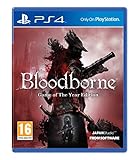
|
Bloodborne - Game of the Year (PS4) | $39.91 | Buy on Amazon |
| 4 |

|
Bloodborne (PS4) | $25.99 | Buy on Amazon |
As an Amazon Associate I earn from qualifying purchases.
That distinction is more useful than asking which game is “harder” or “better.” The available official descriptions establish design intentions and named systems, not comparative measurements of difficulty, input response, map quality or overall superiority. Experiential verdicts would require playing both games or relying on an identified reviewer.
| Comparison point | Tearscape | Bloodborne |
|---|---|---|
| Camera and presentation | 2D top-down action-adventure; pixel art inspired by Game Boy Color classics | Third-person PS4 action RPG in a detailed gothic city |
| Combat emphasis | Precise strikes and dodges, stamina management, limited healing flasks and stat upgrades | Faster movement and dodging, aggressive enemies, transforming weapons, firearms and Regain |
| How space opens up | Branching paths, shortcuts, secrets and tools or abilities that expose concealed routes | Interconnected areas, hubs used for travel and refuge, and a journey beyond Yharnam |
| Optional or repeatable dungeon structure | Hidden dungeons with challenges, items and enemies | Multi-level Chalice Dungeons with traps, creatures, rewards and changing layouts |
| Best-supported distinction | Retro-styled, top-down exploration in which abilities help decode the map | Offensive, weapon-transforming combat embedded in a connected gothic city |
How the combat systems differ
Tearscape: deliberate actions under stamina and flask limits
Tearscape’s Steam description says that each strike and dodge matters. The practical implication is a combat loop in which committing to an attack or evasive move has a resource cost and a positioning consequence. Stamina management is named explicitly, so the game’s combat presentation asks you to watch that meter rather than treat attacks and dodges as unlimited actions. Healing flasks are also described as limited, making recovery another decision to budget during a dangerous area or encounter.
#1 Best Overall
- Bloodborne Game of The Year
- If Bloodborne needs to be summed up, then the prevalent themes would be: exploring the fearsome unknown, intense life-and-death battles, and a familiar yet uniquely new online experience
- From the makers of the infamous Souls series, From Software's PS4 exclusive will attempt to take the tried and tested formula of giving players a sense of achievement to the next stage - especially when Miyazaki, the original creator of the Souls series is back at the helm
- What is promised is a harrowing experience like no other, and fans of tension, discovery, and straight up fun will sure to be excited to play Bloodborne
- If you have played the previous Souls games, then this one is a definite must buy
The same description identifies upgradeable stats and dungeon tools that enhance combat. Those systems suggest two parallel forms of preparation: permanent or semi-permanent character development through stats, and situational advantages supplied by tools discovered in the world. Nintendo’s listing likewise highlights combat, tools, dungeons and challenging bosses. These are publisher and platform descriptions; they do not provide frame data, exact stamina costs, invulnerability timings or an independent difficulty ranking.
Bloodborne: speed, pressure and the Regain window
Bloodborne’s producer, Masaaki Yamagiwa, described an intentionally more offensive style with quicker movement and dodging, aggressive enemies and transforming blades. Firearms are part of the combat vocabulary as well. Instead of presenting every exchange as a retreat-and-recover cycle, the official explanation encourages pressure when an enemy has just hurt you.
Yamagiwa defined the Regain System this way: “The Regain System allows players to recover health lost after taking damage by striking back at enemies within a short time period with a bladed weapon.” In other words, recent damage creates a brief opportunity to regain some health through a successful counterattack. That is a named healing interaction, not a claim that Bloodborne has no other resource management. Likewise, Tearscape’s cited descriptions do not establish whether it has a counterattack mechanic; they emphasize stamina and limited flasks instead.
What the contrast means during an encounter
The clearest supported contrast is where each game places its attention. Tearscape foregrounds the cost of acting and the scarcity of flask-based recovery. Bloodborne foregrounds momentum: move quickly, use a transforming weapon or firearm, and consider answering damage with an immediate blade strike while Regain is available. Both descriptions involve deliberate decision-making, but “deliberate” does not mean identical pacing. A top-down game communicates threats through a wider overhead view, while Bloodborne’s third-person perspective presents the fight from inside the surrounding space.
Do not convert that contrast into an unsupported claim that one game has tighter controls, more forgiving timing or a higher skill ceiling. No comparative test or named statistic is supplied for those judgments.
Healing and survivability: flasks versus retaliation
Tearscape’s finite recovery loop
Limited healing flasks make survival partly a planning problem. If recovery is finite within the game’s stated loop, taking damage has a second cost: it can reduce the resources available for the next fight, room or boss attempt. Stamina management compounds that pressure because an exhausted character may have fewer safe options immediately after an attack. The official descriptions do not state the flask count, refill rules, upgrade path or exact stamina formula, so those details should not be assumed.
Bloodborne’s recoverable recent damage
Bloodborne’s Regain system changes the meaning of a hit. The producer’s explanation describes a short period in which striking back with a bladed weapon can recover health lost from damage. The system therefore rewards recognizing when an exchange is still active instead of automatically disengaging. The source does not specify the precise duration, amount recovered or every condition that enables Regain, so those values are not stated here.
Recommended Free Tools
Rank #2
- Bloodborne - Game Of The Year Edition [PS4]
These are different recovery philosophies, not directly comparable healing quantities. Tearscape’s cited material tells you to account for a limited flask supply; Bloodborne’s tells you that recent damage can become an invitation to counterattack.
Weapons, upgrades and tools
What Tearscape gives you
Tearscape combines ordinary combat decisions with progression systems found through exploration. Its descriptions name stat upgrades and dungeon tools. Tools can make encounters easier and can also open hidden routes, so the same discovery may have both a combat function and a navigational function. Nintendo’s listing reinforces the role of tools, dungeons and bosses without specifying a complete inventory or a fixed order in which items are obtained.
That dual role matters when reading the map. A blocked passage is not necessarily a purely decorative secret; it may be waiting for a tool or ability acquired elsewhere. Conversely, a tool discovered in a dungeon may be useful outside that dungeon. The sources support this general ability-linked structure, but not a full item list or a prescribed route through the game.
What Bloodborne gives you
Bloodborne’s official combat overview centers on transforming melee weapons and firearms. A transforming blade can change the range or feel of an attack set, while a firearm contributes to the game’s aggressive, reactive style. The cited material does not enumerate every weapon, upgrade tier or ammunition rule, so a comparison should stay at the level of the systems the producer actually describes.
The Tool Desk
Outbyte PC Repair FREERepair Windows errors before they cause bigger problemsFix Now →Outbyte Driver Updater FREEFix the driver behind crashes, sound loss and screen glitchesFind Drivers →The difference is one of emphasis. Tearscape’s tools are explicitly tied to both combat improvement and access to concealed paths. Bloodborne’s named combat identity comes from how weapon transformation, gun use, quick movement and Regain work together during an encounter.
Exploration and map structure
Tearscape: a non-linear map built around discovery
Tearscape’s store descriptions present an interconnected, non-linear world with branching paths, shortcuts, secrets and hidden dungeons. Tools and abilities can open concealed routes, making exploration a process of remembering obstacles and returning when your capabilities change. A shortcut is not merely a convenience: it can connect a later discovery to an earlier safe area and alter how you approach repeated trips through dangerous territory.
The overhead perspective supports a map-reading style in which route choices, blocked passages and nearby branches are part of the same visible spatial problem. That does not prove that every secret is visible from the camera or that the world has a particular size. It does establish that route discovery and ability-gated access are central parts of the game’s published pitch.
Rank #3
- A Terrifying New World: Journey to a horror-filled gothic city where deranged mobs and nightmarish creatures lurk around every corner.
- Strategic Action Combat: Armed with a unique arsenal of weaponry, including guns and saw cleavers, you'll need wits, strategy and reflexes to take down the agile and intelligent enemies that guard the city's dark secrets.
- A New Generation of Action RPG: Stunningly detailed gothic environments, atmospheric lighting, and advanced new online experiences showcase the power and prowess of PlayStation 4.
Bloodborne: linked locations with hubs
Bloodborne’s producer describes a journey that begins in Yharnam and continues to other locations. Creator Hidetaka Miyazaki explained the structure as a combination of linked areas and central hubs: “So every area is linked in one way or another much like the first Dark Souls, but you also have a hub system like Demon’s Souls.” In this model, the world is not a single uninterrupted road. Areas connect to one another, while hubs function as warp points and refuges.
Quick wins for a faster PC:
Fix the driver behind crashes, sound loss and screen glitchesFind Drivers →Clear out junk files and repair common Windows errorsFree Scan →The hub distinction changes how travel is understood. A connected level can support shortcuts and spatial surprises, while a hub provides a deliberate return point from which to travel elsewhere. The official comments do not supply a complete map or say that every region connects directly to every other region; “linked in one way or another” is the supported level of precision.
How the two forms of non-linearity differ
Tearscape makes the act of finding routes and using abilities to expose them a headline feature. Bloodborne’s sources describe a connected journey organized alongside hubs. Both can make backtracking meaningful, but the evidence does not establish that either map is larger, more intricate or more rewarding. Their documented structures simply give players different reasons to pay attention: Tearscape to blocked routes and hidden shortcuts, Bloodborne to connections between regions and the travel role of hubs.
Dungeons and optional spaces
Tearscape’s hidden dungeons
Tearscape’s Nintendo listing describes hidden dungeons containing challenges, items and enemies. Because these spaces are presented as discoveries within a non-linear world, finding one is part of the exploration loop rather than only a separate menu selection. The description does not state how many hidden dungeons exist, whether their layouts are randomized or how their rewards are distributed. Those details remain unspecified.
Bloodborne’s Chalice Dungeons
Bloodborne’s Chalice Dungeons descend into underground ruins and are described by PlayStation as multi-level spaces containing traps, creatures and rewards. Their defining structural difference is variability: the layouts change whenever a portal is opened. That makes them distinct from a single fixed dungeon route and gives the underground content a repeatable, changing form.
Free tools Windows power users keep installed
One-click scans. No signup required.
The two dungeon concepts should not be merged into one category. Tearscape’s published emphasis is on hidden dungeons discovered in the world and the challenges or items inside them. Bloodborne’s is on a multi-level underground system whose layout changes on entry. The sources do not establish whether Tearscape’s dungeons are procedurally generated, nor do they claim that Bloodborne’s Chalice Dungeons are the game’s only optional areas.
Independent reader supportYour contribution helps us test, update, and keep practical guides available for everyone.Presentation and perspective
Tearscape’s top-down pixel-art frame
Tearscape is described as a 2D top-down action-adventure with pixel art inspired by Game Boy Color classics. The camera places the character and nearby routes in a shared overhead field, and the retro presentation is part of the game’s identity rather than a neutral technical detail. That framing pairs naturally with a map built from branches, shortcuts and hidden entrances.
Rank #4
- A terrifying new world: journey to a horror-filled gothic city where deranged mobs and nightmarish creatures lurk around every corner
- strategic action combat: armed with a unique arsenal of weaponry, including guns and saw cleavers, you'll need wits, strategy and reflexes to take down the agile and intelligent enemies that guard the city's dark secrets
- a new generation of action RPG: stunningly detailed gothic environments, atmospheric lighting, and advanced new online experiences showcase the power and prowess of the PlayStation 4 system
- ever-changing chalice dungeons to explore: use Holy chalices to gain entrance to a network of vast underground ruins, filled with traps, beasts, and rewards, to explore and conquer alone or with others. These procedurally generated dungeons offer brand new challenges to master, and can be uploaded or shared with friends.Subtitle
Bloodborne’s third-person gothic city
Bloodborne is identified by PlayStation as a PS4 action RPG set in a detailed gothic city. The third-person camera keeps the character, weapon and immediate threats at the center of the view while the environment supplies the architectural context. Its presentation supports the producer’s description of aggressive enemies, faster movement and transforming blades, but the source material does not justify a claim about graphical quality relative to Tearscape.
Which game fits which player?
Choose Tearscape if you want
- A top-down viewpoint and pixel-art presentation inspired by Game Boy Color-era classics.
- Combat decisions framed around stamina, precise attacks and dodges, and a limited flask supply.
- A non-linear map where shortcuts, secrets and branching paths are explicit goals.
- Tools or abilities that can both improve combat and unlock concealed routes.
- Hidden dungeons discovered as part of exploring the main world.
Choose Bloodborne if you want
- A third-person action RPG set in a detailed gothic city.
- Faster movement and dodging, aggressive enemies, transforming melee weapons and firearms.
- A named counterattack-healing mechanic that rewards striking back soon after taking damage.
- Connected regions supported by hubs that act as warp points and refuges.
- Multi-level Chalice Dungeons whose layouts change whenever a portal is opened.
These are preference-based distinctions, not quality rankings. The cited material does not prove that either game is more difficult, more responsive or better designed.
Release and platform context
Steam lists Tearscape’s release as February 2, 2026. Nintendo UK lists its Switch version for August 26, 2026. Those are separate storefront entries, so the date and platform should be read together rather than treated as one universal release date. Bloodborne’s current PlayStation page identifies it as a PS4 game and lists March 24, 2015 as its release date.
Storefront metadata can change, especially for platform listings. Check the relevant regional store page for current availability, edition information and any later date changes before buying.
What the evidence does—and does not—settle
The official listings and developer statements establish the named mechanics and broad level structures described above. They do not provide a controlled comparison of difficulty, responsiveness, boss design, map size, completion time, frame rate or player satisfaction. They also do not support a universal claim that one title is the better introduction to Soulslike games.
A fair reading is therefore categorical rather than numerical. Tearscape’s documented identity is a compact, top-down exploration adventure in which stamina, flasks, tools and route discovery interact. Bloodborne’s documented identity is a faster third-person action RPG in which transforming weapons, firearms and Regain operate inside a connected gothic setting with hubs and variable underground dungeons. Deciding between them depends on which of those structures you want to learn, not on a statistic the sources do not provide.
What’s actually slowing this PC down?
Pick the symptom - the matching free tool is one click away.
Bottom line
Tearscape and Bloodborne share an interest in dangerous exploration and consequential combat, but they ask different questions of the player. Tearscape asks you to read a branching map, manage stamina and finite flasks, and remember where a newly acquired tool can open the world. Bloodborne asks you to maintain offensive momentum with quick movement, transforming weapons and counterattacks enabled by Regain, while navigating connected regions, hubs and changing Chalice Dungeons. Treat that as a design comparison—not a claim that one is harder or superior—and the choice becomes straightforward: pick the top-down, ability-gated exploration loop or the faster, weapon-centered gothic action RPG.
Quick Recap
Product prices and availability are accurate as of the date/time indicated and are subject to change. Any price and availability information displayed on Amazon at the time of purchase will apply.

