The Tool Desk
Outbyte Driver Updater FREEScan for outdated or missing drivers - takes under a minuteDriver Scan →Outbyte PC Repair FREEClear out junk files and repair common Windows errorsFree Scan →There is no single best PUBG headset. The right choice depends on accurate positional imaging, clear mids, low-latency connectivity, long-session comfort, microphone quality, and compatibility with your platform. For most players, a reliable stereo headset or low-latency 2.4 GHz wireless model is a better starting point than a product chosen for its “7.1” badge, maximum bass, or driver size.
This guide explains what actually improves PUBG audio, compares headset types and current candidates, and provides a setup method that avoids the most common spatial-audio and EQ mistakes.
As an Amazon Associate I earn from qualifying purchases.
Quick picks: which PUBG audio setup fits you?
| Best fit | Recommended direction | Connection | Main advantage | Important drawback |
|---|---|---|---|---|
| Simple budget setup | HyperX Cloud III | Wired | Complete headset with boom microphone and broad compatibility | No wireless freedom; verify current cable and platform details |
| Budget wireless | Turtle Beach Stealth 600 Gen 3 | 2.4 GHz and Bluetooth | Low-latency wireless convenience at the value end | Its bass-forward tuning may mask detail for some players |
| Quiet-room open back | Drop + EPOS PC38X or Philips SHP9500 plus a microphone | Wired | Open, natural presentation and clear midrange | Leaks sound and blocks almost no outside noise |
| Multi-device wireless | SteelSeries Arctis Nova 7 | 2.4 GHz, Bluetooth and USB-C | Convenient PC, console and mobile flexibility | Software and platform behavior require careful setup |
| Premium sound and battery | Audeze Maxwell 2 | USB-C wireless, Bluetooth and wired | Planar drivers, long battery life and detachable microphone | At 560 g, it is heavy for players sensitive to weight |
| Premium wired | Beyerdynamic MMX 300 Pro | Wired | No battery management and a conventional boom-mic design | No wireless or Bluetooth functionality |
These are category matches, not universal rankings. Independent testing from RTINGS and SoundGuys evaluates several relevant factors—including positional rendering, comfort, frequency response, microphone performance, isolation, battery life, price and availability—rather than treating branding as proof of competitive performance.
Free tools Windows power users keep installed
One-click scans. No signup required.
What matters most for PUBG audio?
PUBG rewards the ability to separate quiet mechanical sounds from louder effects and place them in three-dimensional space. You want to distinguish nearby and distant footsteps, reloads, weapon swaps, healing, vaulting, and gunfire while still understanding teammate voice chat.
#1 Best Overall

- Almighty Audio — Custom-designed Nova Acoustic System features best-in class audio for gaming with High Fidelity Drivers. Fully customize your ideal sound experience with a first-in gaming Pro-grade Parametric EQ.
- 360 degree Spatial Audio - Immersive surround sound transports you to the gaming world, letting you hear every critical step, reload, or vocal cue to give you an advantage. *Fully compatible with Tempest 3D Audio for PS5 / Microsoft Spatial Sound
- Adjustable for Perfect Fit — The ComfortMAX System includes height-adjusting, rotating earcups with AirWeave memory cushion and a stretchy band. The lightweight form of the headset keeps you comfortable no matter how long you play.
- Bidirectional Noise-Cancelling Mic — The ClearCast Gen 2 mic silences background noise by up to 25dB on any platform to give you crystal clear comms. Fully retract the mic into the earcup for a sleeker look.
- Multi-Platform Support - Easily connect to any gaming console with a 3.5mm jack, such as PlayStation, PC, Xbox, or Switch. Works great with mobile devices as well.
Imaging
Imaging is how precisely headphones place a sound from left to right and, through spatial cues, in front, behind, above or below you. Strong imaging makes a sound feel anchored rather than vaguely “somewhere on the left.” This is generally more important for PUBG than an especially large or cinematic soundstage.
Soundstage and separation
Soundstage is the perceived size and openness of the audio space. A larger stage can feel immersive, but it does not automatically improve direction finding. A headset can sound spacious while placing front and rear sounds ambiguously.
Separation describes how well individual sounds remain distinct when several happen at once. Good separation helps you hear a reload beneath gunfire or footsteps beneath environmental noise.
Recommended Free Tools
Frequency response and detail
Frequency response describes the balance of bass, mids and treble. Footsteps and many mechanical cues occupy the midrange and upper-midrange, while explosions and engine noise generate substantial bass. Excessive bass can make a headset exciting but obscure quieter cues.
Detail retrieval is the ability to hear low-level information beneath louder sounds. It is affected by the headset’s tuning, distortion, fit, the game mix, your hearing and listening volume. A “footstep booster” cannot create information that the game does not provide.
Latency
Latency is the delay between an in-game sound being generated and reaching your ears. A wired connection is simple and typically low latency. A properly implemented 2.4 GHz gaming connection can also be suitable for competitive play. Bluetooth behavior varies by codec, platform and microphone mode, so Bluetooth-only use should not be your automatic first choice for ranked play.
Isolation and leakage
Isolation blocks outside noise. Leakage is sound escaping from the earcups. Closed-back headsets are usually better for noisy rooms and privacy. Open-back models can sound natural and spacious, but they leak game audio and provide little isolation—an issue if you use a sensitive desktop microphone or share a room.
Microphone noise handling
A headset can have excellent game audio and an average microphone, or the reverse. Assess boom clarity, keyboard and fan rejection, sidetone, flip-to-mute behavior, console compatibility, and game/chat balance separately from headphone performance.
Gaming headset or headphones plus a microphone?
Choose a gaming headset when simplicity matters
- It combines headphones and a boom microphone in one purchase.
- Most models include onboard mute, volume and chat controls.
- Platform-specific wireless dongles can simplify console use.
- It is easier to carry and configure than a separate microphone setup.
The trade-off is that some gaming headsets use excessive bass or poorly implemented virtual surround. Wireless models may cost more than comparable wired headphones, and companion software, firmware support and replacement parts vary.
Choose conventional headphones or IEMs plus a microphone for flexibility
- You may get more sound quality per dollar.
- You can choose open-back, closed-back or in-ear designs independently of the microphone.
- Individual components are easier to replace or upgrade.
- The setup can also serve music, work and other games.
You may need a USB microphone, splitter, DAC, adapter or console-compatible connection. Open-back headphones are also a poor choice where isolation or privacy is important. IEMs can be compact and inexpensive, but fit, seal and comfort are highly personal.
Open-back versus closed-back
| Design | Best for | Advantages | Trade-offs |
|---|---|---|---|
| Open-back | Quiet rooms and players who prefer a spacious presentation | Natural openness, clear midrange and often less heat buildup | Sound leakage, almost no isolation and usually less low-bass impact |
| Closed-back | Noisy rooms, shared spaces and living-room gaming | Better isolation, privacy and bass impact | More heat; excessive bass or enclosure reflections can hurt clarity and imaging |
Open-back is not automatically better for footsteps. A well-tuned closed-back headset can be the better PUBG choice if your room is noisy. Conversely, an open-back headphone can be excellent in a quiet room if its imaging and fit work for you. RTINGS notes that open-back designs may provide an immersive presentation and clear midrange while offering little ambient-noise blocking: see its gaming headset coverage.
What’s actually slowing this PC down?
Pick the symptom - the matching free tool is one click away.
Rank #2

- 【Amazing Stable Connection-Quick Access to Games】Real-time gaming audio with our 2.4GHz USB & Type-C ultra-low latency wireless connection. With less than 30ms delay, you can enjoy smoother operation and stay ahead of the competition, so you can enjoy an immersive lag-free wireless gaming experience.
- 【Game Communication-Better Bass and Accuracy】The 50mm driver plus 2.4G lossless wireless transports you to the gaming world, letting you hear every critical step, reload, or vocal in Fortnite, Call of Duty, The Legend of Zelda and RPG, so you will never miss a step or shot during game playing. You will completely in awe with the range, precision, and audio quality your ears were experiencing.
- 【Flexible and Convenient Design-Effortless in Game】Ideal intuitive button layout on the headphones for user. Multi-functional button controls let you instantly crank or lower volume and mute, quickly answer phone calls, cut songs, turn on lights, etc. Ease of use and customization, are all done with passion and priority for the user.
- 【Less plug, More Play-Dual Input From 2.4GHz & Bluetooth】 Wireless gaming headset adopts high performance dual mode design. With a 2.4GHz USB dongle, which is super sturdy, lag<30ms, perfectly made for gamers. Bluetooth mode only work for phone, laptop and switch. And 3.5mm wired mode (Only support music and call).
- 【Wide Compatibility with Gaming Devices】Setup the perfect entertainment system by plugging in 2.4G USB. The convenience of dual USB work seamlessly with your PS5,PS4, PC, Mac, Laptop, Switch and saves you from swapping cables.
Wired, 2.4 GHz wireless or Bluetooth?
Wired
Wired is the lowest-complexity option. Use a suitable 3.5 mm, USB or controller connection and avoid charging, pairing and dongle-placement concerns. Controller headphone outputs can differ in amplification and noise, while analog cables may require console-specific adapters. Check whether the cable is detachable before buying; for example, RTINGS identifies the wired Cloud III cable as non-detachable.
2.4 GHz wireless
For wireless competitive gaming, 2.4 GHz dongle audio is generally the safer choice. Before buying, confirm:
- The exact dongle and headset edition work with your platform.
- Game/chat mixing is supported on that platform.
- The headset can be used while charging, if that matters to you.
- The dongle has a practical range and does not occupy a port you need.
- Desktop software is optional or available on the device where you intend to configure it.
Do not assume a PlayStation, Xbox and PC edition of the same product family has identical compatibility.
Bluetooth
Bluetooth is useful for phones, music and calls, but latency, codec support and microphone behavior vary. Some headsets use Bluetooth for mobile audio while reserving 2.4 GHz for gaming. Treat Bluetooth as a convenience feature unless your particular device combination proves responsive and reliable.
HRTF, stereo and virtual surround
Stereo does not mean poor positional audio. A well-tuned stereo headset can present excellent directional information. Virtual surround can help some listeners, but it can also add coloration, echoes or front/back confusion.
PUBG has used HRTF processing for directional cues, including opponent gunfire, but the official evidence available for this guide comes from an older Xbox patch note: PUBG’s announcement. Menu labels and implementation may differ between current game editions and platforms, so verify the options in your own client.
The key rule is simple: do not stack processing layers by default. PUBG’s spatial processing, console 3D audio, Windows spatial audio, headset software surround and other virtual-surround systems can interact. SteelSeries warns that games with their own virtual-surround system should not have multiple surround layers enabled simultaneously; its documentation is available here.
Start with plain stereo. Test the game’s HRTF or spatial option on and off using the same controlled audio sample. Then test any headset or operating-system processing separately. Keep whichever setting makes directions clearer—not whichever sounds widest.
PC Slower Than It Used to Be?
A free scan shows the junk files, broken settings and background clutter dragging Windows down - then fixes them in one click.Free scan · Windows 10 & 11Outdated Drivers Are Slowing You Down
One free scan finds every outdated or missing driver and matches the right update for your exact hardware.Free scan · exact hardware matchPlatform advice
PC
PC offers the most control but also the most opportunities for routing mistakes. A wired headset is usually straightforward. For USB or wireless models, select the intended device as Windows’ default playback output and confirm PUBG is routed to that same device. If you use Sonar, route PUBG to Sonar Gaming and assign your physical headset as Sonar’s output; incorrect routing can result in no sound, according to SteelSeries’ support documentation.
PlayStation
Check the exact PlayStation-compatible SKU, USB-dongle behavior, console 3D-audio setting, microphone monitoring and game/chat balance. PC-only EQ, Dolby licensing and software features may not transfer to the console.
Xbox
Xbox compatibility is especially important because wireless editions and spatial-audio support can differ from PlayStation versions. Confirm the exact Xbox model, connection method, chat support and whether any included spatial feature requires a separate license or app.
Rank #3
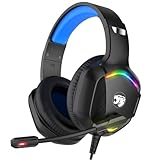
- 【Multi-platform Compatible】 Gaming headset with microphone for PC, PS4, PS5, Xbox One Series X/S (older version requires adapter), Nintendo 3DS, Switch, Laptop, PSP, Tablet, iPad, Computer, Mobile Phone, 3.5mm jack device.
- 【Surrounding Stereo Subwoofer】 Gaming headset with high power 50mm neodymium magnet drivers, greatly enhance the expressiveness and sense of depth of voice playback details, powerful sound quality provide you immersive gaming experience.
- 【Noise Isolating Microphone】Headset integrated onmi-directional microphone can transmit high quality communication with its premium noise isolating function, which enables you to clearly deliver or receive messages while you are in a gamer.
- 【Humanised Design】 Soft and skin-friendly ear cushions, flexible headband with thickening pads, headset weight is only 0.77lb, lightweight and comfortable design provides you with a long-lasting excellent gaming experience.
- 【Professional Gaming Headset】Gaming headphones with 6.5ft high tensile strength, anti-tangle braided cable, rotary volume control and button microphone mute.
Switch and Switch 2
Check handheld and docked use separately. USB-C dongles may need an adapter, and USB or Bluetooth behavior can vary by system mode. A 3.5 mm headset is often the least complicated option, but confirm microphone support and chat requirements for the game edition you use.
Do these 3 things before closing this tab:
1Clear out junk files and repair common Windows errors2Fix the driver behind crashes, sound loss and screen glitches3Repair Windows errors before they cause bigger problemsMobile
Mobile PUBG players must account for USB-C or Lightning compatibility, Bluetooth latency, microphone access, voice-chat behavior and limited EQ controls. A phone may need an adapter, and simultaneous charging and USB audio may require additional hardware. Do not transfer a PC recommendation to mobile without checking the phone, adapter and game edition.
A reliable PUBG audio setup
Menu labels can change between builds and platforms, so use this as a verification path rather than assuming every label is identical.
In PUBG
- Open Settings and select the Audio tab.
- Set Master and Effects/FX volume high enough to hear cues without using unsafe listening levels.
- Reduce music and menu/UI sounds while testing.
- Locate the current HRTF or spatial-audio option, if available.
- Compare HRTF enabled and disabled using the same sound sample or controlled match situation.
- Use only one virtual-surround or spatial-processing layer.
- Start without a “footsteps booster” preset.
In Windows
- Select the intended headset as the default playback device.
- Confirm PUBG is routed to that output.
- Disable enhancements, loudness equalization, normalization and third-party effects while establishing a baseline.
- Use a consistent sample-rate setting for the output and headset software unless the manufacturer specifies otherwise.
- Check that Discord or other communications software is not automatically lowering game volume.
On console
- Select the headset as the audio output.
- Check whether the console’s 3D-audio or spatial mode is active.
- Confirm the headset edition matches the console.
- Test microphone monitoring, sidetone and game/chat balance.
- Do not assume PC software EQ or mixing features are available.
If the sound suddenly seems wrong
- Return to plain stereo.
- Disable third-party EQ, surround, compressor, limiter and enhancement effects.
- Check left/right balance and ensure mono audio is disabled.
- Reconnect the headset or wireless dongle.
- Try another USB port or controller connection.
- Update firmware only through the manufacturer’s official software.
- Compare with another headset to separate a configuration problem from a hardware fault.
- If footsteps are louder but directions are less reliable, undo the processing instead of increasing volume.
EQ: a safer method than a universal “PUBG preset”
There is no universally correct PUBG EQ. Head shape, hearing, ear-pad seal, room noise, platform processing and the headset’s own frequency response all change the result.
- Start flat or with the manufacturer’s neutral preset.
- Listen to the same sounds at different distances and angles.
- If explosions mask footsteps, make a small reduction to excessive sub-bass or mid-bass rather than applying a large treble boost.
- Keep overall volume unchanged while comparing presets.
- Save a neutral preset and a game preset separately.
- Return to neutral if the sound becomes harsh, unnatural or less directional.
EQ cannot repair poor imaging, a damaged cable, severe channel imbalance or incorrect spatial processing. Loudness normalization and compressors may make quiet sounds easier to notice, but they can reduce natural distance and dynamic information. Treat them as optional experiments, not mandatory competitive settings.
Quick wins for a faster PC:
Fix the driver behind crashes, sound loss and screen glitchesFind Drivers →Repair Windows errors before they cause bigger problemsFix Now →Comfort can matter more than a small sound-quality advantage
PUBG sessions commonly last several hours. Check clamp force, ear-pad depth and material, headband pressure, weight distribution, adjustability, heat buildup and replaceable pads. Glasses, hair, earrings and piercings can affect both comfort and the ear-cup seal.
A heavy headset may sound excellent but still be a poor choice if it causes neck fatigue. The manufacturer lists the Audeze Maxwell 2 at 560 g: check the official specifications before buying if weight is a concern.
For a two- to six-hour session, comfort is not a cosmetic preference. A headset that you remove frequently cannot provide a consistent competitive setup.
Microphone and team communication
Evaluate the microphone independently from the headphones. Look for clear speech, background-noise handling, sidetone, flip-to-mute behavior and reliable compatibility with in-game chat and Discord.
A separate USB microphone can outperform a headset microphone, especially with a good conventional headphone or IEM. It also adds desk space, setup complexity and the possibility of echo if both microphone and speaker levels are poorly configured. For most players, a clear boom mic is the better convenience-to-complexity compromise.
Independent reader supportYour contribution helps us test, update, and keep practical guides available for everyone.Best PUBG headphones by budget
Under $75
Prioritize a durable wired stereo headset, usable microphone and comfortable fit. Avoid paying extra for RGB or poorly implemented “7.1” features. Entry-level models such as the HyperX Cloud Stinger 3 may suit basic needs, but availability and current specifications should be checked on the official HyperX store.
Rank #4

- Zero-Latency, Interference-Free Wireless Gaming Headset: Powered by proprietary 2.4GHz wireless technology, the NUBWO G06 ensures flawless connectivity during intense gaming sessions, including FPS and RPG titles. Seamlessly use wireless peripherals (keyboards, mice, controllers) alongside Wi-Fi networks without interference, delivering 0ms audio latency and 100% uninterrupted immersion
- 100-Hour Uninterrupted Gaming: Powered by a 1200mAh high-capacity battery and Proprietary Low-Power Chipset Technology, the NUBWO G06 delivers 50% reduced energy consumption, enabling 100 hours of uninterrupted gameplay
- Dual Wireless Freedom: Equipped with dual wireless technology (2.4GHz + Bluetooth 5.3), the headset ensures zero-compromise multitasking. While the 2.4GHz dongle connects to gaming consoles (PS5, PS4, PC) for ultra-low-latency audio, the Bluetooth 5.3 simultaneously links to your smartphone. Miss no critical calls—even during intense gaming sessions—as a single power button press instantly answers incoming calls without disrupting gameplay
- Triple Mode All Devices Compatible: Seamlessly switch between 2.4GHz wireless (dongle-connected for PC/PS5/PS4), Bluetooth 5.3 (mobile/tablet pairing), and 3.5mm wired modes (Xbox/Switch compatibility) with zero latency, offering universal device adaptability and uninterrupted gaming immersion (Xbox Series only supports 3.5mm wired)
- Immersive Sound Sync for Competitive Edge: Equipped with a 50mm composite diaphragm driver, this headset delivers immersive 3D surround sound—command the explosive audio of RPG epics and pinpoint tactical footsteps in FPS battles. Powered by a proprietary wireless chip, achieve seamless audio-video synchronization for true-to-life immersion
$75–$150: the value sweet spot
This range commonly adds better comfort, more consistent imaging, stronger microphones, 2.4 GHz wireless options and useful software. RTINGS currently includes the Turtle Beach Stealth 600 Gen 3, Philips SHP9500, HyperX Cloud III and Razer BlackShark V2 HyperSpeed among relevant under-$100 options, while noting that tuning and availability vary: see its current coverage.
The HyperX Cloud III is a straightforward wired choice for players who want one complete headset. The Turtle Beach Stealth 600 Gen 3 is worth considering when wireless freedom matters, provided its sound profile works for you and you verify the exact platform version.
$150–$300
You may gain better wireless hardware, microphones, battery life, build quality, multi-device support or premium wired sound. Do not assume you will automatically hear enemy positions proportionally better. The improvement may be comfort and convenience rather than a dramatic competitive advantage.
The SteelSeries Arctis Nova 7 combines 2.4 GHz wireless, Bluetooth, USB-C connectivity and simultaneous Bluetooth use; SteelSeries lists 38 hours of battery life and a fast-charge claim of six hours from 15 minutes. Confirm current specifications and platform compatibility on the official product page.
The Audeze Maxwell 2 targets sound-focused buyers with 90 mm planar magnetic drivers, USB-C low-latency wireless, Bluetooth 5.3, a detachable boom microphone and more than 80 hours of claimed battery life. It is also heavy, and Audeze sells separate PlayStation and Xbox versions: verify the exact edition.
Above $300
Buy this tier for specific benefits such as premium materials, ANC, multi-device convenience, high-end wireless features or long-term ownership—not because a higher price guarantees better PUBG positioning.
The SteelSeries Arctis Nova Elite is a luxury option with features such as multi-device connectivity, ANC and hot-swappable batteries; SoundGuys lists a $599.99 MSRP in its guide. Those features may be valuable, but it is a poor value if your only goal is locating footsteps.
The Beyerdynamic MMX 300 Pro is a premium wired alternative for buyers who want a conventional boom-mic headset without battery management. Check current regional price and stock on the official North American page.
How to score a headset instead of guessing
Use a weighted score that reflects your priorities:
| Criterion | Suggested weight |
|---|---|
| Positional imaging and separation | 25% |
| Comfort and fit | 20% |
| Sound signature and detail | 15% |
| Connection latency and reliability | 15% |
| Microphone and chat controls | 10% |
| Platform compatibility | 10% |
| Price, warranty and availability | 5% |
If you mainly listen to music, reduce the microphone weighting and increase general sound quality. If you play exclusively on console, increase compatibility and chat functionality. Score the headset you can actually use on your platform—not a technically attractive model whose dongle or software does not work there.
Quick Recap
Common buying mistakes
- Choosing the most bass-heavy model: explosions can mask footsteps and reloads.
- Assuming “7.1” is automatically better: virtual surround may help or hurt depending on the implementation and listener.
- Stacking spatial processing: multiple surround layers can add coloration and ambiguity.
- Ignoring the exact platform SKU: product families may have separate PC, PlayStation and Xbox editions.
- Trusting a universal EQ preset: fit, hearing and room conditions differ.
- Ignoring weight and glasses compatibility: discomfort becomes a performance problem over long sessions.
- Using Bluetooth-only audio competitively without testing: latency and microphone behavior vary.
- Paying for a DAC or amp without a problem to solve: it is not a guaranteed positional-audio upgrade.
- Maximizing volume: louder is not the same as clearer, and unsafe listening can damage hearing.
Final decision tree
- Want the simplest complete setup? Choose a wired or 2.4 GHz gaming headset with a usable boom microphone.
- Have a quiet room and value openness? Consider an open-back headset or headphone plus microphone.
- Need isolation? Choose closed-back.
- Already own a good microphone? Consider conventional headphones or IEMs for better component flexibility.
- Want wireless? Prefer a compatible 2.4 GHz gaming connection; treat Bluetooth as a secondary convenience.
- Play on console? Verify the exact edition, dongle support, chat mixing and spatial-audio compatibility before ordering.
- Unsure about virtual surround? Keep stereo as your baseline and test one processing layer at a time.
Product prices and availability are accurate as of the date/time indicated and are subject to change. Any price and availability information displayed on Amazon at the time of purchase will apply.




