
Crashes, No Sound, or Screen Glitches?
Random freezes, missing sound and display glitches usually trace back to one bad driver. Find and replace yours safely.Free scan · under a minuteWindows Errors? Fix Them Before They Spread
Repair common Windows errors and clear accumulated junk for a smoother, more stable PC - no reinstall needed.Free scan · no reinstallThere is no universally best controller for tag fighting games. Buy the layout you can operate comfortably, consistently, and legally on your platform and at the events you plan to attend. For most players, a standard gamepad or fight pad is the safest starting point; an arcade stick suits players who prefer a joystick, while a leverless controller can work well for people willing to learn button-based movement.
Choose the input style first, then verify the exact console or PC edition, measure the practice required to change layouts, and read the current tournament rules before spending serious money.
As an Amazon Associate I earn from qualifying purchases.
Which controller style is right for you?
The three practical categories are a standard pad or fight pad, an arcade stick, and a leverless controller. The reviewed evidence does not establish a universal performance winner or controlled input-speed advantage across players and games. Your hand position, existing muscle memory, platform, budget, and event rules matter more than the label on the box.
Do these 3 things before closing this tab:
1Fix the driver behind crashes, sound loss and screen glitches2Repair Windows errors before they cause bigger problems3Scan for outdated or missing drivers - takes under a minute| Controller style | How you move | Why choose it | Main adjustment or risk |
|---|---|---|---|
| Standard pad | Directional pad or analog control plus face buttons | Familiar, compact, and usually the least disruptive choice for a player who already uses a gamepad | Small face-button clusters and a particular directional pad may feel crowded during rapid commands |
| Fight pad | Usually a larger directional pad with several face buttons | More buttons can make frequently used attacks and tag functions easier to reach without changing hand position | Layouts differ by model and platform edition; confirm the exact version before buying |
| Arcade stick | Joystick for directions and large arcade-style buttons for actions | Appeals to players who prefer an arcade layout and a distinct physical control for movement | It is larger to carry, and adapting from a pad takes practice |
| Leverless | Individual buttons for left, right, up, and down | Offers a button-based movement layout and a flat control surface | Players used to a pad or stick must learn new movement habits; simultaneous-direction rules can affect event legality |
Start with a pad if you want the lowest-risk purchase
A standard pad or fight pad is the sensible default when you already play comfortably on a gamepad. You keep the familiar hand position, do not need a separate desk-sized device, and can spend your practice time learning the game rather than relearning every movement input.
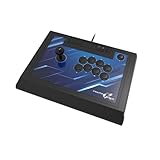
#1 Best Overall

- Small Form Factor Fight Stick featuring an 8-button layout and 8ft. cable
- Great for both Arcade and Fighting Games
- Compact, lightweight and portable design
- Features Classic 8-Button Layout and HORI’s Original Joystick with V-cut Housing
- Officially Licensed by Sony
A fight pad is worth considering when you want more directly accessible face buttons. GPADLAB describes the HORI Fighting Commander OCTA as having six face buttons, an octagonal gate, adjustable directional settings, and support for PS5, PS4, and Windows XInput. Those specifications apply to the described edition; confirm the product’s regional and platform version before ordering because similarly named hardware can differ.
Choose an arcade stick for a joystick-and-button layout
An arcade stick is a good fit if the physical separation between movement and action feels natural to you, or if you specifically want an arcade-style control scheme. It is not automatically faster or more accurate. The advantage is familiarity and comfort for the player who prefers that layout, not a guaranteed result for everyone.
Check the stick’s console compatibility, cable or wireless requirements, button layout, and return policy. A stick that works on PC may not authenticate on your console, and a device that works in one generation of hardware may need a different edition or adapter for another.
What’s actually slowing this PC down?
Pick the symptom - the matching free tool is one click away.
Consider leverless only if you will practice the transition
Leverless controllers replace the joystick with buttons for directional movement. That can appeal to players who like discrete button presses, but it is a new motor pattern for anyone coming from a pad or stick. TechRadar’s review of the 8BitDo Arcade Controller found its buttons responsive while also noting a learning curve for people accustomed to traditional pads or sticks. That is a reviewer’s observation, not a promise of better results for every player.
Before buying leverless, make sure the layout’s spacing and direction order are comfortable for your hands. Also learn how the device handles simultaneous opposite cardinal directions (SOCD), because a tournament may inspect or restrict that behavior.
Rank #2
- High-end pro fight stick for PlayStation 5, PlayStation 4 and PC
- Opens for easy customization and maintenance
- Replaceable top-panel artwork
- Hayabusa buttons and joystick
- Officially Licensed by Sony
How should platform compatibility change your choice?
Compatibility is a purchase requirement, not a detail to check after delivery. Read the manufacturer’s platform list for the exact model number and edition, then confirm that the game recognizes the device in its intended mode. A product can have separate console versions that look almost identical while using different authentication hardware.
| Example | Compatibility reported in the cited review | Important qualification |
|---|---|---|
| 8BitDo Arcade Controller, Switch/PC model | Nintendo Switch, Switch 2, and PC | TechRadar’s review says not to expect PlayStation compatibility; the listed $89.99 price was the publication-time figure and may no longer be current |
| 8BitDo Arcade Controller, Xbox/PC model | Xbox and PC | TechRadar’s review lists a $99.99 publication-time price; verify current pricing and console support before purchase |
| Razer Kitsune | PS5 and PC in TechRadar’s review, tested with Street Fighter 6 and Tekken 8 | The review says it is not compatible with the PS4 console; price and availability can change |
| HORI Fighting Commander OCTA | PS5, PS4, and Windows XInput as described by GPADLAB | Confirm the edition, because platform support is model-specific |
The 8BitDo review specifically covered separate Switch/Switch 2 and Xbox models, both usable on PC, and excluded PlayStation support. Do not infer that the Xbox version works on PlayStation or that the Switch version works on Xbox simply because the shell looks similar. If you play on more than one platform, list each console and PC before narrowing your options.
The Tool Desk
Outbyte Driver Updater FREEFix the driver behind crashes, sound loss and screen glitchesFind Drivers →Outbyte PC Repair FREERepair Windows errors before they cause bigger problemsFix Now →What should you prioritize for a tag fighting game?
Tag games can put a premium on reliable access to the actions you use most, but the right arrangement depends on your hand and your game’s control scheme. Use the following decision order rather than buying based on tournament photos or a fashionable layout.
- Identify your primary platform. Write down the console generation and whether you also need PC support. Eliminate every edition that does not explicitly support those systems.
- Choose the movement method you already trust. Stay with a pad if you can perform directional inputs without fighting the hardware. Choose a stick if a joystick feels more natural. Choose leverless only when you are prepared to build new muscle memory.
- Map the game’s important actions. Check how many simultaneous or quickly alternating buttons you need to reach. A fight pad’s six face buttons may reduce hand movement for players who want more action buttons in one cluster, but more buttons are useful only if you can distinguish and press them reliably.
- Check physical comfort. Look at the directional pad shape, button spacing, device weight, cable position, and whether your wrists stay neutral. A controller that causes fatigue will undermine long practice sessions regardless of its competitive reputation.
- Verify event legality. Read the current organizer’s controller, mapping, and SOCD language before entering. A device can work perfectly at home and still require a changed configuration at an event.
- Plan the learning period. If you change from pad to stick or leverless, budget dedicated practice sessions for movement, blocking, jumping, and your basic tag sequences before judging the hardware.
Pad, stick, or leverless: practical trade-offs
Pad and fight pad: portability versus button access
Pads are generally the easiest to carry and the least intimidating to share between games. Their trade-off is that directional-pad feel varies widely, and a compact face-button arrangement may force more finger movement. A fight pad addresses that for some players by placing more action buttons across the front. The HORI Fighting Commander OCTA example includes six face buttons and an octagonal gate, with adjustable directional settings according to GPADLAB.
Do not assume an octagonal gate is universally preferable. It changes how the directional control registers angles; whether that feels precise or restrictive depends on your hand and the game’s input demands. Treat it as a preference to test, not an objective upgrade.
Rank #3

- Compatible with Switch and Windows.
- Supports ultimate software - customize button mapping and create macros
- Dynamic button layout - button mapping changes with mode functionally and visually
- Ultra-moddable arcade stick - Universal mounting plate supports Sanwa arcade sticks
- Three ways to connect: Bluetooth, 2.4g and wired USB-C. The included 2.4g receiver has a special hidden compartment to store it safely.
Arcade stick: clear separation, larger footprint
Sticks give movement and attacks separate physical areas, which some players find easier to understand under pressure. They are also conspicuous and less portable than a pad. Make sure you have a stable surface at home and a realistic way to carry the unit to events. If you already use a pad, expect a genuine adaptation period rather than immediate improvement.
Recommended Free Tools
Leverless: compact controls with a real learning curve
Leverless hardware can make each directional input a deliberate button press. That consistency appeals to some players, but it changes how you initiate jumps, crouches, dashes, and defensive movement. TechRadar reported that the 8BitDo Arcade Controller’s buttons felt responsive while identifying a learning curve for players from traditional pads or sticks. Use that as a warning to practice, not as evidence that the device will raise your win rate.
Leverless devices also deserve extra rule checking. Organizers may define how simultaneous left-plus-right or up-plus-down inputs must be resolved. Firmware settings, button remapping, and the controller’s SOCD behavior can therefore matter as much as the physical layout.
What are the relevant product examples?
HORI Fighting Commander OCTA
GPADLAB describes this fight pad with six face buttons, an octagonal gate, adjustable directional settings, and PS5, PS4, and Windows XInput support. It is a logical example for a player who wants a familiar pad shape with a larger action-button layout. Confirm the exact edition and current compatibility listing before purchase; the specification is not a guarantee that every regional variant is identical.
8BitDo Arcade Controller
TechRadar tested the controller with Tekken 8 and Street Fighter 6 and reviewed separate Switch/Switch 2 and Xbox models, both also usable on PC. The review says PlayStation compatibility should not be expected. It listed $89.99 for the Switch/PC model and $99.99 for the Xbox/PC model at publication. Those are time-sensitive review prices, not current price promises.
Rank #4
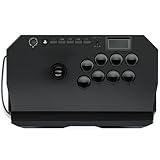
- Compatible with PlayStation5, PlayStation4, and PC
- Officially licensed Sony peripheral
- Authentic Qanba buttons and lever
- Full control panel, touch pad, Qanba 30-mm B30 buttons, and Qanba OV7 OMRON switch joystick
- 3.5-mm microphone input with mute button control
The same review found the buttons responsive and described a learning curve for traditional pad or stick players. That combination makes the controller a plausible leverless option for someone who accepts practice, not a drop-in competitive shortcut.
Razer Kitsune
TechRadar’s cited review positions the Kitsune as a premium leverless example and reports using it with Street Fighter 6 and Tekken 8 on PS5 and PC. It also notes that the device is not compatible with the PS4 console. Check current price, stock, firmware requirements, and event rules separately because availability and policies change.
How much practice does a new layout require?
Changing hardware changes the physical language of your inputs. Do not evaluate a stick or leverless controller after one casual match. Use a staged test that separates hardware comfort from game knowledge:
- Confirm recognition. In the game’s input display, press every direction and action button once. Check that the console or PC sees the intended signal and that no button is sticking.
- Drill neutral movement. Walk, crouch, jump, block, and return to neutral repeatedly. Concentrate on clean releases rather than speed.
- Repeat basic commands. Practice the directional motions and button sequences you use most often in training mode. Watch the input history for accidental diagonals or missed releases.
- Add tag actions. Once basic movement is reliable, rehearse your character-switch or assist commands at slow speed, then under match pressure.
- Test fatigue. Play a longer session and note hand, wrist, or forearm discomfort. Change seating, hand position, or the controller before discomfort becomes a habit.
- Recheck tournament settings. If you plan to compete, confirm that your final firmware, mappings, and SOCD behavior match the organizer’s rules.
Keep your old controller available during the transition. That gives you a known-good fallback if a firmware update, platform authentication issue, or unfamiliar layout appears before a match.
Free tools Windows power users keep installed
One-click scans. No signup required.
What do tournament rules mean for your purchase?
Controller legality is event-specific. Capcom’s cited Pro Tour page is an archived 2023 rule set last updated March 30, 2023. It discusses leverless input rules and applies to Capcom-sponsored tournaments; it is historical evidence, not a blanket approval for every current event.
“This rule change only affects tournaments and competitions sponsored by Capcom.”
Street Fighter League rules are another example of a competition imposing its own restrictions. The cited rules address button mappings, movement inputs, simultaneous directions, and controller inspection. Before an event, locate the organizer’s current rule page and check whether your device’s firmware or configuration needs inspection or adjustment.
Best Value

- FIGHT LIKE A PRO: Nacon Daija arcade stick officially licensed for PlayStation PS4|PS5 and PC was developed in collaboration with professional gamers and designed for top fighting games like Marvel Tokon Fighting Souls, Street Fighter, Tekken, Guilty Gear Strive, and Mortal Kombat.
- SANWA JOYSTICK & ACTION BUTTONS: A leading brand among professional fighting game players and a guarantee of premium quality and durability
- FULL BUTTON MAPPING: Buttons are fully configurable using the Nacon Daija Arcade Stick software on PC and Mac; you can easily create game profiles with the intuitive and user-friendly software
- COMFORT & PRECISION: Textured palm rest provides sturdy and comfortable support so you can remain at the top of your game for as long as possible; switch between two different joystick heads to choose the best solution for perfect control and precision
- LOCK FUNCTION: Enable the button lock feature to prevent accidental presses and avoid interrupting intense fights
- Save a copy or offline note of the current rules in case venue connectivity is poor.
- Use the exact controller model you intend to bring, not an assumed equivalent.
- Reset experimental remaps before check-in.
- Ask the organizer in advance about SOCD behavior if the written rule is unclear.
- Bring a legal backup controller when transport allows.
Common buying mistakes and how to avoid them
Buying the wrong platform edition
Separate Switch, Xbox, PlayStation, and PC versions can have different authentication and firmware. Match the model name and supported platform list to your actual system before paying.
Assuming a premium price buys better results
A higher-priced leverless controller may offer a different build, but the reviewed evidence does not establish automatic performance gains. Comfort, reliable recognition, and practice determine whether a layout helps you.
Switching hardware immediately before an event
New controls can make familiar movement unreliable. Practice on the event setup well before competition and keep a known-good alternative available.
Ignoring simultaneous-direction behavior
SOCD handling can be legal in one competition and restricted in another. Test the device’s actual output and compare it with the organizer’s current language.
Using stale prices as a budget
The 8BitDo prices cited by TechRadar were publication-time figures of $89.99 and $99.99 for its two reviewed models. They can change, as can the Kitsune’s price and availability. Treat review prices as historical reference points and check the current listing before setting a budget.
A quick buying checklist
- Primary console and PC requirements written down
- Exact model and edition verified
- Movement style selected on comfort and familiarity, not hype
- Action-button count and spacing tested or returnable
- Cable, wireless, and authentication requirements understood
- Firmware and remapping options checked
- Current tournament and SOCD rules read if you compete
- Enough practice time reserved for a layout change
- Backup controller prepared for travel or events
Bottom line: which controller should you buy?
Buy a standard pad or fight pad if you want familiar handling, portability, and the smallest learning curve. Pick an arcade stick if you genuinely prefer joystick movement and large separated buttons. Choose leverless if button-based directions appeal to you and you are willing to practice the transition and verify SOCD rules.
The strongest purchase is the one that matches your platform and hands, survives a long session without discomfort, and is legal where you intend to play. No reviewed evidence proves that one configuration is best for every tag fighter or player.
Quick Recap
Product prices and availability are accurate as of the date/time indicated and are subject to change. Any price and availability information displayed on Amazon at the time of purchase will apply.

