Free tools Windows power users keep installed
One-click scans. No signup required.
A first-person shooter (FPS) is a video game genre built around weapon-based combat, shown from the viewpoint of the character the player controls. The camera perspective is central, but it is not enough on its own: the combat focus and the player’s control of movement through the game world also define the genre. In video game writing, FPS almost always means first-person shooter, though the same letters are also used for frames per second, a display and performance measure, so context matters in hardware discussions.
What the name means
“First person” describes what the player sees: the world is shown through the eyes of the character being controlled. “Shooter” describes what the player mostly does: fights with weapons, usually firearms, aimed and fired at targets. The genre sits within the wider shooter and action-game families, and Wikipedia’s entries on first-person shooters and shooter games treat it as a subtype of that broader group.
| # | Preview | Product | Price | |
|---|---|---|---|---|
| 1 |
|
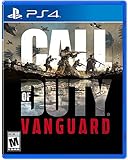
Call of Duty: Vanguard | $28.99 | Buy on Amazon |
| 2 |

|
Crysis Remastered Trilogy (PS4) | $23.19 | Buy on Amazon |
| 3 |

|
Crysis Remastered Nintendo Switch | $28.95 | Buy on Amazon |
| 4 |

|
Sniper 3D Assassin: Shoot to Kill - Best Shooting Game by Fun Games For Free | Buy on Amazon | |
| 5 |

|
RoboCop Rogue City (PS5) | $30.80 | Buy on Amazon |
As an Amazon Associate I earn from qualifying purchases.
How FPS differs from related perspectives
Most confusion comes from games that look similar on screen. The table below compares the common shooter views on the two features that matter most: what the camera shows and how much control the player has over movement.
Quick wins for a faster PC:
Repair Windows errors before they cause bigger problemsFix Now →Fix the driver behind crashes, sound loss and screen glitchesFind Drivers →Clear out junk files and repair common Windows errorsFree Scan →| Genre | What the camera shows | Player control of movement | Example named in the sources |
|---|---|---|---|
| First-person shooter | The world from the controlled character’s eyes | Player guides the character through the game space | Doom, Halo, Call of Duty, Counter-Strike |
| Third-person shooter | The controlled character, visible from an external camera, often behind or above | Not described in the sources consulted | Not named in the sources consulted |
| Rail shooter | Often a first-person view | Limited; the character moves along a fixed path | Not named in the sources consulted |
| Light-gun shooter | Often a first-person view | Limited navigation of the game world | Not named in the sources consulted |
The rail and light-gun rows describe a practical distinction rather than an exceptionless rule. Some games blur it, so the table is best used to test a specific game against the two features rather than to sort every title automatically. The “fixed path” wording is a general description of rail games, not a detail taken from a specific source.
#1 Best Overall
- Rise on every front Dogfight over the Pacific, airdrop over France, defend Stalingrad with a sniper's precision and blast through advancing forces in North Africa
- Through a deeply engaging single player Campaign a select group of soldiers from different countries rise to meet the world's gravest threat
- Call of Duty Vanguard will also usher in a new and unparalleled Call of Duty Warzone integration post launch
- Some features may require an internet connection and an online subscription
A common shortcut says a game is an FPS whenever a gun is visible at the bottom of the screen. That convention is widespread, but it is a weak test: a visible weapon does not show whether the game is built around combat or how much freedom the player has. Use perspective, combat focus, and player control together.
Core features of a first-person shooter
- First-person viewpoint: the camera is placed where the player character’s eyes would be.
- Weapon-based combat as the main activity: shooting is the primary challenge, even when other systems are present.
- Player-directed movement: the player chooses where to go within the game space, which separates the genre from rail and light-gun designs.
- Flexible play structure: FPS games appear as single-player campaigns, cooperative games, and competitive multiplayer, and many combine more than one.
Examples of FPS games
The examples below are listed as illustrations of the genre’s range. They are not a ranked or complete list, and naming a game here does not make a statement about its current availability, age rating, or platform support.
Rank #2
- Crysis Remastered Trilogy includes each of the single-player campaigns from the legendary first-person shooters Crysis, Crysis 2, and Crysis 3
- optimized for today's hardware
- Relive the adventure in this great value all-in-one bundle.
| Game | Why it is cited | Source |
|---|---|---|
| Doom | Classic FPS; associated with the genre’s mainstream popularization (1993) | Reference overview and Techopedia |
| Halo | Classic FPS; highlighted as a prominent console FPS | Reference overview and Xbox Wire |
| Call of Duty | Classic FPS; used to illustrate military settings | Reference overview and Xbox Wire |
| Counter-Strike | Classic FPS; competitive multiplayer example | Reference overview |
| Medal of Honor | Used to illustrate historical military settings | Xbox Wire |
| Far Cry | Used to illustrate the range of settings and approaches | Xbox Wire |
| Crysis | Cited in the genre’s evolution | Xbox Wire |
| BioShock | Cited as an FPS that draws on other design traditions | Xbox Wire and Wikipedia |
Xbox Wire’s “Know Your Genres: First-Person Shooters” feature, published 30 July 2015, is a publisher overview of the genre’s development. Techopedia’s FPS definition page is a secondary reference and did not show a publication date in the sources consulted.
The Tool Desk
Outbyte PC Repair FREEClear out junk files and repair common Windows errorsFree Scan →Outbyte Driver Updater FREEFix the driver behind crashes, sound loss and screen glitchesFind Drivers →Comparing FPS games
When comparing games, these four axes explain more than a subgenre label does:
Rank #3
- Suit up: Your Nanosuit’s speed, strength, armor, and cloaking allow creative solutions for every kind of fight.
- Adapt: In an ever-changing environment, adapt your tactics to dominate on battlefields ranging from frozen jungle to alien environments.
- Customize: A huge arsenal of modular weaponry provides unprecedented control over play style, with options ranging from the experimental to the alien.
- Conquer: Life-like enemy AI require a strategic and flexible playstyle, as new challenges – including a zero-g battlefield– require players to take the offensive and be proactive.
- Explore: Choose your own path through the open world of Crysis, destroying obstacles, driving vehicles, and using the environment itself against your enemies.
- Perspective and movement: first-person, player-directed navigation, or a constrained rail-style path.
- Play structure: solo campaign, cooperative play, competitive multiplayer, or a mix.
- Setting and tone: historical or contemporary military, science fiction, or other fictional worlds.
- Genre emphasis: straightforward shooting versus stronger narrative, exploration, or role-playing systems.
These axes describe differences between games. They do not establish that every FPS shares one mode, setting, pace, or level of realism.
Hybrids and blurred lines
Some games sit where the genre meets other design traditions. BioShock and Deus Ex are often discussed as shooters that also draw on role-playing design. Whether such a game is best labeled an FPS depends on which features an account emphasizes, so the label is sometimes a judgment about emphasis rather than a fixed category.
Rank #4
- Ultra realistic 3D graphics and cool animations
- Hundreds of thrilling missions
- Play in multiple battlegrounds, from huge cities to beautiful beaches
- Tons of letal guns and mortal weapons
- Addicting FPS gameplay
Where the genre came from
Wolfenstein 3D (1992) is commonly treated as an archetype of the modern FPS, and Doom (1993) as the game that carried the genre into mainstream popularity. Earlier games with similar features also existed, so calling either one the “first FPS” depends on how strictly the genre is defined. Describe them as foundational or influential examples rather than as a definitive first.
What’s actually slowing this PC down?
Pick the symptom - the matching free tool is one click away.
Xbox Wire’s retrospective also traces the move of shooters onto consoles, with Halo cited as a prominent console FPS. Its overview draws on the Medal of Honor, Call of Duty, Far Cry, Crysis, and BioShock series. It is a concise account of development, not a full history.
Quick Recap
Best Value
- Get ready to…PROTECT THE INNOCENT AND UPHOLD THE LAW
- Armed with your trusty Auto-9, factory-built strength, years of experience on the force and a variety of tools at your disposal, you will fight forces seeking to destroy the city you call home in an all new first-person, explosive hunt for the truth
- You have the power to decide how to fulfil prime directives in your own way, but as the story unfolds proceed with caution because corruption and greed know no limits
- Prepare yourself to... Protect the innocent and uphold the law
Common mistakes when using the term
- Assuming every FPS is multiplayer, realistic, military, or firearm-only. The examples above show a wide range of settings, modes, and tones.
- Reading FPS as frames per second. In game reviews and genre discussions, FPS refers to the genre; in performance or hardware discussions, the same abbreviation often refers to frame rate.
- Treating genre labels as strict. Hybrids and games with limited movement make a single label misleading.
Sources
- Xbox Wire, “Know Your Genres: First-Person Shooters,” published 30 July 2015.
- Techopedia, “What is First Person Shooter? FPS Definition, Genres & Examples” (publication date not shown in the sources consulted).
- Wikipedia, “First-person shooter” and “Shooter game,” used for genre boundaries and historical framing.
Product prices and availability are accurate as of the date/time indicated and are subject to change. Any price and availability information displayed on Amazon at the time of purchase will apply.




