An open-ended game lets players choose or invent goals and decide how to play within the possibilities its design provides. It can have rules, missions, and structure; what makes it open-ended is that players have meaningful room to interpret its systems, pursue different aims, or shape what counts as success.
What does “open-ended game” mean?
“Open-ended” is best understood as a quality of play and design, not a strict genre with one universally accepted definition. The term describes how much freedom players have to set goals, interpret the game’s systems, and shape their experience.
| # | Preview | Product | Price | |
|---|---|---|---|---|
| 1 |

|
Open World: Video Games and Contemporary Art | $53.58 | Buy on Amazon |
| 2 |
|
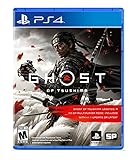
Ghost of Tsushima - PlayStation 4 | $22.99 | Buy on Amazon |
| 3 |

|
Mad Max - PlayStation Hits (PS4) | $18.64 | Buy on Amazon |
| 4 |
|
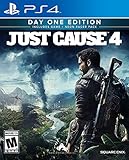
Just Cause 4 - PlayStation 4 | $11.80 | Buy on Amazon |
| 5 |

|
Elden Ring - PlayStation 4 | $33.15 | Buy on Amazon |
As an Amazon Associate I earn from qualifying purchases.
A useful formulation from Eindhoven University of Technology’s 2012 thesis Designing for open-ended play is: “Open-ended play is play without predefined (game) rules in which players can attach meaning to the design properties and the interactions while playing.” In practice, this does not mean that a game has no design or constraints. It means that the design leaves room for players to improvise, make choices, and create purposes beyond a single prescribed outcome. (Eindhoven University of Technology thesis)
What makes a game open-ended?
Look for a combination of player-directed goals, multiple ways to act, and outcomes that are not entirely fixed in advance. The game still needs possibilities and systems for players to engage with: freedom in an empty space is not automatically meaningful play.
#1 Best Overall
- Players can choose or invent goals. They are not limited to completing one required objective.
- Several approaches are viable. Players can pursue an aim through different actions or strategies.
- Systems invite interpretation. Players can use the game’s materials or mechanics in ways that give their play a personal direction.
- Success is not wholly predetermined. There may be no single required route, result, or definition of a satisfying session.
- The design offers a framework. Rules, resources, and constraints give players something to explore and work with.
Openness comes in degrees. A game might have a tightly directed campaign alongside activities that give players much greater freedom. It is more useful to examine the particular mode and systems than to treat “open-ended” as an all-or-nothing label.
Open-ended vs. open-world vs. sandbox
These terms can overlap, but they describe different aspects of a game. “Open-world” chiefly describes how exploration is organized; “open-ended” focuses on how much room players have to set goals and shape play. “Sandbox” is a broader design label often used for games built around systems, experimentation, or nonlinear activity.
Rank #2
- Available Now - Ghost of Tsushima: Legends, a new cooperative multiplayer experience inspired by Japanese folk tales and mythology.
- Beyond war, ancient beauty endures: Uncover the hidden wonders of Tsushima in this open-world action adventure.
- The rise of the Ghost: Forge a new path and wage an unconventional war for the freedom of Tsushima.
| Term | What it describes | What the label alone does not establish |
|---|---|---|
| Open-ended | Freedom to choose or invent goals and shape play or outcomes. | That the game has no rules, structure, or directed content. |
| Open-world | Exploration that is not confined to a strictly linear route. (Epic Games Developer Community) | That players can freely invent goals or outcomes; an open world can still guide players through a defined story or missions. |
| Sandbox | A broad approach that can include open worlds, emergent behavior, automation, or nonlinear stories. | That the game offers meaningful play just by providing space. A useful framework and engaging possibilities still matter. (Game Developer, 2008) |
For example, a game may let you roam across a large world but still direct you toward a set story and mission sequence. That makes it open-world in its exploration structure, but does not by itself show how open-ended its play is. Conversely, open-ended play can happen with simple physical materials, without a digital world at all.
Examples of open-ended play
Digital games
The Eindhoven University of Technology thesis names The Sims, Grand Theft Auto, and Minecraft as examples in which players can wander and decide what to do. They illustrate open-ended qualities, not a claim that every mode or activity in each game is equally open-ended.
Rank #3
- Be Mad Max - Become the iconic post-apocalyptic warrior, crafting and upgrading Max's equipment and weapons to survive by combining melee combat, gunplay and tactical techniques. Gamers must form alliances as they work towards the goal of building their "Magnum opus."
- Immersive savage Wasteland - Explore the gritty, dynamic world while braving the treacherous landscapes, hostile weather patterns and deadly marauders.
- survive the open-world landscape - Staying alive isn't easy. Players clash with deadly factions and gangs through scores of dangerous side-missions and quests in the dynamic open-world full of exploration.
- intense vehicular combat - Engage in dynamic inter-vehicular combat, taking down enemy vehicles with a range of powerful weapons. Car combat is entirely physics-based, so no two battles are ever the Same.
- build the ultimate survival machine - Players design, customize and upgrade their ultimate vehicle-the Magnum Opus-choosing from different car chassis and a slew of upgrades including mounted weapons, armour and engines to survive another day
A non-digital example
The University of Hong Kong’s Guidebook on Game-based Learning and Storytelling describes giving students assorted LEGO pieces and asking them to build an object connected to course content, then explain their choices. Students decide what to make and how to represent the topic, rather than producing one required object. The example shows that open-ended play is about the freedom built into an activity, not the size of its world or whether it is digital. (University of Hong Kong guidebook)
Independent reader supportYour contribution helps us test, update, and keep practical guides available for everyone.How to tell whether a game is open-ended
When evaluating a game—or comparing two—ask these questions rather than relying on its marketing label:
Rank #4
- Day One Edition includes Neon Racer Pack with these DLC items Neon Racer Supercar, Neon Racer Wingsuit, Neon Racer Parachute; see description for full details
- Bring The Thunder Soar through the skies with your wingsuit Skydive, Base Jump and Free Dive, as you fight your enemies harnessing extreme weather to your advantage
- Rico’s Ultimate Mission Spearhead the rebellion and defeat a hi tech private military organization; Face off against the most capable adversary yet; Uncover the mystery behind Rico’s Father’s past
- Huge South American World 100 square kilometers to explore from rainforest to desert, and across snowy mountain peaks as you explore the world of Solis from bustling cities to rural grasslands
- Creative destruction at its best Customize your new grapple hook with evolved and new capabilities; Experiment with military jets, helicopters, turbo fueled sports cars, and construction vehicles
- Can players choose or create goals? Check whether play can have purposes beyond the game’s stated objectives.
- Are there multiple workable approaches? Consider whether players can make meaningful choices about how to pursue an aim.
- Can players interpret or repurpose systems? Look for mechanics or materials that support different kinds of play.
- How fixed are the route and outcome? A game may allow exploration while still requiring a particular sequence or conclusion.
- Does the freedom have a useful framework? Consider whether the game provides enough systems and possibilities to make self-directed play engaging.
There is no validated numerical scale for rating a game’s “openness” in the sources cited here. Compare the dimensions directly—goal-setting freedom, viable approaches, fixed structure, outcome flexibility, and scope for interpretation—instead of assigning an unsupported score.
Recommended Free Tools
Quick Recap
Best Value
- ELDEN RING is a fantasy action-RPG adventure set within a world created by Hidetaka Miyazaki—creator of the influential DARK SOULS video game series; and George R.R. Martin—author of The New York Times best-selling fantasy series, A Song of Ice and Fire
- Danger and discovery lurk around every corner in FromSoftware’s largest game to-date
- HIDETAKA MIYAZAKI: President and Game Director of FromSoftware Inc. Known for directing critically-acclaimed games in beloved franchises including Armored Core and Dark Souls
- GEORGE R. R. MARTIN: the #1 The New York Times bestselling author of many novels, including the acclaimed series A Song of Ice and Fire—A Game of Thrones, A Clash of Kings, A Storm of Swords, A Feast For Crows, and A Dance with Dragons
Product prices and availability are accurate as of the date/time indicated and are subject to change. Any price and availability information displayed on Amazon at the time of purchase will apply.




