The Ryzen 7 9850X3D is the fastest gaming CPU in the tested class—but only narrowly. AMD’s eight-core Zen 5 chip improves on the Ryzen 7 9800X3D mainly by raising its maximum boost clock from 5.2GHz to 5.6GHz. Tom’s Hardware measured about a 3% gaming advantage, alongside roughly 30% higher gaming power consumption. That makes the 9850X3D a compelling prestige part for a premium new build, but not an automatic upgrade for 9800X3D owners or the best value for most gamers.
Verdict
The Ryzen 7 9850X3D wins the bragging-rights contest. With a flagship GPU, a high-refresh monitor, and a CPU-limited game, it can deliver the highest frame rates available from a mainstream desktop gaming processor. But its lead is usually small enough that price matters more than the product name.
| # | Preview | Product | Price | |
|---|---|---|---|---|
| 1 |

|
AMD Ryzen™ 7 9850X3D Desktop Processor | $484.00 | Buy on Amazon |
| 2 |

|
AMD RYZEN 7 9800X3D 8-Core, 16-Thread Desktop Processor | $444.00 | Buy on Amazon |
| 3 |

|
AMD Ryzen 9 9950X3D 16-Core Processor | $659.98 | Buy on Amazon |
| 4 |

|
AMD Ryzen 7 7800X3D 8-Core, 16-Thread Desktop Processor | $348.00 | Buy on Amazon |
| 5 |
|
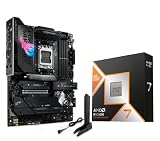
AMD Ryzen 7 9850X3D Processor with ASUS ROG Strix X870E-E R2 Motherboard | $999.99 | Buy on Amazon |
As an Amazon Associate I earn from qualifying purchases.
At its $499 launch MSRP, the 9850X3D costs $20 more than the 9800X3D did at launch. That premium can be reasonable for a new high-end system. If the 9800X3D is $50 or more cheaper, however, it is generally the smarter gaming purchase. The 9850X3D is an excellent CPU, but it is best understood as a higher-clocked refinement rather than a major new generation.
What’s actually slowing this PC down?
Pick the symptom - the matching free tool is one click away.
Tom’s Hardware measured approximately 3% higher gaming performance than the 9800X3D in its test suite, while reporting about 30% higher gaming power consumption. GamersNexus likewise found the practical difference small enough for price to determine the purchase.
#1 Best Overall
- AMD Ryzen 7 9850X3D Desktop Processor
What is the Ryzen 7 9850X3D?
The Ryzen 7 9850X3D is an eight-core, 16-thread AM5 desktop processor built around AMD’s Zen 5 architecture and second-generation 3D V-Cache. It has the same core count and cache capacity as the Ryzen 7 9800X3D, but a higher advertised boost ceiling.
| Specification | Ryzen 7 9850X3D | Ryzen 7 9800X3D |
|---|---|---|
| Architecture | Zen 5 X3D | Zen 5 X3D |
| Cores / threads | 8 / 16 | 8 / 16 |
| Base clock | 4.7GHz | 4.7GHz |
| Maximum boost | Up to 5.6GHz | Up to 5.2GHz |
| Total cache | 104MB | 104MB |
| Default TDP | 120W | 120W |
| Launch MSRP | $499 | $479 |
AMD lists 8MB of L2 cache and 96MB of L3 cache, integrated Radeon graphics, DDR5 memory support, PCIe Gen 5 platform support, and an unlocked multiplier. The processor supports Precision Boost Overdrive, Curve Optimizer, EXPO memory profiles, and Ryzen Master. It is manufactured with TSMC 4nm CPU cores and a 6nm I/O die. No cooler is included. See AMD’s product page for the complete specification list.
What changed from the 9800X3D?
Almost everything important remains the same: the Zen 5 architecture, eight cores, 16 threads, 104MB of cache, 4.7GHz base clock, AM5 socket, and 120W default TDP. The headline change is a 400MHz increase in maximum boost frequency.
That does not mean the chip runs every game 400MHz faster. Maximum boost is a ceiling reached under particular conditions, not an all-core gaming specification. Actual clocks depend on cooling, temperature, motherboard limits, BIOS behavior, workload, silicon quality, Precision Boost decisions, and any PBO or Curve Optimizer settings.
This is why the 9850X3D behaves more like an XT-style refresh or premium bin than a new platform generation. It extracts a little more performance from the same basic design, rather than adding cores or redesigning the cache arrangement.
Gaming performance: fastest, but not transformative
The 9850X3D’s advantage is easiest to see when the processor is the limiting component. That means testing at 1080p or lower settings with a very fast GPU, such as an RTX 5090, so the graphics card does not determine the frame rate first.
Rank #2
- The world’s fastest gaming processor, built on AMD ‘Zen5’ technology and Next Gen 3D V-Cache.
- 8 cores and 16 threads, delivering +~16% IPC uplift and great power efficiency
- 96MB L3 cache with better thermal performance vs. previous gen and allowing higher clock speeds, up to 5.2GHz
- Drop-in ready for proven Socket AM5 infrastructure
- Cooler not included
In those conditions, the extra frequency can produce high-single-digit gains in selected frequency-sensitive games. Many other games show low-single-digit differences or effectively no meaningful change. Tom’s Hardware’s overall result—around 3% ahead of the 9800X3D—is a useful summary, but not a promise for every title.
Crashes, No Sound, or Screen Glitches?
Random freezes, missing sound and display glitches usually trace back to one bad driver. Find and replace yours safely.Free scan · under a minuteWindows Errors? Fix Them Before They Spread
Repair common Windows errors and clear accumulated junk for a smoother, more stable PC - no reinstall needed.Free scan · no reinstall| Scenario | How relevant is the 9850X3D? |
|---|---|
| Flagship GPU, 1080p, 240Hz or higher | Highest; CPU limits are easiest to expose |
| Flagship GPU, 1440p high refresh | Moderate; game-dependent |
| Flagship GPU, 4K | Often limited by the GPU |
| Midrange GPU, 1440p | Usually a small difference |
| Budget GPU, 1080p | Highly dependent on the game and settings |
| Esports, simulation, strategy, and MMO games | Potentially above average |
At 1440p and especially 4K with high or ultra settings, the GPU usually becomes the bottleneck. A faster CPU cannot add frames that the graphics card cannot render. For a gamer whose current system already reaches the monitor’s refresh rate, the difference may be invisible.
Average FPS is not the whole result
Competitive players should also examine 1% lows, 0.1% lows, latency, and frame-time consistency. A small average-frame-rate improvement can matter if it improves lows in a CPU-limited game. Conversely, a higher average with unchanged frame-time spikes may not feel different.
AMD claims the 9850X3D is up to 27% faster in gaming than Intel’s Core Ultra 9 285K. That is AMD’s selected testing claim, using a particular system and game selection, not a universal advantage across every game, resolution, GPU, or configuration.
Power, temperatures, and efficiency
The largest drawback is power efficiency. Although both the 9850X3D and 9800X3D have a 120W default TDP, TDP is not the same thing as measured wall power or package power. It is a design and thermal target, not a complete description of what the PC consumes.
Tom’s Hardware measured roughly 30% higher gaming power consumption for the 9850X3D than for the 9800X3D. That can mean more electricity use, higher fan speeds, greater case-airflow requirements, and lower performance per watt for a very small frame-rate gain.
Rank #3
- AMD Ryzen 9 9950X3D Gaming and Content Creation Processor
- Max. Boost Clock : Up to 5.7 GHz; Base Clock: 4.3 GHz
- Form Factor: Desktops , Boxed Processor
- Architecture: Zen 5; Former Codename: Granite Ridge AM5
The chip does not automatically run dangerously hot. Tom’s described it as running relatively cool under its test conditions. But a cool temperature and good efficiency are different things: a strong cooler can remove more heat while the processor still consumes substantially more power.
A 120W label should therefore not be treated as a complete cooler recommendation. Cooler model, ambient temperature, fan curve, motherboard limits, sustained package power, gaming temperature, all-core temperature, and noise all affect the result.
Productivity and streaming
The 9850X3D is primarily a gaming processor. Its eight cores and 16 threads are adequate for everyday use, gaming while streaming, and many interactive workloads, but they do not make it a natural choice for sustained rendering, video encoding, compilation, virtual machines, or other heavily threaded work.
The Tool Desk
Outbyte PC Repair FREERepair Windows errors before they cause bigger problemsFix Now →Outbyte Driver Updater FREEFix the driver behind crashes, sound loss and screen glitchesFind Drivers →Tom’s Hardware measured roughly 5% to 7% gains in lightly threaded tasks, but broadly similar heavily threaded performance to the 9800X3D despite the higher power draw. If serious production work is part of the brief, the Ryzen 9 9950X3D is the more credible alternative: it has 16 cores, 32 threads, 144MB of cache, up to a 5.7GHz boost clock, and a 170W default TDP, according to AMD’s Ryzen 9000 comparison information.
9850X3D versus 9800X3D: let the price decide
The two processors deliver nearly the same gaming experience. The right question is not simply which is faster, but how much the extra performance costs.
- Premium under $25: The 9850X3D is defensible in a premium new build or high-refresh competitive system.
- Premium around $50: The 9800X3D is usually the better value.
- Premium above $75: Buy the 9800X3D and put the difference toward a faster GPU, monitor, storage, or quieter cooling.
These are practical decision rules, not fixed laws. Compare live prices at the time of purchase. AMD’s U.S. store showed the 9850X3D at $499 and out of stock when checked on August 18, 2026; retailer prices observed in review-page listings were approximately $484 to $489.99. Those are dated snapshots, not guarantees of current availability.
Rank #4
- Processor provides dependable and fast execution of tasks with maximum efficiency.Graphics Frequency : 2200 MHZ.Number of CPU Cores : 8. Maximum Operating Temperature (Tjmax) : 89°C.
- Ryzen 7 product line processor for better usability and increased efficiency
- 5 nm process technology for reliable performance with maximum productivity
- Octa-core (8 Core) processor core allows multitasking with great reliability and fast processing speed
- 8 MB L2 plus 96 MB L3 cache memory provides excellent hit rate in short access time enabling improved system performance
Upgrade advice
Owners of the Ryzen 7 9800X3D
Do not upgrade unless you have a specific reason. The 9850X3D’s small lead is unlikely to justify selling a 9800X3D, reinstalling or validating a system, and paying the price difference. Exceptions include benchmark chasing, very high-refresh competitive gaming, or a known game that responds unusually well to frequency.
Owners of the Ryzen 7 7800X3D
The 9850X3D can be meaningfully faster in CPU-limited situations, but existing 7800X3D owners should still be selective. Upgrade when you have a flagship GPU, a high-refresh target, and a game that is demonstrably CPU-limited. At 4K or with a GPU bottleneck, the money may produce a larger improvement elsewhere.
For a new buyer, the 7800X3D can remain attractive when heavily discounted. GamersNexus placed it roughly $100 below the 9850X3D in its pricing context, making it a potentially strong value alternative.
Owners of older AM4 X3D processors
An AM4 owner must account for the entire platform change. The 9850X3D requires an AM5 motherboard and DDR5 memory, as well as appropriate cooling and a BIOS version that supports the processor. A Ryzen 7 5700X3D drop-in upgrade may be dramatically cheaper if the existing AM4 system is otherwise satisfactory.
Intel owners
The 9850X3D is the more straightforward choice when maximum gaming frame rates are the priority, but the Core Ultra 9 285K should be judged on total platform price, productivity performance, power, features, and existing hardware. AMD’s 27% figure should not be treated as an all-purpose result.
Do these 3 things before closing this tab:
1Scan for outdated or missing drivers - takes under a minute2Repair Windows errors before they cause bigger problems3Fix the driver behind crashes, sound loss and screen glitchesRyzen 7 9850X3D versus Ryzen 9 9950X3D
Choose the 9850X3D for predominantly gaming-focused use and the highest possible gaming benchmark score. Choose the 9950X3D when gaming shares the machine with rendering, editing, compiling, simulation, virtual machines, or other workloads that can use many cores.
Best Value
- AMD Ryzen 7 9850X3D Desktop Processor, AM5 CPU Socket, 8 Cores 16 Threads, Up to 5.6 GHz, L2+L3 104 Cache, 120W TDP, Unlocked for Overclocking, PCIe 5.0 Support, DDR5, ECC Support
- For the state-of-the-art Socket AM5 platform, can support PCIe 5.0 on select motherboards. OS Support: Windows 11/ 10-64-Bit Edition. Cooler & Thermal Solution (PIB) not included. AMD Radeon Graphics Integrated
- ASUS ROG Strix X870E-E R2 Gaming WiFi Motherboard, ATX Form Factor, Dual Channel Memory DDR5 up to 256GB, 3x PCIe 5.0 x4 M.2 Slot, 2x PCIe 4.0 x4 M.2 Slot, 4x SATA 6Gb/s ports, 2 x USB4 (40Gbps) ports support USB Type-C, USB 20Gbps Type-C, 2x2 Wi-Fi 7, Bluetooth v5.4, Windows 11 64-bit
- Ready for Advanced AI PC: Designed for the future of AI computing, with the power and connectivity needed for demanding AI applications;/ AMD AM5 Socket: Ready for AMD Ryzen 9000, 8000 and 7000 series desktop processors
- Intelligent Control: ASUS-exclusive AI Overclocking, AI Cooling II, AI Networking and AEMP to simplify setup and improve performance;/ ROG Strix Overclocking technologies: Dynamic OC Switcher, Core Flex, Asynchronous Clock and PBO Enhancement
The 9950X3D costs more to cool and powers a higher-wattage platform, but its 16-core design can save substantial time in serious multithreaded work. Existing 9950X3D owners have no gaming-focused reason to move to the eight-core 9850X3D.
Platform and setup considerations
Before buying, confirm the exact motherboard model and BIOS version on the manufacturer’s CPU-support page. Do not assume every AM5 board supports the processor without an update. When possible, update the BIOS before replacing the CPU and keep the board vendor’s recovery procedure available in case an update fails.
You will need:
- An AM5 motherboard with confirmed Ryzen 7 9850X3D support.
- DDR5 memory.
- A suitable CPU cooler; no cooler is bundled.
- A power supply sized for the complete system, especially with a flagship GPU.
- Current AM5 chipset drivers, available from AMD’s support page.
DDR5-6000 with an EXPO profile is a common enthusiast baseline, but advertised EXPO speed is not guaranteed automatically. Enable EXPO in the BIOS, then validate stability. GamersNexus’s DDR5-4800 testing is useful as an edge-case comparison, but it should not be generalized to every game or memory kit.
Recommended Free Tools
PBO and Curve Optimizer can improve performance, temperatures, or efficiency depending on the settings and sample. Keep stock results separate from tuned results, and stress-test any configuration. The higher factory boost ceiling may also leave less obvious value for manual tuning than the 9800X3D offered.
Who should buy it?
| Buyer | Recommendation |
|---|---|
| Wants the absolute fastest gaming CPU | Buy the Ryzen 7 9850X3D |
| Wants the best gaming value | Buy the cheaper 9800X3D unless the premium is very small |
| Owns a Ryzen 7 9800X3D | Keep it |
| Owns a Ryzen 7 7800X3D | Upgrade only for a high-refresh CPU-limited setup |
| Owns an older AM4 X3D chip | Compare the full AM5 cost with a 5700X3D drop-in upgrade |
| Games and renders or edits heavily | Consider the Ryzen 9 9950X3D |
| Plays mostly at 4K | Prioritize the GPU before the CPU |
Final recommendation
The Ryzen 7 9850X3D earns the gaming-performance crown, but its crown is made from a small clock-speed increase rather than a major architectural advance. It is the right choice for a premium new build when the price gap to the 9800X3D is modest and the system has the GPU, monitor, and games to expose the difference.
For everyone else, the Ryzen 7 9800X3D is usually the more sensible buy. It provides nearly the same gaming experience, consumes less power in testing, and leaves more budget for the component most likely to matter at 1440p and 4K: the graphics card.
Quick Recap
Product prices and availability are accurate as of the date/time indicated and are subject to change. Any price and availability information displayed on Amazon at the time of purchase will apply.
Quick wins for a faster PC:
Repair Windows errors before they cause bigger problemsFix Now →Scan for outdated or missing drivers - takes under a minuteDriver Scan →Clear out junk files and repair common Windows errorsFree Scan →



