
Recommended Free Tools
No—not on the evidence currently available. Vampire-game releases on Steam have increased sharply, but that count has not been tested against a recognized consumer-confidence survey, a recession series, or any other validated economic indicator. The pattern is an interesting cultural coincidence, not a proven measure of what households expect or how the economy is performing.
A feature by Lincoln Carpenter in PC Gamer, published October 8, 2026, places a rising number of vampire-themed games beside signs of financial pressure in the United States. That juxtaposition can suggest a story about escapism, anxiety or market opportunity. It cannot establish that vampire games track consumer sentiment, cause economic changes or predict a recession.
| # | Preview | Product | Price | |
|---|---|---|---|---|
| 1 |
|
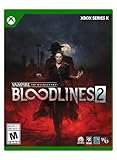
Vampire: The Masquerade - Bloodlines 2 - Xbox Series X | $29.99 | Buy on Amazon |
| 2 |
|
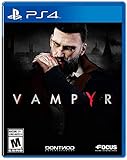
Vampyr - PlayStation 4 | $31.99 | Buy on Amazon |
| 3 |

|
Vampire the Masquerade Coteries and Shadows of New York - Nintendo Switch | $26.84 | Buy on Amazon |
| 4 |
|
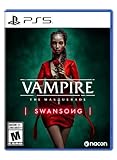
Vampire: The Masquerade - Swansong (PS5) | $32.80 | Buy on Amazon |
| 5 |

|
Vampyr - Xbox One | Buy on Amazon |
As an Amazon Associate I earn from qualifying purchases.
What “consumer confidence” actually measures
Consumer confidence is about people’s attitudes and expectations: whether households feel secure about their finances, employment and the broader economy, and whether they expect conditions to improve or worsen. Established measures use surveys or economy-wide data collected with a defined method and repeated over time.
A count of games observes something different. It records developer decisions, publishing schedules, platform visibility and player-market opportunities. A rise in vampire releases could reflect lower development costs, a successful breakout title, genre imitation, better tagging, changes in Steam’s catalog or simple coincidence. None of those possibilities directly measures what consumers say they believe.
#1 Best Overall
- You are the Nomad — an elder vampire awakening from a century-long slumber, new to the modern nights. Trapped in your Blood is a stranger’s voice. This entity, a vampire detective known as Fabien, will be your guide to 21st-century Seattle. You will explore the city through his eyes as well as those of the Nomad, as you revisit a cold case from a hundred years ago that is threatening undead and mortal society alike.
- Hunt your way through a modern-night Seattle on the brink of an open supernatural war in Vampire: The Masquerade - Bloodlines 2, where visceral vampire action meets a neo-noir murder mystery.
- Navigate the vampire Court of Seattle and its dark underbelly in this action RPG, realized by the BAFTA award-winning studio The Chinese Room.
- Enter the World of Darkness and rise through vampire society or rail against it. Experience Seattle - a city full of alluring, dangerous characters and factions, not to mention the mortals at stake in the clash of powers beyond their knowing. In this sequel to the cult classic, your choices, plots, and schemes will determine the balance of power and what becomes of the city and its people.
That distinction is the central problem with treating the trend as an indicator. The available feature reports no correlation coefficient, forecasting model, survey comparison or out-of-sample test connecting vampire-game activity with consumer confidence.
What the Steam counts show
Carpenter’s feature reports several increases, all attributed to his own counting and classification rather than to an official economic database.
| Measure | Earlier figure | Later figure | Qualification |
|---|---|---|---|
| Vampire games launched on Steam | 4 in 2016 | 65 by October 8, 2026 | 2026 figure is year to date; additional releases were scheduled before the end of the year. |
| Largest quarterly vampire-game launch count | 6 in 2020 | 24 in 2026 | Compares the busiest quarter in each year. |
| First appearances in the SteamDB archive | 9 in 2016 | 99 in 2025 | Archive appearances are a proxy for recorded listing activity, not releases or development starts. |
| All Steam game launches | 9,634 in 2020 | 21,263 in 2025 | Shows that the overall platform catalog also expanded substantially. |
The absolute vampire-game count therefore rose, but the denominator rose too. Steam had far more releases in 2025 than in 2020, so raw totals alone cannot tell you whether vampire games captured a larger share of the market. The feature’s figures also cover different periods: the 2026 vampire total is incomplete as of October 8, while the overall-launch comparison ends in 2025.
Why the numbers are not official statistics
Steam does not publish a standardized economic series for “vampire games.” The feature’s totals came from manual review and platform records. They are useful descriptive counts, but they should not be mistaken for a government statistic, a consumer survey or a validated leading indicator.
Rank #2
- Be the Vampyr - Fight and manipulate with supernatural abilities
- Feed to Survive - Be the savior and the stalker
- Shape London - a Web of inter-connected citizens reacts to your decisions
- Country of origin: United States
How the games were classified
Carpenter manually reviewed 1,213 games carrying Steam’s Vampires tag at the time of analysis. He kept titles where the developers appeared to make vampirism a central interest and excluded games in which vampires were incidental. That judgment call matters: two researchers could reasonably classify the same borderline title differently.
The feature gives Resident Evil Village as an example of a game omitted under this process. It also notes that the tag is noisy. Vampire Survivors and imitators helped popularize the tag for discoverability before Steam had a dedicated bullet-heaven genre label, so tagging behavior may reflect marketing as much as subject matter.
This creates several sources of measurement error:
- Selection: only games carrying the tag entered the initial review.
- Subjectivity: “vampirism is central” is an editorial classification, not a machine-readable rule.
- Discoverability effects: developers may add a popular tag to attract searches.
- Platform scope: the count covers Steam activity, not console, mobile or non-Steam PC releases.
- Catalog change: tagging practices and Steam’s genre taxonomy can change over time.
A confidence index needs a definition that can be applied consistently in every period. A manually curated theme count can support cultural analysis, but it is not yet reproducible enough for economic forecasting.
What SteamDB archive appearances mean—and do not mean
For listing activity, Carpenter used a game’s first appearance in the SteamDB archive because Steam did not provide the needed information in the same form. That is a defensible proxy for when a title was first recorded, but it is not a development-start date, a release date or a measure of sales.
Rank #3
- Enter the universe of Vampire: The Masquerade, one of the most popular role-playing games of all time, through two interactive novels.
- In Coteries of New York, you will rediscover New York from the perspective of a newborn vampire, caught between the power struggles of two vampire clans: Camarilla and Anarchs.
- Fight to preserve the vestiges of your humanity while you try to control your desire to feed or the Beast that beats inside; you will end up taking control.
- Shadows of New York is a completely independent adventure in which you will play a member of the clan Lasombra, who is in charge of investigating the death of the New York Anarchs leader.
A project can appear in an archive long before launch, disappear, be renamed, remain unreleased or be listed for reasons unrelated to consumer demand. Comparing archive appearances with releases therefore mixes different stages of a game’s life cycle. The feature also says that calculating a comparable yearly percentage for first appearances would have required reviewing more than 100,000 games, so it did not provide that rate.
The “Vampire Menace Rating” is not an economic index
The feature introduces a humorous custom measure that divides quarterly vampire-game appearances in SteamDB by total quarterly Steam game launches. Because it uses a denominator, it is more informative than a raw count: it asks whether vampire activity changed relative to the platform’s overall output.
But the author himself jokes that the rating “might need some work.” It has no established benchmark, confidence interval, accepted definition, relationship to a named consumer-confidence series or demonstrated predictive accuracy. Treat it as a creative visualization, not as an index that economists or policymakers use.
Outdated Drivers Are Slowing You Down
One free scan finds every outdated or missing driver and matches the right update for your exact hardware.Free scan · exact hardware matchPC Slower Than It Used to Be?
A free scan shows the junk files, broken settings and background clutter dragging Windows down - then fixes them in one click.Free scan · Windows 10 & 11What the financial context does—and does not—show
Carpenter places the release trend beside several indicators of household pressure in the United States. As cited in the feature, real median household income rose about 4.6% from 2020 to 2025, while the Consumer Price Index for All Urban Consumers increased approximately 27–29% from the start of 2020 through the feature’s publication, depending on whether food and energy are included. The article also discusses producer prices, credit-card delinquency and personal savings.
Rank #4
- WELCOME TO THE WORLD OF DARKNESS: What if vampires were real, bloodthirsty predators living hidden among us; In Vampire: The Masquerade you play as these monsters in a world where the lines between the real and supernatural are always blurred
- A HEART-POUNDING THRILLER: Hazel Iversen, the Swan, is an iron hand in a velvet glove, she intends to assert her power and respect the Masquerade, the vampiric law designed to ensure humans never learn of the existence of these creatures of the night
- PLAY AS 3 VAMPIRES: Progress through the game through their intertwined destinies, deal with their different points of view, and use their character sheets to try to separate the truth from the lies
- GAMEPLAY WITH CONSEQUENCES: With its unique approach to gameplay, Swansong puts emphasis on the consequences of your actions in both the investigation and your social interactions with characters
Those figures support a narrower observation: households faced substantial changes in prices and financial conditions during the period in which vampire-game releases increased. They do not show that developers responded to consumer confidence, that players demanded vampires because they felt pessimistic or that the game trend led economic conditions.
Several other explanations remain possible. The success of one vampire-themed game may have encouraged imitators. Digital distribution makes it easier for small teams to publish niche projects. A crowded market can make a recognizable theme attractive for store search and advertising. Developers may choose vampires for creative reasons that have nothing to do with macroeconomic sentiment.
Independent reader supportYour contribution helps us test, update, and keep practical guides available for everyone.Why the trend cannot identify a recession
The National Bureau of Economic Research’s Business Cycle Dating Committee defines a recession as “a significant decline in economic activity that is spread across the economy and that lasts more than a few months.” The committee evaluates depth, diffusion and duration across a range of economy-wide indicators.
A niche release count from one storefront does not meet that standard. It lacks broad geographic coverage, does not measure output or employment, and can move because of platform-specific catalog decisions. Even a strong statistical relationship would need to be tested against alternative explanations and checked in periods not used to build the model.
Best Value
- Be the Vampyr - Fight and manipulate with supernatural abilities
- Feed to Survive - Be the savior and the stalker
- Shape London - a Web of inter-connected citizens reacts to your decisions
Consequently, “vampire games are a recession indicator” is a much stronger claim than the evidence supports. The most defensible description is that the Steam trend is a cultural signal occurring during a period that also included household cost and credit pressures.
What a real validation study would require
To determine whether vampire-game activity contains information about consumer confidence, a researcher would need a transparent design rather than a visual comparison.
- Define the category in advance. Specify whether a game must feature vampires as protagonists, enemies, mechanics or setting, and apply the rule to every year.
- Build a complete time series. Record releases and first listings across a consistent set of platforms, with dates, cancellations and re-releases handled the same way.
- Choose a denominator. Compare vampire titles with all game releases, all comparable indie releases or another justified market baseline.
- Match a named confidence series. Use a published survey or index with known geography, sampling method and frequency, rather than an impression of public mood.
- Control for industry growth. Account for Steam’s expanding catalog, changes in tagging, development tools, marketing practices and the success of influential games.
- Test timing. Establish whether game activity leads, coincides with or follows changes in confidence, and state the lag before testing it.
- Reserve data for validation. Evaluate forecasts on later periods that were not used to choose the definition or model.
Without those steps, an apparent pattern can be post hoc storytelling. A valid indicator must continue to work when the next year of data arrives, not merely fit a striking historical chart.
How to compare the game trend with established measures
| Comparison question | Vampire-game count | Consumer-confidence or recession measure |
|---|---|---|
| What it observes | Theme-tagged releases or archive appearances | Stated expectations, spending attitudes or economy-wide activity |
| Data consistency | Manual classification and platform records; definitions can vary | Published methodology and repeated collection, depending on the series |
| Coverage | Primarily one storefront and its tagged catalog | Usually defined households, regions or national economic sectors |
| Timing | Release and listing dates; relationship to sentiment is unknown | Survey or economic dates with known frequency and publication schedule |
| Predictive accuracy | Not established in the cited material | Can be evaluated with historical and out-of-sample tests |
What readers should conclude
The strongest conclusion is “interesting cultural coincidence, unvalidated indicator.” Carpenter’s count documents a substantial increase in vampire-focused Steam activity: four launches in 2016 versus 65 by October 8, 2026, with the 2026 figure still incomplete. The quarterly peak also rose from six in 2020 to 24 in 2026, and SteamDB archive appearances increased from nine in 2016 to 99 in 2025.
Those observations are worth tracking, especially for questions about genre cycles, discoverability and independent-game markets. They do not answer what consumers expect, whether households are confident or whether a recession is approaching. For those questions, use a named confidence survey and the broader economic indicators evaluated under the NBER framework—not a vampire-game count by itself.
Quick Recap
Product prices and availability are accurate as of the date/time indicated and are subject to change. Any price and availability information displayed on Amazon at the time of purchase will apply.

