
Quick wins for a faster PC:
Scan for outdated or missing drivers - takes under a minuteDriver Scan →Repair Windows errors before they cause bigger problemsFix Now →Start with Jujutsu Kaisen. It is the closest overall follow-up to Demon Slayer: Kimetsu no Yaiba if you want modern supernatural horror, organized monster hunters, tactical battles and a protagonist carrying a dangerous supernatural threat. Choose Blue Exorcist when demon hunting itself is the priority, Bleach for the biggest sword-and-spirit saga, Black Clover for magic-driven team battles, and Bone Collection if you are willing to switch from anime to a compact manga discovery.
The right choice depends on which part of Demon Slayer you want to preserve: tragic family stakes, demons as the central enemy, highly choreographed swordplay, horror, or a long-running battle-world commitment. This guide ranks five options by that specific fit rather than treating every action anime as interchangeable.


As an Amazon Associate I earn from qualifying purchases.
What makes a good Demon Slayer follow-up?
Demon Slayer establishes a very specific promise. Its official premise places the story in Japan’s Taisho period, where Tanjiro Kamado, a kindhearted charcoal seller, returns home to find his family slaughtered by a demon. His sister Nezuko survives but is transformed into a demon, so Tanjiro joins the Demon Slayer Corps in the hope of turning her human again. Koyoharu Gotouge created the original story, and ufotable produced the animation.
That combination matters. The series is not simply “an anime with swords.” Its appeal comes from several elements working together:
#1 Best Overall
- Personal loss: Tanjiro’s mission is tied to his family, especially Nezuko, rather than to an abstract war.
- A defined monster threat: Demons are dangerous, human-derived enemies with rules, abilities and tragic histories.
- Visible sword technique: The fights are built around readable blades, forms, movement and momentum, even when the presentation becomes spectacular.
- An organized response: The Demon Slayer Corps gives the story ranks, mentors, missions and rivalries.
- Tragedy beside warmth: Horror and grief are balanced by humor, friendship and compassion.
The recommendations below are strongest when they match several of those traits at once. None is a replica: each changes the era, enemy type, power system or tone.
Ranked recommendations at a glance
| Rank | Series | Closest match | Main enemy | Combat focus | Commitment |
|---|---|---|---|---|---|
| 1 | Jujutsu Kaisen | Dark supernatural action and tactical exorcist battles | Curses born from human negative emotions | Cursed techniques, hand-to-hand combat and weapons | Focused modern battle series with multiple major arcs |
| 2 | Blue Exorcist | Literal demon hunting and institutional training | Demons from Gehenna | Exorcist weapons, rituals and supernatural powers | Continuing multi-saga story |
| 3 | Bleach | Sword-focused spirit warfare and squad structure | Hollows, Soul Reapers and Quincy factions | Zanpakuto sword combat and escalating abilities | Long-running epic |
| 4 | Black Clover | Big team battles, demons and a determined hero | Magical enemies, including demons | Magic-and-sword combat | Long-form fantasy adventure |
| 5 | Bone Collection | Compact monster-fighting manga discovery | Yokai and other monsters | Exorcist techniques and fights | Shorter print-first commitment |
1. Jujutsu Kaisen is the closest overall match
Why it fits
Jujutsu Kaisen should be your first stop when what you miss is the combination of frightening supernatural enemies, a disciplined group of fighters and battles that reward strategy as much as strength. Its official introduction defines curses as beings generated by human negative emotions and jujutsu sorcerers as the people who fight them. That gives the series the same human-versus-monster urgency as Demon Slayer, while making the source of the threat more psychological and contemporary.
VIZ specifically recommends Jujutsu Kaisen to readers who enjoyed Demon Slayer, emphasizing its horrific cursed beings and intricate good-versus-evil battle strategies. The recommendation is especially persuasive if you liked battles in which a fighter must read an enemy’s ability, protect teammates and exploit a narrow opening instead of simply overpowering the opponent.
What feels familiar
- A young protagonist is drawn into a hidden supernatural conflict after a life-changing encounter.
- Fighters train within an organized school-and-mentor system rather than learning every skill alone.
- Major enemies can be grotesque, intelligent and emotionally complicated.
- Team chemistry and personal sacrifice matter as much as individual power.
What is different
The enemies are curses, not Taisho-era demons. Their origin in negative emotion changes the horror: the threat is tied to fear, hatred, grief and other feelings that accumulate around human life. Combat also relies heavily on cursed techniques, barriers and close-quarters skill, so the sword is one tool among many rather than the central language of every fight. If the exact look and rhythm of historical sword forms is non-negotiable, another pick below will serve you better.
Who should choose it
Choose this series if you prioritize tactical fights, a darker horror edge and a modern setting. It is also the best bridge for viewers who want the emotional danger of a protagonist carrying something monstrous inside or close to him without repeating Tanjiro and Nezuko’s story.
The official Jujutsu Kaisen site states a worldwide circulation of 1.5 billion copies, including digital editions, in a 2026 figure. That is a franchise circulation claim, not a measure of anime quality or a guarantee of availability in your country.
2. Blue Exorcist is the most literal demon-hunting parallel
Why it fits
If your search terms are “anime about exorcists fighting demons,” Blue Exorcist is the most direct answer. Its official introduction divides the setting into Assiah, the realm of humans, and Gehenna, the realm of demons. Demons intrude into the material world, and Exorcists are trained to fight them. The central conflict therefore names demons as the primary enemy instead of translating them into curses, spirits or magical creatures.
Do these 3 things before closing this tab:
1Fix the driver behind crashes, sound loss and screen glitches2Repair Windows errors before they cause bigger problems3Scan for outdated or missing drivers - takes under a minuteThe series began as a manga in 2009 and has continued through multiple anime sagas. Its official site records more than 25 million copies in print as of 2026. That figure is a site-stated print milestone, not a statement that every volume or season is equally available in every territory.
What feels familiar
- Demonology is central to the world rather than an occasional subplot.
- Young fighters learn within a formal training institution and develop distinct specialties.
- Family identity and inherited supernatural danger drive the emotional story.
- Exorcist weapons and techniques provide a clear combat vocabulary.
What is different
The setting is modern and institutional, not a Taisho-period road journey. School life, classes, rivalries and demon lore sit beside the action, and the tone can move more readily into comedy. The mythology also explores the relationship between the human and demon realms through family and religious imagery, so the story’s questions are broader than “how do we defeat the next monster?”
Who should choose it
Pick Blue Exorcist when you want the word “demon” to mean exactly what you expect, but you are comfortable trading historical atmosphere for a school-based modern world. It is particularly suitable for viewers who enjoyed the Demon Slayer Corps hierarchy and want a larger institutional setting with classmates, teachers and competing approaches to the same threat.
3. Bleach is the best sword-and-spirit escalation
Why it fits
Bleach is the choice for viewers who want sword battles to become the organizing principle of an enormous supernatural society. Its story centers on Ichigo Kurosaki, a Substitute Soul Reaper, who takes up his Zanpakuto again while fighting the Quincy-led Wandenreich. Soul Reapers, their swords and their squad structure create a strong sense of ranks, captains, specialist teams and military missions.
PC Slower Than It Used to Be?
A free scan shows the junk files, broken settings and background clutter dragging Windows down - then fixes them in one click.Free scan · Windows 10 & 11Outdated Drivers Are Slowing You Down
One free scan finds every outdated or missing driver and matches the right update for your exact hardware.Free scan · exact hardware matchWhere Demon Slayer concentrates on one corps and a relatively clear demon hierarchy, Bleach opens into a much larger spirit cosmology. Hollows and other spiritual enemies fill the role of supernatural threats, while rival factions can be as important as monsters. The result is a long-form escalation in which new abilities, organizations and battlefields continually widen the scope.
Rank #3

- Tanjiro Kamado, joined with Inosuke Hashibira, a boy raised by boars who wears a boar's head, and Zenitsu Agatsuma, a scared boy who reveals his true power when he sleeps, board the Infinity Train on a new mission with the Fire Pillar, Kyojuro Rengoku, to defeat a demon who has been tormenting the people and killing the demon slayers who oppose it!
What feels familiar
- Swords are not decorative: a fighter’s blade, technique and personal identity are tightly connected.
- Ranks, squads and mentors make the world easy to navigate even as it expands.
- Fights frequently hinge on a weapon’s special ability and the user’s willingness to take a risk.
- Characters carry grief, duty and family obligations into battles.
What is different
It is a much longer commitment than Demon Slayer and has a broader power system. The enemies are not simply demons; Hollows, Soul Reapers and Quincy represent different parts of the setting’s spiritual conflict. The pacing and scale reflect a long-running battle epic, so the story spends more time on faction politics, extended rivalries and large casts.
Who should choose it
Choose Bleach if your favorite Demon Slayer moments are the sword forms, the named fighters and the feeling that every new opponent belongs to a larger hierarchy. It is less suitable if you want a short, tightly focused sibling drama or if you need demons to remain the only supernatural enemy.
4. Black Clover is best when magic and demons matter more than sword realism
Why it fits
VIZ recommends Black Clover as a follow-up for Demon Slayer fans, highlighting demons, action, lovable characters, magic battles and a pure-hearted protagonist. The connection is strongest in its emotional momentum: a determined young hero begins with a disadvantage, joins a team of specialists and keeps moving forward through increasingly dangerous battles.
Although swords are important, the series is fundamentally a magic-fantasy adventure. Spells, grimoires, squad tactics and combinations between abilities define the action. A sword may cancel or channel magic, but fights are not built around the realistic blade work or period weapons that give Demon Slayer its visual identity.
What feels familiar
- A straightforward, compassionate protagonist refuses to abandon his goals.
- Squad members have sharply different personalities and combat roles.
- Demons and ancient supernatural forces become part of a larger mythology.
- Major battles reward teamwork, training and emotional resolve.
What is different
The tone is more openly adventurous and comedic, and the world is organized around magic knights rather than demon slayers. Battles can grow to enormous scale, with several characters combining spells in the same confrontation. If you want suspense built around a single sword stroke, this may feel too expansive; if you want constant progression and team spectacle, it may be exactly right.
Who should choose it
Select Black Clover when you want the camaraderie, underdog energy and demon mythology of a battle shonen series but do not require a historical setting or sword-only combat. It is the strongest option here for viewers who prefer ensemble growth over a solitary central mission.
5. Bone Collection is a short, monster-focused manga path
Why it fits
Bone Collection is a print-first recommendation rather than a direct anime replacement. VIZ describes a struggling exorcist, a yokai, scary monsters, cool fights and fun characters. That makes it useful for readers who want to discover another compact supernatural action story after finishing the available Demon Slayer material.
Free tools Windows power users keep installed
One-click scans. No signup required.
What feels familiar
- Exorcism and monster hunting are the immediate engines of the plot.
- Yokai provide a recognizable bridge from demon folklore to a new setting.
- The story emphasizes quick character chemistry and action rather than a vast multi-faction mythology.
What is different
It is newer and shorter in scope than the established anime franchises above, and it should be approached as a manga discovery. The premise is compact, so it cannot offer the same long-term corps hierarchy, extended training arcs or multi-season production scale.
Who should choose it
Choose Bone Collection if you want a concise monster-fighting read and are comfortable leaving anime for manga. It is a better fit for “what should I read next?” than for someone specifically seeking a new animated series with years of episodes.
How the five series differ by the thing you want most
| If your priority is… | Choose | Why |
|---|---|---|
| The closest modern supernatural match | Jujutsu Kaisen | It combines horror, organized exorcists, strategic battles and a dangerous supernatural burden. |
| Demons as the explicit enemy | Blue Exorcist | Its world is built around Assiah, Gehenna and Exorcists fighting demonic incursions. |
| The most sustained sword emphasis | Bleach | Zanpakuto, Soul Reaper squads and faction warfare make blades central to the story. |
| Magic, demons and team progression | Black Clover | It turns the demon-hunting appeal into a large magic-knight adventure. |
| A compact print discovery | Bone Collection | Its exorcist-and-yokai premise delivers a shorter monster-focused route. |
| Tragic family stakes above all | Jujutsu Kaisen first, then Blue Exorcist | Both put personal and inherited supernatural danger near the center, though neither repeats Tanjiro and Nezuko’s exact relationship. |
| The biggest mythology and longest journey | Bleach | Its spirit cosmology and multiple factions support an extended battle saga. |
Enemy types: demons, curses, spirits and magic
“Demon” is not a interchangeable label across these series. In Blue Exorcist, demons come from Gehenna and intrude into the human realm. In Jujutsu Kaisen, curses are generated by negative human emotion, so the supernatural threat is a by-product of ordinary society. In Bleach, Hollows and other spiritual beings belong to a larger afterlife system, while Quincy oppose Soul Reapers. In Black Clover, demons exist inside a magic-based world whose conflicts also involve kingdoms, squads and spell systems. Bone Collection uses yokai and exorcist folklore as its monster framework.
That distinction helps set expectations. If you want the same folklore vocabulary as Demon Slayer, choose Blue Exorcist or Bone Collection. If you want the emotional horror of human negativity becoming a monster, choose Jujutsu Kaisen. If you want a full spiritual civilization and sword ranks, choose Bleach. If you want demon mythology embedded in high-energy spell battles, choose Black Clover.
The Tool Desk
Outbyte Driver Updater FREEScan for outdated or missing drivers - takes under a minuteDriver Scan →Outbyte PC Repair FREEClear out junk files and repair common Windows errorsFree Scan →Combat style and tone: what will feel closest?
For tactical, high-risk fights
Start with Jujutsu Kaisen. Its battles ask characters to understand techniques, manage limitations and make decisions under pressure. The emphasis is not only on who has the larger attack but on how a fighter interprets the opponent.
Best Value

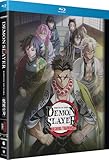
- Demon Slayer: Kimetsu No Yaiba Standard Edition Part Two
- Product type: PHYSICAL MOVIE
- Brand: Crunchyroll
For exorcist weapons and demon lore
Choose Blue Exorcist. Training, rituals, weapons and the boundary between the human and demon realms give the action a recognizable exorcist identity, even though the modern school setting changes the atmosphere.
For named swords, squads and escalating duels
Choose Bleach. It delivers the most sustained sword-centered structure, but its size means you should expect a longer journey and more extensive faction storytelling.
For magic spectacle and ensemble momentum
Choose Black Clover. Its fights are less sword-realistic and more about combining powers, protecting teammates and overcoming a seemingly impossible magical gap.
For a short monster story
Choose Bone Collection. It is the cleanest option when you want a concise exorcist premise in print rather than another multi-season anime commitment.
Recommended watch order for different viewers
If you want one immediate next show
- Watch Jujutsu Kaisen first.
- Move to Blue Exorcist if you miss explicit demon lore and training institutions.
- Try Bleach when you are ready for a much larger sword-and-spirit commitment.
If sword fights matter more than demons
- Start with Bleach for the strongest sword-and-faction emphasis.
- Follow with Jujutsu Kaisen for tactical supernatural combat in a modern setting.
- Use Black Clover when you want swords combined with large-scale magic.
If demons matter more than the setting
- Start with Blue Exorcist, whose premise explicitly centers on the human and demon realms.
- Try Jujutsu Kaisen for a darker reinterpretation in which curses arise from negative emotion.
- Read Bone Collection for a shorter yokai-and-exorcist experience.
If you want the longest possible battle saga
Pick Bleach first, then Black Clover. Both reward viewers who enjoy large casts, evolving abilities and repeated power-system expansion. Jujutsu Kaisen is the better choice if you want a more concentrated modern horror experience rather than the broadest possible mythology.
What to expect when moving on from Demon Slayer
None of these series reproduces the exact balance of Taisho-era travel, sibling devotion, demon tragedy and ufotable’s visual presentation. The most useful way to choose is to identify the element you are actually chasing. If it is the emotional bond between a human and a transformed family member, expect every recommendation to offer a variation rather than a duplicate. If it is the corps structure and sword forms, Bleach is the strongest structural successor. If it is the fear of supernatural beings born from human suffering, Jujutsu Kaisen comes closest in atmosphere. If it is the literal demon-hunter vocabulary, Blue Exorcist is the clearest match.
The Demon Slayer official USA site states more than 3 million copies sold in a site-stated historical figure; the page does not give a publication year for that number, so it should not be read as a current sales total. That figure explains the scale of the franchise’s audience, but it does not change which follow-up is right for you. Match the next series to the specific experience you want, not to sales rankings.
What’s actually slowing this PC down?
Pick the symptom - the matching free tool is one click away.
Quick Recap
Product prices and availability are accurate as of the date/time indicated and are subject to change. Any price and availability information displayed on Amazon at the time of purchase will apply.

