The Tool Desk
Outbyte Driver Updater FREEScan for outdated or missing drivers - takes under a minuteDriver Scan →Outbyte PC Repair FREERepair Windows errors before they cause bigger problemsFix Now →The best ARC Raiders weapon build is the one whose handling and amplified behavior match the fight you expect to take—not a universal weapon ranking. Since the October 8, 2026 Frozen Trail update, weapon amplification adds a fifth quality level and branches that can change how some guns behave. Use those branches to shape a weapon around close engagements, longer sightlines, sustained fire, or a mixed raid, then check its current in-game unlocks and effects before committing resources.
What makes a weapon build “best” in ARC Raiders?
A useful build decision starts with the fight, not a tier list. A weapon that suits quick close-range engagements may be a poor fit for a player who prefers careful shots at distance. A configuration that supports long firing stretches may matter less if you usually take brief shots and reposition. And a raid focused on ARC can ask for different priorities than one where encounters with Raiders are the main concern.
As an Amazon Associate I earn from qualifying purchases.
Think of a build as a set of trade-offs. Before choosing a gun or branch, consider:
Recommended Free Tools
- Target: Are you mainly preparing for Raiders, ARC, or a mix of both?
- Distance: Where do you expect to fight, and how often can you control that distance?
- Handling: Does the weapon ask for accuracy and recoil control you can deliver under pressure?
- Firing rhythm: Do you favor measured shots, short bursts, or staying on the trigger longer before reloading?
- Investment: What quality level, unlocks, ammunition, and replacement risk are reasonable for this raid?
- Skills: Do your skill selections reinforce the way you want to use the weapon?
These are decision criteria, not a claim that one option wins on a measured damage or win-rate comparison. Embark’s official Frozen Trail materials describe new weapon behaviors, but do not publish a complete current matrix of amplified branches, costs, unlocks, or comparative performance. No exact build can responsibly be called the current winner without those details.
#1 Best Overall

- Game-Themed Mechanical Spider Desktop OrnamentClassic ARC Raiders Leaper stylized geometric mecha shape, premium 3D printed home decorative figurine, perfectly fits game room, desk, shelf, cabinet display, unique futuristic industrial style home decor to elevate your space atmosphere.
- Remote Controlled RGB Glowing Atmosphere LightBuilt-in colorful RGB LED luminous core, equipped with dedicated infrared remote control. Freely switch multiple light colors, breathing flash, steady glow & gradient lighting modes, create cool sci-fi ambient night light decor for bedroom, game space and workstation.
- Highly Detailed Articulated Display SculptureFull movable ball joint structure, adjustable diverse posing angles, stable shape retention & exquisite mechanical texture.
- Premium Durable Eco-Friendly 3D Print CraftHigh-toughness environmental printing material
- Perfect for birthday, holiday, housewarming present, stylish decorative accent for man cave, game room, office desk and living room.
It helps to separate three questions that are often collapsed into “What is best?” First, what is the weapon’s intended job in your raid? Second, does its handling suit you well enough to perform that job? Third, is the progression and resource commitment sensible for how often you expect to use it? A branch that looks appealing on paper may not be worth pursuing if it pushes a gun toward a role you rarely need, or if you cannot reliably use its behavior in the encounters you take.
For a fair comparison, keep the target and distance consistent. Compare two choices for the same kind of fight rather than comparing a precision setup in open space with a close-range option in a cramped encounter. Also consider how long you stay exposed while firing, how often you need to reposition, and whether accuracy or recoil control is a meaningful constraint for you. The official update information confirms that branches can change weapon behavior, but it does not supply numerical rankings on these axes.
What changed with amplified weapons?
Frozen Trail launched on October 8, 2026. Its update brought weapon amplification, a new map, new threats, and new weapons. Embark describes amplification as a progression system tied to the Outpost Research Workstation: it adds a fifth quality level for a range of guns and offers branching abilities or enhancements that can alter how a weapon behaves. The initial rollout covered 15 weapons, according to the ARC Raiders team’s September 23 preview.
Do these 3 things before closing this tab:
1Fix the driver behind crashes, sound loss and screen glitches2Repair Windows errors before they cause bigger problems3Scan for outdated or missing drivers - takes under a minuteThat changes how older loadout advice should be read. A weapon name alone may no longer tell the whole story: a branch can move a familiar gun toward a different role. At the same time, the existence of a branch does not prove it is stronger for every player or encounter. Embark framed the system as a way to give more room to favorite weapons, saying: “We know that highly-skilled Raiders are loyal to their favorite weapons, but that means others barely get used – that’s why we’ve been building an upgrade system that totally reimagines some of the guns you’re already used to.” That is the developer’s rationale, not a published performance ranking.
The official examples illustrate role changes rather than universal recommendations:
| Official example | What Embark showed | What it can tell you | What it does not establish |
|---|---|---|---|
| Burletta | An automatic version | Amplification can change a familiar weapon’s firing behavior. | Whether the automatic branch is more effective, its exact handling, or its best target. |
| Renegade | A scoped version | A branch can support a longer-sightline approach. | Damage, accuracy, effective range, unlock cost, or superiority over another option. |
| Rattler | An incendiary example with a 64-bullet magazine | A branch can pair an ammunition effect with an example of sustained fire. | A general magazine capacity, measured damage-per-second benefit, or best use against a particular enemy. |
The 64-bullet figure belongs to the example configuration in Embark’s preview; it is not a general capacity claim for every Rattler. Likewise, the examples show possible behavior changes, not a tested set of winning builds.
The fifth quality level also makes progression part of the build decision rather than an afterthought. Before investing, check the quality and branch requirements currently displayed for the weapon you want to use. The October 8 patch notes and September 23 preview establish the system’s shape, but do not list every weapon’s unlock conditions, material costs, or branch effects. Those details matter: a build is not a practical recommendation if its progression burden is unsuitable for your plans, and guessing at costs can lead you to commit resources to the wrong route.
Amplification should also be distinguished from a conventional attachment recipe. The verified examples describe behavior changes—automatic fire, a scope, incendiary ammunition, and the Rattler’s example magazine—not a complete set of attachments or a tested combination. Do not infer that a particular attachment is required, that a shown configuration is available on every weapon, or that all amplified weapons follow the same progression path.
Build direction for close-quarters and aggressive play
If you prefer to close distance, take initiative, and resolve encounters quickly, look for a weapon and branch whose behavior supports close-range handling and the engagement you intend to take. The key question is not simply whether the weapon fires quickly. Consider whether you can control it while moving or reacting, whether the branch’s behavior suits the amount of time you expect to be exposed, and whether the likely target is a Raider, ARC, or both.
The official material does not identify a definitive close-quarters weapon or list the current amplified effects and costs for every gun. It would therefore be misleading to prescribe a specific Burletta or other weapon branch as the best aggressive build. Instead, inspect the available in-game branch descriptions and ask:
Rank #2
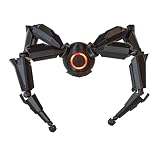
- Design: Hand-fine modeled to replicate the iconic in-game Leaper character with precise details.
- High-Quality 3D Printing: Crafted via 3D printing for sharp details and sturdy structure, ideal for collection.
- Smart Remote Control RGB Lights: Features upgraded remote-controlled LED lighting with 13 optional colors and stepless brightness adjustment. Easily switch colors and adjust light intensity remotely to create diverse cool visual atmospheres.
- Specified Size: Measuring 5.1"×5.1", the space-saving size fits perfectly on desks, shelves and display cabinets. It works as a stylish ornament to build a unique gaming-themed space.
- Perfect Fan Collection & Gift:Blending highly restored modeling and customizable lighting, it boasts high ornamental and collection value. An ideal gift for game fans and model collectors for birthdays and various festivals.
- Does the branch support the distance at which you actually take fights?
- Does its handling fit your ability to keep shots controlled when an encounter becomes urgent?
- Will its benefit matter against the targets you expect, or is it specialized for a different kind of fight?
- Can you afford the progression and replacement exposure for a weapon you plan to use aggressively?
For an aggressive build, a theoretical advantage at a distance you rarely fight is less useful than behavior you can exploit reliably in your normal encounters. Treat that as a way to evaluate the branch, not as a claim that a particular branch has a verified advantage.
Free tools Windows power users keep installed
One-click scans. No signup required.
Aggressive play can also make the cost side more important. If you expect to take risky fights or use the weapon frequently, think about what losing or needing to replace it would mean for your next raid. The official materials do not publish a universal replacement-cost comparison, so make that judgment from the current in-game economy and your own inventory rather than assuming a high-quality weapon is automatically the sensible choice. A build should fit not just the encounter but also the amount of risk you are willing to accept.
Build direction for precision and longer sightlines
For deliberate shots at longer sightlines, prioritize a configuration that helps you acquire and manage the view you want. Embark’s amplified Renegade example is a scoped version, so it is a verified illustration of how amplification can support this style. It does not establish that the Renegade is the strongest precision weapon, that its scope improves damage or accuracy, or that it is appropriate at every distance.
Check the actual in-game branch description rather than inferring its performance from the word “scoped.” Then judge whether the configuration suits how you aim and how often your raids create clear sightlines. If fights regularly move close or targets interrupt your aim, a longer-sightline configuration may not match the encounter even if the weapon appeals to you. The official sources do not supply a complete precision-build comparison or exact current attachment recipe.
When weighing a precision-oriented choice, look at the whole engagement rather than the sight alone. Ask whether your usual routes give you time and space to use the view, whether you can make accurate shots consistently, and whether you will have another plan when an encounter does not stay at range. The available official example verifies a scoped Renegade, not its effective distance, accuracy, or results against Raiders or ARC. Those remain details to confirm in the current game rather than conclusions to draw from the preview.
PC Slower Than It Used to Be?
A free scan shows the junk files, broken settings and background clutter dragging Windows down - then fixes them in one click.Free scan · Windows 10 & 11Crashes, No Sound, or Screen Glitches?
Random freezes, missing sound and display glitches usually trace back to one bad driver. Find and replace yours safely.Free scan · under a minuteBuild direction for sustained fire
If your preferred approach is to keep firing rather than rely on isolated shots, look for a branch whose demonstrated behavior supports that rhythm. Embark’s Rattler example combines incendiary ammunition with a 64-bullet magazine. It shows that an amplified configuration can be presented around a sustained-fire role, but the preview does not report measured damage, firing duration, reload behavior, or results against specific targets.
Use the example as a prompt for questions, not as a performance guarantee. Check what the current branch says it changes, how much firing time you gain in practice, and whether the ammunition behavior fits the enemies you expect. The official sources do not provide enough detail to calculate a damage-per-second advantage or recommend the Rattler as a universal sustained-fire choice. Nor should the 64-bullet example be repeated as a general statistic for every Rattler configuration.
Sustained fire has trade-offs worth checking even when the example looks attractive. A larger example magazine does not by itself establish how much ammunition a configuration consumes over a raid, what its reload timing is, or how effective its incendiary behavior is against any particular target. If ammunition availability matters to your plans, verify what you can bring and replenish in the current game. Likewise, consider whether staying on the trigger fits your exposure and accuracy habits, or whether you usually benefit more from short bursts and repositioning. These are practical questions for evaluating a build, not claims about an unverified Rattler performance advantage.
Build direction for mixed Raiders-and-ARC raids
A mixed raid rewards flexibility: a weapon that is useful across targets may be preferable to one that is narrowly suited to a single encounter, depending on your route and priorities. The clearest official context here is the Anvil. In the October 8, 2026 patch notes, Embark moved it from green to blue rarity, explaining that its versatility against Raiders and ARC and its performance relative to weapons at or above its former rarity motivated the change.
What’s actually slowing this PC down?
Pick the symptom - the matching free tool is one click away.
That update also changes how to read older advice. Anvil should be considered at its new blue rarity, not treated as a green-rarity option in a current build discussion. The notes identify Bantam as taking the uncommon hand-cannon role. They also list Bantam and Stiletto as new weapons. Those facts establish the update’s weapon and rarity context, but the official material does not provide a complete side-by-side build comparison for them, or enough detail to declare either the best choice for a mixed raid.
Rank #3

- Durable solid 3D printed structure for long-lasting daily use
- Exact in-game Mk.3 loot crate replica for ARC Raiders collectors
- Weighted anti-slip base to avoid sliding and tipping over
- Smooth matte finish prevents scratches on all gamepad surfaces
- Fully pre-assembled compact design, ready for instant desktop display
When choosing for a mixed raid, compare the current in-game descriptions for the targets and distances you expect. Consider whether the weapon’s quality level and progression cost are worth its potential versatility in your plans. Anvil’s official rationale makes it a relevant candidate to assess, not a universal answer for every Raider or ARC encounter.
The rarity change is an important comparison point, but it is not a promise that Anvil is the right purchase or progression target for every player. Its former green status should not anchor an updated cost judgment: check its current blue-rarity context and compare it with what you can reasonably invest in the game now. The patch notes explain why Embark changed its rarity; they do not provide a current price list or declare it more efficient than Bantam, Stiletto, or every other option.
If you are choosing between broad flexibility and specialization, make the trade explicit. A mixed raid may favor a weapon whose role is useful across the encounters you expect, while a raid built around one target or distance may justify a more focused choice. The official statement about Anvil supports its versatility as Embark’s rationale, but does not establish a measured advantage over other weapons. Treat it as a candidate for your own target mix, not as a universal answer to the player question “Best weapons for fighting Arc right now?”
How to fit weapon choices to the revised skill tree
Weapon amplification is not the only system to account for in Frozen Trail. The October 8 patch notes describe a revised skill tree with a binary choice in the middle branch. At the end branches, after the required investment, players can select up to two of three skills. The tree can be reset.
That means a weapon and its supporting skills should be treated as choices that refine a playstyle, rather than as one mandatory package for everyone. Decide what you want the weapon to do first, then review the current skill choices for ways to support that approach. Because the patch notes do not name a universal winning tree or give a complete weapon-to-skill matrix, do not assume that one skill setup is best with every amplified weapon.
The ability to reset the tree gives you a way to change your selections, but it does not supply missing information about a weapon branch. Before changing skills, read the current in-game descriptions and required investment so you understand what the choice affects. If you are still deciding between styles, treat the tree as adjustable rather than locking yourself into an assumed universal build.
Keep the tree’s choice structure in mind while planning: the middle branch is a binary choice, while the end branches allow up to two of three skills after the required investment. That is more specific than simply saying the tree has been “updated,” and it means you should inspect the requirements and alternatives rather than assuming every option can be selected together. The reset function is useful if your priorities change, but the patch notes do not say that a reset makes every other part of a weapon build free to change or removes weapon-progression requirements.
A practical way to choose and verify a build
- Name the job. Decide whether the build is for close engagements, precision at longer sightlines, sustained fire, or flexibility across Raiders and ARC.
- Choose the distance and target. Be specific about the fights you expect. “Good against enemies” is not a useful test if the branch is meant to change a particular kind of firing behavior.
- Inspect the current amplified branch in game. Use the Outpost Research Workstation progression and read the branch’s actual description. Do not rely on pre-Frozen Trail videos or lists to supply a current branch effect.
- Check investment before spending. Confirm the quality level, unlock conditions, and costs shown in the current game. The official sources summarized here do not enumerate those details for every weapon.
- Match the skill choices to your intent. Review the revised tree and its investment requirements. Use the reset option if you need to revise your selections, rather than assuming that another player’s configuration is mandatory.
- Recheck the build when the patch state changes. Weapon behavior, availability, and progression details are tied to the live game. Confirm the current branch text and update state before treating any advice as current.
Older loadout material can still give a sense of how players think about weapon-by-weapon choices, but a February 2026 creator loadout video predates Frozen Trail and cannot verify the fifth-tier amplification paths. Similarly, a single community post asking “Best weapons for fighting Arc right now?” captures a real question players ask, not a verified meta result.
Use a short checklist when comparing two real options in the game: target, expected distance, firing rhythm, handling demands, quality and unlock burden, ammunition availability, and how much replacement risk you accept. Keep the comparison on equal terms—same kind of encounter and similar expectations—rather than treating a scoped example or a large-magazine example as proof of a broad ranking. If you change your playstyle, revisit the branch and skill choices instead of carrying over an old recommendation unchanged.
Finally, separate gameplay costs from optional access or cosmetic purchases. Embark’s October 8 Collector Set DLC announcement describes optional digital cosmetics, tokens, and Reward Pass access; those are not physical items needed to make a weapon build and do not establish a combat advantage. The official game page lists digital access platforms, but platform availability can vary by region. A DLC purchase should not be treated as a prerequisite for the weapon choices discussed here.
Rank #4

- 【Size】 Dimensions: 16" x 32" (41 x 82 cm) with thickness of 0.12" (3 mm) providing ample space for mouse movement and keyboard placement
- 【Material】100% polyester top surface with anti-slip natural rubber base ensuring stability during use
- 【Quality Craftsmanship】Hemmed edges and premium product by Raiders Market, #1 ARC Raiders fan merch shop.
- 【Unique Design】 Features data on hostile ARCs with authentic blueprint styling for gaming enthusiasts
- 【Enhanced Surface Smooth polyester surface optimized for precise mouse tracking and control during gameplay
What this guide can—and cannot—recommend
The confirmed update details support a playstyle-based way to evaluate builds: amplification adds a fifth quality level and branching behavior changes; Embark illustrated an automatic Burletta, scoped Renegade, and incendiary Rattler example; and the skill tree was revised. The same evidence does not establish a complete current list of branch effects, unlocks, costs, or measured performance across all amplified weapons, including Bantam and Stiletto.
Quick wins for a faster PC:
Fix the driver behind crashes, sound loss and screen glitchesFind Drivers →Clear out junk files and repair common Windows errorsFree Scan →For that reason, the reliable recommendation is to choose by the behavior and fight you need, then verify the exact branch in the current game. No official comparison in the cited material establishes a universal best weapon, a best build for each playstyle, a time-to-kill ranking, or a win-rate advantage. If a guide names an exact branch as the current winner without current branch details and evidence, treat that ranking cautiously.
Frequently Asked Questions
What changed with weapon amplification in Frozen Trail?
The October 8, 2026 update added weapon amplification through the Outpost Research Workstation. It adds a fifth quality level for a range of guns and branching enhancements that can change weapon behavior. Embark’s September 23 preview said the initial rollout covered 15 weapons.
Which amplified weapon build is best for my playstyle?
There is no verified universal winner in Embark’s official update information. Start with your intended target, engagement distance, firing rhythm, handling comfort, and progression budget, then inspect the current branch description in game.
Does the scoped Renegade prove it is the best precision weapon?
No. Embark showed a scoped Renegade as an example of amplification changing a weapon’s role. The example does not establish its damage, accuracy, effective range, unlock cost, or superiority over other weapons.
Is every Rattler magazine 64 bullets after amplification?
No general capacity claim is established. Embark’s preview used an incendiary Rattler with a 64-bullet magazine as an example configuration; do not assume that figure applies to every Rattler.
What happened to the Anvil in the Frozen Trail update?
The October 8 patch notes moved Anvil from green to blue rarity. Embark said its versatility against Raiders and ARC and its performance relative to weapons at or above its former rarity motivated the change. Bantam took its uncommon hand-cannon role.
Can I change my skill setup if my weapon build changes?
The October 8 patch notes say the revised skill tree can be reset. They also describe a binary middle-branch choice and end-branch choices that let players select up to two of three skills after the required investment. Check current in-game requirements and effects before changing selections.
Are older ARC Raiders loadout videos still reliable for amplified weapon paths?
They can provide general context about weapon-by-weapon loadout choices, but a February 2026 creator video predates Frozen Trail and cannot verify the fifth-tier amplification paths. Check the live in-game branch details instead.
The Bottom Line
Choose an ARC Raiders build by the fight you expect and the weapon behavior you can handle, not by an unsupported universal ranking. Frozen Trail’s amplification examples show how a familiar gun can shift roles, but exact branch effects, costs, and unlocks should be verified at the Outpost Research Workstation in the current game.
Quick Recap
Product prices and availability are accurate as of the date/time indicated and are subject to change. Any price and availability information displayed on Amazon at the time of purchase will apply.




