
What’s actually slowing this PC down?
Pick the symptom - the matching free tool is one click away.
Short answer: wait for an authoritative rulebook or publisher page before choosing Finals Week. No reliable source currently establishes its player count, playing time, role structure, win conditions, or availability, so any direct rules comparison would be guesswork. For games you can evaluate now, choose Deception: Murder in Hong Kong for a short clue-solving game that scales from four to twelve players, Secret Hitler for election-driven bluffing with five to ten players, The Resistance for mission teams and repeated votes, or Clue Conspiracy for a mainstream mystery with two hidden-role teams.
The right choice depends less on the word “co-op” than on what your group wants to do: interpret one fixed clue, pass and vote on governments, assemble mission teams, or investigate a hidden plot. The guide below separates those experiences and shows what works best at four, six, eight, and ten players.
As an Amazon Associate I earn from qualifying purchases.
What is known about Finals Week?
At present, there is no authoritative Finals Week rulebook, publisher product page, verified player-count listing, duration, or retail record available in the material used for this comparison. That means its central questions remain unanswered: Is it a deduction game, a hidden-team game, a party game, or a hybrid? Does one player moderate? Are roles revealed? Can anyone be eliminated? How are ties and accusations handled? Is the game intended for four people or for a much larger table?
Do not infer answers from the title. “Finals Week” could describe a school setting, an exam theme, a round structure, or something unrelated to education. Until the publisher identifies the game and publishes rules, claims about its mechanics would be speculation rather than a useful recommendation.
#1 Best Overall

- Hot or cold. Soft or hard. Wizard or…not a wizard? Work together to decide where your clue falls on the spectrum in this telepathic party game.
- POLYGON: “One of the best party games we’ve ever played.”
- NYT WIRECUTTER: Featured in “The best board games”
- Works in groups from 2-12+ people. Great for large parties, offsites, family gatherings, and anywhere you need instant fun.
- 5 seconds to set up, 1 minute to learn, 30 minutes to play
What to verify before buying or scheduling it
- Player count: confirm the minimum and maximum, and whether the range applies to the base game rather than an expansion.
- Playing time: look for a typical round length and whether that estimate includes teaching, setup, and discussion.
- Role information: find out who knows teammates, who knows the solution, and what information is public.
- Turn and vote procedure: check how teams, proposals, accusations, or missions are selected.
- End conditions: identify the exact number of successes, failures, rounds, or votes needed to finish.
- Elimination and moderation: establish whether players leave the game and whether a non-playing facilitator is required.
- Availability: verify a current publisher or retailer listing in your country rather than relying on an undated mention.
Once those facts are published, Finals Week can be compared on the same axes as the games below. Until then, the responsible verdict is “unverified,” not “better” or “worse.”
At-a-glance comparison
| Game | Supported players | Time or end point | Core activity | Information pattern | Voting | Elimination | Tone |
|---|---|---|---|---|---|---|---|
| Deception: Murder in Hong Kong | 4–12 players (Gen42 Games product page) | About 20 minutes (Gen42 Games product page) | Interpret scene tiles to identify a murderer and method | Forensic Scientist knows the solution; investigators and murderer interpret the clues | Not stated as the central procedure in the cited product description | Not stated in the cited product description | Forensic murder mystery |
| Secret Hitler | 5–10 players (official Secret Hitler/Blackbox site) | Ends through policy and election conditions in the rules | Elect governments, pass policy tiles, and expose hidden fascists | Liberal majority faces hidden fascists; the rules define asymmetric team knowledge | Government elections are the main engine | Not stated as a routine feature in the cited official description | Political bluffing and dark historical theme |
| The Resistance | Not stated in the cited rules FAQ | Ends after three successful or three failed missions, or five rejected team votes in one round (rules FAQ) | Propose mission teams and judge whether missions succeed | In the regular game, spies know one another; resistance members do not | Team approval votes determine mission composition | Role cards are not revealed as a normal information solution | Clean science-fiction resistance theme |
| Clue Conspiracy | 4–10 players (Hasbro official instructions) | Not stated in the cited official instructions | Friends try to save Mr. Coral and uncover the plot; Conspiracy members try to complete his murder | Two opposing secret-role teams pursue different objectives | Not stated as the defining procedure in the cited description | Not stated in the cited official instructions | Mainstream mansion mystery |
The table deliberately leaves unsupported specifications open. A missing figure is not evidence that a game lacks a feature; it means the cited official material does not establish it.
Deception: Murder in Hong Kong — best for flexible groups and a short social-deduction game
Deception: Murder in Hong Kong is the clearest recommendation when your group wants a compact game that accommodates both a small table and a large party. Gen42 Games lists four to twelve players and about 20 minutes. That range makes it the strongest answer to “what is the best deception game for 4 players?” among the verified choices, while still giving a ten- or twelve-person group room to play together.
How the clue-solving loop works
A Forensic Scientist knows the solution to the murder. Instead of explaining it directly, that player communicates through scene tiles. Investigators examine those fixed visual clues and try to infer the relevant evidence. The murderer is also interpreting the same clues and can misdirect the table. The experience therefore centers on reading a constrained signal rather than freely inventing evidence.
That structure rewards players who enjoy explaining why a particular tile matters. It also gives quieter participants a concrete object to discuss: the table is not arguing from an entirely blank slate. The murderer’s challenge is to blend into interpretations of the tiles, while investigators must distinguish a persuasive theory from a plausible decoy.
Why it fits four, six, eight, or ten players
- Four players: this is the only verified option here with an explicitly published four-player minimum that is designed around a forensic clue. Expect a tighter discussion, with each interpretation carrying more weight.
- Six players: enough voices exist for competing theories without the table becoming unwieldy. Choose it when your group prefers evidence talk to formal elections.
- Eight players: the fixed clues keep a larger discussion focused. Give each player room to state a theory before the group converges.
- Ten players: it remains within the published range, but appoint an informal timekeeper so every interpretation gets heard during the approximately 20-minute session.
Trade-offs
Choose Deception when a short round and a murder-mystery frame matter more than a long sequence of votes. The cited product description does not establish a separate facilitator requirement, a player-elimination rule, or a formal voting procedure, so do not promise those features when teaching the game. If your group specifically wants government formation or mission-team approval, one of the next two games is a closer match.
Secret Hitler — best for five to ten players who enjoy elections and asymmetric information
Secret Hitler is built around a liberal majority and hidden fascists. The official game description and rules require players to elect governments and enact policy tiles. That makes the game’s central drama procedural: every proposed government is a public claim about who can be trusted, and every enacted policy changes what the table believes about the remaining hidden roles.
Quick wins for a faster PC:
Fix the driver behind crashes, sound loss and screen glitchesFind Drivers →Repair Windows errors before they cause bigger problemsFix Now →Scan for outdated or missing drivers - takes under a minuteDriver Scan →What players are doing each round
The group debates a proposed government, votes on whether to approve it, and then deals with the policy outcome described by the rules. Because the fascists are hidden inside the majority, a failed vote, an unexpected policy, or a suspicious partnership can become evidence in the next discussion. Players must evaluate both what someone says and which government they were willing to support.
This is a good fit for people who like bluffing with a visible procedural record. It is less suitable for a group that dislikes political themes or wants everyone to work from the same factual clue. The asymmetry is intentional: hidden-team knowledge drives the arguments, so confident deception and careful memory matter as much as deduction.
Player-count guidance
- Five players: this is the published minimum. With fewer voices, each election argument has a large effect, and repeated voting can feel especially personal.
- Six to seven players: choose it when your group wants a focused election game in which every government proposal is easy to track.
- Eight to ten players: the larger table gives hidden factions more room to maneuver and creates more competing explanations for each policy result.
The official site also states that the game is available free under the Creative Commons Attribution-NonCommercial-ShareAlike 4.0 license. That is a licensing fact, not a claim that a particular physical edition, regional listing, or commercial product is in stock. If you need a boxed copy, verify the current edition and contents separately.
Rank #2

- VIBRANT COLOR GAME: Challenge friends and family to connect words with colors in the engaging Hues and Cues, featuring 480 colorful hues for limitless fun!
- FUN FOR ALL AGES: Perfect for family game nights, parties, or casual play, this game brings players of all ages together with simple rules and exciting gameplay.
- UNIQUE EXPERIENCE: No two rounds are the same! Hues and Cues provides a new and unique experience with each playthrough, keeping the fun fresh and engaging.
- CREATIVE AND INNOVATIVE: Use just one or two word clues to guide others to the right hue, sparking creative thinking and fostering fun team interaction.
- QUICK TO LEARN: Hues and Cues offers fast-paced action with easy rules, making it enjoyable for both casual players, and gaming enthusiasts.
When Secret Hitler is the wrong choice
Do not select it for a group that wants a neutral mystery theme, a very short clue round, or a game that avoids political subject matter. It is also not the answer for four players: the official range begins at five. If your table’s main pleasure is interpreting a shared visual clue, Deception is more direct.
The Resistance — best for mission-team votes and repeated accusation
The Resistance is the option for a group that wants accusation and team selection without revealing role cards as the normal way to settle the game. The rules FAQ says that spies know one another in the regular game. Players propose mission teams, vote on those teams, and then use the mission result to update their suspicions.
The game’s decisive end conditions
The game ends after three successful missions, three failed missions, or five rejected team votes in a round. Those conditions give the discussion a clear rhythm: assemble a team, approve or reject it, observe the result, and decide which players can still be trusted. A rejected proposal is information even when nobody goes on a mission, because it records who supported or opposed the team.
Why groups choose it
- Mission composition is the focus: the key question is who should be sent, not which policy tile should be enacted.
- Accusations persist: players can challenge one another across several proposals rather than resolving suspicion in one vote.
- Role cards stay meaningful: the regular rules do not rely on publicly revealing every role to explain the outcome.
The cited FAQ does not establish a player-count range or a typical duration, so check the rule set for your edition before promising that it supports a particular table size. That qualification matters when someone asks what to play with six or eight people: Resistance may be an excellent fit, but the available official material here does not provide the number needed for a definitive count-based recommendation.
Who should avoid it
Choose another game if your group wants a fully identified forensic solution, a familiar mansion setting, or a policy-and-election mechanism. Resistance is strongest when players enjoy the uncertainty created by team proposals and mission outcomes themselves.
The Tool Desk
Outbyte Driver Updater FREEFix the driver behind crashes, sound loss and screen glitchesFind Drivers →Outbyte PC Repair FREERepair Windows errors before they cause bigger problemsFix Now →Clue Conspiracy — best for a familiar mystery theme with two hidden teams
Hasbro describes Clue Conspiracy as a four- to ten-player game. Friends try to save Mr. Coral and uncover the hidden plot, while members of the Conspiracy try to carry out his murder. That opposing-objective structure gives a mainstream mystery theme to a social-deception game without requiring the table to learn an unfamiliar setting first.
How its team conflict differs
The important distinction is the two-team objective: Friends are trying to prevent the murder and discover the plot, while Conspiracy members are trying to complete it. This creates a straightforward answer to “which game lets everyone lie?”—players can conceal their team identity while presenting actions as protection or investigation.
Player-count guidance
- Four players: it meets the published minimum and is the alternative to Deception when the group prefers the Clue universe to a forensic-scene format.
- Six to eight players: the hidden-team premise has enough room for discussion and counterclaims while staying within the official range.
- Ten players: it reaches the published maximum, making it a useful mainstream option for a larger party that wants a recognizable mystery frame.
The cited official instructions do not establish a typical playing time, separate facilitator requirement, elimination rule, or central voting procedure. Do not advertise those as guaranteed features. Select Clue Conspiracy for its theme and opposing secret objectives, not because the available description proves it follows the same turn structure as Resistance or Secret Hitler.
Independent reader supportYour contribution helps us test, update, and keep practical guides available for everyone.What “co-op with a traitor” means in these games
People often use “co-op game with a traitor” to describe any table where most players share an objective and one or more players secretly oppose it. Strictly speaking, these titles are not identical forms of cooperative play. In Deception, investigators and the murderer have incompatible goals while the Forensic Scientist supplies the constrained clue. In Secret Hitler, liberals and fascists belong to hidden political teams. In Resistance, the resistance tries to complete missions while spies undermine team selection and outcomes. In Clue Conspiracy, Friends and Conspiracy members pursue opposing objectives around Mr. Coral’s murder.
Recommended Free Tools
The practical question is therefore not whether a game contains a traitor, but how betrayal is surfaced. A fixed clue makes Deception an interpretation contest. Elections make Secret Hitler a procedural trust game. Mission votes make Resistance a repeated composition problem. Clue Conspiracy uses a familiar mystery frame to organize the hidden-team conflict.
Rank #3
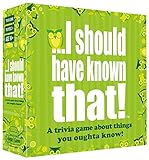
- Package Quantity :1
- In contrast to traditional trivia formats, you don't receive points for answering questions correctly. Instead, points are subtracted for every incorrect answer!
- Contains 110 cards with more than 400 questions about things that you should know
- An addictively entertaining trivia game where it will only be a matter of time before you hear yourself say ahhh!... I should have known that!
Choosing by the mechanic your group actually wants
Pick a clue-solving game
Choose Deception if players want to examine one set of forensic scene tiles and argue over what those clues imply. It is the strongest fit for a short social-deduction game and the only verified title here explicitly supporting four players with an approximately 20-minute playing time.
Pick an election game
Choose Secret Hitler if the group enjoys proposing governments, voting on them, and interpreting policy outcomes while hidden fascists try to steer the table. Its published range is five to ten, so it is unavailable as a four-player recommendation.
Pick a mission game
Choose The Resistance if the group wants team proposals, approval votes, and mission results that accumulate until three successes, three failures, or five rejected votes in one round. Confirm the player range in your edition because the cited FAQ does not state it.
Do these 3 things before closing this tab:
1Fix the driver behind crashes, sound loss and screen glitches2Repair Windows errors before they cause bigger problems3Scan for outdated or missing drivers - takes under a minutePick a familiar mystery
Choose Clue Conspiracy if recognition and theme are the priority. Its official four-to-ten-player range and Friends-versus-Conspiracy premise make it approachable for a mixed party, even though the available instructions do not establish its typical duration or detailed vote procedure.
Recommendations by group size
Four players
Start with Deception or Clue Conspiracy. Deception is the better answer when you want a compact deduction puzzle and a published approximately 20-minute duration. Clue Conspiracy is the better answer when the Clue setting and opposing hidden teams matter more. Secret Hitler is below its published minimum, and the available Resistance FAQ does not establish a four-player range.
Six players
Choose Deception for clue interpretation, Secret Hitler for elections, or Clue Conspiracy for a recognizable mystery. Resistance can also fit your desired style if your edition lists six players, but verify that number first because it is not stated in the cited FAQ.
Eight players
All three games with published ranges—Deception, Secret Hitler, and Clue Conspiracy—cover eight players. Let the mechanic decide: forensic clues, policy elections, or a two-team murder plot. Resistance remains a conditional choice until you confirm the player count for the rules you own.
Ten players
Deception, Secret Hitler, and Clue Conspiracy all publish ten as an available count (Deception continues to twelve). Deception keeps the round short, Secret Hitler gives a larger electorate more room for hidden factions, and Clue Conspiracy offers the broadest mainstream mystery framing. Check your edition details for Resistance before inviting a ten-person table.
A practical decision checklist
- Count the players. Remove any title whose published minimum or maximum does not include your table.
- Choose the information style. Select Deception for a shared visual clue, Secret Hitler for asymmetric political knowledge, Resistance for mission evidence, or Clue Conspiracy for opposing mystery teams.
- Set the time expectation. Deception is the only option here with an approximately 20-minute figure in the cited official product material. Treat the other games’ duration as edition-dependent until their rules state otherwise.
- Ask about theme comfort. Secret Hitler uses a dark political setting; Deception and Clue Conspiracy use murder mysteries; Resistance uses a science-fiction resistance frame.
- Confirm the rules source. Use the current publisher or official rules page for setup, end conditions, and component details, especially for Finals Week and for any edition of Resistance.
- Explain the win condition before dealing roles. Hidden information is only fun when players understand what success looks like for every side.
Bottom line on Finals Week versus the verified alternatives
There is no evidence yet to name Finals Week the winner of this comparison. Without an authoritative identity and rule set, it cannot be placed fairly against games with documented player ranges and mechanisms. For a choice you can justify now, pick Deception for four to twelve players and a short forensic-clue round; Secret Hitler for five to ten players who want elections and bluffing; The Resistance for mission-team votes and a three-success/three-failure structure; or Clue Conspiracy for four to ten players who want a familiar mystery and two secret teams. Revisit Finals Week only after its publisher supplies the missing specifications.
Quick Recap
Product prices and availability are accurate as of the date/time indicated and are subject to change. Any price and availability information displayed on Amazon at the time of purchase will apply.

