
Predictive movement technology lets a game show movement before the server has confirmed it. The client uses the player’s latest input to simulate an immediate result, then checks that estimate against the authoritative server and corrects any difference. Done well, this makes a high-latency connection feel responsive without handing control of the game state to the player’s device.
The trade-off is that prediction can be wrong. Corrections may appear as rubber-banding, and rollback can consume substantial CPU time. Machine-learning predictors may reduce unnecessary updates, but published accuracy and bandwidth figures remain specific to particular traces and test setups rather than universal promises for every game.
As an Amazon Associate I earn from qualifying purchases.
What predictive movement technology actually does
In a conventional online game, an input travels from the player’s device to a server. The server simulates the movement, sends back an updated state, and the client renders that response. The full round trip can make a fast game feel delayed.
Client-side prediction changes the order of presentation, not the authority boundary. The client immediately runs a movement simulation using the local player’s input. It sends that input to the server at the same time. When the server snapshot arrives, the client compares the authoritative result with its local estimate. If they differ, the client resets to the server’s state and replays inputs that the server has not yet processed.
#1 Best Overall

- BLUE LIGHT BLOCKING GLASSES: Our blue light glasses for women boast UV400 protection, blocking harmful blue rays from computer screens. With these bluelight glasses women, you can enjoy gaming, reading, or watching TV with no worries of eye strain.
- EYE RELIEF: Our blue light glasses are engineered to reduce blurry vision or strain caused by prolonged screen time. These womens blue light glasses aid in better sleep by preventing blue light from disrupting your natural sleep cycle, helping you fall asleep faster and enjoy a more restful night's sleep, making them the perfect christmas present.
- COMFORTABLE: Crafted from durable material, our trendy blue light glasses for woman or blue light glasses men ensure long-lasting comfort. The high-transmittance lenses accessories, gamer gifts for men, help keep your eyes relaxed. Perfect stocking stuffers, gifts for gamers men, christmas gifts for men, halloween costumes.
- LIGHTWEIGHT: These clear blue light glasses feature a lightweight frame, meaning they’ll stay comfy for long-term wear. Perfect as blue blockers glasses for women or mens blue light glasses, these non-prescription fake glasses for men can be worn throughout the day. The blue light blocking glasses women feature polycarbonate HD lenses, which are anti-reflective and restore true color.
- WORRY-FREE PURCHASE: If you experience any issues, our support team is ready to assist you quickly. These are the perfect costume glasses for cosplay dressing up.
Unity describes this approach as a way to apply input immediately and improve “game feel.” Roblox’s server-authority documentation describes a similar model in which the client predicts a few frames ahead, compares its result with the server, and rolls back and resimulates when necessary.
The authority boundary
Prediction does not mean the client is allowed to declare where its character really is. Roblox states: “In a server authority model, the server is the single source of truth for the entire game state, and clients are only trusted to report their own inputs.” The server therefore remains responsible for contested outcomes such as collisions, ability results and movement that affects other players.
This distinction matters for competitive games. A client can display an immediate local response, but it cannot permanently move itself through a wall by sending a fabricated position. The server validates the input against its own simulation and distributes the accepted state.
The Tool Desk
Outbyte Driver Updater FREEFix the driver behind crashes, sound loss and screen glitchesFind Drivers →Outbyte PC Repair FREERepair Windows errors before they cause bigger problemsFix Now →The prediction and reconciliation loop
A practical implementation follows a fixed-tick sequence. Using fixed simulation ticks helps the client and server refer to the same numbered moments rather than trying to reconcile arbitrary render frames.
- Capture input: Read movement, jump, crouch or ability input on a simulation tick and assign it a sequence number.
- Simulate locally: Apply that input immediately to the client’s predicted character.
- Send input: Transmit the input and its tick or sequence number to the authoritative server.
- Receive a snapshot: The server returns its state and identifies the last input it has processed.
- Compare states: Measure position, velocity, grounded state and other gameplay-relevant values against the local prediction.
- Rewind if needed: Reset the simulation to the authoritative tick, then replay buffered inputs after that tick.
- Render the correction: Apply small visual corrections smoothly while retaining the server’s state for gameplay decisions.
That final separation is important. A visual smoothing layer can hide a centimetre-scale discrepancy without changing the authoritative collision position. A large discrepancy may need to be shown more directly, because smoothing a genuine teleport or a denied action would leave the player looking at an outcome that is no longer true.
Prediction, rollback and interpolation compared
These techniques solve related but different problems. Prediction is primarily about making the local player’s input feel immediate. Rollback is a method for correcting a simulation by rewinding it and replaying inputs. Interpolation displays remote states between received snapshots; it does not predict the local player’s unacknowledged input in the same way.
Rank #2
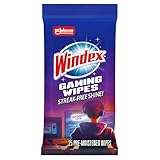
- WINDEX GAMING WIPES: effortlessly clean all your gaming gear and gaming electronics in one easy step with our new Windex Gaming Wipes
- AMMONIA FREE: our ammonia-free formula is safe to use on all of your favorite gaming equipment like consoles, headsets, controllers, screens, keyboards, and more
- PRE-MOISTENED WIPES: each wipe instantly removes dust, dirt, and stubborn smudges and fingerprints leaving a streak-free shine
- ANTI-STATIC: great for cleaning and wiping down your gaming gear and electronics leaving behind no visible residue
- COMPACT RESEALABLE PACKAGE: store your pack of Windex Gaming Wipes anywhere in your home for whenever a quick and easy wipedown is needed
| Approach | Responsiveness | Authority and cheat resistance | Correction visibility | CPU and memory cost | Determinism requirement | Typical scope |
|---|---|---|---|---|---|---|
| Client-side prediction with reconciliation | Immediate local input response | High when the server validates inputs | Small corrections when the estimate is close; visible snaps when it is not | Extra local simulation and input buffering | Client and server movement code must produce compatible results | Usually the local player or locally controlled objects |
| Rollback and resimulation | Immediate presentation followed by authoritative correction | High if the server remains authoritative | Errors can appear as sudden movement or altered outcomes | Potentially high because several ticks may be simulated in one rendered frame | Strong requirement for reproducible simulation | Any rollback-capable interaction or complete game-state slice |
| Remote-player extrapolation | Continues motion between updates | Server still decides the accepted state | Direction changes can cause visible snaps | Usually lower than full rollback | Prediction model need not reproduce the entire game | Other players or objects outside local control |
| Interpolation | Introduces a display buffer rather than removing network delay | Server-authoritative | Usually smooth until packets are late or missing | Relatively modest | Does not require identical client/server simulation | Remote entities and cosmetic motion |
| Server-side forecasting | Can mask latency for selected interactions | Centralized authority | Depends on forecast confidence and update policy | Server CPU and model-management cost | Requires validated forecasting and fallback rules | Entities or clients affected by latency |
Why prediction feels faster, and why it sometimes fails
Perceived latency falls even when network latency does not
Prediction cannot shorten the physical route between a player and a server. It removes the need to wait for that route before drawing the first response. Roblox characterizes an unpredicted round trip as potentially “laggy, unresponsive, and unplayable” for fast games; prediction makes the local input visible immediately instead.
Quick wins for a faster PC:
Repair Windows errors before they cause bigger problemsFix Now →Fix the driver behind crashes, sound loss and screen glitchesFind Drivers →Clear out junk files and repair common Windows errorsFree Scan →The benefit is largest for actions whose result can be estimated from local information: walking, steering or starting a jump. It is less certain for actions that depend on hidden server state, another player’s input, an authoritative hit test or a status effect applied elsewhere.
Corrections are the unavoidable cost
The client cannot know another player’s next input or a server-only event such as a stun. It may therefore predict movement that the server later rejects. Roblox notes that these mismatches are normal and can be made small and often imperceptible when the system is tuned correctly, while also warning that resimulation can produce a sudden movement artifact.
Common correction triggers include an unpredicted collision, a different friction or acceleration result, packet loss, a delayed snapshot, an ability that changes movement, or a client and server using different simulation rules. A correction is not automatically a networking failure; it is the visible evidence that the local estimate and authoritative state diverged.
Rollback spends CPU to buy responsiveness
Rollback may require the client to run many simulation iterations during one rendered frame. Unity gives an example in which a 300 millisecond connection can require about 22 frames of resimulation. The exact count depends on tick rate, snapshot timing and how much state must be replayed, but the engineering implication is general: better perceived latency can require more CPU, memory for buffered inputs and carefully deterministic code.
What’s actually slowing this PC down?
Pick the symptom - the matching free tool is one click away.
Can machine learning predict player movement?
Traditional dead reckoning extrapolates from recent position, direction and velocity, often assuming that an entity will continue in roughly the same direction. That is cheap, but it performs poorly when a player turns, stops or encounters an obstacle.
Rank #3

- Ergonomic & Adjustable Design: Fight "text neck" and improve your posture. Designed for comfort, it offers an adjustable height (7.1in-8.5in) (1.4in adjustable range) and angle (5°-85°) Please note: cell phone stand is only 9 inches tall—the length of a standard pencil
- Without blocking subtitles Perfect for office desk Tiktok Face Time Zoom video—this is the ultimate kitchen desk essential for phones! Perfect viewing experience while reducing neck back strain, A must-have for gamers streamers desk, and anyone who values both style and support!
- Sleek & Stable Design fits Otterbox Case: Say goodbye to bent cables, tangles, and tip-overs! LISEN’s stylish adjustable desk phone holder features a built-in charging hole and smart cable management, keeping your phone secure and your workspace clutter-free cool gadgets for men
- ANTI-SLIP DESIGN free hands: The under 10.00 items easy gadgets back and the bottom of this kitchen essentials for women are fully covered by anti-skid silicone, which LISEN stand up desk decor can provide maximum protection device from any scratches and slides
- Your Perfect Viewing Companion:If your product arrives damaged or breaks within 365 days, reach out to LISEN for a quick and hassle-free solution. Struggling with assembly, like tightening the screw? We’ve got your back! Your experience matters to us. (Product including: phone Holder stand*1, screw*1, hexagon screwdriver*1, specification*1)
The Smart Reckoning study by E.P. Duarte and colleagues adds a machine-learning decision layer. Its first phase predicts whether ordinary dead reckoning is likely to succeed. If a direction change appears likely, a second model predicts the new direction. The study used real World of Warcraft traces and area-of-interest information, targeting the problem of avoiding redundant movement updates in a large online world.
| Reported result | Figure | Qualification |
|---|---|---|
| Best Bagging configuration’s overall accuracy | 78.76% | Reported by Duarte and colleagues in the 2020 Smart Reckoning study using its World of Warcraft traces and experimental setup |
| Bandwidth savings versus no movement predictor for Bagging | 78.76% | Study-specific result, not a universal reduction for commercial games |
| Baseline Dead Reckoning accuracy in the reported comparison dataset | 44.54% | Applies to that dataset and comparison, not to every dead-reckoning implementation |
| Average inference time | 98 microseconds | Measured in the authors’ reported test setup |
The model was trained offline, so the paper reports no requirement for continuous in-game training. A shipped game could load a fixed predictor and use confidence thresholds to decide whether to suppress an update, request a correction or fall back to ordinary networking.
A separate 2019 preprint titled “Predictive Simulation” explores extrapolating future client states into server updates and examines regression and artificial neural networks for networked interactive environments. It supports the direction of research, but it is not evidence that neural prediction improves every commercial game.
Free tools Windows power users keep installed
One-click scans. No signup required.
What a standards-based architecture could add
The MPAI SPG-MDL V1.0 introduction groups latency mitigation into client prediction, time delay and time warp, noting that each has shortcomings. It describes a server-level approach in which “the server uses a predictive model to forecast player actions based on historical data and the current Game State when Latency-affected clients are detected.”
This points toward a hybrid architecture rather than an AI replacement for netcode. A server could remain authoritative, use forecasting only for latency-affected clients or high-value interactions, and choose an update policy based on model confidence. Low-confidence forecasts would trigger more frequent authoritative updates or revert to a conservative mode.
Such a system needs validation rules. A forecast must not grant an ability hit, movement advantage or collision result merely because a model assigned it a high probability. The model can decide how to present or transmit an expected state; the authoritative simulation still decides whether the action is legal.
Rank #4

- Easy Installation: Our gaming lights have been designed to enhance your entertainment experience. Simply position the led light bar next to your TV or game console to create a game room environment with ease. They come with USB power and a 60 inch cord for direct mounting and mobility
- Audio Syncing & Extensive Mode: The built-in high-sensitivity music sensor allows you to sync the TV led lights to your favorite music. Lights react and move to the beat of music, film and game audio, creating an incredible immersive sound and light experience – and all without the need for an additional hub. You can choose from 64+ patterns, including strobe, illusion, jump, energy, gradient, running, chasing, fluttering mode etc. Each mode can be applied to different scenes
- 64+ Chasing IC+RGB & W Effect: The independent control design of IC+RGB and white all-in-one multifunctional rgbw led bar lights monitor backlight allows you to easily switch the led lights for desk between IC+RGB and white to enjoy a variety of lighting effects, you can choose white lighting mode with high brightness for better illumination when working, etc. Choose IC+RGB lighting mode when you need to create an entertaining atmosphere for the light show, 16 million colours of Color changing rgb light bar let you dance to the beat and create a dynamic party atmosphere
- Dynamic and Dimmable Lights: 1%-full brightness free brightness adjustment gives you the flexibility to adjust dimmable led light bar for room decorations or a variety of occasions
- USB Powered: USB light bars for room can be powered by powernank, usb charger, TV, Monitor, laptop PC mainframe, making behind TV led lighting bar easy to install in any location.TV led lights are powered by the TV usb interface / PC mainframe, can be turned on/off synchronously with TV / PC
How game design could change
Faster traversal and denser scenes
If movement remains visually stable during ordinary latency, designers can support faster vehicles, more responsive traversal and denser multiplayer spaces without making every object wait for a server response. Prediction does not remove the need for server capacity, but it can make the same network delay less disruptive to moment-to-moment control.
Do these 3 things before closing this tab:
1Fix the driver behind crashes, sound loss and screen glitches2Clear out junk files and repair common Windows errors3Scan for outdated or missing drivers - takes under a minuteSelective simulation instead of predicting everything
Prediction is expensive, so an engine can apply it per entity. The locally controlled character and nearby objects involved in an interaction may receive full prediction and rollback. Distant characters can be interpolated, and low-priority objects can update less often. Unity documents per-entity prediction choices and warns that prediction carries a cost.
Bandwidth-aware massively multiplayer worlds
A movement predictor can suppress an update when the receiver’s estimate remains inside an acceptable error threshold. In a massively multiplayer online game, avoiding redundant updates for thousands of entities could matter more than shaving a small amount of latency from one player. The Smart Reckoning result illustrates this objective, but its measured savings should be treated as evidence for a method, not a guaranteed production percentage.
Deterministic and replayable gameplay code
Rollback works only when the client and server can reproduce the same simulation from the same inputs. Randomness, floating-point differences, physics order, time-dependent effects and platform-specific behavior must be controlled or represented explicitly. Roblox requires core simulation logic to run in a form that can be rolled back and resimulated.
Fairer authority without a sluggish feel
Keeping collision, abilities and contested outcomes on the server preserves a clear anti-cheat boundary. Letting the client present a provisional movement result preserves immediate control. This combination is more defensible than either trusting a claimed client position or forcing every local action to wait for acknowledgement.
Outdated Drivers Are Slowing You Down
One free scan finds every outdated or missing driver and matches the right update for your exact hardware.Free scan · exact hardware matchPC Slower Than It Used to Be?
A free scan shows the junk files, broken settings and background clutter dragging Windows down - then fixes them in one click.Free scan · Windows 10 & 11A new correction user experience
Games will need correction budgets and visual rules. Small position errors can be blended over a short interval. Larger errors may require a direct snap, a disabled input state, a knockback animation or an explicit gameplay explanation. The goal is not to hide every correction, but to make the reason for a correction understandable rather than presenting unexplained teleportation.
Best Value
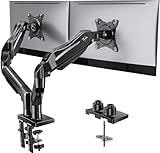
- Compatible with Wide Screens - To ensure compatibility with the dual monitor mount, your each monitor must meet three conditions at the same time: First, computer screens size range: 13 to 32 inches. Second, screen weight range: 4.4 to 19.8 lbs. Third, the back of the monitor screen must have VESA mounting holes with a pitch of 75x75mm or 100x100mm.
- Regarding the compatibility with desks - Your desk must meet three conditions at the same time: First, desk material: Only wooden desks are recommended, plastic or glass desks cannot be used. Second, desk thickness range: 0.59" - 3.54". Third, the bottom of the desk should not have any cross beams or panels, as this will interfere with installation. We recommend carefully checking that your desk and monitors meets all above conditions before purchasing.
- Dual C-Clamp Hold - Worried your dual monitors might wobble or slip? Our upgraded base uses a larger platform plus a dual C-clamp structure to lock the dual monitor arm firmly to your desk. Each arm safely keeps your screens steady while you type, click and game—no shaking, no sliding, just a clean and secure setup you can trust every day. It also provides Grommet Mounting installation choice, both options ensure stable and secure fixation for your 0.59" - 3.54" desk.
- Full-Motion Adjustment For Comfortable View - Pull the screen closer when you’re deep in a spreadsheet, push it back to watch videos, or rotate to portrait for coding — moving everything smoothly with just one hand. The monitor stand offers +85°/-50° tilt, ±90° swivel and 360° rotation. Raise your monitor up to 15.75″ to support a healthy sitting posture. Whether you’re working from home, gaming through the night, or switching between video calls and documents, getting the screens to your natural line of sight helps relieve neck, shoulder and back strain so you can stay focused longer with less fatigue.
- Keep Your Desk Organized: By lifting both screens off the desktop, this dual monitor stand opens up valuable space for your keyboard, notebook, docking station or a simple, clutter-free work area. Built-in cable management guides wires along the arms, keeping cords out of sight and out of the way. Enjoy a tidy, modern workstation that looks as good as it feels to use.
Does prediction reduce lag?
It reduces perceived input delay, not the underlying network latency. A player may see a character begin moving immediately while the server is still processing the input. If the prediction is accurate, the later confirmation is invisible. If it is wrong, the player experiences a correction whose size depends on the error and the time spent predicting.
- Good fit: locally controlled movement with predictable acceleration and few hidden state changes.
- Mixed fit: movement around dynamic obstacles, vehicles with complex physics or actions frequently interrupted by other players.
- Poor fit without safeguards: interactions where a single server-side decision determines the outcome, such as a contested collision or a stun that the client cannot observe in advance.
No published source in the available evidence establishes a universal latency threshold at which prediction is always beneficial. Tick rate, simulation design, packet loss, correction tolerance and the game’s fairness requirements all affect the result.
Why online games rubber-band
Rubber-banding is the visible result of a client being moved toward an authoritative state after its prediction diverged. It can be caused by ordinary prediction error, but also by packet loss, delayed snapshots, server load, clock or tick mismatches, inconsistent collision code and an overly aggressive correction threshold.
Developers can reduce the symptom by keeping movement code deterministic, timestamping inputs and snapshots, buffering enough history for replay, and separating gameplay state from render smoothing. They should also record the correction cause, error magnitude and number of replayed ticks. A system that hides small errors but exposes repeated large corrections needs investigation rather than a longer smoothing duration.
A practical implementation plan for developers
- Define authority first: List which decisions the server owns, including collision, inventory, abilities and damage. Never let prediction change that list.
- Choose a fixed tick: Give every input, snapshot and simulation result a tick or sequence number.
- Build one reproducible movement simulation: Share the rules or a compatible implementation between client and server, and control randomness and numerical differences.
- Buffer inputs and history: Keep unacknowledged inputs and enough state history to rewind to the server’s last confirmed tick.
- Reconcile by replaying: Restore the authoritative state, apply each unacknowledged input in order, and produce a new predicted state.
- Separate presentation from truth: Smooth visual motion only after gameplay state has been corrected.
- Set error thresholds: Decide when to blend, when to snap and when to show a gameplay-specific correction.
- Measure under adverse conditions: Test latency, jitter, packet loss, server delay and conflicting inputs rather than testing only on a local network.
- Add prediction selectively: Start with the local player or high-priority interactions, then expand only where CPU, memory and correction data justify it.
- Validate any ML model offline: Use representative traces, measure false predictions as well as successful ones, and provide a conservative fallback when confidence is low.
What predictive multiplayer will and will not change
Prediction will make network delay less obvious, enable more selective use of bandwidth and encourage engines to treat simulation, networking and rendering as separate layers. Machine-learning predictors may help decide which updates are necessary and which future movement is safe to extrapolate.
It will not make distant servers behave like local machines, eliminate packet loss or remove the need for an authoritative simulation. Every prediction system remains an estimate. Its quality depends on deterministic code, clear authority, sensible confidence thresholds and a correction experience that players can understand.
The most credible future is therefore hybrid: immediate client prediction for responsive control, rollback where exact replay is practical, interpolation for distant entities, and model-assisted forecasting where it saves bandwidth without deciding contested gameplay. That combination can make online worlds feel faster while preserving the server’s role as the final arbiter.
Recommended Free Tools
Quick Recap
Product prices and availability are accurate as of the date/time indicated and are subject to change. Any price and availability information displayed on Amazon at the time of purchase will apply.

