
Do these 3 things before closing this tab:
1Repair Windows errors before they cause bigger problems2Fix the driver behind crashes, sound loss and screen glitches3Clear out junk files and repair common Windows errorsA tier list is a starting filter, not a deck recipe. To build a winning Clash Royale deck, choose one primary win condition, assign all eight cards a job, verify that the list functions in single elixir, and then adapt each slot to your collection, levels, special-slot access, and expected matchups. A coherent A-tier card usually contributes more than an S-tier card that does not support your plan.
Why eight top-ranked cards usually lose
Tier lists score cards in aggregate. They may combine recent win rate, usage, deck performance, matchup data, or expert judgment, but a card’s grade does not describe what happens when it is placed beside seven unrelated cards. A high-ranked card can be excellent in a narrow shell and awkward everywhere else. Eight individually strong cards can still lack a reliable way to damage a tower, stop a tank, answer air units, remove a swarm, or punish an opponent who spends elixir in the other lane.
As an Amazon Associate I earn from qualifying purchases.
Think of the tier letter as a shortlist. Your deck is a system with a win condition, defensive coverage, spell interactions, an elixir curve, and a repeatable cycle. The best list is the one you can level and pilot while covering the threats you actually face. A lower-ranked card that fills a missing role is often a stronger choice than a higher-ranked card that duplicates a job already covered.
Quick wins for a faster PC:
Repair Windows errors before they cause bigger problemsFix Now →Fix the driver behind crashes, sound loss and screen glitchesFind Drivers →Freeze the tier-list input before choosing cards
Record what the ranking actually measures. A result from one population cannot be treated as a universal rating for every player. Write down the publisher, date, mode, trophy or ranked population, and data window before you copy a card. Do not silently combine an Ultimate Champion list with a mid-ladder list, or a tournament ranking with a collection-level ladder environment.
#1 Best Overall

- Brand new card game: Enjoy a fresh and exciting gameplay experience that mixes strategy, surprises, and fun, perfect for game nights, travel, or gifting to friends and family.
- Easy to learn: Quick to pick up and play with simple rules and a clear, illustrated manual, perfect for all ages to jump in and start having fun right away.
- Fun for friends and family: Spark laughter and connection with hours of engaging gameplay, perfect for parties, game nights, and quality time with loved ones.
- Travel-friendly design: Compact and lightweight, this game is easy to pack, store, and carry, perfect for road trips, vacations, or spontaneous fun wherever you go.
- Gift for all ages: A thoughtful and fun choice for kids, teens, and adults alike, perfect for birthdays, holidays, or just bringing people together for a good time.
- Publisher and page date: Rankings can change after a balance patch or a new card release.
- Mode: Standard ladder, ranked play, challenges, and special events can produce different card values.
- Player population: A card that performs among highly skilled players may be difficult to use at lower levels, while a forgiving card may be overrepresented in a broad ladder sample.
- Measurement window: Prefer a list that states its period and exposes win rate, use rate, and sample context.
SeeMeta’s checker, for example, labels its displayed figures as a rolling seven-day snapshot and shows tier, win rate, and use rate. Treat those numbers as observations from that window, not permanent power ratings. Save the date beside your notes so you can tell whether a later change reflects your deck or a changed metagame.
Choose one primary win condition first
Start with the card or repeatable plan that is supposed to take towers. Typical categories include a direct attacker, a siege condition, a heavy beatdown condition, or a spell-bait plan. The category matters because it determines what the other seven slots must do: support a push, protect a building, create a cycle, force a response, or convert a defensive stop into damage.
Use a three-question filter
- Can I field it at a useful level? A nominally superior card that is far below your opponents’ levels may lose interactions that the ranking assumes.
- Can I support it with my collection? Check that you own answers for air units, ground pressure, buildings, swarms, and the spells needed to open a path.
- Can I play its plan in single elixir? If the win condition needs several expensive support cards before it is safe, you may surrender the first two minutes and never reach your preferred sequence.
Choose one primary plan rather than asking every card to be a second win condition. A secondary pressure card can be useful, but it should reinforce the main plan or punish an opponent who overcommits; it should not make your deck split between incompatible game plans.
The Tool Desk
Outbyte PC Repair FREEClear out junk files and repair common Windows errorsFree Scan →Outbyte Driver Updater FREEScan for outdated or missing drivers - takes under a minuteDriver Scan →Assign roles before selecting card names
Make the checklist first, then fill it with cards from the ranking. This prevents the common mistake of selecting eight favorites and discovering afterward that two slots do the same thing. A card can cover more than one role, but every common threat still needs an answer that you can afford at the moment it appears.
| Role | Question the slot must answer | What to check when comparing candidates |
|---|---|---|
| Primary win condition | How does this deck repeatedly deal tower damage? | Reliability, level, support requirements, and ability to function before double elixir |
| Support or secondary pressure | How do I protect the win condition or punish a spent counter? | Synergy, lane pressure, vulnerability to the same spell, and whether it duplicates the main plan |
| Ground defense | What stops a ground push when the win condition is unavailable? | Damage, durability, cost, and whether it can defend without a perfect hand |
| Air defense | What answers flying units immediately? | Range, targeting rules, number of air answers, and ability to survive a spell |
| Building, pull, or kiting tool | How do I redirect or delay a dangerous attacker? | Placement flexibility, lifetime, cost, and interaction with your other defenses |
| Small spell | How do I clear a cheap unit, finish a defense, or protect an attack? | Coverage, damage thresholds at your level, cycle cost, and bait exposure |
| Big spell | How do I remove a medium group, damage a tower, or break a defensive setup? | Elixir trade, range, tower pressure, and whether it leaves a matchup unwinnable when out of cycle |
| Cycle or utility | How do I reach the right card without leaking elixir? | Cost, defensive flexibility, four-card cycle, and usefulness when drawn first |
This role framework mirrors the core deck-building checks identified by ElixirDeck: a win condition, spells, air defense, and elixir balance, with archetypes such as beatdown, cycle, control, siege, bait, and bridge-spam. Use those labels to describe how your deck wins, not as a reason to force a card into a role it cannot perform.
Use the ranking inside each role
Once the roles are open, shortlist the highest-ranked cards that actually support your chosen win condition. Compare recent win rate and use rate together. Win rate indicates how a card performed in the sampled decks; use rate gives some indication of how often players exposed it to the current field. Neither number proves that the card belongs in your deck.
Rank #2

- Are you Superficial enough? Only the most shallow group of friends can cooperate to win! Superficial is the ultimate adult party game for 2-10 (or more!) players where everyone can pile in on the fun. Invite your friends, include weird Uncle Joe, and let Superficial bring you together in outrageous laughter. If you are tired of playing "Cards Against Decency," there's a NEW way to let your indecent side shine!
- Superficial is the one game where you can let your inside thoughts have an outside voice. Go ahead and let those snap-judgements fly! Make sure to invite that one friend who has no filter--you know who I'm talking about! Superficial is perfect for any size group of 2-10 players or more! All the art is hand-drawn by an American artist.
- If "Cards Against Decency" and "Guess Who It Is" had a baby--it would be Superficial! Superficial is a hilarious new adult party game made to liven up even the most boring party. Its easy to learn, very engaging, and perfect for your next gathering, gift, or game night! The game comes equipped with 50 Question Cards and 90 diverse Character Cards. The questions are um....intrustive, and each character has their own completely unique vibe.
- While Superficial can’t be summed up in a sentence or two, here’s the gist. ● 30 character cards, including ONE “mystery person” are laid out face up. ● The players will then ask questions as judgey as a wealthy aunt in hopes of sussing out the mystery person. Sample questions such as: ○ Is this person a vegetarian? ○ Does this person shave their pubes? ○ Does this person play video games til 3am?
- ● The ones who don’t meet the judgey standard, will flipped over. ● The aim of the game is to flip every card BUT the mystery person. ● If you’ve judged correctly you’ll be left with the mystery person, and you WIN! If not, your lose. But don't worry, either way, you can play again!
| Card | Captured tier | Win rate | Use rate | How to read the snapshot |
|---|---|---|---|---|
| Barbarian Barrel | S+ | 51.9% | 23.2% | High use means the result includes many current matchups; test whether its role fits your spell package. |
| Fireball | S | 50.1% | 21.5% | A widely used spell can be easier to fit, but its value still depends on your win condition and level-based interactions. |
| Giant | S | 52.3% | 1.8% | Low use suggests a more specialized sample; do not treat the S tier as proof that every deck should include it. |
These are SeeMeta’s captured seven-day figures, not universal ratings or guarantees. A low-use S-tier card may be powerful in a particular shell, while a heavily used A-tier card may offer more reliable coverage for your collection. For every open role, ask whether the candidate improves the deck’s plan, fills a missing interaction, and leaves enough elixir for the next defense.
Outdated Drivers Are Slowing You Down
One free scan finds every outdated or missing driver and matches the right update for your exact hardware.Free scan · exact hardware matchWindows Errors? Fix Them Before They Spread
Repair common Windows errors and clear accumulated junk for a smoother, more stable PC - no reinstall needed.Free scan · no reinstallCompare same-role alternatives on seven axes
- Recent performance: Use the same date window for both candidates.
- Exposure: Consider use rate and the matchups represented by the sample.
- Elixir and cycle: A one-elixir difference can change whether you return to a spell or defensive answer in time.
- Interaction coverage: Check which ground, air, swarm, tank, and building situations each card handles.
- Synergy: A card should improve the win condition’s approach, defense, or counter-push.
- Vulnerability: Note shared spell counters, building dependence, and whether one removal effect disables multiple cards.
- Execution and availability: Favor the option you can play accurately at your level with the slots your account provides.
Audit average elixir and the four-card cycle
Add the elixir cost of all eight cards, but do not reduce deck building to one average. Inspect your opening hand and the four-card cycle as well. You need a legal first move, a response to immediate pressure, and a route back to your win condition without relying on one exact opening hand.
Test the single-elixir game
- List the cheapest defensive sequence you can make against a common ground threat and a common air threat.
- Check whether that sequence leaves enough elixir to avoid leaking while you wait for the next card.
- Simulate an opening hand that contains your win condition and expensive support. If playing both leaves you unable to defend, the deck is too dependent on a perfect start.
- Identify the first four cards after each defensive play. Make sure the cycle returns a required answer before the opponent can repeat their pressure.
Supercell’s official rules state that elixir regenerates at 1× during minutes 1–2, 2× during minute 3 and overtime minute 4, and 3× during overtime minute 5. Modes can differ. A heavier deck can therefore become more comfortable later, but it still needs a dependable early defense. A high average cost is a risk when the opening cycle cannot absorb pressure; a very cheap cycle is a risk when it cannot stop a tank or convert a defense into tower damage.
Look for functional balance rather than a magic number
No authoritative source establishes a mandatory average-elixir target. Use your own opening-hand and cycle checks instead of rejecting a deck because its average is above or below an invented threshold. The practical question is whether the list can defend, preserve enough elixir for a counterattack, and reach its key cards on time.
Check levels, Evolutions, Heroes, Champions, and slot eligibility
Deck strength on paper assumes that the cards can participate in the interactions the ranking measured. Compare your card levels with the environment you play in. A role-equivalent card at a higher level can be the better choice when an underleveled alternative fails to survive, reach a damage threshold, or remove the unit it is supposed to answer.
What’s actually slowing this PC down?
Pick the symptom - the matching free tool is one click away.
Confirm special-slot rules before committing to a list. Supercell documents separate Evolution, Hero, and Wild slots and says they unlock at different Trophy Road milestones. The correct Evolution, Hero, or Champion must be available in the appropriate slot for the special form to function. A card that is powerful only with an unavailable form is not part of your current deck; select the strongest accessible substitute in the same role.
Rank #3
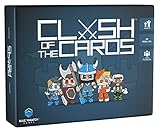
- Easy to Learn and Fun to Play - Learn in 5 minutes with our how-to-play video and then play all night!
- Fun for kids and adults - Difficulty can scale with younger players so everyone can enjoy - Includes simplified rules to get everyone involved
- Clash of the Cards has an endless variety of cute characters and funny sayings on each card for you to collect and build armies to win
- Utilize special action cards at the right time to thwart your opponents - Hilarious "Gotcha" moments when you hold until just the right moment
- Small Business Owned - 100% Customer Satisfaction Guarantee - We truly hope you enjoy this game as much as we enjoyed creating it!
- Verify that the card is unlocked and upgraded enough for your mode.
- Check which special slots your account has unlocked and which form each slot accepts.
- Do not count a special ability that cannot be activated in your current configuration.
- Use a higher-level, role-equivalent substitute when the listed card is impractical to field.
- Save working variants separately; Supercell says players can save up to 10 decks per mode.
Test the deck by matchup, then change one slot
Play a controlled set of matches against the kinds of decks your list is meant to answer. The purpose is not to produce a universal win-rate claim; it is to identify the first repeatable failure. Record the matchup, your opening hand, the card that failed to appear in time, and the decision that left you unable to recover.
- Write the intended answers first. For each major threat, name the card, placement, or spell that should handle it.
- Play without changing the list. Changing several cards after every loss hides the cause.
- Classify the first failure. Common categories are no air answer, no tank stop, a spell mismatch, inability to break a building, or an unaffordable cycle.
- Replace one card only. Choose a same-role substitute that fixes the failure without removing another essential answer.
- Repeat the test. If the new card solves one matchup but creates a different hole, restore the original and reconsider another role.
A deck checker can reveal weak cards and comparable current lists, but no source establishes a universal number of matches that proves a deck is good. Treat your match count as a personal testing method, not a published statistic or guarantee.
Independent reader supportYour contribution helps us test, update, and keep practical guides available for everyone.Troubleshoot losses by symptom
| Repeated symptom | Likely structural cause | Adjustment to test |
|---|---|---|
| You take damage before reaching double elixir | The opening cycle lacks a cheap answer or every defense costs too much | Replace a redundant expensive card with a low-cost defensive or utility card that still supports the win condition. |
| Air units force a spell every time | One air answer is overloaded, too expensive, or absent from the first cycle | Add or strengthen a dedicated air-defense role; do not rely on a card that only targets ground. |
| Tanks reach the tower while your win condition is in hand | The deck has no reliable pull, building, or kiting tool | Test a role-equivalent building or redirector and verify that it can be played with your early elixir. |
| Your attack stops at the same building | The win condition has no way to remove, bypass, or out-cycle the building | Compare a big spell, secondary pressure option, or faster cycle card that addresses that defense. |
| You defend successfully but deal no damage | Defensive cards do not convert into a counter-push and the deck lacks pressure | Replace a duplicated defensive slot with support or secondary pressure that protects the primary plan. |
| Every loss feels different | The list may lack a defined win condition or has too many overlapping plans | Return to the role checklist and remove the card that does not serve a clear job. |
Make the smallest change that explains the evidence. A dramatic rebuild after one unlucky opening hand prevents you from learning whether the original structure was sound.
Recommended Free Tools
Adapt the method to your archetype
Beatdown
Choose the heavy win condition first, then verify that the deck can survive while building an elixir advantage. Support should protect the push or punish a counter-lane response; do not fill every slot with expensive attackers. Your single-elixir test is especially important because a slow opening can concede tower damage before the deck reaches its preferred phase.
Cycle
Prioritize a repeatable four-card cycle and cheap answers that do not leave the win condition stranded. Each low-cost card still needs a purpose: defense, utility, or a way to create pressure. A card that is cheap but useless against the matchups you face can make the deck faster without making it safer.
Control
Control lists need answers that trade efficiently and a clear method for turning a stop into tower damage. Compare spells and defensive cards by the situations they cover, not only by their tier. If every defense requires a different expensive card, the deck will struggle before elixir accelerates.
Rank #4

- Fast-Paced Adventure Game: Enjoy 30-60 minutes of fantasy-themed strategy as you build a party and face off against monsters, great for game night with friends, teens, and adults.
- Build Your Party: Collect heroes, slay monsters, and use items and magic to create winning strategies and become a hero in this role-playing card game.
- Easy to Learn Gameplay: Easy-to-learn mechanics make this card game ideal for adventuring with families, friends, and on game nights with ages 10 and up.
- High-Quality Components: Includes illustrated cards, custom dice, and smooth gameplay elements that make each session engaging and replayable. A great pick for fantasy and tabletop fans.
- Expand Your Game Collection: Grow your lineup of card games with expansion packs like Warriors and Druids, Berserkers and Necromancers, Here to Sleigh Holiday, and the Here to Slay Vinyl Mini Figure Blind Boxes.
Siege
Protect the siege condition with a building answer, air coverage, and a cycle that returns to it after the opponent spends a counter. Test whether the list can force a response without committing more elixir than the opponent can punish.
Free tools Windows power users keep installed
One-click scans. No signup required.
Bait and bridge-spam
These plans depend on creating awkward choices. Check whether your pressure cards share the same spell vulnerability and whether you can continue attacking when the opponent holds the relevant counter. A secondary pressure slot should widen the opponent’s decisions rather than simply add another card with the same weakness.
Read balance changes and rankings as moving information
A tier list can become stale as soon as a balance change alters one interaction. Supercell’s November 3, 2025 balance notes changed Goblin Hut’s Spear Goblin spawn speed from 1.9 seconds to 2.1 seconds, explaining that it had been dominating across many deck types and pushing other buildings out of the metagame. That change illustrates why a card’s current letter grade cannot be separated from its patch context.
When a new patch arrives, recheck the cards that define your deck’s matchups, not only the card that was changed. A slower building may alter how long an opponent can defend, how much spell value you obtain, or whether your win condition needs a different support card. Re-run the role, elixir, and matchup audits after the change rather than copying a new list blindly.
A repeatable worksheet for any ranking
- Freeze the source: Write the publisher, date, mode, player population, and data window.
- Mark one win condition: Choose the tower-damage plan you can level and execute.
- Open eight role slots: Add support or secondary pressure, ground defense, air defense, building or kiting, small spell, big spell, and cycle or utility.
- Shortlist by role: Use tier, recent win rate, use rate, cost, interactions, synergy, and vulnerability.
- Run the early-game audit: Test opening hands, four-card cycles, and defenses at 1× elixir.
- Verify account access: Check levels, Evolutions, Heroes, Champions, Wild slots, and mode-specific availability.
- Test matchups: Record the first failure instead of judging only by the final tower score.
- Change one slot: Use a same-role substitution, then repeat the test.
For example, if a current snapshot places Giant in S tier, that is a reason to inspect Giant-based options, not an instruction to add Giant to every list. Compare the card’s 52.3% win rate and 1.8% use rate with your own support cards, level, cycle, and expected matchups. The same reasoning applies to a popular spell such as Fireball or a frequently used utility card such as Barbarian Barrel.
What “winning” should mean for this process
A winning deck is not the list with the most S labels. It is a list with a defined route to tower damage, answers for the threats its environment presents, an elixir curve that survives the opening phase, and cards you can legally field and play well. Tier rankings narrow the search; role coverage and testing decide the final eight.
Keep a dated version of every successful change. When rankings move or a balance patch changes an interaction, you can identify which role became weak and replace that role without discarding the entire deck. This turns a tier list from a static shopping list into a repeatable decision method.
Quick Recap
Product prices and availability are accurate as of the date/time indicated and are subject to change. Any price and availability information displayed on Amazon at the time of purchase will apply.

