
A small game team finishes more reliably when its schedule is built around a finishable player experience, not a long feature list. Define the smallest version that delivers the game’s central promise, keep a visible roadmap, plan only the next evidence-producing slice in detail, and end every milestone with a playable build and observable acceptance checks. Estimate with the people doing the work, record uncertainty, assign owners to risks, and trade scope or dates when evidence changes. A sustainable schedule treats realistic capacity and regular rest as production constraints rather than rewards for finishing early.
Why small-team schedules break down
Small teams have little slack. A missing programmer, an art rework, or an integration problem can affect the entire build. The usual response is to add more tasks to a detailed plan, then recover slippage with overtime. That approach hides uncertainty until late and makes every change feel like a crisis.
As an Amazon Associate I earn from qualifying purchases.
Two mistakes sit underneath many failed schedules:
- Planning work instead of an experience: a backlog can be full while the game still lacks a complete, testable loop.
- Treating forecasts as promises: early estimates are hypotheses made before the team has removed important unknowns.
GameDevProducer describes crunch as a planning failure, while PF Studio frames project management as protection against scope creep and burnout. Their shared lesson is practical: schedule decisions must protect the playable outcome and the team’s capacity at the same time.
The Tool Desk
Outbyte Driver Updater FREEScan for outdated or missing drivers - takes under a minuteDriver Scan →Outbyte PC Repair FREEClear out junk files and repair common Windows errorsFree Scan →There is no authoritative team-size formula, universal sprint length, or guaranteed schedule percentage that works for every project. The useful system is one that produces evidence frequently enough to reveal whether the scope, technology, and date still fit.
#1 Best Overall

- BLUE LIGHT BLOCKING GLASSES: Our blue light glasses for women boast UV400 protection, blocking harmful blue rays from computer screens. With these bluelight glasses women, you can enjoy gaming, reading, or watching TV with no worries of eye strain.
- EYE RELIEF: Our blue light glasses are engineered to reduce blurry vision or strain caused by prolonged screen time. These womens blue light glasses aid in better sleep by preventing blue light from disrupting your natural sleep cycle, helping you fall asleep faster and enjoy a more restful night's sleep, making them the perfect christmas present.
- COMFORTABLE: Crafted from durable material, our trendy blue light glasses for woman or blue light glasses men ensure long-lasting comfort. The high-transmittance lenses accessories, gamer gifts for men, help keep your eyes relaxed. Perfect stocking stuffers, gifts for gamers men, christmas gifts for men, halloween costumes.
- LIGHTWEIGHT: These clear blue light glasses feature a lightweight frame, meaning they’ll stay comfy for long-term wear. Perfect as blue blockers glasses for women or mens blue light glasses, these non-prescription fake glasses for men can be worn throughout the day. The blue light blocking glasses women feature polycarbonate HD lenses, which are anti-reflective and restore true color.
- WORRY-FREE PURCHASE: If you experience any issues, our support team is ready to assist you quickly. These are the perfect costume glasses for cosplay dressing up.
Start with a finishable player promise
Write one sentence about the repeated experience
Before listing features, write one sentence describing what the player repeatedly does and why it is enjoyable. For example: “The player explores a compact derelict station, reroutes power, and makes a costly choice before escaping.” This is not marketing copy. It is a filter for schedule decisions.
Use the sentence to answer three questions:
- What action or loop must work for the game to feel like itself?
- What emotional or strategic payoff must the player receive?
- What content can be removed without breaking that promise?
If a proposed task does not strengthen the loop, teach it, or make it shippable, it belongs outside the first committed version until the team has capacity and evidence.
Define the version-one boundary before the feature list
“Done for version one” should describe a complete experience, not an arbitrary number of systems. Specify the start condition, core loop, ending or completion state, required content, critical accessibility and stability expectations, and the platforms that are genuinely in scope. A small game might commit to one environment, one enemy family, one progression arc, and a replayable ending rather than three environments with unfinished transitions.
Quick wins for a faster PC:
Repair Windows errors before they cause bigger problemsFix Now →Fix the driver behind crashes, sound loss and screen glitchesFind Drivers →Clear out junk files and repair common Windows errorsFree Scan →Write a separate cut list beside the committed scope. Every new idea then has a visible tradeoff: add it only by removing, simplifying, or delaying something else. This keeps scope change honest instead of allowing “small” additions to accumulate invisibly.
Use a scope decision test
For each candidate feature, ask:
- Does it make the central loop more understandable, satisfying, or complete?
- What new assets, code, design, testing, and integration does it require?
- What existing commitment would move if this feature is added?
- Can the team learn what it needs from a cheaper prototype or placeholder?
Record the decision and the tradeoff. The record matters more than a perfect initial choice because it lets the team revisit scope without reopening the same debate from memory.
Use a roadmap for intent and a detailed plan for the next slice
Agile guidance from the GOV.UK Service Manual says teams should change plans as they learn more, keep near-term work detailed, leave later work at a higher level, and make the roadmap visible. This gives a small team two useful horizons rather than one brittle master schedule.
Keep the medium-term roadmap outcome-based
Group the next several months, or equivalent production horizon, into outcomes such as “first complete combat loop,” “vertical slice with final art direction,” “content-complete run,” and “release candidate.” Attach rough sequencing and assumptions, not a false precision of task dates. A roadmap communicates intent to the team and stakeholders; it is not a commitment that unknown work has already been estimated.
Detail only the next evidence-producing slice
For the next iteration, identify the smallest set of tasks that can create new evidence in the game. Include work across disciplines when necessary: design, code, art, audio, narrative, UI, build engineering, and testing. A task that cannot contribute to the agreed proof may be deferred unless it removes a blocking risk.
Keep the roadmap and team board in a shared location. At minimum, show:
Rank #2

- WINDEX GAMING WIPES: effortlessly clean all your gaming gear and gaming electronics in one easy step with our new Windex Gaming Wipes
- AMMONIA FREE: our ammonia-free formula is safe to use on all of your favorite gaming equipment like consoles, headsets, controllers, screens, keyboards, and more
- PRE-MOISTENED WIPES: each wipe instantly removes dust, dirt, and stubborn smudges and fingerprints leaving a streak-free shine
- ANTI-STATIC: great for cleaning and wiping down your gaming gear and electronics leaving behind no visible residue
- COMPACT RESEALABLE PACKAGE: store your pack of Windex Gaming Wipes anywhere in your home for whenever a quick and easy wipedown is needed
- the current playable objective;
- task owner and discipline;
- dependencies and blocked work;
- current status and review date;
- scope trades and decisions;
- links to the latest shared build and acceptance checks.
Review the roadmap at each milestone or whenever evidence changes a major assumption. Moving a date or cutting an outcome is a planning action, not a failure of transparency.
Estimate with the people doing the work
Break work into representative tasks
Ask the people who will implement, create, integrate, and test the work to break it down. Separate discovery from production: “prove that the save system can recover after a version change” is different from “implement save slots.” Include integration and verification tasks; otherwise the schedule measures creation while omitting the work that makes a feature playable.
Do these 3 things before closing this tab:
1Fix the driver behind crashes, sound loss and screen glitches2Clear out junk files and repair common Windows errors3Scan for outdated or missing drivers - takes under a minuteRecord assumptions beside each estimate. Examples include “existing animation rig is reusable,” “the target platform supports the required shader,” or “the level uses an established lighting setup.” When an assumption is disproved, update the estimate instead of treating the difference as unexplained underperformance.
Compare estimates with actual focused effort
After each milestone, compare what the team expected with what it completed. Look for patterns rather than blaming individual estimates: repeated integration overruns, review rework, unclear acceptance checks, or an overloaded specialist. Use the result to change task size, sequencing, or scope.
Forecast with throughput, not certainty
Scrum.org advises teams to communicate uncertainty, use historical throughput when available, and update forecasts as reviews reveal new information. Throughput means completed, accepted work or outcomes, not hours spent or tickets moved to “done.” If the team has little history, say so and treat the first slices as calibration.
Present a forecast as a range or conditional statement: “At the recent completion rate, this set of outcomes is plausible; the lighting integration risk could move the review.” Do not turn a forecast into a guarantee by removing the uncertainty from the status report.
Windows Errors? Fix Them Before They Spread
Repair common Windows errors and clear accumulated junk for a smoother, more stable PC - no reinstall needed.Free scan · no reinstallOutdated Drivers Are Slowing You Down
One free scan finds every outdated or missing driver and matches the right update for your exact hardware.Free scan · exact hardware matchMake every milestone a playable proof
A milestone is useful when it answers a player-facing question. PlayablePlan’s milestone template calls for a one-sentence playable proof, target review date, three to five observable acceptance checks, required tickets, known blockers, and a shared build link. The template is dated 24 August 2026 and expresses the key principle clearly: planning is deciding what evidence the team needs next, then making that evidence playable.
Write the proof statement
Use the form: “At review, a player can ___.” Keep the blank observable. “The combat feels good” is a discussion topic; “a player can defeat two enemy types, recover, and reach the exit without debug commands” is testable.
Define three to five acceptance checks
Checks should be visible in the build and easy for another team member to verify. A suitable set might cover:
Rank #3

- Ergonomic & Adjustable Design: Fight "text neck" and improve your posture. Designed for comfort, it offers an adjustable height (7.1in-8.5in) (1.4in adjustable range) and angle (5°-85°) Please note: cell phone stand is only 9 inches tall—the length of a standard pencil
- Without blocking subtitles Perfect for office desk Tiktok Face Time Zoom video—this is the ultimate kitchen desk essential for phones! Perfect viewing experience while reducing neck back strain, A must-have for gamers streamers desk, and anyone who values both style and support!
- Sleek & Stable Design fits Otterbox Case: Say goodbye to bent cables, tangles, and tip-overs! LISEN’s stylish adjustable desk phone holder features a built-in charging hole and smart cable management, keeping your phone secure and your workspace clutter-free cool gadgets for men
- ANTI-SLIP DESIGN free hands: The under 10.00 items easy gadgets back and the bottom of this kitchen essentials for women are fully covered by anti-skid silicone, which LISEN stand up desk decor can provide maximum protection device from any scratches and slides
- Your Perfect Viewing Companion:If your product arrives damaged or breaks within 365 days, reach out to LISEN for a quick and hassle-free solution. Struggling with assembly, like tightening the screw? We’ve got your back! Your experience matters to us. (Product including: phone Holder stand*1, screw*1, hexagon screwdriver*1, specification*1)
- the player can complete the intended loop from a clean launch;
- the required interaction has a clear success and failure response;
- the build contains the agreed content and no placeholder that invalidates the proof;
- the target platform handles the path without a known blocking defect;
- the build link installs or launches using the team’s documented steps.
Do not substitute ticket completion for acceptance. A closed ticket can still produce an unplayable integration.
Attach the minimum cross-discipline tickets
List only tickets needed to make the proof real, but include every discipline that can invalidate it. A combat proof may require hit reactions, sound cues, UI feedback, encounter setup, save-state handling, and a test pass even when the main code task is finished.
Review the build, not the board
At the review date, install the shared build and play the path from the stated starting condition. Record which checks passed, failed, or were not testable. A failed check is evidence that should change the next plan; it is not a reason to conceal the build until every ticket appears complete.
Run a risk register with owners and triggers
Track risks that could alter scope, schedule, quality, or technical viability. A short register is more useful than a long list of vague concerns. For each item, record:
| Field | What to write |
|---|---|
| Risk | The uncertain event and the outcome it could affect. |
| Owner | One person responsible for watching and advancing the response. |
| Trigger | An observable condition that shows the risk is becoming real. |
| Mitigation | An action taken before the trigger to reduce likelihood or impact. |
| Contingency | The decision or fallback used after the trigger fires. |
For example, a procedural level generator might have the risk “generation cannot guarantee a reachable exit.” The owner runs a representative seed test; the trigger is a failed reachability check by review; mitigation is a constrained prototype; contingency is a hand-authored layout for the milestone and a scope decision for later content.
What’s actually slowing this PC down?
Pick the symptom - the matching free tool is one click away.
Review the register with the milestone. When a trigger fires, escalate, reorder, simplify, or cut scope. Do not silently add overtime to preserve an old plan.
Design a cadence the team can sustain
Capacity is a schedule input. Reserve time for support, bugs, meetings, build failures, leave, and recovery instead of assigning every available hour to feature work. The exact allocation depends on the team and project; the evidence comes from actual completed work, not a universal utilization target.
GameDevProducer characterizes crunch as a planning failure, and the GDC session on sustainable agile process emphasizes adapting process to small, rapidly changing teams. A sustainable cadence therefore has explicit limits:
- regular rest is planned rather than treated as a reward;
- late discoveries cause scope or date changes before they cause routine overtime;
- work in progress is limited so blocked tasks do not multiply;
- reviews happen while the work is still easy to change;
- leaders model accurate reporting instead of praising hidden heroics.
If a task repeatedly slips, inspect its size, dependency, acceptance criteria, or technical uncertainty first. Asking for more hours may hide the cause while increasing the chance of errors and burnout.
Rank #4

- Easy Installation: Our gaming lights have been designed to enhance your entertainment experience. Simply position the led light bar next to your TV or game console to create a game room environment with ease. They come with USB power and a 60 inch cord for direct mounting and mobility
- Audio Syncing & Extensive Mode: The built-in high-sensitivity music sensor allows you to sync the TV led lights to your favorite music. Lights react and move to the beat of music, film and game audio, creating an incredible immersive sound and light experience – and all without the need for an additional hub. You can choose from 64+ patterns, including strobe, illusion, jump, energy, gradient, running, chasing, fluttering mode etc. Each mode can be applied to different scenes
- 64+ Chasing IC+RGB & W Effect: The independent control design of IC+RGB and white all-in-one multifunctional rgbw led bar lights monitor backlight allows you to easily switch the led lights for desk between IC+RGB and white to enjoy a variety of lighting effects, you can choose white lighting mode with high brightness for better illumination when working, etc. Choose IC+RGB lighting mode when you need to create an entertaining atmosphere for the light show, 16 million colours of Color changing rgb light bar let you dance to the beat and create a dynamic party atmosphere
- Dynamic and Dimmable Lights: 1%-full brightness free brightness adjustment gives you the flexibility to adjust dimmable led light bar for room decorations or a variety of occasions
- USB Powered: USB light bars for room can be powered by powernank, usb charger, TV, Monitor, laptop PC mainframe, making behind TV led lighting bar easy to install in any location.TV led lights are powered by the TV usb interface / PC mainframe, can be turned on/off synchronously with TV / PC
A practical weekly or iteration rhythm
The cadence can be weekly, fortnightly, or another length that matches the team’s ability to produce a meaningful build. Choose the shortest interval that yields useful evidence without creating administrative overhead.
| Stage | Actions | Output |
|---|---|---|
| Planning | Choose one playable proof, confirm realistic capacity, check dependencies, and identify risk triggers. | Proof statement, acceptance checks, owners, and a committed slice. |
| Execution | Keep the board current, integrate early, resolve blockers, and make scope trades visible. | Incremental builds and an updated risk view. |
| Review | Install and play the shared build against the acceptance checks. | Observed results, defects, and evidence about the roadmap. |
| Retrospective | Compare estimates with actuals, inspect process friction, and update risks. | One or more concrete process or scope changes. |
| Roadmap update | Revise medium-term dates or outcomes when the evidence changes assumptions. | A visible, current roadmap rather than an obsolete promise. |
How to choose among scheduling approaches
Teams often compare a detailed long-range plan, a feature backlog, and an evidence-led roadmap as if one must replace the others. They serve different purposes. Evaluate each approach on the following axes:
| Approach | Finishable scope | Playable evidence | Forecast transparency | Ownership and dependencies | Ease of cutting or reordering | Sustainability |
|---|---|---|---|---|---|---|
| Detailed long-range task plan | Can expose missing work, but encourages premature commitment. | Often weak unless builds are explicit. | Looks precise while uncertainty is hidden. | Strong only when maintained continuously. | Low; changes cascade through dates. | At risk when slippage is recovered with overtime. |
| Feature backlog without milestone proofs | Flexible, but may never define a complete experience. | Weak; “done” can mean ticket closure. | Usually unclear. | Varies with board discipline. | High in theory. | Can still overload the team. |
| Evidence-led roadmap with near-term detail | Starts from a version-one boundary and cut list. | Strong; each milestone has a playable proof. | Explicitly communicates uncertainty and updates forecasts. | Visible owners, blockers, and dependencies. | High; scope can be traded at review. | Protects capacity and discourages crunch. |
A detailed roadmap remains useful for communicating intent. Execution should be controlled by the next playable evidence and the team’s observed capacity.
Build the next playable milestone step by step
- State the player proof. Write one sentence beginning “At review, a player can …” and name the starting condition and completion condition.
- Choose the review date. Pick a date that fits confirmed capacity and known absences, not an aspirational deadline.
- Write three to five observable checks. Make each check pass/fail through play, inspection, or a documented build test.
- Map the minimum tickets. Include design, implementation, assets, integration, platform, and verification work required for the proof.
- Ask the team to estimate and expose assumptions. Split discovery from production and identify dependencies before committing.
- Assign owners and monitor risks. Add a trigger, mitigation, and contingency for each uncertainty that could change the result.
- Integrate before the final day. Put representative work into the shared build early enough to reveal incompatible assumptions.
- Play the build at review. Run the acceptance checks from a clean, repeatable starting condition and record evidence.
- Trade scope or date immediately. If the proof fails, decide what to simplify, defer, or reschedule; do not hide the result with extra hours.
- Update the forecast and roadmap. Use completed evidence and actual effort to choose the smallest next proof.
Capacity planning without fake precision
Start each slice with the people actually available, then subtract known non-feature work: support, bug fixing, build maintenance, reviews, leave, and essential meetings. Do not convert every remaining hour into a promise. Use the team’s recent accepted outcomes as a reality check, and label the first few iterations as calibration when there is no history.
Free tools Windows power users keep installed
One-click scans. No signup required.
Specialist bottlenecks deserve explicit treatment. If one artist, designer, or engineer is required for every proof, sequence work so that person is not assigned to mutually dependent tasks at once. A blocked specialist can make an apparently parallel plan serial in practice.
When capacity falls, preserve the proof by reducing content, fidelity, or optional variations before extending the workday. If the proof itself is no longer realistic, change the milestone rather than declaring success on a smaller, unstated result.
Common failure modes and recovery actions
“Everything is a priority”
Symptom: the board contains many active tasks and no agreed playable outcome.
Recovery: stop starting, select one proof, move nonessential work to the cut list, and limit work in progress until the build can be reviewed.
Recommended Free Tools
Tickets are green but the build is not playable
Symptom: individual tasks are marked complete, but integration fails or the player cannot finish the loop.
Best Value
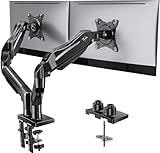
- Compatible with Wide Screens - To ensure compatibility with the dual monitor mount, your each monitor must meet three conditions at the same time: First, computer screens size range: 13 to 32 inches. Second, screen weight range: 4.4 to 19.8 lbs. Third, the back of the monitor screen must have VESA mounting holes with a pitch of 75x75mm or 100x100mm.
- Regarding the compatibility with desks - Your desk must meet three conditions at the same time: First, desk material: Only wooden desks are recommended, plastic or glass desks cannot be used. Second, desk thickness range: 0.59" - 3.54". Third, the bottom of the desk should not have any cross beams or panels, as this will interfere with installation. We recommend carefully checking that your desk and monitors meets all above conditions before purchasing.
- Dual C-Clamp Hold - Worried your dual monitors might wobble or slip? Our upgraded base uses a larger platform plus a dual C-clamp structure to lock the dual monitor arm firmly to your desk. Each arm safely keeps your screens steady while you type, click and game—no shaking, no sliding, just a clean and secure setup you can trust every day. It also provides Grommet Mounting installation choice, both options ensure stable and secure fixation for your 0.59" - 3.54" desk.
- Full-Motion Adjustment For Comfortable View - Pull the screen closer when you’re deep in a spreadsheet, push it back to watch videos, or rotate to portrait for coding — moving everything smoothly with just one hand. The monitor stand offers +85°/-50° tilt, ±90° swivel and 360° rotation. Raise your monitor up to 15.75″ to support a healthy sitting posture. Whether you’re working from home, gaming through the night, or switching between video calls and documents, getting the screens to your natural line of sight helps relieve neck, shoulder and back strain so you can stay focused longer with less fatigue.
- Keep Your Desk Organized: By lifting both screens off the desktop, this dual monitor stand opens up valuable space for your keyboard, notebook, docking station or a simple, clutter-free work area. Built-in cable management guides wires along the arms, keeping cords out of sight and out of the way. Enjoy a tidy, modern workstation that looks as good as it feels to use.
Recovery: add cross-discipline acceptance checks, integrate representative work earlier, and make build review the milestone’s completion condition.
Dates never change despite new information
Symptom: estimates increase, risks trigger, and the published date remains untouched.
Recovery: communicate the uncertainty, show the evidence that changed the forecast, and choose among scope reduction, sequencing change, or a date move.
Risks have no owner
Symptom: everyone knows a system is dangerous, but nobody checks whether it is becoming a blocker.
Recovery: assign one owner, define an observable trigger, and schedule the mitigation in the next slice.
Overtime becomes the default contingency
Symptom: missed milestones are routinely recovered through longer hours.
Recovery: inspect scope, estimation assumptions, dependencies, and review quality. Use the risk contingency or cut list; reserve overtime for exceptional, voluntary circumstances rather than a hidden schedule buffer.
The Tool Desk
Outbyte Driver Updater FREEScan for outdated or missing drivers - takes under a minuteDriver Scan →Outbyte PC Repair FREEClear out junk files and repair common Windows errorsFree Scan →An illustrative milestone
Consider a two-person programming and design team working with one artist on a compact exploration game. Their next proof is: “At review, a player can enter the station, restore power in one wing, avoid one hazard, and open the exit.”
The acceptance checks are that a clean launch reaches the station; the power interaction has clear feedback; the hazard can be avoided using the intended route; the exit opens only after the required action; and the shared build can be installed by another team member. Required tickets include level setup, interaction logic, hazard behavior, feedback UI, audio cues, art pass for the route, save-state handling, and a verification pass. The risk register identifies navigation failure as a technical risk, assigns it to the designer, uses an unreachable-route test as the trigger, and keeps a simplified hand-authored route as the contingency.
At review, the team plays the build. If the art pass is incomplete but the proof is clear and the route works, art polish can move to a later slice. If the route is unreliable, the next decision concerns navigation scope and technology, not how to conceal the failure with crunch. The example is deliberately small: its value is the observable decision it enables.
Keep the system visible and revisable
A sustainable schedule is a feedback loop: promise, slice, estimate, build, review, learn, and adjust. The GOV.UK Service Manual summarizes the operating principle as, “In agile, you change your plans as you do more work and learn more about your users.” Scrum.org likewise says forecasts should include the uncertainty involved.
For a small game team, the most important artifact is not a perfect calendar. It is a current, shared statement of what the next build must prove, who owns the work and risks, what will be cut if capacity changes, and what the team will do when the evidence disagrees with the plan.
Quick Recap
Product prices and availability are accurate as of the date/time indicated and are subject to change. Any price and availability information displayed on Amazon at the time of purchase will apply.

