
Recommended Free Tools
If “without combat” is a hard requirement, start with Gone Home. Steam describes it as a “nonviolent and puzzle-free experience” with “No Combat, No Puzzles.” If you want a more guided wilderness mystery and can accept that the developer emphasizes story rather than making a categorical no-combat promise, choose Firewatch. For a much larger world and energetic traversal, The Pathless is the most expansive option, but its archer premise means it should be treated as action-light exploration—not a guaranteed combat-free game.
Start with your definition of “no combat”
“A narrative game with exploration but no combat” can describe very different experiences. Some players mean literally no enemies, attacks, weapons or danger. Others mainly want to avoid a combat loop while still enjoying movement challenges, an active protagonist or occasional action. Deciding which meaning applies to you is more important than choosing by the label “walking simulator.”
| # | Preview | Product | Price | |
|---|---|---|---|---|
| 1 |
|
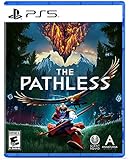
The Pathless - PlayStation 5 | $19.79 | Buy on Amazon |
| 2 |

|
The Pathless (PS5) | $35.60 | Buy on Amazon |
| 3 |

|
Returnal - PlayStation 5 | $35.95 | Buy on Amazon |
| 4 |

|
Dolmen - PlayStation 5 | $31.95 | Buy on Amazon |
As an Amazon Associate I earn from qualifying purchases.
- Literal no combat: Choose Gone Home. Its Steam listing explicitly says “No Combat, No Puzzles,” and explains that you can play at your own pace without being attacked, getting stuck or being frustrated by combat encounters.
- Story-led exploration with a guided mystery: Choose Firewatch. You hike through a Wyoming wilderness, communicate with Delilah by handheld radio and uncover a tense mystery. The developer calls it “incredibly story driven,” but the description is not an explicit no-combat guarantee.
- Large-scale traversal with mythic adventure: Choose The Pathless. You explore a vast forest and mystical island as an archer accompanied by an eagle. It is action-light compared with a conventional combat game, yet the archer premise means it should not be sold as strictly combat-free.
Once you have set that boundary, compare the shape of exploration, how the story is delivered and whether the camera and platform fit your comfort. Those factors determine whether a game feels relaxing, absorbing or unexpectedly stressful.
The Tool Desk
Outbyte PC Repair FREEClear out junk files and repair common Windows errorsFree Scan →Outbyte Driver Updater FREEFix the driver behind crashes, sound loss and screen glitchesFind Drivers →Quick comparison of the three best fits
| Game | How certain is “no combat”? | Exploration shape | How the story arrives | Overall tone | Best for |
|---|---|---|---|---|---|
| Gone Home | Explicitly nonviolent; Steam lists “No Combat, No Puzzles.” | A dense, inspectable family house; open drawers, doors and rooms. | Environmental clues, personal objects and the story reconstructed from what was left behind. | Intimate and domestic. | Players who want the safest literal interpretation of no combat. |
| Firewatch | Exploration-focused in the developer’s description, but not presented as a categorical no-combat promise. | A navigable Wyoming wilderness shaped around a guided mystery. | Handheld-radio conversations with Delilah, relationship choices and discoveries. | Lonely, conversational and suspenseful. | Players who want a strong verbal relationship and directed story momentum. |
| The Pathless | Not a strict no-combat recommendation; its premise centers on an archer. | A broad mythic island and forest built for active traversal. | Setting, movement and a mythic adventure about dispelling a curse. | Expansive and mythic. | Players who value a larger world and movement more than a completely passive experience. |
Platform availability can change by edition and region. Check the current store page before buying, and confirm that the camera and control scheme suit you. PlayStation lists The Pathless for PS4 and PS5; availability for other editions should be checked separately.
#1 Best Overall
- The PS5 launch title combining open world exploration with epic boss encounters
- Dash through a gorgeous wilderness with swift fluid motion
- Use your eagle companion to explore the mysteries of the world
- Day 1 Edition comes with six premium art cards
Gone Home: the clearest answer when combat is unacceptable
What you actually do
You arrive at a seemingly normal house and investigate it room by room. The official description frames play around opening drawers and doors, examining objects and reconstructing a family story from what has been left behind. Exploration is therefore close-up and forensic rather than a trek across a large map.
Everyday items provide context. The house is not simply a backdrop between story scenes; it is the evidence. You decide which rooms to enter, what to inspect and how long to spend making connections between objects and the people who used them. That makes the game a good fit if “exploration” means freely examining a detailed place at your own pace.
Why the no-combat claim is unusually strong
Many games are described as “mostly exploration” while reserving the right to introduce enemies or boss encounters. Gone Home does not require that leap of faith. Steam’s listing calls it a “nonviolent and puzzle-free experience” and states “No Combat, No Puzzles.” It also says you can play without getting attacked, stuck or frustrated. For a player avoiding weapons, enemies and fail states, this is the most defensible recommendation in the group.
Quick wins for a faster PC:
Repair Windows errors before they cause bigger problemsFix Now →Fix the driver behind crashes, sound loss and screen glitchesFind Drivers →Clear out junk files and repair common Windows errorsFree Scan →That wording does not mean the game has no tension or emotional weight. The uncertainty comes from what happened to the family and what the objects imply, not from an opponent pursuing you. If you want suspense without having to defend yourself, that distinction matters.
Who should choose it
- Choose it if you want a literal no-combat experience and are comfortable with first-person movement.
- Choose it if inspecting spaces and interpreting personal details sounds more appealing than navigating a large outdoor world.
- Choose it if you prefer to set your own pace instead of following constant mission markers or dialogue prompts.
Do not choose it expecting a broad wilderness to roam. Its strength is the density of one house and the way ordinary objects become narrative clues.
Rank #2
- The PS5 launch title combining open world exploration with epic boss encounters
- Dash through a gorgeous wilderness with swift fluid motion…
- ...and use your Eagle companion to explore the mysteries of the world
- Also comes with six Premium art Cards
Firewatch: guided wilderness exploration with a conversational story
The core setup
The developer describes a single-player first-person game in which Henry takes a summer job as a fire lookout in the Wyoming wilderness. He explores the surrounding landscape and speaks with Delilah over a handheld radio while a tense mystery develops. The radio relationship is the organizing structure: movement gives you places and discoveries to discuss, while conversations give those discoveries personal and dramatic meaning.
How it differs from Gone Home
In Gone Home, the house is a compact archive that you interpret largely through objects. Firewatch gives you a more directed route through outdoor spaces. You hike, reach lookout points and investigate situations that push the mystery forward. The wilderness feels larger and more scenic, but the narrative is less about examining every possible object and more about what happens as Henry and Delilah talk.
The developer’s FAQ says, “Firewatch is incredibly story driven!” That emphasis is useful when setting expectations: exploration supports the relationship and mystery rather than functioning as a fully open-ended sandbox.
What “without combat” means here
Firewatch is a sensible choice for someone who wants to avoid a combat-centered design, but it should not be described with the same certainty as Gone Home. The available description focuses on first-person exploration, radio conversation and mystery. It does not provide the explicit “No Combat” language that Steam uses for Gone Home. If any possibility of an action encounter would make you stop playing, select Gone Home instead.
Who should choose it
- Choose it if dialogue, character chemistry and a guided mystery matter as much as walking through the landscape.
- Choose it if you want a first-person wilderness rather than a single interior location.
- Choose it if you are comfortable with narrative tension even when combat is not the main activity.
Check the current edition and platform listing before purchase, and make sure first-person movement is comfortable for you. A game can be combat-light yet still unsuitable if its camera causes discomfort.
Rank #3
- The procedural world of returnal invites you to dust yourself Off in the face of defeat and take on new, evolving challenges with every Rebirth.
- After crash-landing on a shape-shifting world, selene must search through the barren landscape of an ancient civilization for her Escape.
- Isolated and alone, she finds herself fighting tooth and nail for survival. Again and again, she's defeated - forced to restart her journey every time she dies.
The Pathless: the expansive option, with an action caveat
Its exploration promise
PlayStation describes The Pathless as “a mythic adventure of an archer and an eagle in a vast forest.” You travel through a mystical island and work to dispel a curse. Compared with the enclosed investigation of Gone Home or the guided wilderness route in Firewatch, this is the choice for players who want scale, movement and a stronger sense of traversing a world.
Crashes, No Sound, or Screen Glitches?
Random freezes, missing sound and display glitches usually trace back to one bad driver. Find and replace yours safely.Free scan · under a minutePC Slower Than It Used to Be?
A free scan shows the junk files, broken settings and background clutter dragging Windows down - then fixes them in one click.Free scan · Windows 10 & 11The eagle and the archer premise make traversal feel active. Exploration is not only about looking at scenery or reading clues; it is tied to movement across the island and to the mythic adventure framing. That can be ideal if you want to keep your hands busy without returning to a conventional sword-and-gun combat loop.
Why it is not a strict no-combat recommendation
The same detail that makes the game distinctive—the protagonist is an archer—creates an important qualification. The available description does not support promising a completely combat-free experience. Present it as action-light exploration, not as a game with no combat under any circumstances. A player who simply dislikes repetitive fighting may be happy; a player who cannot tolerate any combat-related mechanics should choose Gone Home and avoid assuming that “exploration-focused” means “nonviolent.”
Who should choose it
- Choose it if a large mythic setting and active traversal are your priorities.
- Choose it if you are willing to trade absolute combat certainty for more movement and world scale.
- Choose it on PS4 or PS5 if that is your platform, after checking the current regional listing.
Match the game to the kind of exploration you want
Small-space inspection
If you want to read a place through its contents, Gone Home is the strongest match. Its exploration is measured in rooms, containers, doors and objects. The reward is inference: you assemble a family story from physical traces rather than being handed every explanation in a conversation.
Guided outdoor investigation
If you want to walk through a wilderness while a story keeps giving you reasons to continue, choose Firewatch. Its routes and discoveries are tied to Henry’s job and to the radio relationship with Delilah. This structure provides direction without turning the game into a combat mission chain.
Do these 3 things before closing this tab:
1Fix the driver behind crashes, sound loss and screen glitches2Repair Windows errors before they cause bigger problems3Scan for outdated or missing drivers - takes under a minuteRank #4
- Dolmen is a terrifying new action RPG that combines futuristic Sci-Fi and Cosmic Horror elements
- Dolmen casts players onto a hostile alien world known as Revion Prime - Your job is to bring back samples of a crystal with particularly unique properties - the so-called "Dolmen"
- Experience a rich combat system with various weapons and moves at your disposal
- Energy management is key to victory in Dolmen - Energy is not only used for ranged weapons, but also for activating "Energy Mode"
- Revion Prime offers a wide array of gruesome obstacles that will put your skills to the test
Large-world traversal
If “exploration” means distance, movement and a world that feels substantially bigger, choose The Pathless. Its island and forest setting are built around a mythic journey, and the eagle-and-archer pairing signals a more active style than the other two games.
Independent reader supportYour contribution helps us test, update, and keep practical guides available for everyone.Match the game to the way you want the story delivered
| If you prefer… | Best match | Why |
|---|---|---|
| Objects, spaces and personal clues | Gone Home | The family story is reconstructed from what remains in the house. |
| Conversation and a continuing relationship | Firewatch | Henry and Delilah communicate by handheld radio as the mystery unfolds. |
| World atmosphere and movement | The Pathless | The mythic setting and traversal are central to the adventure’s identity. |
These are not interchangeable forms of storytelling. A player who finds environmental interpretation rewarding may find radio-heavy scenes too directive; a player who wants character banter may find a house full of clues too quiet. Decide whether you want to infer the story, discuss it as you move, or experience it through place and traversal.
Use this decision process before buying
- Set your combat boundary. If the answer is “none at all,” pick Gone Home. If the answer is “I mainly want to avoid a combat loop,” Firewatch becomes viable. If you want active movement and can accept an archer-themed adventure, consider The Pathless.
- Choose your exploration scale. Select a dense house for close inspection, a guided wilderness for directed discovery, or a broad mythic island for traversal.
- Choose your narrative channel. Decide between environmental objects, radio dialogue or setting-and-movement-led mythic storytelling.
- Check camera comfort. Gone Home and Firewatch are first-person experiences. If first-person camera movement is uncomfortable, do not assume a nonviolent premise solves that problem.
- Verify the current edition and region. Store listings can differ by platform and territory. Confirm the exact version you can buy before relying on a recommendation; PlayStation currently lists The Pathless for PS4 and PS5.
- Read the wording, not just the genre tag. Look for explicit language such as “No Combat” when that requirement is absolute. “Exploration-focused,” “story driven” and “action-light” are useful descriptions, but they are not all equivalent to “combat-free.”
Common mistakes when choosing a walking or narrative game
Assuming every walking simulator is nonviolent
“Walking simulator” describes an emphasis on movement, observation and story, not a legal guarantee that no combat exists. The safest evidence is an explicit store or developer statement. In this group, Gone Home provides that statement; the other two require more careful interpretation.
Confusing an open world with unrestricted wandering
Firewatch offers a wilderness to navigate, but its mystery and job structure guide your movement. The Pathless offers broader mythic traversal. Gone Home offers depth within a compact interior. “Open” can mean physical space, optional inspection or simply freedom to set your pace, so identify which kind you want.
What’s actually slowing this PC down?
Pick the symptom - the matching free tool is one click away.
Ignoring the camera
A no-combat game can still use first-person movement, and a peaceful game can still create tension through sound, isolation or uncertainty. Confirm the viewpoint and consider whether it suits you before purchase, especially for Gone Home and Firewatch.
Expecting the same emotional tone from every recommendation
Gone Home is intimate and domestic. Firewatch is lonely, conversational and suspenseful. The Pathless is expansive and mythic. If you want a calm personal investigation, a relationship-led mystery and a sweeping adventure are not substitutes, even when all three reduce the importance of conventional combat.
Recommendation by reader priority
- “I never want to fight or be attacked.” Choose Gone Home; it is the only one here with an explicit no-combat statement.
- “I want to walk outdoors and talk to an interesting character.” Choose Firewatch, provided its first-person presentation and suspenseful mystery suit you.
- “I want the biggest world and the most active movement.” Choose The Pathless, but accept that an archer-led adventure is not the same as a guaranteed combat-free game.
- “I want to inspect details and build the story myself.” Choose Gone Home.
- “I want the story to keep moving through dialogue.” Choose Firewatch.
- “I want exploration to feel like a mythic journey.” Choose The Pathless.
A practical checklist for your final choice
- Is “no combat” an absolute requirement or a preference?
- Do you want one highly detailed location, a guided wilderness or a broad mythic world?
- Would you rather infer a story from objects, hear it through radio conversations or absorb it through setting and traversal?
- Are you comfortable with first-person camera movement in Gone Home or Firewatch?
- Have you checked the current platform, edition and regional store listing?
- For The Pathless, are you comfortable with an archer premise and an action-light design rather than a strict no-combat promise?
Answering those questions produces a more reliable choice than searching for a single genre label. The central distinction is simple: Gone Home is the certainty-first pick, Firewatch is the conversation-first pick and The Pathless is the scale-and-traversal pick.
Quick Recap
Product prices and availability are accurate as of the date/time indicated and are subject to change. Any price and availability information displayed on Amazon at the time of purchase will apply.

