
Choose a platform fighter if you want stage geometry, recovery routes, launch-based knockouts, flexible rules and easy drop-in group play. Choose a traditional fighting game if you prefer timed rounds, a more constrained combat plane, classic command inputs and focused one-on-one practice. Super Smash Bros. Ultimate and Street Fighter 6 make the contrast clear, but the same decision applies across both genres.
Start with the way you want to win
The most important difference is not the number of buttons. It is the match objective. In a platform fighter, you normally build damage and then launch an opponent beyond the stage boundary. Nintendo describes the loop this way: “The more damage a fighter takes, the farther they’ll fly.” A high-damage opponent is therefore easier to knock out, but the launch is not automatically the end of the exchange: that player can attempt to recover to the stage.
As an Amazon Associate I earn from qualifying purchases.
In a traditional fighting game, victory is normally decided inside a round. Each fighter has a life total, the clock counts down, and the player who wins the required number of rounds takes the battle. Street Fighter League’s official Street Fighter 6 rules specify 99-second rounds and a two-out-of-three-round structure. That format creates a predictable sequence of opening, adaptation and final-round pressure rather than a stock count and repeated returns from off-screen.
Recommended Free Tools
| Question | Platform fighter | Traditional fighting game |
|---|---|---|
| How is a knockout created? | Increase damage, then launch the opponent beyond the stage boundary. Rules may use stocks or other match formats. | Reduce the opponent’s life within a timed round and win the required number of rounds. |
| What happens after a launch or combo? | The launched player may recover, use a ledge or land on a platform and continue fighting. | The exchange usually returns to the combat plane after hitstun, a knockdown or a reset. |
| What does a player manage? | Damage, launch angle, recovery resources, stage position, platforms and ledges. | Life, timer, spacing, blocking, matchup knowledge, resource gauges and round momentum. |
| Typical social strength | Flexible rules, stages, items and several-player sessions. | Deliberate one-on-one sets, training and tournament-style rounds. |
How movement changes the game
Platform fighters make the stage part of your moveset
Super Smash Bros. Ultimate uses a battlefield with edges, ledges and platforms. Movement is not limited to walking toward or away from an opponent: jumps, air movement, fast falls, platform drops and ledge options all affect whether an attack connects and whether a launched fighter survives. Nintendo’s official explanation tells players to “Make your way back to the stage and keep fighting.” Recovery is consequently an active decision, not merely an animation after a hit.
#1 Best Overall

- Small Form Factor Fight Stick featuring an 8-button layout and 8ft. cable
- Great for both Arcade and Fighting Games
- Compact, lightweight and portable design
- Features Classic 8-Button Layout and HORI’s Original Joystick with V-cut Housing
- Officially Licensed by Sony
Stage position can matter more than a small amount of damage. A character near an edge may be vulnerable to an edge guard, while a character above a platform may have a different landing route from one caught in open space. Launch angle, remaining recovery options and the opponent’s position all determine whether a hit produces a knockout or only a temporary advantage. This creates dramatic reversals: a player who appears to have won an exchange can still lose the stock if the opponent reaches the ledge.
Traditional fighters concentrate decisions on a combat plane
Street Fighter 6 centers its neutral game on horizontal spacing, approach timing, anti-air attacks, blocking and command-based offense. There are no platform-recovery routes to memorize in the Street Fighter 6 rules and controls documentation. A jump is an approach or attack option rather than a route back from a blast zone, and a corner position is important because it restricts horizontal escape.
This narrower space does not make the game simple. Small differences in distance determine which normal attack reaches, whether a move can be punished and whether a jump can be anti-aired. Because the stage geometry contributes less movement variety, players can spend more of their attention on frame timing, spacing, defensive choices and recognizing an opponent’s habits.
Free tools Windows power users keep installed
One-click scans. No signup required.
Stocks, rounds and the feeling of a match
What stocks ask you to do
Stock-based play gives each fighter more than one chance to be launched out. The exact stock count, time limit, items and stage rules depend on the game and event, so do not assume that every platform-fighter match uses the same settings. In a standard Smash-style session, however, losing one stock is a major event without ending the whole match. You can change your approach, adapt to the opponent’s recovery and attempt a comeback with the remaining stocks.
Damage also has a changing value. Early damage may help you win a neutral exchange, while the same hit at high damage can send the opponent far enough to threaten a knockout. You must therefore balance immediate damage with positioning, edge pressure and your own recovery safety.
Rank #2
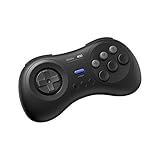
- The redefined 6-button gamepad with wireless connectivity. Perfect for all SEGA’s classic Games.
- Compatible with Switch, Windows 10 or above, Android and Raspberry Pi.
- Turbo Function (unavailable on Switch).
- Bluetooth and rechargeable battery.
- Upgradeable firmware.
What rounds ask you to do
A round-based game gives every exchange a clear clock and a finite life bar. In Street Fighter 6’s documented league format, the 99-second timer means a player cannot wait indefinitely, and winning two rounds is necessary to take the battle. A lost round provides information and a reset, but it also gives the opponent a concrete lead in the set.
Rounds make adaptation easy to read. You can identify whether an opponent is repeatedly jumping, pressing after blocking or spending a resource too early, then alter your plan in the next round. Players who enjoy short, repeatable competitive units often prefer this structure to the longer arc of a multi-stock game.
Windows Errors? Fix Them Before They Spread
Repair common Windows errors and clear accumulated junk for a smoother, more stable PC - no reinstall needed.Free scan · no reinstallOutdated Drivers Are Slowing You Down
One free scan finds every outdated or missing driver and matches the right update for your exact hardware.Free scan · exact hardware matchControls: classic commands versus flexible inputs
Street Fighter 6’s three control options
Capcom documents three control options in Street Fighter 6:
- Classic: the traditional six-button layout with command inputs for special moves.
- Modern: simplified special-move inputs intended for players who want to fight without memorizing every traditional button combination.
- Dynamic: an assisted option available in certain offline modes.
Classic gives you the full conventional input vocabulary and is the natural choice if you want to learn motion inputs, normal-button selection and the control style used by long-running arcade fighters. Modern lowers the initial execution barrier, allowing you to concentrate sooner on movement, defense and when to attack. Dynamic is more restricted by mode and is best understood as an offline accessibility or introductory option, not a universal replacement for the other layouts.
Modern controls do not remove the game’s strategic decisions. You still need to choose the right attack, recognize ranges, block, anti-air and manage the round clock. They can also involve trade-offs in attack selection or damage, depending on the character and situation. Treat the layout as a way to enter the game, then test whether Classic better serves your long-term goals.
Rank #3

- Wired Controller optimized for fighting games
- Features a six-button layout, micro Switch Buttons, adjustable d-pad, and a short throw analog stick with 8-way Gate for increased accuracy and execution speed
- Customize and save up to four profiles with the companion app and easily Switch between them with the profile button
- Compatible with Xbox series x|s, Xbox One, and Windows 10
- Officially Licensed by Microsoft
Why platform-fighter controls can feel easy first and demanding later
Platform fighters commonly map attacks and special moves to directional movement plus a small set of buttons. That makes a first match approachable: you can move, jump and attack without learning a list of quarter-circle or charge motions. Exact controls vary by title, so the genre should not be treated as uniformly simple.
The difficulty often moves elsewhere. You must control a character in the air, choose a recovery route, recognize launch angles, use platforms and avoid being trapped at an edge. A new player may perform an attack immediately but still lose stocks because of poor positioning or an unsafe recovery. The result is a different learning curve, not proof that one genre is universally easier.
Which game is easier for a beginner?
There is no universal winner. Your first hour may feel easier in a platform fighter because movement and attacks are immediately available, or in Street Fighter 6 because Modern controls let you perform special attacks with simple button combinations. Your first week can reverse that impression when you begin learning recovery, launch survivability, spacing or matchup-specific answers.
| If your main obstacle is… | Likely better starting point | Why |
|---|---|---|
| Remembering special-move motions | Street Fighter 6 with Modern controls | Capcom designed Modern inputs to reduce the need to memorize traditional combinations. |
| Understanding when and where a character can return | A platform fighter with a forgiving practice setup | You can learn jumps, ledges and recovery routes directly through stage movement. |
| Choosing a first attack in a crowded match | Street Fighter 6 in one-on-one play | The combat plane and round structure reduce the number of simultaneous opponents and stage events. |
| Staying engaged with friends immediately | Super Smash Bros. Ultimate | Nintendo emphasizes multiple modes, stages, items and multiplayer-oriented options. |
For either genre, begin with one character, one basic defensive habit and one reliable way to start an attack. Avoid measuring progress by wins alone. A player who learns why a stock was lost or why a round was timed out is building a transferable skill; a player who only repeats a move may win briefly and then stall.
Which is better for couch multiplayer?
Choose Super Smash Bros. Ultimate when the group wants flexible local rules, stage interaction, items, several players or a party-like atmosphere. Nintendo’s official overview presents multiple modes and options, and the platform-fighter format lets less experienced players contribute through movement, attacks and opportunistic launches even when they do not know every matchup.
Quick wins for a faster PC:
Fix the driver behind crashes, sound loss and screen glitchesFind Drivers →Repair Windows errors before they cause bigger problemsFix Now →Scan for outdated or missing drivers - takes under a minuteDriver Scan →Rank #4

- Compatible with Switch and Windows.
- Supports ultimate software - customize button mapping and create macros
- Dynamic button layout - button mapping changes with mode functionally and visually
- Ultra-moddable arcade stick - Universal mounting plate supports Sanwa arcade sticks
- Three ways to connect: Bluetooth, 2.4g and wired USB-C. The included 2.4g receiver has a special hidden compartment to store it safely.
Choose Street Fighter 6 when two people want a focused set with clear rounds. One-on-one play makes it easier to see why an attack connected, whether a block was punished and how the opponent adapted. It also suits a group that wants to rotate through deliberate matches, discuss decisions and practice between games.
A second controller is the most immediate accessory consideration for local play. A fight stick or leverless controller is optional: it may appeal to players who prefer traditional inputs, but neither accessory is required to learn either game. Product editions, platforms, prices, online requirements and availability vary and should be checked for your region at the time of purchase.
Choose by the kind of improvement you enjoy
Pick a platform fighter if you enjoy movement expression
- You want jumps, platforms, ledges and recovery routes to be central tactical tools.
- You like a knockout system in which damage changes launch distance and comeback potential.
- You prefer flexible match rules and playing with friends rather than only formal sets.
- You enjoy experimenting with stage position, edge pressure and routes through the air.
Your practice will naturally include movement precision, recovering from different launch angles, landing safely, recognizing when to contest an edge and converting a high-damage opening into a launch.
Pick a traditional fighter if you enjoy structured repetition
- You want timed rounds and a clear two-out-of-three style set structure.
- You enjoy spacing, blocking, anti-airs, command inputs and learning matchup-specific responses.
- You prefer a controlled one-on-one environment in which every exchange is easy to review.
- You want the option to start with simplified controls and later move to a classic layout.
Your practice will emphasize a small group of reliable attacks, blocking under pressure, punishing unsafe moves, controlling the space just outside the opponent’s reach and adapting between rounds.
A practical decision process before you buy
- Decide whether the match objective sounds more exciting. If “launch them off the stage and recover before they do” is appealing, start with a platform fighter. If “win two timed rounds by managing life and space” is appealing, start with a traditional fighter.
- Choose your preferred movement problem. Select stage geometry, air movement and recovery if you want three-dimensional positioning. Select grounded spacing, blocking and corner pressure if you want a more constrained plane.
- Choose your input commitment. Use Street Fighter 6 Modern or Dynamic controls to reduce the initial execution barrier, or commit to Classic six-button commands if learning traditional inputs is part of the appeal. In a platform fighter, expect simpler attack access but more movement and recovery decisions.
- Match the game to your group. For a mixed-skill couch session, prioritize the title whose modes and rule options fit the number of players and desired pace. For rotating one-on-one sets, prioritize the game whose round structure your group will actually practice.
- Plan the first five practice sessions. In a platform fighter, learn movement, one recovery route, one safe approach and one edge situation. In Street Fighter 6, learn blocking, one anti-air, one punish and one dependable special move using your chosen control layout.
- Reassess after you understand the basic loop. Do not switch genres solely because your first match was confusing. Identify whether the frustration came from inputs, movement, stage knowledge, the timer or playing against an experienced friend; each problem calls for a different adjustment.
Common buying and learning mistakes
Assuming “platform” means casual and “traditional” means inaccessible
Platform fighters can demand precise air control, recovery knowledge and stage awareness. Traditional fighters can provide lower-barrier entry through Modern or Dynamic controls. Genre labels describe the structure of play, not a universal difficulty ranking.
Best Value
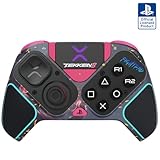
- BUILT FOR GAMING - Engineered to fit your play style and packed with tons of customizable options, the Pro BFG Wireless Controller is the new standard in PlayStation and PC gaming.
- FULLY CUSTOMIZABLE - Map functions to any of the four mappable back buttons to take down ops quickly and efficiently. Use the Profile Button to create three unique button mapping profiles to maximize your efficiency in any game.
- ULTIMATE MODULARITY - Create the ultimate controller for any game using the swappable modules and interchangeable pieces. Includes a reversible left module, standard right module, 6-button fight pad module, 4 interchangeable sticks, 3 different D-pads, and 4 gates.
- PREMIUM BUILT-IN AUDIO - Hear your enemies before you see them with Sony 3D audio on PS5. Plus, low latency audio and different EQ profiles to choose from give you the advantage over the competition.
- Officially licensed by Bandai Namco Entertainment Inc. & a PlayStation Official Licensed Product
Comparing only the attack buttons
Two games may both let you attack with a button, yet ask you to solve entirely different problems. In a platform fighter, ask how a character returns after a launch and how platforms alter routes. In a traditional fighter, ask how the character controls space, defends and converts a blocked or whiffed attack into a punish.
Using the wrong social format
A traditional fighter can be excellent for a serious two-person set but feel demanding if a group wants constant multi-player chaos. A platform fighter can be ideal for a party but less satisfying for someone seeking only repeatable round analysis. Decide how your real play sessions will be organized before treating a genre as better.
Buying around unstable details
Tournament settings, patches, control documentation, product editions, platform support, online requirements, prices and availability can change. Verify those details for the specific edition and region you intend to use. The genre-level decision does not depend on a temporary promotion or a particular event rule set.
Do these 3 things before closing this tab:
1Repair Windows errors before they cause bigger problems2Scan for outdated or missing drivers - takes under a minute3Clear out junk files and repair common Windows errorsFinal recommendation by player type
| Your priority | Recommended starting point | First thing to learn |
|---|---|---|
| Stage movement, recoveries and launch knockouts | Super Smash Bros. Ultimate | How to return to the stage from common launch angles and how damage changes launch distance. |
| Local group play with flexible rules | Super Smash Bros. Ultimate | Basic movement, one reliable attack and safe recovery. |
| Timed rounds and focused one-on-one practice | Street Fighter 6 | Blocking, spacing and a dependable response to a jump-in. |
| Classic command inputs | Street Fighter 6 with Classic controls | One motion special move and the normal attack that reaches its preferred range. |
| Lower initial input barrier | Street Fighter 6 with Modern controls | When to use the simplified special move without abandoning defense and spacing. |
| Uncertain beginner who wants both possibilities | Try a platform fighter first for movement or Street Fighter 6 Modern for structured rounds | Use the first few sessions to identify which kind of mistake you enjoy solving. |
The shortest answer to “Smash or Street Fighter?” is therefore a preference test: choose Smash when the stage, recovery and group format are the attraction; choose Street Fighter 6 when rounds, spacing, command options and one-on-one improvement are the attraction. Neither genre is automatically easier, and the best choice is the one whose core problem you want to practice repeatedly.
Quick Recap
Product prices and availability are accurate as of the date/time indicated and are subject to change. Any price and availability information displayed on Amazon at the time of purchase will apply.

