
Windows Errors? Fix Them Before They Spread
Repair common Windows errors and clear accumulated junk for a smoother, more stable PC - no reinstall needed.Free scan · no reinstallCrashes, No Sound, or Screen Glitches?
Random freezes, missing sound and display glitches usually trace back to one bad driver. Find and replace yours safely.Free scan · under a minuteThe best mixed-age board game starts with the youngest player’s real abilities, not the biggest number on the box. Check whether that child can handle the pieces, reading, attention span, and rules; then make sure the game gives older players meaningful choices, suits your available time, and works for the group’s preferred level of cooperation and competition.
Use the box’s age range as a safety and suitability screen, not as a guarantee that every child of that age will enjoy the game. A thoughtful choice balances motor demands, language, content complexity, play length, player count, theme, luck, strategy, replayability, setup, and component safety.
As an Amazon Associate I earn from qualifying purchases.
A quick framework for choosing one game for several ages
Before comparing titles, write down the youngest participant’s abilities and the household’s practical limits. The following checklist prevents an attractive theme or high review score from hiding a poor age fit.
| Decision point | What to inspect | Why it matters in a mixed-age group |
|---|---|---|
| Youngest player | Dexterity, visual tracking, reading, language, attention, and comfort with rules | The game must be independently playable enough to feel fair and safe for that child. |
| Motor demands | Piece size, precision, stacking, speed, sorting, counting, and hand strength | A child who cannot physically perform the main action will be excluded even if the rules are simple. |
| Reading and language | Text volume, vocabulary, symbols, listening requirements, and language dependence | Adults may need to read aloud or translate without making every decision for a younger player. |
| Rule and content complexity | Number of steps, exceptions, hidden information, arithmetic, and emotional intensity | Older players need decisions, while younger players need a manageable learning curve. |
| Time | Advertised duration, setup, cleanup, and whether a round can end cleanly | A short or modular game is easier to fit around school nights, meals, and changing attention spans. |
| Player count | Minimum and maximum players, downtime, team rules, and performance at the extremes | A game that shines at four may drag at two or become chaotic at six. |
| Social structure | Cooperative, competitive, team-based, or adjustable rules | The format determines how the group handles unequal skill, losing, and coaching. |
| Replayability and setup | Variable goals, changing layouts, sorting, storage, and reset time | Frequent setup can stop a theoretically excellent game from reaching the table. |
| Safety | Age label, warnings, component dimensions, magnets, batteries, and the specific edition | Small parts and other hazards must be kept away from children younger than three. |
If two games pass the safety and ability checks, choose the one that fits your household’s time and social preferences. Those practical details determine whether the game is actually played.
#1 Best Overall
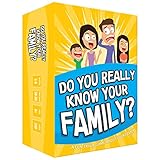
- Get ready for the best family game night as you laugh and learn new things about each other with this fun card game.
- See who really knows the family best as you answer fun questions about each other while sparking interesting conversations.
- Create hilarious family memories as you compete and perform silly challenges together.
- Super easy to learn and play - a perfect game for families with kids 8 and up, teens and adults.
Start with the youngest player’s actual abilities
Use the printed age range as a first filter
The age range on a package is useful, but it is not a substitute for observing the child. The U.S. Consumer Product Safety Commission explains that intended audience, packaging, marketing, and reasonably foreseeable use all help determine whether a product is a children’s product. In practice, compare the label with the youngest participant’s dexterity, attention, reading ability, and comfort with rules.
A child at the lower end of a stated range may need an adult to read cards, count resources, or repeat the turn sequence. That can be a good family experience when coaching is welcome. It becomes a poor fit when the adult must secretly choose every move or handle every component.
Check the physical actions
Look at what players do repeatedly, not just the illustrated components. Picking up large tiles is different from manipulating tiny tokens. Rolling dice is different from placing a piece precisely on a narrow track. Speed games, balancing games, timed sorting, and dexterity challenges can create a physical barrier that a younger player cannot overcome through explanation.
Free tools Windows power users keep installed
One-click scans. No signup required.
- Ask whether the child can hold, distinguish, and place the pieces without constant help.
- Check whether color, shape, and symbol differences remain visible under the room’s lighting.
- Consider fine-motor fatigue: a child who manages one round may not manage an hour.
- For children who are still developing counting or quantity recognition, see whether the game supplies visual aids or requires exact arithmetic.
Check reading, language, and listening
A game can be age-appropriate physically and still be inaccessible because every decision depends on text. Count the words on cards, the number of icons that must be learned, and the amount of information a player must remember between turns. Multilingual households should consider whether rules and card text are available in the family’s strongest language.
Reading aloud is a useful accommodation when the younger player can make choices from pictures, symbols, or a short list of options. It is less successful when an adult must interpret complex exceptions or conceal information. If adults will translate, decide in advance whether all players hear the same information so the game remains fair.
Check attention and emotional readiness
Estimate how long the youngest child can wait between meaningful turns. A game with ten players and long planning phases may be unsuitable even when its stated duration looks reasonable. Also consider reactions to losing, taking resources from another player, elimination, scary themes, and public mistakes. Emotional fit is part of age fit.
Match complexity using the CPSC checklist
The CPSC’s January 2020 age-determination guidance places primary emphasis on five characteristics for card, floor, board, and table games: “Motor Skills Required,” “Content Complexity,” “Length of Time Required to Play,” “Educational,” and “Classic.” Use these as a practical inspection list rather than treating the age number as the whole decision.
Quick wins for a faster PC:
Scan for outdated or missing drivers - takes under a minuteDriver Scan →Repair Windows errors before they cause bigger problemsFix Now →Fix the driver behind crashes, sound loss and screen glitchesFind Drivers →Motor skills required
Identify the action that determines success. If it is precision placement, rapid movement, or fine sorting, ask whether the youngest player can perform it reliably. If success depends mostly on choosing among clearly presented options, the motor burden may be lower even when the game contains many pieces.
Rank #2
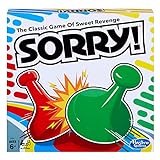
- GAME OF SWEET REVENGE: Enjoy classic Sorry! gameplay with this Sorry! board game for kids. It's an edge-of-your-seat race to home, so hurry up and get there first
- FIRST ONE HOME WINS: Who will be the first player to get all 3 of their pawns to the home space? But watch out! Players can get "sweet revenge" by sending each other's pawns back to the starting point
- SO MANY POSSIBILITIES: Slide, collide, and score to win the Sorry! game. This family game for kids and adults features so many possibilities depending on the card picked up and strategy chosen
- CLASSIC SORRY! GAMEPLAY: Remember playing the original Sorry! game as a kid? Bring back memories of playing the Sorry! game with family members and introduce it to a new generation
- FAMILY GAME NIGHT FAVORITE: A go-to game for family time or anytime indoor fun, the Sorry! game for kids is one of the best family games for game night
Content complexity
Complexity comes from more than the rulebook’s page count. Hidden information, changing objectives, simultaneous effects, negotiation, arithmetic, and exceptions all raise the mental load. A long rulebook can describe a simple turn sequence, while a short rulebook can conceal a difficult strategic puzzle.
For a mixed-age table, prefer games that teach one action at a time, use visible reminders, or allow optional rules. Adults can model a turn without dictating a child’s decision. If the game requires players to remember several exceptions, make a one-page turn aid before play.
Length of time required to play
Play length includes setup, explanation, turns, scoring, and cleanup. A fifteen-minute game that takes ten minutes to assemble may be less practical than a twenty-minute game that starts immediately. Check whether a round has a natural stopping point and whether unfinished progress can be recorded without confusion.
Educational and classic qualities
Educational content should be described precisely. A game may require counting, reading, spatial planning, communication, or probability awareness, but that does not prove it improves a measured skill. Childcare.gov describes board games as structured play in which children follow directions or rules to complete a task, and notes that play can support physical, social, intellectual, and creative skills. Balance this structured activity with unstructured play, and do not promise a specific learning outcome without evidence from the publisher or an independent study.
Classic games often remain playable across ages because skill changes their difficulty. The CPSC states that traditional games such as chess, checkers, backgammon, playing cards, and Chinese checkers can appeal to children and adults because the level of difficulty rises or falls with the player’s skill. That does not mean every classic game suits every child; reading, patience, abstraction, and tolerance for losing still need to be checked.
Choose cooperation or competition deliberately
When cooperative play is a good fit
Cooperative games give the group a shared objective instead of a direct winner-versus-loser contest. This can reduce pressure on a younger player and make it easier for an adult to explain options aloud. Teams can also let a child contribute through a role that matches their abilities, such as spotting symbols or choosing between two visible actions.
Cooperation is not automatically easier. If one experienced player makes every decision, the child becomes a passenger. Look for games with simultaneous choices, individual responsibilities, or limits on advice. A useful house rule is to ask, “What do you think we should do?” before offering a suggestion.
Do these 3 things before closing this tab:
1Fix the driver behind crashes, sound loss and screen glitches2Repair Windows errors before they cause bigger problems3Scan for outdated or missing drivers - takes under a minuteWhen competition is a good fit
Competitive games reward planning, negotiation, risk assessment, and learning to handle unequal outcomes. They can be satisfying for a family that enjoys tactical decisions and clear winners. To keep the contest constructive, avoid games in which a younger player is eliminated early or can be targeted repeatedly without a chance to recover.
Rank #3

- All New Game: It's the 2nd edition of the quick question “what am I?” Game. Includes 6 new bands- dino, narwhal, robot, flower, butterfly, & brain
- Simple To Play: Pick a headband, place a card in it and play to figure out what's shown on your card. Using yes/no questions, be the first to guess 3 cards correctly and you win
- Family Game Night: Hedbanz is a must-have in your collection of family games for kids and adults. It is for everyone ages 6 and up. For 2-6 players, bring along when you are in need of fun board games for family night
- Funny Random Stuff For Family Game Night: Throw the best party, birthday, game night & Friendsgiving with new party games, family board games & card games for teens & adults
- Spin Master Toys & Games: Looking for kids games, yard games & card games for grown ups, kids or teens? Shop everything from family game night, travel games, puzzles for adults & family games
Adjustments can preserve meaningful competition: pair an adult with a child, give a less experienced player a small starting advantage, reveal information that older players would normally keep hidden, or remove advanced cards for the first session. Explain the adjustment openly so it feels like a designed rule rather than pity.
Balance luck and strategic control
Luck can create exciting reversals and allow a child to stay competitive with an experienced adult. Dice, shuffled cards, and random objectives reduce the advantage of deep prior knowledge. Too much randomness, however, can make careful choices feel irrelevant.
Strategic control rewards planning and gives players a reason to improve over repeated sessions. It can also magnify age and experience differences. For a wide age range, look for a middle ground: random inputs that everyone must adapt to, combined with several decisions that remain under a player’s control.
Recommended Free Tools
- More luck: easier entry, surprising outcomes, and less benefit from memorized strategy; weaker sense that choices determine results.
- More strategy: stronger long-term learning and planning; greater risk that experienced adults dominate.
- Mixed system: chance sets the situation while players choose how to respond, often a useful compromise for family tables.
Fit the game to time, player count, and stopping points
Plan for the real session, not the best-case duration
Use the advertised play time as a range, then add explanation and setup. Younger children often need a break before the final scoring. A game that can end after any round is safer for weeknights than one that requires a single uninterrupted conclusion.
Before buying, answer three questions: Can we teach it in the time available? Can we pause without losing state? Can we stop after a round without making someone feel that their effort was wasted? If the answer to all three is no, reserve the game for planned sessions.
Check performance at your household’s player count
Read the minimum and maximum player counts and inspect whether the rules change with group size. At two players, negotiation games may lose their social engine. At the maximum count, downtime and table space may become the problem. Team options can make a high player count workable, but only if teams have enough information and meaningful turns.
Use teams and handicaps without taking over
Pairing an adult with a child can teach turn structure and reduce a skill gap, but the child should still make visible choices. A handicap can be as simple as an extra starting resource, a wider range of legal moves, or permission to redraw one card. Keep the adjustment small enough that the experienced player still has to adapt.
Pick a theme that crosses generations
Theme is a practical accessibility tool, not decoration. A setting that interests only one age group makes teaching harder and reduces the chance of replay. Look for a shared hook—building, exploration, animals, mysteries, sports, food, or storytelling—then check whether the rules actually express that theme.
Rank #4

- Fast-Paced Fun for All Ages: Engage in a lively game where players race to match cards with spoken words like "Taco," "Cat," "Goat," "Cheese," and "Pizza." Designed for 2–8 players aged 7 and up, each round lasts just 10–15 minutes, making it perfect for quick family card games or travel entertainment. Its simplicity and speed ensure everyone stays engaged and laughing.
- Simple Rules, Wild Gameplay: Players take turns playing cards while chanting the game's title in order. When a spoken word matches the card played, everyone races to slap the pile and the last one to do so takes the cards! Add in surprise action cards and it becomes a fast-paced, laugh-out-loud competition that's easy to learn but hard to stop playing.
- Card Games for Families and Social Events: Whether it's a holiday gathering, birthday party, or casual get-together, Taco Cat Goat Cheese Pizza is a go-to choice. Its easy-to-learn rules and engaging gameplay make it a hit among both kids and adults. It's also a top pick for stocking stuffers and Easter baskets, offering fun without the need for screens.
- Portable Entertainment for On-the-Go Fun: Compact and lightweight, this card game is travel-friendly, making it an excellent companion for road trips, vacations, or family outings. Its quick setup and short playtime ensure that you can enjoy a fun-filled game session anytime, anywhere.
- Boosts Cognitive Skills and Reflexes: Beyond entertainment, Taco Cat Goat Cheese Pizza helps develop important skills such as concentration, pattern recognition, and fine motor coordination. Players must stay alert and think quickly, making it both a fun and mentally stimulating activity for all ages.
Ask each participant to name one topic they would enjoy and one they would rather avoid. Consider frightening imagery, conflict, mature humor, or culturally specific references that may not suit the youngest player. When preferences conflict, a neutral theme with colorful components often works better than a highly specialized setting.
Evaluate replayability and setup burden
What creates a fresh second play?
Replayability can come from variable maps, changing objectives, modular scenarios, different roles, or a decision space that remains interesting after the rules are familiar. Randomness alone is not proof of replay value; repeated random draws can still produce the same strategic script.
For mixed ages, replayability also means adjustable challenge. A family can begin with open information and a simplified objective, then add rules as the younger player gains confidence. Check that the advanced content is optional rather than required from the first session.
The Tool Desk
Outbyte Driver Updater FREEScan for outdated or missing drivers - takes under a minuteDriver Scan →Outbyte PC Repair FREEClear out junk files and repair common Windows errorsFree Scan →Measure setup, sorting, and cleanup
Count the steps before the first turn: sorting tokens, assembling a board, shuffling decks, reading scenario text, and assigning roles. Storage inserts or labeled bags can make a large game practical. If components return to the box in one undifferentiated pile, expect the setup burden to grow with every play.
Designate a child-friendly job such as dealing cards, placing large tiles, or checking off objectives. Participation in setup can build ownership, but never make a child handle components that the package warns are unsuitable for their age.
Independent reader supportYour contribution helps us test, update, and keep practical guides available for everyone.Read the box and verify safety
Inspect the exact edition
Component sizes, warnings, rules, and age labels can differ between editions, languages, and regional releases. Read the physical package or the current product listing for the exact version you intend to buy. Do not assume that a similarly named expansion or travel edition has the same parts.
Keep small parts away from children under three
The CPSC advises following age guidance and safety information, matching toys to each child’s interests and abilities, and keeping small parts away from children younger than three. Treat this as a hard household rule: store the game out of reach, inventory pieces after play, and do not rely on supervision if a toddler can access the box.
Also check for magnets, batteries, sharp edges, cords, and pieces that could be mistaken for food. Follow every warning printed for the product. If a component is cracked, splintered, swollen, or missing, stop using the game until the issue is resolved.
Best Value

- INTRODUCING A DIGITAL DIE: More suspense, more surprises, more laughs! In this Jenga game, enjoy the classic Jenga gameplay fans love—or dare to play it with the digital die for added challenges
- 6 MORE WAYS TO PLAY: Roll the digital die for unpredictable challenges: play using thumbs only, race against the clock, and more! (To download the die onto a phone, scan the in-pack QR code or access the web app. No additional purchase needed)
- HILARIOUS CHALLENGES: Actions like “Team-Up” amp up the fun! A player who rolls it selects another player to act as their eyes. The other player can guide their arm, but can’t touch the tower—or topple it
- EXCITING GAME FOR PARTIES OR SOLO PLAY: The Jenga game for kids and adults is the wooden block balancing game livening up parties for generations. No friends around? No problem. Play solo to beat a personal best
- GENUINE WOOD BLOCKS: The Jenga party game includes 54 precision crafted wooden blocks. Pull out a block, place it on top, but don't let the tower fall in this original wood block game
Use safety and suitability together
A game can meet the age label and still be wrong for a particular child’s sensory, motor, language, or emotional needs. Conversely, a younger child may participate safely in a supervised family session when an adult handles components and the child’s role is appropriate. Make that decision from the child’s abilities and the product’s warnings, not from the desire to use a favorite game early.
A practical buying process
- List the participants. Record ages, reading levels, attention limits, motor considerations, languages, and any themes to avoid.
- Set the session limit. Decide the maximum teaching, play, setup, and cleanup time you can realistically give the game.
- Filter by safety. Remove products with unsuitable age labels, inaccessible warnings, or components that a child under three could reach.
- Inspect the main action. Identify the repeated physical and mental task, then test it against the youngest player’s abilities.
- Read the turn sequence. Count exceptions, hidden information, arithmetic, text, and the number of steps before a player gets a meaningful choice.
- Check group size. Confirm that your usual number of players is supported and that teams, handicaps, or open information are allowed if needed.
- Choose the social format. Decide whether your family wants a shared objective, direct competition, teams, or a game that supports more than one mode.
- Plan the first session. Prepare a short explanation, remove optional rules, assign setup jobs, and decide how adults will coach without making decisions for children.
- Review after playing. Note where anyone was bored, confused, physically blocked, or overwhelmed. Add or remove rules for the next session rather than abandoning a good game after one imperfect play.
Game profiles that often work across ages
These are design profiles, not guarantees. Compare each candidate with your family’s actual abilities and the product’s current instructions.
| Profile | Typical strengths | Potential mismatch | Useful adjustment |
|---|---|---|---|
| Simple pattern or matching game | Low reading burden, visible choices, short turns | Older players may find limited strategy | Add a scoring variant or let experienced players plan several turns ahead. |
| Light tile or route builder | Visible progress, spatial decisions, moderate replay | Counting, blocking, or long turns may frustrate younger players | Use open information and a smaller board for the first session. |
| Team deduction or storytelling game | Shared discussion, flexible reading support, strong social engagement | Language, memory, or confidence can dominate | Allow drawing, pointing, or picture clues and rotate the facilitator. |
| Cooperative resource challenge | Shared goal, natural coaching, reduced direct conflict | An adult may become the sole decision-maker | Give each player a private responsibility and limit unsolicited advice. |
| Classic abstract game | Few components, durable replay, skill-based handicap potential | High abstraction, no luck, and strong advantage for experienced players | Use a smaller starting position, team play, or a modest starting advantage. |
| Dexterity or speed game | Immediate excitement, little reading, easy demonstration | Fine-motor or reaction-speed differences can decide every round | Remove the timer, use teams, or score improvement rather than raw wins. |
Fix common mixed-age problems
The child cannot follow the rules
Stop adding explanations. Demonstrate one turn with visible pieces, reduce the objective to the next decision, and use a turn card or spoken rhythm. If the child still cannot identify a legal choice, the game’s cognitive load is too high for this session.
The adult wins every time
First check whether the advantage comes from hidden information, arithmetic, or familiarity. Open information, pair the adult with a child, remove advanced options, or give the less experienced player a small starting benefit. Do not pretend the game is balanced if the adjustment does not change decisions.
The child loses interest before the end
Shorten the session to one round, remove downtime, or choose a game with simultaneous actions. If the child has no meaningful choice during other players’ turns, the player count or design may be the problem rather than the child’s attention.
Cooperative play turns into adult control
Assign each player a role, ask for proposals before advice, and allow a short private planning pause. A shared objective should not erase individual agency.
The table becomes upset about losing
Set expectations before play, avoid elimination, and choose a team or shared-score mode for a while. Teach that trying a new strategy is a successful outcome, but do not use that language to dismiss genuine frustration. A different game may be the right solution.
What’s actually slowing this PC down?
Pick the symptom - the matching free tool is one click away.
Setup prevents another play
Separate components into labeled bags, photograph the starting layout, and keep the rule summary with the game. If setup still takes longer than your available session, choose a title with fewer pieces or a faster reset.
Use board games as structured family play
Board games provide a defined task, rules, and social interaction, which is why Childcare.gov describes them as structured play. Their value is not limited to winning or to a claim that one title teaches a measured academic skill. Playing can involve movement, communication, planning, imagination, turn-taking, and coping with uncertainty, while unstructured play provides a different kind of choice and creativity.
Let the child’s role grow over time. In an early session, the child might identify colors, choose between two actions, or help maintain a shared objective. Later, remove the aid, add an advanced rule, or invite the child to teach the game to someone else. Keep the adjustment transparent and voluntary so support does not become pressure.
The final pre-purchase checklist
- Does the youngest player’s dexterity match the game’s repeated physical actions?
- Can the child access the information needed to choose, with reading support that does not take over?
- Are the rules, content, theme, and emotional intensity suitable for everyone?
- Does the realistic session fit your available time, including setup and cleanup?
- Does the game work at your usual player count, with acceptable downtime?
- Will adults and older children have enough strategy, variety, or challenge?
- Can you adjust difficulty through teams, handicaps, open information, or optional rules?
- Is the social format—cooperative, competitive, or mixed—right for this group?
- Does the exact edition provide clear age guidance and safety information?
- Can small parts and other hazards be stored safely away from children under three?
- Will the game be easy enough to set up that your family will actually play it again?
The strongest choice is not the game with the highest stated age, the longest rulebook, or the most elaborate components. It is the game whose physical demands, information, pace, social pressure, and challenge can be adjusted so the youngest player participates while older players still make real decisions.
Quick Recap
Product prices and availability are accurate as of the date/time indicated and are subject to change. Any price and availability information displayed on Amazon at the time of purchase will apply.

