
Fix a troublesome PC shooter in a controlled sequence: capture what is happening, check the exact game’s requirements, confirm the intended GPU, update the graphics driver and Windows, verify the installation, remove overlays and recording tools for a test, follow the title’s shader instructions, then investigate heat and memory pressure. Change one variable at a time so you can tell which action helped.
There is no universal fix for every shooter or PC. A low average frame rate, brief frame-time hitch, game-process crash, blue screen, and forced restart have different likely causes. The workflow below separates them and tells you what evidence to collect when the problem needs the publisher’s support team.
As an Amazon Associate I earn from qualifying purchases.
Start with a baseline instead of changing everything
Before changing settings, write down the exact shooter, launcher, Windows version, CPU, GPU, video memory (VRAM), system RAM, graphics-driver version, monitor arrangement, resolution, and current graphics settings. Note whether the fault began after a game patch, Windows update, driver installation, settings change, or hardware change.
Classify the symptom
- Low FPS: the frame rate stays lower than expected for long periods.
- Stuttering or hitching: most frames may look acceptable, but occasional long frame times interrupt movement. Note whether it happens during traversal, combat, loading, or only on first launch.
- Game crash: the shooter closes, freezes, or returns to the desktop while Windows continues running.
- System failure: a blue screen, black screen, forced reboot, or complete power loss points beyond an ordinary game-process crash.
Record whether the issue is constant, tied to a particular map or mode, or difficult to reproduce. Capcom’s support guidance asks players to describe where and when frame-rate problems occur, whether they are constant, and how to reproduce them. That information is more useful than a general report that the game is broken.
#1 Best Overall

- 【High Performance Cooling Fan】 Automatic speed control of the motherboard through the 4PIN PWM fan cable interface, which can determine the speed according to the temperature of the motherboard, with a maximum speed of 1550RPM. Configured with up to 55cm of cable for PWM series control of fans, ideal for cases and CPU coolers.
- 【Quality Bearings】The carefully developed quality S-FDB bearings solve the problem of pc cooling fan blade shaking in lifting mode, keeping fan noise to a minimum while providing maximum cooling performance when needed and extending the life of the fan.
- [Excellent LED light] The high-brightness LED atomizing argb fan blade can effectively reflect the light, making the ARGB lighting effect softer, and it matches the cooler and case more perfectly. Up to 17 modes of light effects with ARGB support, color can be managed and synchronized through the port on motherboard.
- 【Silent Fan Size】 Model: TL-C12C-S X5, Size: 120*120*25mm, Speed: 1550RPM±10%, Noise ≤ 25.6dBA Connector: 4pin pwm, Current: 0.20A, Air Pressure: 1.53mm H2O, Air Flow: 66.17CFM, Higher air flow for improved cooling performance.
- 【Perfect Match】The PC fan can be used not only as a case fan, but is also suitable for use with a cpu cooler to create a cooling effect together, which can take away the dry heat from the case and the high temperature generated by the CPU in operation, allowing for maximum cooling; Ideal for cases, radiators and CPU coolers.
Make one controlled comparison
Choose a repeatable test, such as the same training area, match type, or route. Keep a short log of the setting changed, the old value, the new value, and what happened after restarting if a restart was required. Do not update a driver, alter several graphics options, disable security software, and reinstall the game in one pass; you will not know which change affected the result.
Check the exact game’s requirements and graphics settings
Use the publisher’s minimum and recommended specifications for the specific shooter and edition you own. A generic rule about what constitutes a gaming PC cannot account for a game’s rendering technology, patch state, resolution target, or operating-system requirement.
What the requirement comparison tells you
| Situation | Reasonable first action | What not to conclude |
|---|---|---|
| The PC is below the published minimum | Expect poor frame rates or failure to run; compare every major requirement before troubleshooting software. | Do not assume a driver update will make unsupported hardware meet the minimum. |
| The minimum is met, but recommended specifications are not | Lower demanding graphics options and, if necessary, resolution as a diagnostic test. Restart when the game requests it. | Do not promise a particular FPS increase without measuring that title on this PC. |
| The PC meets the recommended specification | Continue with GPU selection, driver, file, background-process, shader, heat, and memory checks. | Meeting a recommendation does not prove that a configuration, patch, or hardware fault is absent. |
Lowering settings is both a performance adjustment and a diagnostic. Reduce one demanding option at a time, document each change, and run the same test. If a lower setting changes the symptom, you have identified a workload relationship even though it does not prove the underlying cause.
Use settings to separate load from instability
- Lower resolution temporarily to see whether the GPU is being asked to render more pixels than it can sustain.
- Reduce the most visually expensive options identified by the game’s own menu or support guide, then compare frame-time consistency rather than only the displayed average.
- If capping the frame rate makes the game smoother or cooler, keep the cap as a temporary stability measure while you investigate.
- Restore settings after each test if you need to compare another variable; otherwise the log becomes difficult to interpret.
Capcom notes that a restart may be necessary after settings changes. Treat that instruction as title-specific rather than assuming every option applies immediately.
Update the driver, Windows, and the GPU assignment separately
Three checks are often incorrectly treated as one: the graphics driver, Windows updates, and the graphics processor selected for the game. Perform each deliberately.
Install the appropriate graphics driver
Identify the GPU model in Windows or the computer manufacturer’s documentation, then use the GPU maker’s current driver for that model and operating system, or follow the game’s current official recommendation. Driver versions are not universal: they depend on the GPU, Windows release, and sometimes the title.
Rank #2
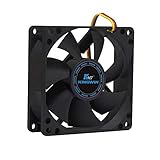
- ✅ Quiet 80mm PC Fan – Designed for silent operation with low noise levels, this 80mm computer case fan is perfect for quiet PC builds, office desktops, and home servers.
- ✅High Airflow Cooling Fan – Optimized blade design delivers excellent ventilation and airflow to reduce system heat buildup for better PC performance and longevity.
- ✅Universal Fit for Computer Cases & CPU Coolers – Compatible with standard 80mm mounts, ideal as a replacement fan for PC cases, CPU coolers, and custom water cooling radiators.
- ✅Ideal for Mining Rig Cooling – Built to handle high-performance environments such as crypto mining rigs and GPU farms, maintaining airflow and minimizing overheating risks.
- ✅Long Life Bearing & Durable Design – Features a reliable long life bearing for extended lifespan and consistent cooling, housed in a rugged black frame for lasting use.
Restart Windows after installing the driver before retesting. Capcom’s general guidance treats ordinary driver updating as the first step and reserves a clean installation for cases that do not improve after a normal update. A clean installation removes existing driver components, so use it as a targeted follow-up, not as a ritual for every hitch.
Apply Windows updates and reboot
Install relevant Windows updates, complete any pending restart, and then launch the shooter again. If the problem began immediately after an update, record that timing for support rather than assuming the update is responsible; the timing is a clue, not proof.
Confirm the high-performance GPU on a laptop
Many laptops contain integrated and discrete GPUs. Verify in Windows graphics settings or the laptop vendor’s GPU-control panel that the shooter’s executable is assigned to the intended high-performance processor. Capcom documents an incorrect GPU assignment as a possible configuration problem.
Check the actual GPU in use while the game is running, not only the GPU listed in the specification. If the game launches on the integrated processor, changing in-game quality settings may not address the real bottleneck. Record the executable and assignment you changed so you can reverse it if another title needs a different profile.
Repair the installation and remove software interference
Verify or repair game files
Patch interruptions, disk errors, or damaged files can produce missing assets, graphical faults, crashes, or unusual loading behavior. Use the launcher’s built-in verification or repair command rather than deleting random folders.
Recommended Free Tools
- In Steam, open the game’s Properties from your Library, choose the installed-files section, and run Verify integrity of game files.
- Wait for the process to finish; allow Steam to reacquire files it identifies as missing or damaged.
- For a game managed by another launcher, use that launcher’s equivalent Verify, Scan, or Repair command. Activision’s Warzone guidance, for example, points players to file verification or Battle.net repair.
- Retest the same reproducible scenario and record whether the symptom changed.
Verification does not upgrade unsupported hardware, cure overheating, or guarantee that a game patch itself is bug-free. It answers a narrower question: whether the local installation contains files the launcher considers missing or damaged.
Rank #3

- High performance cooling fan, 120x120x25 mm, 12V, 4-pin PWM, max. 1700 RPM, max. 25.1 dB(A), >150,000 h MTTF
- Renowned NF-P12 high-end 120x25mm 12V fan, more than 100 awards and recommendations from international computer hardware websites and magazines, hundreds of thousands of satisfied users
- Pressure-optimised blade design with outstanding quietness of operation: high static pressure and strong CFM for air-based CPU coolers, water cooling radiators or low-noise chassis ventilation
- 1700rpm 4-pin PWM version with excellent balance of performance and quietness, supports automatic motherboard speed control (powerful airflow when required, virtually silent at idle)
- Streamlined redux edition: proven Noctua quality at an attractive price point, wide range of optional accessories (anti-vibration mounts, S-ATA adaptors, y-splitters, extension cables, etc.)
Close recorders, overlays, and unnecessary programs
For one controlled run, close applications that capture video, display performance overlays, inject an in-game overlay, or consume substantial CPU, GPU, memory, or disk bandwidth. Capcom identifies recording programs and performance overlays as possible performance or stability concerns, while Activision lists specific interfering applications for Warzone.
Retest without changing graphics quality. If the hitch or crash disappears, re-enable programs one at a time to identify the conflict. An overlay that is harmless in one shooter can interfere with another after a patch, so do not treat a single successful test as a permanent diagnosis.
Handle antivirus questions narrowly
Do not disable system protection broadly as a default troubleshooting step. Investigate an exclusion only when the game’s official support instructions or a specific quarantine or blocked-file event points to security software interference. Limit any exception to the game’s required files and follow the vendor’s documented procedure, then restore normal protection when the test is complete.
Free tools Windows power users keep installed
One-click scans. No signup required.
Treat shader compilation and caches as game-specific
Shaders are compiled or preloaded differently by different engines. A first launch, a major game update, a driver change, or a changed graphics option can make a title perform work that is not repeated later. This can appear as hitching during early play, but the available support guidance does not establish that every stutter is a shader problem.
Follow the game’s own preloading instruction
Activision states that Warzone shader preloading is an important part of first boot and should be allowed to complete before leaving the main menu. If your title displays a similar progress message, leave it in the menu until the process finishes, then test again.
Do not delete arbitrary cache folders
Capcom describes cases involving damaged driver- or game-generated shader-cache files and gives instructions for a particular game’s cache file where applicable. That is not permission to delete every cache directory on the PC. Use the current instructions for the exact game and understand whether the next launch will rebuild the cache and take longer.
Rank #4

- High Performance Cooling Fan: The design of nine fan blades, the maximum speed reaches 1200 RPM, and it is connected to the motherboard through the 3 PIN interface, providing a good cooling effect for the case
- Low Noise: Every fans is equipped with four soft silicone cushions that can absorb vibration at high speeds. The maximum noise is only 32.1 dBA. Keep the case in a relatively quiet environment when working
- Hydraulic Bearing Design: High-quality bearings can make the fan rotate more stably, reduce noise, and prolong its service life. Each fan can work an average of 30,000 hours
- Simple Installation: This computer fan's size is 120 mm and is compatible with all types of cases, making it easy to install. You can do it even if you have no installation experience
- Good Insulation and Heat Resistance: Case fan uses PBT environmental protection material, with good insulation and heat resistance, tough and durable quality
When reporting a shader-related symptom, state whether it occurs only on the first launch after an update, continues after preloading completes, or happens in every match. That distinction helps support separate normal compilation work from a persistent fault.
Quick wins for a faster PC:
Repair Windows errors before they cause bigger problemsFix Now →Fix the driver behind crashes, sound loss and screen glitchesFind Drivers →Clear out junk files and repair common Windows errorsFree Scan →Check ventilation, heat, and memory pressure before buying parts
Look for heat-related behavior
Keep the PC’s intake and exhaust paths clear, confirm that fans spin, and observe whether the problem appears after the system has been playing for a while rather than immediately. Capcom’s support article warns that gameplay may be less smooth if the PC generates too much heat. Lowering graphics settings or limiting the frame rate can reduce heat production while you test.
Do not turn that clue into a diagnosis from a single temperature reading. A hot case, failing fan, blocked filter, or poor airflow pattern can have different remedies. If a fan is confirmed to be failed or inadequate, a compatible PC case fan replacement may help; check the case mounting size, connector, and airflow direction before purchasing. A new fan is not a general cure for every stutter or crash.
Check available memory and disk swapping
Steam’s hardware-performance guidance identifies low available memory and swapping to disk as possible sources of repeated hitches. Close unnecessary programs, watch whether memory becomes scarce during the reproducible test, and note if disk activity rises as the hitch occurs.
These observations identify pressure, not a defective component. Do not buy additional RAM or replace a drive until you have confirmed the capacity, compatibility, and behavior of the existing system. A memory-heavy background application can produce the same symptom as a game that simply needs more available memory.
PC Slower Than It Used to Be?
A free scan shows the junk files, broken settings and background clutter dragging Windows down - then fixes them in one click.Free scan · Windows 10 & 11Crashes, No Sound, or Screen Glitches?
Random freezes, missing sound and display glitches usually trace back to one bad driver. Find and replace yours safely.Free scan · under a minuteUse a symptom-specific decision path
If the problem is mainly low FPS
- Confirm the game’s requirements and whether the laptop is using the discrete GPU.
- Lower resolution or demanding options for a controlled comparison.
- Update the appropriate graphics driver and Windows, then reboot.
- Close overlays and recorders and retest the same scene.
- Check heat and memory pressure if performance degrades during a longer session.
Compare frame-time consistency and visual quality, not just the highest number shown by an overlay. Keep the setting that solves the specific symptom without creating an unacceptable visual or input trade-off.
Best Value

- 【High Performance Cooling Fan】 Automatic speed control of the motherboard through the 4PIN PWM fan cable interface, which can determine the speed according to the temperature of the motherboard, with a maximum speed of 1550RPM. Configured with up to 55cm of cable for PWM series control of fans, ideal for cases and CPU coolers.
- 【Quality Bearings】The carefully developed quality S-FDB bearings solve the problem of pc cooling fan blade shaking in lifting mode, keeping fan noise to a minimum while providing maximum cooling performance when needed and extending the life of the fan.
- [Excellent LED light] The high-brightness LED atomizing argb fan blade can effectively reflect the light, making the ARGB lighting effect softer, and it matches the cooler and case more perfectly. Up to 17 modes of light effects with ARGB support, color can be managed and synchronized through the port on motherboard.
- 【Silent Fan Size】 Model: TL-C12C-S X3, Size: 120*120*25mm, Speed: 1550RPM±10%, Noise ≤ 25.6dBA Connector: 4pin pwm, Current: 0.20A, Air Pressure: 1.53mm H2O, Air Flow: 66.17CFM, Higher air flow for improved cooling performance.
- 【Silent Fan Size】 Model: TL-C12C-S X3, Size: 120*120*25mm, Speed: 1550RPM±10%, Noise ≤ 25.6dBA Connector: 4pin pwm, Current: 0.20A, Air Pressure: 1.53mm H2O, Air Flow: 66.17CFM, Higher air flow for improved cooling performance.
If the problem is intermittent stuttering
- Record where the hitch occurs: first launch, after an update, traversal, combat, menu transition, or an apparently random moment.
- Allow any title-specific shader preloading to finish.
- Run once with recorders and overlays closed.
- Check memory availability, disk swapping, ventilation, and the time elapsed before the hitch appears.
- Verify files if the behavior began after a patch or damaged-installation warning.
A change that removes only first-launch hitches suggests a different path from a hitch that persists in every match. Keep those observations separate in your notes.
If the game crashes to the desktop
- Verify or repair the installation.
- Update the graphics driver and Windows and restart.
- Confirm the intended GPU on dual-GPU laptops.
- Close overlays, capture utilities, and other known interfering applications.
- Follow the game’s specific shader-cache or preloading instructions.
- Record the exact crash location, timing, recent changes, and any crash report.
Do not assume that lowering settings alone fixes a crash. It is a useful test for load and heat, but file damage, driver problems, software conflicts, and game defects remain possible.
If the whole PC restarts or shows a blue screen
Separate a Windows-level failure from a game process closing. A forced reboot, blue screen, or power loss requires PC and operating-system troubleshooting in addition to contacting the game publisher. Note the stop message if one appears, whether the event happens only under load, and whether Windows records a system error. Avoid describing this as an ordinary game crash in a support ticket.
The Tool Desk
Outbyte PC Repair FREEClear out junk files and repair common Windows errorsFree Scan →Outbyte Driver Updater FREEScan for outdated or missing drivers - takes under a minuteDriver Scan →Choose changes by the trade-off they reveal
| Change | What it can test | Trade-off to record |
|---|---|---|
| Lower resolution or demanding visual options | Whether rendering load relates to low FPS, heat, or frame-time spikes | Reduced image quality; some settings require a restart |
| Frame-rate cap | Whether limiting workload improves smoothness or heat behavior | Lower peak frame rate |
| Close overlays and recorders | Whether injected or resource-consuming software is involved | Loss of capture or overlay features during the test |
| Driver update | Whether the installed driver is outdated or unsuitable for the GPU and title | Driver changes can alter behavior in other games; reboot after installation |
| File verification or launcher repair | Whether local files are missing or damaged | Reacquisition time and additional disk use while files are restored |
For hardware changes, compare the part’s physical form factor, connector, airflow requirement, and compatibility with the actual case and system. A purchase is justified only after the corresponding fault has been observed.
Prepare an actionable support report
If the sequence does not resolve the fault, send the game’s support team a compact, reproducible report. Include:
- Game name, edition, launcher, and game version if displayed.
- CPU and GPU models, VRAM, installed system memory, monitor configuration, resolution, and graphics settings.
- Windows version and graphics-driver version.
- Security software and any quarantine or blocked-file event relevant to the game.
- Where and when the problem occurs, how long the session runs before it appears, and whether it is constant or intermittent.
- Every change already tested, including file verification, driver or Windows updates, GPU assignment, closed overlays, shader-preloading completion, and graphics-setting changes.
- Numbered reproduction steps that another person can follow.
- The game’s crash report, error code, log, or dump when the title provides one.
Capcom and Activision both request system details, issue location and timing, reproducible steps, and crash information in their support guidance. A precise report lets the publisher distinguish an installation problem, configuration conflict, hardware symptom, and title-specific bug.
When to stop troubleshooting the game alone
Escalate to broader PC support when the machine blue-screens, reboots, loses display output, powers off, or shows failures in several unrelated games. Escalate to the game publisher when one title consistently crashes or stutters after you have documented the requirements, driver, GPU assignment, file, background-software, shader, heat, and memory checks. Keep the baseline and test log; repeating the same uncontrolled changes will not add evidence.
Do these 3 things before closing this tab:
1Repair Windows errors before they cause bigger problems2Fix the driver behind crashes, sound loss and screen glitches3Clear out junk files and repair common Windows errorsQuick Recap
Product prices and availability are accurate as of the date/time indicated and are subject to change. Any price and availability information displayed on Amazon at the time of purchase will apply.

