
Some links on this page are affiliate links: if you buy through them we may earn a commission, at no extra cost to you.
AI game assets stay consistent when you treat generation as a documented production system, not a one-off prompt or lucky seed. Maintain a living style-and-narrative bible, separate fixed project rules from per-asset changes, reuse approved identity and composition references, record every generation setting, iterate in small batches, and require human approval before anything reaches the build. The same discipline works for character portraits, environments, UI illustrations, quests, dialogue, item descriptions, and barks. A fixed seed can help you compare variants of one asset, but it cannot make an entire cast or world share a visual language; consistent prompts, references, versioning, cleanup, and review do that.
What does “consistent with your vision” mean for an AI game pipeline?
Consistency has several independent dimensions. An image can depict the correct character yet use the wrong palette, camera, or lighting. A line of dialogue can sound attractive while contradicting a date, faction, ability, or relationship. Decide which dimensions are invariant before generating anything.
As an Amazon Associate I earn from qualifying purchases.
Crashes, No Sound, or Screen Glitches?
Random freezes, missing sound and display glitches usually trace back to one bad driver. Find and replace yours safely.Free scan · under a minuteWindows Errors? Fix Them Before They Spread
Repair common Windows errors and clear accumulated junk for a smoother, more stable PC - no reinstall needed.Free scan · no reinstall- Identity fidelity: the same silhouette, facial landmarks, hair, costume, emblem, proportions, names, abilities, and relationships remain recognizable.
- Style fidelity: palette, value range, line quality, rendering method, texture, lighting, diction, rhythm, point of view, and emotional register stay within the project’s language.
- Composition and format: pose, camera, perspective, negative space, aspect ratio, line length, markup, and final-size readability fit the intended asset slot.
- Narrative fidelity: chronology, world rules, terminology, motivations, and player-facing meaning do not drift.
- Production repeatability: another team member can reproduce or deliberately revise an approved result from the recorded setup.
Write these as testable requirements. “Make it feel like our game” is too vague; “three-quarter portraits, warm rim light from camera left, four-color dusk palette, no photoreal texture” can be checked.
How do I create a style bible that every art prompt can reuse?
Write one fixed style block, approve it with the art lead, and append the unchanged block to every asset prompt. AIGAMEDEV describes this as a repeatable chunk covering palette, line weight, rendering style, and exclusions; repeating it reduces drift.
#1 Best Overall

- BLUE LIGHT BLOCKING GLASSES: Our blue light glasses for women boast UV400 protection, blocking harmful blue rays from computer screens. With these bluelight glasses women, you can enjoy gaming, reading, or watching TV with no worries of eye strain.
- EYE RELIEF: Our blue light glasses are engineered to reduce blurry vision or strain caused by prolonged screen time. These womens blue light glasses aid in better sleep by preventing blue light from disrupting your natural sleep cycle, helping you fall asleep faster and enjoy a more restful night's sleep, making them the perfect christmas present.
- COMFORTABLE: Crafted from durable material, our trendy blue light glasses for woman or blue light glasses men ensure long-lasting comfort. The high-transmittance lenses accessories, gamer gifts for men, help keep your eyes relaxed. Perfect stocking stuffers, gifts for gamers men, christmas gifts for men, halloween costumes.
- LIGHTWEIGHT: These clear blue light glasses feature a lightweight frame, meaning they’ll stay comfy for long-term wear. Perfect as blue blockers glasses for women or mens blue light glasses, these non-prescription fake glasses for men can be worn throughout the day. The blue light blocking glasses women feature polycarbonate HD lenses, which are anti-reflective and restore true color.
- WORRY-FREE PURCHASE: If you experience any issues, our support team is ready to assist you quickly. These are the perfect costume glasses for cosplay dressing up.
Define the visual invariants
- Medium and rendering: for example, hand-painted 2D, hard-edged cel shading, low-poly 3D, or pixel art with a specified scale.
- Palette: name the dominant hues, value range, saturation limits, and any reserved colors for factions, damage states, rarity, or interaction cues.
- Line and shape language: line weight, edge sharpness, silhouette exaggeration, corner treatment, and how much detail survives at the game’s display size.
- Lighting: key-light direction, softness, contrast, rim-light policy, shadow color, and whether environments use a shared time-of-day logic.
- Camera and composition: orthographic or perspective, typical focal length or crop, horizon placement, portrait angle, sprite framing, and negative-space rules for UI text.
- Texture and background: brush grain, surface scale, atmospheric treatment, background value, and transparency requirements.
- Exclusions: recurring failures such as extra fingers, glossy plastic highlights, modern logos, text artifacts, photoreal skin, or unapproved costume details.
Keep style separate from character identity
The style bible should describe how the project renders subjects, not every fact about a particular hero. Store each approved character sheet separately with front, side, and action views; silhouette, facial landmarks, hair shape, costume pieces, colors, proportions, scars, emblems, and forbidden changes. This lets you change a pose without silently changing the character.
Use an explicit fixed block
PROJECT STYLE: [medium]; [palette]; [line/rendering rules]; [lighting]; [camera convention]; [approved identity reference]; AVOID: [recurring failure modes].Keep the wording and order stable. If the team revises the style, increment the style-bible version and regenerate or review affected assets rather than quietly editing the text in place.
How should I separate identity, style, and scene intent in an image prompt?
Give each role its own input. OpenAI’s image guidance recommends labeling image roles such as “edit target” and “style reference,” and explicitly stating what must not change. This prevents a pose request from overwriting a face or a style reference from importing an unwanted costume.
Identity block
Attach the approved character sheet or object turntable and list the non-negotiable landmarks: “keep the broken left horn, asymmetrical shoulder plate, narrow jaw, and three-fingered glove.” Use the same reference whenever that identity appears.
Style block
Append the project block verbatim. If a reference image supplies style, label it as a style reference rather than an edit target so the system does not copy its subject.
Variable scene block
Describe only what changes for this asset: action, emotion, camera, pose, environment, time of day, and output slot. State invariants again when a failure would be costly, such as “keep costume colors and emblem unchanged.”
The Tool Desk
Outbyte Driver Updater FREEScan for outdated or missing drivers - takes under a minuteDriver Scan →Outbyte PC Repair FREERepair Windows errors before they cause bigger problemsFix Now →ASSET: [character/object]; ACTION: [observable action]; POSE/COMPOSITION: [approved sketch or layout]; OUTPUT: [sprite, portrait, UI, concept]; KEEP FIXED: [invariants].Concrete language matters. Runway’s prompting guidance notes that generative models interpret words literally and lack the shared context a colleague has. Replace “make it dynamic” with “knees bent, torso twisted 20 degrees toward camera, sword crossing the lower third, three-quarter view.”
Rank #2

- WINDEX GAMING WIPES: effortlessly clean all your gaming gear and gaming electronics in one easy step with our new Windex Gaming Wipes
- AMMONIA FREE: our ammonia-free formula is safe to use on all of your favorite gaming equipment like consoles, headsets, controllers, screens, keyboards, and more
- PRE-MOISTENED WIPES: each wipe instantly removes dust, dirt, and stubborn smudges and fingerprints leaving a streak-free shine
- ANTI-STATIC: great for cleaning and wiping down your gaming gear and electronics leaving behind no visible residue
- COMPACT RESEALABLE PACKAGE: store your pack of Windex Gaming Wipes anywhere in your home for whenever a quick and easy wipedown is needed
How do references keep poses, layouts, and environments aligned?
Use structural references when composition must line up. A pose sketch, thumbnail, blockout, or approved layout can hold the action and camera while the subject or costume changes. This is different from an identity sheet: one controls structure, the other controls who or what appears in it.
Choose the right reference for the job
- Identity reference: character sheet, turntable, prop orthographic, or approved sprite.
- Style reference: a project-approved image showing palette, rendering, lighting, and texture.
- Structural reference: pose sketch, depth layout, perspective guide, map blockout, or UI wireframe.
- Edit target: the image being modified when you need to preserve its background or composition.
Label each file and role in the manifest. If the generator allows strength or influence controls, change one control at a time and save the result; otherwise you cannot tell whether a drift came from the reference, prompt, or model.
Review at game scale
An image that looks consistent at 200 percent may fail as a 32-pixel icon or a small dialogue portrait. Inspect silhouettes, facial landmarks, contrast, text-safe negative space, and color separation at the final display size before approving it.
Do these 3 things before closing this tab:
1Fix the driver behind crashes, sound loss and screen glitches2Repair Windows errors before they cause bigger problems3Scan for outdated or missing drivers - takes under a minuteWhat should a generation manifest record?
Record enough information to reproduce an accepted asset and diagnose silent drift. OpenAI and AIGAMEDEV both emphasize setup tracking; a manifest also makes handoffs between artists, writers, and engineers safer.
| Manifest field | What to capture | Why it matters |
|---|---|---|
| Model and checkpoint | Exact model name, checkpoint, or service version | Model updates can change identity, style, or safety behavior. |
| Prompt template | Fixed and variable blocks, including their versions | Shows which instruction changed when an output drifts. |
| References | File names, roles, and file versions | Prevents an unapproved image from becoming the new standard. |
| Generation settings | Resolution, sampler or equivalent controls, guidance settings, and seed policy | Enables controlled variants and repeatable reruns. |
| Adapters and tools | LoRA, control modules, plug-ins, and their versions | Adapter changes can alter anatomy, palette, or composition. |
| Output status | Draft, review, approved, rejected, and output revision | Keeps rejected material out of the reference library and build. |
Store the manifest beside the asset or in the project database, not in a private chat history. Hash or otherwise identify reference files if your pipeline supports it, and record the date when an external model or service was used.
Do seeds make a whole game visually consistent?
No. A fixed seed helps compare small variants of one prompt and setup, but it does not make unrelated characters, locations, or asset types share a style. AIGAMEDEV states plainly that seeds do not solve consistency across a set.
Use a seed for controlled iteration
- Keep model, checkpoint, prompt, references, resolution, and sampler unchanged.
- Change one variable, such as hand position or background color.
- Generate a small variant set and compare it with the approved image.
- Choose an output, update its revision, and preserve the previous manifest.
When you change the model, reference, resolution, or major composition, treat the seed as a new experiment rather than evidence of continuity.
Rank #3

- Ergonomic & Adjustable Design: Fight "text neck" and improve your posture. Designed for comfort, it offers an adjustable height (7.1in-8.5in) (1.4in adjustable range) and angle (5°-85°) Please note: cell phone stand is only 9 inches tall—the length of a standard pencil
- Without blocking subtitles Perfect for office desk Tiktok Face Time Zoom video—this is the ultimate kitchen desk essential for phones! Perfect viewing experience while reducing neck back strain, A must-have for gamers streamers desk, and anyone who values both style and support!
- Sleek & Stable Design fits Otterbox Case: Say goodbye to bent cables, tangles, and tip-overs! LISEN’s stylish adjustable desk phone holder features a built-in charging hole and smart cable management, keeping your phone secure and your workspace clutter-free cool gadgets for men
- ANTI-SLIP DESIGN free hands: The under 10.00 items easy gadgets back and the bottom of this kitchen essentials for women are fully covered by anti-skid silicone, which LISEN stand up desk decor can provide maximum protection device from any scratches and slides
- Your Perfect Viewing Companion:If your product arrives damaged or breaks within 365 days, reach out to LISEN for a quick and hassle-free solution. Struggling with assembly, like tightening the screw? We’ve got your back! Your experience matters to us. (Product including: phone Holder stand*1, screw*1, hexagon screwdriver*1, specification*1)
What cleanup and review pass should every art batch receive?
Apply one consistent post-process to the batch, then review each asset against the same checklist. Keep rejected outputs out of the approved reference library; otherwise future generations learn from your failures.
Standardize the post-process
- Resize or crop to the production slot and verify aspect ratio.
- Apply the project’s palette conversion, color management, compression, and transparency rules.
- Remove stray pixels, unintended text, broken edges, and artifacts without redesigning the style per asset.
- Export the required format and preserve the source plus manifest.
Inspect four art dimensions
- Identity: silhouette, facial landmarks, hair, costume, emblem, and proportions.
- Style: palette, value range, line quality, texture, lighting, and background treatment.
- Composition: pose, camera, perspective, negative space, and readability at final size.
- Continuity: damage state, equipment, chronology, faction colors, and any state that must match adjacent assets.
A human art lead should approve the final candidate. Automation can flag dimensions and color outliers, but it cannot reliably decide whether a subtle costume change alters the character’s identity.
How do I keep AI-written dialogue and lore faithful to canon?
Create a narrative bible that is as concrete as the art bible. Record canon facts, timeline, character goals, relationships, speech patterns, forbidden contradictions, terminology, point of view, rating, and examples of approved voice.
Organize canon for retrieval
- World rules: physics, magic or technology limits, institutions, geography, and consequences.
- Timeline: dated events, character ages, campaign order, and facts that change by chapter.
- Character cards: goals, fears, relationships, knowledge boundaries, pronouns, vocabulary, and emotional tells.
- Terminology: canonical names, capitalization, translations, item effects, faction labels, and prohibited synonyms.
- Voice examples: approved lines showing point of view, tense, sentence length, humor, formality, and emotional intensity.
- Content limits: rating, moderation rules, disclosure requirements, and platform-specific restrictions.
Supply the relevant excerpt for each task instead of an ever-growing transcript. A focused canon packet is easier to check and less likely to contain obsolete instructions.
Recommended Free Tools
How should writing prompts divide fixed rules from scene changes?
Put canon and voice in a fixed block; put the immediate dramatic task in a variable block. OpenAI recommends a consistent order and explicit constraints, while Runway recommends clear, concrete language without conflicting instructions.
CANON: [facts and timeline]. VOICE: [POV, tense, register, rhythm]. TERMS: [approved names]. NEVER CONTRADICT: [rules]. FORMAT: [line length, markup, rating].SCENE GOAL: [what changes]. SPEAKER: [character and relationship]. BEAT: [conflict/emotion]. CONTEXT: [relevant canon]. LENGTH: [limit].For a companion’s bark, specify the speaker’s relationship to the listener, what the character knows at that moment, the emotional beat, and the maximum line length. For an item description, lock terminology and effect values while varying only the item’s function and flavor.
Why should narrative generation happen in bounded units?
Generate one scene, quest, bark set, codex entry, or item description at a time. Bounded units make continuity checks practical and prevent a long conversation from accumulating contradictory instructions.
Rank #4

- Easy Installation: Our gaming lights have been designed to enhance your entertainment experience. Simply position the led light bar next to your TV or game console to create a game room environment with ease. They come with USB power and a 60 inch cord for direct mounting and mobility
- Audio Syncing & Extensive Mode: The built-in high-sensitivity music sensor allows you to sync the TV led lights to your favorite music. Lights react and move to the beat of music, film and game audio, creating an incredible immersive sound and light experience – and all without the need for an additional hub. You can choose from 64+ patterns, including strobe, illusion, jump, energy, gradient, running, chasing, fluttering mode etc. Each mode can be applied to different scenes
- 64+ Chasing IC+RGB & W Effect: The independent control design of IC+RGB and white all-in-one multifunctional rgbw led bar lights monitor backlight allows you to easily switch the led lights for desk between IC+RGB and white to enjoy a variety of lighting effects, you can choose white lighting mode with high brightness for better illumination when working, etc. Choose IC+RGB lighting mode when you need to create an entertaining atmosphere for the light show, 16 million colours of Color changing rgb light bar let you dance to the beat and create a dynamic party atmosphere
- Dynamic and Dimmable Lights: 1%-full brightness free brightness adjustment gives you the flexibility to adjust dimmable led light bar for room decorations or a variety of occasions
- USB Powered: USB light bars for room can be powered by powernank, usb charger, TV, Monitor, laptop PC mainframe, making behind TV led lighting bar easy to install in any location.TV led lights are powered by the TV usb interface / PC mainframe, can be turned on/off synchronously with TV / PC
- Select the current canon excerpt and the approved voice examples.
- Fill the fixed and variable blocks; state the output format and length limit.
- Generate several candidates if the task benefits from alternatives, but label them as drafts.
- Check every candidate against names, dates, factions, abilities, relationships, and world rules.
- Revise only the failed lines, preserving the approved facts and voice constraints.
- Have the writer or narrative lead approve the final text before localization, recording, or implementation.
Run a terminology and continuity check
Flag changed names, pronouns, dates, factions, item effects, and world rules. Then assess four story-quality dimensions highlighted in 2025 academic work on generative AI for game narrative and character design: grammaticality, fluency, controllable accuracy to the brief, and stable style. A fluent paragraph that fails controllable accuracy is still rejected.
What’s actually slowing this PC down?
Pick the symptom - the matching free tool is one click away.
What does a human approval gate need to check?
Human review is the acceptance gate, not a cosmetic last look. AI can propose variants; a writer, art lead, or narrative lead decides whether the result preserves intent, subtext, player-facing meaning, and production requirements.
- Art approval: identity, style, composition, state continuity, final-size readability, and technical export.
- Writing approval: canon, voice, subtext, terminology, pacing, rating, and whether the line means what the player must understand.
- Safety and policy: moderation, disclosure, maturity rating, privacy, and platform-specific rules.
- Rights and data handling: confirm that reference files and prompts may be used in the selected tool and that project-confidential material is handled under your agreements.
Roblox’s 2026 Creator Hub documentation states that third-party developers remain responsible for content delivered to users, even when it is AI-generated, and requires disclosure for generative interactions. Other platforms may impose different obligations, so check the destination platform before shipping.
What is a practical end-to-end workflow for a small game team?
A small team can achieve strong consistency without a large automation stack by making each handoff explicit.
- Define the vision: approve the style bible, narrative bible, asset slots, rating, and platform constraints.
- Build references: create character sheets, prop sheets, style references, pose sketches, layouts, and voice examples.
- Template prompts: freeze fixed blocks and expose only the variables a contributor is allowed to change.
- Create a manifest: assign an asset ID, record model and adapter versions, attach references, and state the seed policy.
- Generate a small batch: change one variable at a time where comparison matters.
- Clean consistently: run the same resize, palette, compression, and artifact-removal process.
- Review against checklists: inspect art identity/style/composition or writing canon/voice, then check safety and platform rules.
- Approve and version: mark the selected output, archive rejected drafts, and update the reference library only with approved material.
- Integrate and monitor: inspect assets in the actual build, especially at final display size and in context with neighboring scenes or lines.
Which control solves which consistency problem?
| Problem | Primary control | What it cannot guarantee |
|---|---|---|
| Character looks different between scenes | Approved identity sheet plus explicit invariants | Perfect identity preservation across every model or pose |
| Assets share a subject but not a visual language | Fixed style block and approved style references | One universal style score or model that works for every project |
| Pose or layout drifts | Structural reference such as a sketch, blockout, or layout guide | Identical anatomy or perspective when the generator fails to follow the guide |
| Variants cannot be reproduced | Manifest with model, prompt, references, settings, seed policy, and versions | Reproducing results after a service changes its model or defaults |
| Dialogue contradicts lore | Narrative bible, bounded canon excerpt, and continuity check | Human judgment about subtext, pacing, or player interpretation |
| Output is technically attractive but unusable | Final-size inspection and human approval gate | Eliminating every artifact before review |
What are the most common consistency failures and fixes?
“The character’s face changes every time.”
Use a versioned identity sheet, name the facial landmarks in the prompt, and keep the same reference role. Reject outputs that introduce a new scar, hairline, emblem, or proportion; do not add them to the reference library.
“Every scene has a different palette or lighting.”
Move palette, value range, lighting direction, and rendering language into the fixed style block. Use a style reference and apply one cleanup pass to the batch. Put intentional exceptions in the variable block and label them as exceptions.
“The seed worked for one portrait but not another.”
Use the seed only to compare variants of that portrait. For cross-asset consistency, rely on style and identity references, fixed prompts, and manifests.
Best Value
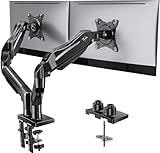
- Compatible with Wide Screens - To ensure compatibility with the dual monitor mount, your each monitor must meet three conditions at the same time: First, computer screens size range: 13 to 32 inches. Second, screen weight range: 4.4 to 19.8 lbs. Third, the back of the monitor screen must have VESA mounting holes with a pitch of 75x75mm or 100x100mm.
- Regarding the compatibility with desks - Your desk must meet three conditions at the same time: First, desk material: Only wooden desks are recommended, plastic or glass desks cannot be used. Second, desk thickness range: 0.59" - 3.54". Third, the bottom of the desk should not have any cross beams or panels, as this will interfere with installation. We recommend carefully checking that your desk and monitors meets all above conditions before purchasing.
- Dual C-Clamp Hold - Worried your dual monitors might wobble or slip? Our upgraded base uses a larger platform plus a dual C-clamp structure to lock the dual monitor arm firmly to your desk. Each arm safely keeps your screens steady while you type, click and game—no shaking, no sliding, just a clean and secure setup you can trust every day. It also provides Grommet Mounting installation choice, both options ensure stable and secure fixation for your 0.59" - 3.54" desk.
- Full-Motion Adjustment For Comfortable View - Pull the screen closer when you’re deep in a spreadsheet, push it back to watch videos, or rotate to portrait for coding — moving everything smoothly with just one hand. The monitor stand offers +85°/-50° tilt, ±90° swivel and 360° rotation. Raise your monitor up to 15.75″ to support a healthy sitting posture. Whether you’re working from home, gaming through the night, or switching between video calls and documents, getting the screens to your natural line of sight helps relieve neck, shoulder and back strain so you can stay focused longer with less fatigue.
- Keep Your Desk Organized: By lifting both screens off the desktop, this dual monitor stand opens up valuable space for your keyboard, notebook, docking station or a simple, clutter-free work area. Built-in cable management guides wires along the arms, keeping cords out of sight and out of the way. Enjoy a tidy, modern workstation that looks as good as it feels to use.
“The model follows the lore in one scene and breaks it in the next.”
Generate bounded units with the relevant canon excerpt, not a giant transcript. Lock names, dates, abilities, and world rules in the fixed block, then run a terminology and continuity check before approval.
“A polished output slipped into the build with an invisible mistake.”
Require status labels, a named approver, and final-size review. Check the asset in context, because a background that looks fine alone may destroy UI contrast or make a neighboring character unreadable.
Free tools Windows power users keep installed
One-click scans. No signup required.
What can the available evidence not prove?
No source establishes a universal numeric consistency score, guaranteed identity preservation, or a single best model for all game projects. Adapter methods such as LoRA can be part of a controlled setup, but their presence is not proof that a whole game will remain consistent; version and test them in your own manifest-and-review pipeline.
Consistency is therefore an operational property of your project: documented constraints, approved references, reproducible settings, small iterations, and accountable human decisions. The more consequential the asset, the more explicit the invariant and the stronger the review gate should be.
Frequently Asked Questions
Do I need to use the same AI model for every game asset?
Not necessarily. A team can change models when the manifest, references, prompt blocks, cleanup rules, and review criteria are updated and the resulting assets pass comparison; model changes should be treated as a controlled version change, not an invisible substitution.
Should rejected AI images ever remain in the reference folder?
Keep rejected files in an archive for auditability, but mark them rejected and exclude them from active reference searches or conditioning. Otherwise a flawed face, costume detail, or palette can become an accidental template for later generations.
How can I preserve a character’s voice when the speaker is angry, joking, or frightened?
Keep the character’s baseline diction, rhythm, vocabulary, and knowledge boundaries fixed, then describe the emotional beat as a variable. Ask for the emotion to change intensity and word choice within those limits rather than replacing the voice with a generic genre style.
What should I inspect after AI text is localized?
Recheck canonical names, item effects, pronouns, dates, rating-sensitive content, and line-length limits in each language. Localization can introduce terminology or grammatical changes that were absent in the approved source line, so the same narrative lead should sign off on player-facing meaning.
Quick Recap
Product prices and availability are accurate as of the date/time indicated and are subject to change. Any price and availability information displayed on Amazon at the time of purchase will apply.

