
Some links on this page are affiliate links: if you buy through them we may earn a commission, at no extra cost to you.
Set AI boundaries by what the tool does, what material you provide, who owns the work, and which rules govern the project—not by treating every AI feature as equivalent. A useful policy puts routine assistance such as proofreading, formatting, accessibility checks, or transcription in one category; generative or transformative work such as drafting scenes, rewriting distinctive prose, synthesizing research, or making images in another; and confidential, rights-sensitive, or prohibited uses in a third. Then assign each task a permission level: allowed, allowed with disclosure, allowed only with consent or a private tool, or prohibited.
That framework works for a game studio, freelance illustrator, novelist, composer, streamer, or multidisciplinary team. The final boundary must still match the publisher, client, employer, grant, submission terms, and law that apply to the specific project. Treat this article as a policy-building method, not a universal legal rule.
As an Amazon Associate I earn from qualifying purchases.
Outdated Drivers Are Slowing You Down
One free scan finds every outdated or missing driver and matches the right update for your exact hardware.Free scan · exact hardware matchPC Slower Than It Used to Be?
A free scan shows the junk files, broken settings and background clutter dragging Windows down - then fixes them in one click.Free scan · Windows 10 & 11Why do creative professionals need an AI boundary policy?
AI use can affect authorship, confidentiality, contractual promises, rights clearance, player trust, and the way a team is credited. The same software may perform a low-risk production task in one context and replace a core creative contribution in another. For example, converting a recorded design meeting into a transcript is materially different from asking a model to invent the game’s setting, dialogue, character art, or soundtrack.
Policies also differ by setting. A publisher may permit operational assistance but require consent for creative generation. A grant program may focus on privacy and the integrity of applications. A professional association may recommend disclosure without having the force of a contract or statute. Your policy should therefore identify the project’s governing rules before anyone uploads files or generates assets.
#1 Best Overall

- BLUE LIGHT BLOCKING GLASSES: Our blue light glasses for women boast UV400 protection, blocking harmful blue rays from computer screens. With these bluelight glasses women, you can enjoy gaming, reading, or watching TV with no worries of eye strain.
- EYE RELIEF: Our blue light glasses are engineered to reduce blurry vision or strain caused by prolonged screen time. These womens blue light glasses aid in better sleep by preventing blue light from disrupting your natural sleep cycle, helping you fall asleep faster and enjoy a more restful night's sleep, making them the perfect christmas present.
- COMFORTABLE: Crafted from durable material, our trendy blue light glasses for woman or blue light glasses men ensure long-lasting comfort. The high-transmittance lenses accessories, gamer gifts for men, help keep your eyes relaxed. Perfect stocking stuffers, gifts for gamers men, christmas gifts for men, halloween costumes.
- LIGHTWEIGHT: These clear blue light glasses feature a lightweight frame, meaning they’ll stay comfy for long-term wear. Perfect as blue blockers glasses for women or mens blue light glasses, these non-prescription fake glasses for men can be worn throughout the day. The blue light blocking glasses women feature polycarbonate HD lenses, which are anti-reflective and restore true color.
- WORRY-FREE PURCHASE: If you experience any issues, our support team is ready to assist you quickly. These are the perfect costume glasses for cosplay dressing up.
Creative Australia’s 2025 Generative AI and creative work paper states that its principles are “founded on the fundamental principles of fairness, transparency, consent, and the centrality of human creativity.” Those principles are a useful starting point for a studio or individual, but they do not replace the terms of a particular deal.
How do I classify AI tasks in a creative workflow?
List the task, the material supplied, the output’s role, and the human contribution. Classifying the task first prevents a blanket rule such as “AI is always allowed” or “AI is never allowed,” both of which miss important differences.
Free tools Windows power users keep installed
One-click scans. No signup required.
| Category | Typical game-creative examples | Default boundary to consider | Controls to add |
|---|---|---|---|
| Routine assistance | Spellcheck, formatting, captioning, accessibility suggestions, transcription, file tagging, or converting notes into a structured outline | Usually permitted when the input is safe to share and a person checks the result | Human review for accuracy, tone, accessibility, and factual errors |
| Generative or transformative assistance | Drafting dialogue, rewriting narrative prose, synthesizing research, generating concept art, composing musical passages, translating a script, or producing a design variation | Permit only under a stated disclosure and rights policy; some projects require prior consent | Record the use, review the output, clear rights, and identify the human contribution |
| Permission-dependent | Uploading an unpublished build, client brief, proprietary lore, actor recording, or a collaborator’s draft to a third-party service | Use only with legal authority, informed consent, or an approved private environment | Data-processing review, written authorization, retention limits, and access controls |
| Prohibited | Submitting confidential material without authorization, misrepresenting generated work, or using an output that violates a contract or rights restriction | Do not proceed | Escalation path, deletion procedure, and documented decision |
The American Counseling Association’s publication guidance uses a similar distinction between routine assistance and generative or transformative use. Its requirements apply to ACA publications, not to every creative project, so use the categories as a model rather than as a universal mandate.
What permission levels should a policy contain?
Four levels are usually enough to make a policy operational. Write them in plain language so a contractor can make a decision without guessing.
- Allowed: The task may be done with an approved tool, provided that the worker performs the required review.
- Allowed with disclosure: The task may proceed, but the team must disclose the AI contribution to the client, publisher, audience, credits, or submission contact specified by the project.
- Allowed only with consent or a private tool: Obtain written permission, use an approved environment with suitable data controls, or do both before processing the material.
- Prohibited: The task or input is not permitted under the project rules. Stop and escalate rather than trying to conceal it.
Define who can grant consent, where that consent is recorded, and whether it covers a single asset or the whole project. A verbal “this should be fine” is difficult to audit later; a short written approval naming the tool, material, and purpose is clearer.
When should I disclose that I used AI?
Disclose whenever the applicable publisher, client, employer, grant, submission rule, or professional policy requires it, and disclose voluntarily when hiding a material contribution would mislead a collaborator or audience. The disclosure threshold should be tied to the task, not merely to whether an AI button was present.
The Tool Desk
Outbyte PC Repair FREERepair Windows errors before they cause bigger problemsFix Now →Outbyte Driver Updater FREEFix the driver behind crashes, sound loss and screen glitchesFind Drivers →Rank #2

- WINDEX GAMING WIPES: effortlessly clean all your gaming gear and gaming electronics in one easy step with our new Windex Gaming Wipes
- AMMONIA FREE: our ammonia-free formula is safe to use on all of your favorite gaming equipment like consoles, headsets, controllers, screens, keyboards, and more
- PRE-MOISTENED WIPES: each wipe instantly removes dust, dirt, and stubborn smudges and fingerprints leaving a streak-free shine
- ANTI-STATIC: great for cleaning and wiping down your gaming gear and electronics leaving behind no visible residue
- COMPACT RESEALABLE PACKAGE: store your pack of Windex Gaming Wipes anywhere in your home for whenever a quick and easy wipedown is needed
For a routine spelling pass or transcript, a project may treat AI like any other production utility. For generated dialogue, images, music, or a substantial rewrite, the contribution is more likely to be considered generative or transformative and may require disclosure or consent. The Authors Guild presents best practices for writers, while ACA requires disclosure for generative or transformative use in its own publishing context. Neither example is a universal rule.
What should a useful disclosure say?
Name the tool or service, the date or version if your policy requires traceability, the task it performed, and the human work that followed. A concise record might state: “A language model supplied three dialogue variations from a human-written scene outline; the writer selected, rewrote, fact-checked, and approved the final lines.” Do not imply that a tool performed work it did not perform, and do not claim that a person created every element if that is not true.
Can I upload my draft, client brief, or game build to an AI tool?
Only if you have the legal right and appropriate authorization, and only after checking how the service handles retention, access, and reuse. ACA guidance says authors must not enter confidential, personally identifiable, protected, unpublished, proprietary, or client information into a third-party AI system without that authority or authorization. The Canada Council for the Arts also identifies privacy and information security as considerations in its grant context.
Make an input inventory
- Unpublished scripts, design documents, builds, and unreleased assets
- Client briefs, non-disclosure information, and proprietary references
- Personal data, including player, employee, actor, or customer information
- Third-party material supplied under a restricted licence
- Voice, likeness, performance, or biometric material
Mark each item as public, internal, confidential, or restricted. If you cannot explain the service’s data controls in terms your contract permits, do not upload the material. Replace it with a fictionalized example, use a tool approved by the rights holder, or ask for written permission.
How do I protect human authorship and copyright?
Keep copyrightability, permission to use inputs, contract compliance, confidentiality, and ethical preference as separate questions. A “licensed” AI product does not automatically answer all five.
The U.S. Copyright Office’s January 29, 2025 summary says: “The Office confirms that the use of AI to assist in the process of creation or the inclusion of AI-generated material in a larger human-generated work does not bar copyrightability.” The same summary requires a human author to determine sufficient expressive elements; providing prompts alone does not qualify. Human selection, arrangement, and modification may matter. This is U.S. guidance as summarized on that date, not a universal rule for every jurisdiction and not a ruling about training inputs.
Rank #3

- Ergonomic & Adjustable Design: Fight "text neck" and improve your posture. Designed for comfort, it offers an adjustable height (7.1in-8.5in) (1.4in adjustable range) and angle (5°-85°) Please note: cell phone stand is only 9 inches tall—the length of a standard pencil
- Without blocking subtitles Perfect for office desk Tiktok Face Time Zoom video—this is the ultimate kitchen desk essential for phones! Perfect viewing experience while reducing neck back strain, A must-have for gamers streamers desk, and anyone who values both style and support!
- Sleek & Stable Design fits Otterbox Case: Say goodbye to bent cables, tangles, and tip-overs! LISEN’s stylish adjustable desk phone holder features a built-in charging hole and smart cable management, keeping your phone secure and your workspace clutter-free cool gadgets for men
- ANTI-SLIP DESIGN free hands: The under 10.00 items easy gadgets back and the bottom of this kitchen essentials for women are fully covered by anti-skid silicone, which LISEN stand up desk decor can provide maximum protection device from any scratches and slides
- Your Perfect Viewing Companion:If your product arrives damaged or breaks within 365 days, reach out to LISEN for a quick and hassle-free solution. Struggling with assembly, like tightening the screw? We’ve got your back! Your experience matters to us. (Product including: phone Holder stand*1, screw*1, hexagon screwdriver*1, specification*1)
For each important asset, preserve evidence of the human contribution: source sketches, drafts, edit history, arrangement decisions, performance direction, and approval notes. Have a person verify facts, check the work against the intended voice and quality bar, and conduct a rights review before delivery. If a client or publisher requires wholly human-created material, that contract requirement controls even where copyright might otherwise exist.
What do major creative policies actually require?
These examples are not interchangeable legal regimes. Compare their scope before borrowing a rule.
What’s actually slowing this PC down?
Pick the symptom - the matching free tool is one click away.
| Source and date | Who it covers | What it emphasizes | How to use it |
|---|---|---|---|
| American Counseling Association publication guidance | Authors submitting to ACA publications | Separates routine assistance from generative or transformative use; requires disclosure for the latter; protects confidential, unpublished, proprietary, client, and personally identifiable information | Use as a model for a publication-specific disclosure and input-safety rule |
| Hachette Book Group author guidance, updated March 20, 2025 | Authors working with that publisher | Distinguishes operational uses from creative uses and says it will avoid creative uses or seek rights-holder consent | Check the current publisher guidance and contract; do not generalize it to another publisher |
| Australian Society of Authors AI guidelines | Creators and author agreements in Australia | Inspect submission and contract terms, ask how a publisher already uses AI, and treat AI-detection scores cautiously because they can produce false positives and false negatives | Use as a checklist for negotiation and attribution conversations |
| Authors Guild, AI Best Practices for Authors, updated May 11, 2026 | Professional writers | Writer-focused best practices and professional concerns | Use for policy language, while confirming the obligations of your own deal |
| Canada Council for the Arts guidance, created December 12, 2025 | Grant applicants and funded projects in its context | Privacy and information security, alongside grant-related AI considerations | Read the grant’s current terms before processing an application or funded work |
| Creative Commons, CC License Guidance in the Age of AI | People applying Creative Commons licences | Explains that licences communicate copyright permissions where copyright applies; some AI uses may fall outside copyright. CC Signals are described as work in progress for expressing AI preferences | Do not assume changing a CC licence controls every AI use |
These differences explain why a studio-wide rule should include a “governing policy” field for each project. Record the publisher, client, employer, grant, platform, or jurisdiction that supplies the actual obligation.
How do I build an AI policy for a game project?
Build the policy before production begins, then attach it to the project brief and onboarding materials. The following sequence turns broad values into decisions a team can follow.
- Map the workflow. List research, brainstorming, drafting, editing, image and audio creation, translation, coding or technical documentation, client materials, testing, marketing, and delivery.
- Describe the human role. For each stage, state who decides the creative direction, who selects or edits outputs, who verifies facts and rights, and who gives final approval.
- Assign a permission level. Mark every task as allowed, allowed with disclosure, allowed only with consent or a private tool, or prohibited. Include an owner who can approve exceptions.
- Identify protected inputs. Name unpublished drafts, client briefs, personal data, proprietary references, unreleased builds, and any material supplied under confidentiality or licence restrictions.
- Set review gates. Require factual checking, rights review, voice and quality review, accessibility review where relevant, and final human approval before delivery.
- Check governing terms. Read the contract, publisher or employer policy, grant rules, and submission terms. Ask the relevant contact when language is ambiguous.
- Choose approved tools. Document which services may be used for which data classes, who can access them, and what retention or deletion settings are required.
- Keep a traceability record. Record the tool, task, material supplied, date or version when relevant, output used, and human contribution whenever the project or policy calls for it.
- Publish an escalation route. Tell team members whom to contact if a tool requests restricted data, an output resembles third-party work, or a contract conflicts with an internal rule.
- Revisit the policy. Review it when tools, contracts, organizational rules, or the project’s jurisdiction changes.
A compact policy template
Use a table with one row per task and these columns: Stage, Task, Input classification, Approved tool or environment, Permission level, Disclosure recipient, Required human review, Consent owner, and Record location. A row should be specific enough that a new contractor can follow it without interpreting a slogan.
What boundaries work for common game-creative roles?
Role-based examples help a team apply the same policy consistently without pretending that every discipline has identical risks.
Quick wins for a faster PC:
Scan for outdated or missing drivers - takes under a minuteDriver Scan →Repair Windows errors before they cause bigger problemsFix Now →Fix the driver behind crashes, sound loss and screen glitchesFind Drivers →Rank #4

- Easy Installation: Our gaming lights have been designed to enhance your entertainment experience. Simply position the led light bar next to your TV or game console to create a game room environment with ease. They come with USB power and a 60 inch cord for direct mounting and mobility
- Audio Syncing & Extensive Mode: The built-in high-sensitivity music sensor allows you to sync the TV led lights to your favorite music. Lights react and move to the beat of music, film and game audio, creating an incredible immersive sound and light experience – and all without the need for an additional hub. You can choose from 64+ patterns, including strobe, illusion, jump, energy, gradient, running, chasing, fluttering mode etc. Each mode can be applied to different scenes
- 64+ Chasing IC+RGB & W Effect: The independent control design of IC+RGB and white all-in-one multifunctional rgbw led bar lights monitor backlight allows you to easily switch the led lights for desk between IC+RGB and white to enjoy a variety of lighting effects, you can choose white lighting mode with high brightness for better illumination when working, etc. Choose IC+RGB lighting mode when you need to create an entertaining atmosphere for the light show, 16 million colours of Color changing rgb light bar let you dance to the beat and create a dynamic party atmosphere
- Dynamic and Dimmable Lights: 1%-full brightness free brightness adjustment gives you the flexibility to adjust dimmable led light bar for room decorations or a variety of occasions
- USB Powered: USB light bars for room can be powered by powernank, usb charger, TV, Monitor, laptop PC mainframe, making behind TV led lighting bar easy to install in any location.TV led lights are powered by the TV usb interface / PC mainframe, can be turned on/off synchronously with TV / PC
Writers and narrative designers
Proofreading a human-written quest can be a routine task. Generating character dialogue, restructuring a scene, or synthesizing research is a creative or transformative task that may require disclosure, consent, and a record of the writer’s revisions. Never submit an unpublished script or client lore to a third-party service unless the rights holder and the service terms permit it.
Concept, UI, and environment artists
Use a clear distinction between production assistance and generation of final or near-final imagery. Document reference images and permissions, keep source sketches and selection decisions, and obtain approval before an AI-generated element enters a deliverable whose contract promises human-created art.
Composers, sound designers, and performers
Audio can contain sensitive performance, voice, or likeness information. Treat recordings and stems as restricted until you know the consent and retention terms. A tool that proposes a rough structure is not the same as one that generates a releasable performance; set different permission levels and require rights review for both.
Translators, editors, and accessibility teams
Machine assistance can speed up a first pass, but a qualified human should check meaning, cultural context, terminology, accessibility, and errors before release. Keep a glossary and approved terminology list outside the prompt when it contains confidential information, or use an approved private environment.
Marketing and community teams
Generated copy or images may be public-facing even when the underlying campaign brief is confidential. Apply the same disclosure and rights checks, and make sure a person verifies factual claims, release dates, ratings language, and platform requirements before publication.
Independent reader supportYour contribution helps us test, update, and keep practical guides available for everyone.What should I ask my publisher, client, or employer about AI?
Ask for answers in writing and attach them to the project record. The goal is to uncover obligations that a general “AI policy” leaves unstated.
Best Value
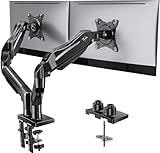
- Compatible with Wide Screens - To ensure compatibility with the dual monitor mount, your each monitor must meet three conditions at the same time: First, computer screens size range: 13 to 32 inches. Second, screen weight range: 4.4 to 19.8 lbs. Third, the back of the monitor screen must have VESA mounting holes with a pitch of 75x75mm or 100x100mm.
- Regarding the compatibility with desks - Your desk must meet three conditions at the same time: First, desk material: Only wooden desks are recommended, plastic or glass desks cannot be used. Second, desk thickness range: 0.59" - 3.54". Third, the bottom of the desk should not have any cross beams or panels, as this will interfere with installation. We recommend carefully checking that your desk and monitors meets all above conditions before purchasing.
- Dual C-Clamp Hold - Worried your dual monitors might wobble or slip? Our upgraded base uses a larger platform plus a dual C-clamp structure to lock the dual monitor arm firmly to your desk. Each arm safely keeps your screens steady while you type, click and game—no shaking, no sliding, just a clean and secure setup you can trust every day. It also provides Grommet Mounting installation choice, both options ensure stable and secure fixation for your 0.59" - 3.54" desk.
- Full-Motion Adjustment For Comfortable View - Pull the screen closer when you’re deep in a spreadsheet, push it back to watch videos, or rotate to portrait for coding — moving everything smoothly with just one hand. The monitor stand offers +85°/-50° tilt, ±90° swivel and 360° rotation. Raise your monitor up to 15.75″ to support a healthy sitting posture. Whether you’re working from home, gaming through the night, or switching between video calls and documents, getting the screens to your natural line of sight helps relieve neck, shoulder and back strain so you can stay focused longer with less fatigue.
- Keep Your Desk Organized: By lifting both screens off the desktop, this dual monitor stand opens up valuable space for your keyboard, notebook, docking station or a simple, clutter-free work area. Built-in cable management guides wires along the arms, keeping cords out of sight and out of the way. Enjoy a tidy, modern workstation that looks as good as it feels to use.
- Which routine uses are allowed, and which uses count as creative or transformative?
- When is disclosure required, and where should it appear: submission form, credits, metadata, or public statement?
- Is prior consent required for generated text, images, audio, translation, or code?
- May confidential, unpublished, client, personal, or proprietary material be entered into any third-party service?
- Which tools or private environments are approved, and what retention and deletion settings apply?
- Who owns or warrants the output, and what records must the creator keep?
- Does the contract promise human-only creation, originality, exclusivity, or a particular rights standard?
- How does the organization handle a suspected rights conflict or an output that resembles someone else’s work?
- Are AI-detection scores being used in evaluation? If so, what appeal process exists, given the risk of false positives and false negatives?
- How will the policy change if the tool, contract, publisher, grant, or applicable law changes?
What are the most common policy failures?
Most failures come from vague categories, unreviewed inputs, or treating one approval as permission for every later use.
- “AI is only for admin.” A seemingly small rewrite can change voice or meaning. Name the exact task and output role.
- One blanket ban or blanket approval. This obscures the difference between transcription and creative generation. Use the task spectrum instead.
- Uploading first and asking later. Confidentiality cannot be restored reliably after material reaches an unauthorized service.
- Assuming a licence solves everything. Copyright permission, privacy, contract terms, training or input rights, and ethical preference remain separate issues. Creative Commons specifically notes that its licences may not govern AI uses outside copyright and describes CC Signals as work in progress.
- Calling prompts authorship. The U.S. Copyright Office’s January 2025 summary says prompts alone do not establish the human expressive authorship needed for protection.
- Using detector scores as proof. The Australian Society of Authors cautions that detection tools can produce both false positives and false negatives.
- Failing to record human decisions. Without drafts, edits, selections, and approvals, it is harder to explain what a person contributed or to answer a rights question.
- Leaving contractors out. Include freelancers, vendors, translators, testers, and temporary staff in onboarding and require them to follow the same input and disclosure rules.
How should I review and update the policy?
Schedule a review at project milestones and whenever a tool or agreement changes. Recheck the task classification, protected-input list, approved environments, disclosure wording, consent owner, review gates, and recordkeeping location. Invite representatives from creative, legal or business affairs, production, security, and accessibility when those functions exist.
When a new use is proposed, pause the specific task rather than rewriting the whole policy informally. Record the question, the governing rule, the decision maker, the data involved, and the conditions attached to approval. That creates a consistent precedent and makes later audits or client conversations less dependent on memory.
Frequently Asked Questions
Does using AI for proofreading have to be disclosed to players or readers?
Not automatically. Disclosure depends on the project’s governing policy and whether the edit is treated as routine assistance; a contract or publisher rule can set a stricter threshold. Keep a record of the tool and the human review even when public disclosure is not required.
Can I use a free public chatbot for an unpublished game script?
Do not assume that a free service is safe for confidential work. First confirm that you have authority to share the script and that the service’s retention and reuse terms fit the project; otherwise use a fictionalized sample or an approved private environment.
Who should approve an exception to an AI policy?
Name the approval owner in the policy before an exception is needed. Depending on the project, that may be the rights holder, publisher contact, client, employer, grant administrator, or a designated legal or security lead; approval should identify the exact tool, input, task, and duration.
What evidence shows that a human made the creative contribution?
Preserve drafts, source sketches, edit history, arrangement choices, performance direction, and final approval notes. These records explain the human selection, modification, or organization of material without relying on an AI-detector score.
Do Creative Commons terms tell me whether I may use an AI output?
Only partly. Creative Commons explains that its licences communicate copyright permissions where copyright applies, while some AI uses may fall outside copyright; changing a licence may not control those uses. Check the specific licence, the input rights, and the project’s contract separately.
Quick Recap
Product prices and availability are accurate as of the date/time indicated and are subject to change. Any price and availability information displayed on Amazon at the time of purchase will apply.

