
Some links on this page are affiliate links: if you buy through them we may earn a commission, at no extra cost to you.
There is no dependable visual shortcut for proving that a retro game’s box art or manual was made with AI. Odd lettering, malformed details, or implausible lighting are reasons to investigate, not proof. The strongest approach is to examine the best available file for supported provenance information, trace earlier appearances of the image, and compare the result with dated publisher, artist, and archival records. A missing marker, clean artwork, or negative detector result cannot establish that a scan is human-made. You can reach a useful conclusion, but you should describe it precisely: a supported AI signal, visual anomalies, a documented earlier source, or evidence that remains inconclusive.
What can actually be proved about an old game image?
Most investigations can establish only what a particular file, provenance system, or historical record shows. They rarely prove the complete origin of a physical package or every edit made to a scan.
As an Amazon Associate I earn from qualifying purchases.
Keep four different claims separate:
- Supported AI provenance signal: the file contains a verifiable marker or signed record recognized by a supported system.
- Visual anomalies: the image has clues such as garbled text or inconsistent lighting that justify closer checking.
- Documented earlier source: the same or a clearly matching image appears in an independently dated catalog, advertisement, artist portfolio, photograph, or archive.
- Inconclusive evidence: the available file and records do not establish either origin.
These are evidence levels, not interchangeable labels. A signed record can document a file’s declared origin and edits, but it does not by itself prove that the declaration is truthful, that the signer owned the artwork, or that the image represents the historically correct box variant. Conversely, a historical photograph of a real box can show that the artwork existed by a certain date without identifying how a later digital recreation was made.
General guidance from Google’s image-verification help, Microsoft’s provenance-detection overview, and the AI Forensics human guide all point to a combined provenance investigation rather than a single detector.
#1 Best Overall

- BLUE LIGHT BLOCKING GLASSES: Our blue light glasses for women boast UV400 protection, blocking harmful blue rays from computer screens. With these bluelight glasses women, you can enjoy gaming, reading, or watching TV with no worries of eye strain.
- EYE RELIEF: Our blue light glasses are engineered to reduce blurry vision or strain caused by prolonged screen time. These womens blue light glasses aid in better sleep by preventing blue light from disrupting your natural sleep cycle, helping you fall asleep faster and enjoy a more restful night's sleep, making them the perfect christmas present.
- COMFORTABLE: Crafted from durable material, our trendy blue light glasses for woman or blue light glasses men ensure long-lasting comfort. The high-transmittance lenses accessories, gamer gifts for men, help keep your eyes relaxed. Perfect stocking stuffers, gifts for gamers men, christmas gifts for men, halloween costumes.
- LIGHTWEIGHT: These clear blue light glasses feature a lightweight frame, meaning they’ll stay comfy for long-term wear. Perfect as blue blockers glasses for women or mens blue light glasses, these non-prescription fake glasses for men can be worn throughout the day. The blue light blocking glasses women feature polycarbonate HD lenses, which are anti-reflective and restore true color.
- WORRY-FREE PURCHASE: If you experience any issues, our support team is ready to assist you quickly. These are the perfect costume glasses for cosplay dressing up.
How do I check a suspicious box-art or manual scan?
Work from the strongest available evidence toward weaker clues. Preserve the file you received, obtain a better source if possible, and record what each check can and cannot show.
- Find the best available file. Prefer the original export or scan over a screenshot, thumbnail, social-media download, or image copied from a listing. Routine resizing, recompression, cropping, and re-saving can remove metadata and provenance records. Keep an untouched copy and perform visual enlargements or conversions on a duplicate.
- Record the object’s identity before searching. Note the game title, platform, publisher, region, language, release period, and whether the image is front cover, back cover, cartridge label, instruction booklet, or a later reprint. Retro packaging often has regional and edition variants; searching the wrong variant can make a genuine image look suspicious.
- Check supported provenance signals. Open the original file in a verifier that supports the relevant provenance standard or provider. If Content Credentials or a signed manifest is present and validates, read its declared origin, creator, tool, and edit history. Save the result and the verifier’s date, because a result is limited to the systems that service supports.
- Inspect ordinary metadata. Look for creation and modification dates, software fields, embedded descriptions, and scanner or camera information. Treat these as context only: metadata can be stripped, altered, copied from another file, or never written in the first place. A software name is not proof of AI generation or human authorship.
- Inspect the artwork at several scales. View the whole composition first, then enlarge small text, logos, hands, faces, hardware, repeated motifs, shadows, and object edges. Write down specific observations rather than deciding from an overall feeling.
- Search the image’s history. Use reverse-image search and crop searches for distinctive regions such as a logo, character pose, or unusual background. Open the matches, follow them to the earliest or most authoritative page you can find, and compare the artwork, dates, credits, and edition details.
- Corroborate with independent records. Check publisher catalogs, contemporary advertisements, credited artist portfolios, dated photographs of physical copies, and reputable archival records. A strong match identifies the same game, region, edition, and packaging variant and has a date that does not depend solely on an undated repost.
- State the conclusion at the evidence’s strength. Say whether a supported marker was detected, anomalies were observed, an earlier source was documented, or the result is inconclusive. Do not convert a failed check into a claim that the image was not AI-generated.
What do Content Credentials and signed provenance records tell me?
Content Credentials, including C2PA-style manifests, can attach signed information about an asset’s origin, creator, tools, and edit history. When the record is intact and verifiable, it is useful evidence about that file’s recorded lifecycle.
| Method | A positive result can show | A negative or missing result means | Best input |
|---|---|---|---|
| Content Credentials or another signed provenance manifest | A supported origin or edit record associated with the file | The marker may be absent, stripped, altered, or outside the verifier’s coverage; absence does not authenticate the image | Original exported file or scan |
| Provider-specific watermark or signal | That the verifier recognized a signal from a supported provider or system | The image may use an unsupported system, predate the signal, or have lost or degraded it through copying or editing | Highest-quality unaltered file available |
| Conventional metadata | Context about software, dates, device, or editing recorded in the file | Fields can be missing, changed, or misleading and do not prove how the artwork was generated | Original file with embedded metadata intact |
| Visual inspection | Specific anomalies worth investigating | A coherent-looking image is not authenticated, and an oddity can have a non-AI explanation | Full-resolution image plus readable crops |
| Reverse-image search | Possible earlier appearances and visually similar sources | No match proves little because the image may be new, unpublished, private, or poorly indexed | Full image and distinctive cropped details |
The scope limitation is crucial. A positive signal is evidence about the marker that was checked, not a complete account of authorship, ownership, intent, truthfulness, or historical context. A negative result can simply mean that the file was transformed or that the relevant system is unsupported. The provenance-detection documentation and provider verification guidance describe this system-specific coverage rather than a universal AI test.
Which visual clues deserve a closer look?
Visual clues are triage tools. They help you choose where to investigate, but none is a standalone test for AI generation.
Small or decorative text
Zoom into title lettering, legal lines, warning panels, screenshots, rating marks, and spine text. AI-produced images can contain inconsistent, nonsensical, or almost-correct characters. However, blurry scans, halftone printing, damaged paper, stylized fonts, and optical-character-recognition errors can create similar defects. Compare every suspect word with a clean logo or another edition before drawing a conclusion.
Object details and anatomy
Look at controllers, weapons, fingers, faces, cables, buttons, and tiny background objects. Repeated or fused parts may indicate a synthetic image, but a low-resolution scan, compression, airbrushing, or a rushed human illustration can also explain them. Record the exact location and magnification of a defect so another investigator can reproduce the observation.
Do these 3 things before closing this tab:
1Repair Windows errors before they cause bigger problems2Fix the driver behind crashes, sound loss and screen glitches3Clear out junk files and repair common Windows errorsLight, shadows, and reflections
Check whether cast shadows point in compatible directions, whether highlights follow the shape of glossy surfaces, and whether figures sit convincingly on the ground. Packaging art often combines painted elements, photographed products, and composited typography, so deliberately inconsistent lighting can be part of the original design.
Rank #2
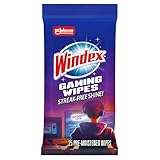
- WINDEX GAMING WIPES: effortlessly clean all your gaming gear and gaming electronics in one easy step with our new Windex Gaming Wipes
- AMMONIA FREE: our ammonia-free formula is safe to use on all of your favorite gaming equipment like consoles, headsets, controllers, screens, keyboards, and more
- PRE-MOISTENED WIPES: each wipe instantly removes dust, dirt, and stubborn smudges and fingerprints leaving a streak-free shine
- ANTI-STATIC: great for cleaning and wiping down your gaming gear and electronics leaving behind no visible residue
- COMPACT RESEALABLE PACKAGE: store your pack of Windex Gaming Wipes anywhere in your home for whenever a quick and easy wipedown is needed
Repeated patterns and edges
Inspect clouds, bricks, foliage, fabric, borders, and other repeated textures for unnatural duplication or abrupt transitions. Also check halos around cut-out figures and warped straight lines. Scanning glare, folded paper, perspective distortion, and retouching can produce edge artifacts, so treat the pattern as a lead rather than a verdict.
The AI Forensics guide recommends this kind of close human review while warning that convincing images can evade visual judgment and that anomalies alone cannot establish origin.
How should I use reverse-image search for retro packaging?
Reverse-image search is most valuable for reconstructing an image’s history, not for labeling it AI-generated.
Start with multiple queries
Submit the uncropped image, then crops of distinctive logos, characters, background scenes, and text. Try the title with platform, region, publisher, and phrases such as box scan, instruction manual, advertisement, or catalog. A crop can find a source when the full scan is obscured by borders, glare, or a collector’s watermark.
Evaluate the earliest credible match
Open the result instead of relying on the thumbnail. Compare artwork details, dimensions, language, legal text, publisher marks, and the physical package shown. Give more weight to a dated magazine advertisement, publisher catalog, artist portfolio, or photograph of a physical copy than to an undated repost that merely repeats the image.
Separate visual similarity from identity
Search engines may return a similar character pose or a fan-made remake rather than the same artwork. A match becomes useful only when the distinctive details align and the page identifies the same game and packaging variant. The AI Forensics guidance treats reverse search as one part of a broader provenance investigation and cautions that it cannot provide certainty on its own.
How can publisher and archival records corroborate the result?
Historical records can establish that an image or physical package existed by a particular date, but you must match the exact edition rather than the game title alone.
Windows Errors? Fix Them Before They Spread
Repair common Windows errors and clear accumulated junk for a smoother, more stable PC - no reinstall needed.Free scan · no reinstallCrashes, No Sound, or Screen Glitches?
Random freezes, missing sound and display glitches usually trace back to one bad driver. Find and replace yours safely.Free scan · under a minuteRank #3

- Ergonomic & Adjustable Design: Fight "text neck" and improve your posture. Designed for comfort, it offers an adjustable height (7.1in-8.5in) (1.4in adjustable range) and angle (5°-85°) Please note: cell phone stand is only 9 inches tall—the length of a standard pencil
- Without blocking subtitles Perfect for office desk Tiktok Face Time Zoom video—this is the ultimate kitchen desk essential for phones! Perfect viewing experience while reducing neck back strain, A must-have for gamers streamers desk, and anyone who values both style and support!
- Sleek & Stable Design fits Otterbox Case: Say goodbye to bent cables, tangles, and tip-overs! LISEN’s stylish adjustable desk phone holder features a built-in charging hole and smart cable management, keeping your phone secure and your workspace clutter-free cool gadgets for men
- ANTI-SLIP DESIGN free hands: The under 10.00 items easy gadgets back and the bottom of this kitchen essentials for women are fully covered by anti-skid silicone, which LISEN stand up desk decor can provide maximum protection device from any scratches and slides
- Your Perfect Viewing Companion:If your product arrives damaged or breaks within 365 days, reach out to LISEN for a quick and hassle-free solution. Struggling with assembly, like tightening the screw? We’ve got your back! Your experience matters to us. (Product including: phone Holder stand*1, screw*1, hexagon screwdriver*1, specification*1)
- Publisher catalogs and advertisements: Compare the cover illustration, logo placement, marketing copy, platform badge, and release region. A contemporaneous advertisement can anchor the artwork before later online circulation.
- Credited artist portfolios: Check whether the artist identifies the game, client, date, and medium. A portfolio entry supports attribution when it is clearly maintained by the artist or a reputable archive, but an uncredited repost does not.
- Dated photographs of physical copies: Examine the actual box or manual, including wear, printing marks, inserts, and regional labels. A photograph proves that the photographed object existed at the time of the image; it does not automatically prove who created every component.
- Reputable archival records: Prefer records with cataloging information, acquisition dates, edition details, and a clear chain to the institution or collection. Note whether the archive displays a scan of the original object or a later reproduction.
Record the source’s date, identifying details, and any differences. A genuine historical match can coexist with a later AI-edited reconstruction, especially when someone has cleaned, recolored, upscaled, or recomposed a scan.
How do I interpret the possible outcomes?
Use wording that says exactly what the evidence supports. The following matrix keeps common findings from being overstated.
| Finding | Defensible wording | What you still cannot claim |
|---|---|---|
| Verifiable supported AI provenance signal | “The file carries a supported signal indicating AI-related creation or editing.” | That the marker describes the complete history, ownership, or truth of the artwork |
| Visual anomalies only | “The image has anomalies that warrant further investigation.” | That AI generated it |
| Earlier dated source with matching details | “This artwork is documented in an earlier source for the identified edition.” | That every later scan or digital copy is unchanged |
| No marker or no detector result | “No supported signal was detected in this file.” | That the image was made by a human |
| Conflicting records or incomplete file | “The available evidence is inconclusive.” | A confident origin story based on appearance alone |
Keep screenshots of verifier results, URLs, access dates, and the exact file examined. If you publish a finding, identify the image’s source and edition so readers can distinguish a claim about one scan from a claim about an entire release.
Does the process differ for a manual scan and a box cover?
The core workflow is the same, but each format offers different corroborating details.
What’s actually slowing this PC down?
Pick the symptom - the matching free tool is one click away.
Box art
Front covers often have widely circulated promotional versions, regional logos, and altered title treatments. Compare the spine, back panel, legal text, rating symbol, screenshots, and publisher marks, not just the front illustration. A scan that combines a genuine front with a modern replacement back can look historically plausible while representing no real retail package.
Instruction manuals
Check page order, numbering, headers, warnings, controller diagrams, copyright lines, translation quality, and repeated layout elements. A generated single page may imitate the cover style but fail to match the typography or terminology used throughout the booklet. Search for neighboring pages and complete scans; a page-level match is more informative than a similar-looking cover.
Regional and reprint differences
European, North American, Japanese, budget, greatest-hits, and reissue packages can use different artists or altered text. Identify the language, rating system, publisher subsidiary, and catalog number before comparing sources. A difference from another region is not evidence of AI generation.
Rank #4

- Easy Installation: Our gaming lights have been designed to enhance your entertainment experience. Simply position the led light bar next to your TV or game console to create a game room environment with ease. They come with USB power and a 60 inch cord for direct mounting and mobility
- Audio Syncing & Extensive Mode: The built-in high-sensitivity music sensor allows you to sync the TV led lights to your favorite music. Lights react and move to the beat of music, film and game audio, creating an incredible immersive sound and light experience – and all without the need for an additional hub. You can choose from 64+ patterns, including strobe, illusion, jump, energy, gradient, running, chasing, fluttering mode etc. Each mode can be applied to different scenes
- 64+ Chasing IC+RGB & W Effect: The independent control design of IC+RGB and white all-in-one multifunctional rgbw led bar lights monitor backlight allows you to easily switch the led lights for desk between IC+RGB and white to enjoy a variety of lighting effects, you can choose white lighting mode with high brightness for better illumination when working, etc. Choose IC+RGB lighting mode when you need to create an entertaining atmosphere for the light show, 16 million colours of Color changing rgb light bar let you dance to the beat and create a dynamic party atmosphere
- Dynamic and Dimmable Lights: 1%-full brightness free brightness adjustment gives you the flexibility to adjust dimmable led light bar for room decorations or a variety of occasions
- USB Powered: USB light bars for room can be powered by powernank, usb charger, TV, Monitor, laptop PC mainframe, making behind TV led lighting bar easy to install in any location.TV led lights are powered by the TV usb interface / PC mainframe, can be turned on/off synchronously with TV / PC
What if I only have a physical copy or a screenshot?
A physical object can support historical verification, while a screenshot is usually the weakest file for technical provenance.
Quick wins for a faster PC:
Fix the driver behind crashes, sound loss and screen glitchesFind Drivers →Repair Windows errors before they cause bigger problemsFix Now →Scan for outdated or missing drivers - takes under a minuteDriver Scan →- Physical copy: Photograph the entire package and close-ups of catalog numbers, printer marks, paper folds, registration, and inserts in even light. Keep the original photographs unedited, then make working copies for cropping. Physical evidence can show printing and assembly details that a digital image hides, but it cannot reveal a provenance marker that was never embedded in the artwork.
- Screenshot or social-media image: Ask the owner or uploader for the original scan or export and its first known source. Preserve the screenshot as evidence of what was posted, but do not treat its missing metadata or compression as evidence about the underlying artwork.
- Online marketplace listing: Save the listing URL, seller’s stated edition, photographs, and access date. Compare the photos with archival images and look for stock art reused across unrelated listings. A seller’s description is a claim to verify, not an independent provenance record.
Are AI-image detectors accurate for retro game packaging?
No universal detector is established by the available guidance for retro box art or manual scans, and there is no cited statistic measuring detector accuracy on this material. A service can verify only the provenance signals and providers it supports.
That limitation is especially important for old packaging. The original artwork may predate modern markers, while a scan may have been resized, cleaned, printed, photographed, and rescanned. Each transformation can remove or degrade a signal. A detector that reports no result may therefore be operating correctly within its scope without answering the broader authorship question.
Do not buy magnifiers, UV lights, or generic detector gadgets expecting them to identify AI generation. They may reveal paper, ink, or printing characteristics, but those observations do not establish how the illustration was created. File provenance, image history, and independent source records provide the relevant evidence.
Independent reader supportYour contribution helps us test, update, and keep practical guides available for everyone.What mistakes make an investigation unreliable?
- Deciding from one uncanny detail: Human artists, printers, scanners, and compression all create defects that resemble synthetic artifacts.
- Treating a clean image as authentic: Visual coherence is not provenance.
- Assuming missing metadata means human-made: Metadata and credentials can disappear during ordinary copying.
- Using a detector outside its coverage: A negative result may reflect an unsupported provider or transformed file.
- Accepting the first reverse-search hit: Similarity is not identity, and reposts can be later than the image you are checking.
- Ignoring edition and region: Genuine variants can differ in language, logos, ratings, and artists.
- Publishing an absolute accusation: State the observed signal, source, date, and remaining uncertainty instead.
How should I document a finding for other collectors?
Create a compact evidence record that another person can audit:
The Tool Desk
Outbyte PC Repair FREEClear out junk files and repair common Windows errorsFree Scan →Outbyte Driver Updater FREEScan for outdated or missing drivers - takes under a minuteDriver Scan →- Identify the file or physical object, including filename, dimensions, format, game, platform, region, and edition.
- Keep the untouched original and label every derived crop or conversion.
- Capture provenance-verifier output and note which system was checked and when.
- List metadata fields exactly as shown, including empty or contradictory dates, without treating them as proof.
- Save reverse-search results and open the underlying pages to record dates, credits, and edition details.
- Link each archival or publisher record and explain which visual details match.
- Publish the conclusion using one of the evidence-level formulations above, with unresolved questions clearly separated from established facts.
This approach lets another collector reproduce the investigation without requiring them to trust your visual judgment.
Frequently asked questions
Can a real 1980s or 1990s package contain AI-generated artwork?
The physical date does not by itself identify the creation method of an image later printed or assembled into a package. A dated object can establish when that particular print existed, while provenance and archival records are needed to investigate when and how the artwork itself was made.
Best Value
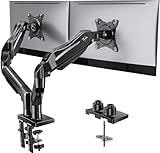
- Compatible with Wide Screens - To ensure compatibility with the dual monitor mount, your each monitor must meet three conditions at the same time: First, computer screens size range: 13 to 32 inches. Second, screen weight range: 4.4 to 19.8 lbs. Third, the back of the monitor screen must have VESA mounting holes with a pitch of 75x75mm or 100x100mm.
- Regarding the compatibility with desks - Your desk must meet three conditions at the same time: First, desk material: Only wooden desks are recommended, plastic or glass desks cannot be used. Second, desk thickness range: 0.59" - 3.54". Third, the bottom of the desk should not have any cross beams or panels, as this will interfere with installation. We recommend carefully checking that your desk and monitors meets all above conditions before purchasing.
- Dual C-Clamp Hold - Worried your dual monitors might wobble or slip? Our upgraded base uses a larger platform plus a dual C-clamp structure to lock the dual monitor arm firmly to your desk. Each arm safely keeps your screens steady while you type, click and game—no shaking, no sliding, just a clean and secure setup you can trust every day. It also provides Grommet Mounting installation choice, both options ensure stable and secure fixation for your 0.59" - 3.54" desk.
- Full-Motion Adjustment For Comfortable View - Pull the screen closer when you’re deep in a spreadsheet, push it back to watch videos, or rotate to portrait for coding — moving everything smoothly with just one hand. The monitor stand offers +85°/-50° tilt, ±90° swivel and 360° rotation. Raise your monitor up to 15.75″ to support a healthy sitting posture. Whether you’re working from home, gaming through the night, or switching between video calls and documents, getting the screens to your natural line of sight helps relieve neck, shoulder and back strain so you can stay focused longer with less fatigue.
- Keep Your Desk Organized: By lifting both screens off the desktop, this dual monitor stand opens up valuable space for your keyboard, notebook, docking station or a simple, clutter-free work area. Built-in cable management guides wires along the arms, keeping cords out of sight and out of the way. Enjoy a tidy, modern workstation that looks as good as it feels to use.
Will scanning a box destroy evidence of AI generation?
Scanning can remove embedded metadata or signed records that existed only in a digital source, and subsequent resizing or recompression can do the same. The scan remains useful for visual comparison and historical research, but it should not be treated as an unchanged copy of the source file.
How can I distinguish an AI recreation from a legitimate fan restoration?
Ask what was changed and compare the restoration with multiple dated references. A restoration may openly document cleaning, color correction, redraws, or reconstructed missing areas; undisclosed changes become harder to evaluate when no work history or source comparison is provided.
Should I report a suspicious scan to a game archive?
Yes, if you provide the original file or object details, your source links, edition information, and a measured description of the evidence rather than an accusation. Archives can then decide whether to annotate, replace, or retain the item and can preserve your documentation for future comparison.
Frequently Asked Questions
Can a real 1980s or 1990s package contain AI-generated artwork?
The physical date does not by itself identify the creation method of an image later printed or assembled into a package. A dated object can establish when that particular print existed, while provenance and archival records are needed to investigate when and how the artwork itself was made.
Will scanning a box destroy evidence of AI generation?
Scanning can remove embedded metadata or signed records that existed only in a digital source, and subsequent resizing or recompression can do the same. The scan remains useful for visual comparison and historical research, but it should not be treated as an unchanged copy of the source file.
How can I distinguish an AI recreation from a legitimate fan restoration?
Ask what was changed and compare the restoration with multiple dated references. A restoration may openly document cleaning, color correction, redraws, or reconstructed missing areas; undisclosed changes become harder to evaluate when no work history or source comparison is provided.
Free tools Windows power users keep installed
One-click scans. No signup required.
Should I report a suspicious scan to a game archive?
Yes, if you provide the original file or object details, your source links, edition information, and a measured description of the evidence rather than an accusation. Archives can then decide whether to annotate, replace, or retain the item and can preserve your documentation for future comparison.
Quick Recap
Product prices and availability are accurate as of the date/time indicated and are subject to change. Any price and availability information displayed on Amazon at the time of purchase will apply.

