
Windows Errors? Fix Them Before They Spread
Repair common Windows errors and clear accumulated junk for a smoother, more stable PC - no reinstall needed.Free scan · no reinstallCrashes, No Sound, or Screen Glitches?
Random freezes, missing sound and display glitches usually trace back to one bad driver. Find and replace yours safely.Free scan · under a minuteSome links on this page are affiliate links: if you buy through them we may earn a commission, at no extra cost to you.
Better prompting is not about finding a magic phrase. It is about stating the task, supplying only the context that changes the answer, defining constraints and output format, showing examples when needed, and revising the instructions after seeing real failures. To keep control, use AI to organize information, draft options, or perform low-risk preparation; keep your values, priorities, fact-checking, and approval of consequential actions with a person.
This approach works for game guides, build planning, accessibility setups, moderation workflows, and any other gaming task where an attractive answer can still be wrong for your goals. The sections below show how to write the prompt, test it, and create a clear boundary between delegated work and delegated judgment.
As an Amazon Associate I earn from qualifying purchases.
What makes a prompt better?
A useful prompt gives the model a job it can recognize and a definition of success it can check. Start with the outcome, then add the facts, limits, and format that materially affect that outcome. Do not make the model infer your objective from a pile of background text.
Anthropic describes clear, explicit task descriptions as the starting point for prompting. Its guidance also emphasizes that there is no single best technique: a prompt that helps one model or task may be ineffective for another.
#1 Best Overall

- BLUE LIGHT BLOCKING GLASSES: Our blue light glasses for women boast UV400 protection, blocking harmful blue rays from computer screens. With these bluelight glasses women, you can enjoy gaming, reading, or watching TV with no worries of eye strain.
- EYE RELIEF: Our blue light glasses are engineered to reduce blurry vision or strain caused by prolonged screen time. These womens blue light glasses aid in better sleep by preventing blue light from disrupting your natural sleep cycle, helping you fall asleep faster and enjoy a more restful night's sleep, making them the perfect christmas present.
- COMFORTABLE: Crafted from durable material, our trendy blue light glasses for woman or blue light glasses men ensure long-lasting comfort. The high-transmittance lenses accessories, gamer gifts for men, help keep your eyes relaxed. Perfect stocking stuffers, gifts for gamers men, christmas gifts for men, halloween costumes.
- LIGHTWEIGHT: These clear blue light glasses feature a lightweight frame, meaning they’ll stay comfy for long-term wear. Perfect as blue blockers glasses for women or mens blue light glasses, these non-prescription fake glasses for men can be worn throughout the day. The blue light blocking glasses women feature polycarbonate HD lenses, which are anti-reflective and restore true color.
- WORRY-FREE PURCHASE: If you experience any issues, our support team is ready to assist you quickly. These are the perfect costume glasses for cosplay dressing up.
State the task and purpose
Replace a vague request such as Help with my game with a bounded instruction: Compare these three character builds for a player who has limited respec materials and prefers defensive play. Explain the trade-offs and identify what information would change the ranking. The second version tells the model what to compare, who the player is, which resource matters, and what a useful answer contains.
Define success in observable terms
Say what the result must include: a table, a short recommendation, cited passages from supplied notes, a list of unknowns, or a sequence of safe tests. If you cannot tell whether an answer met the request, the request is not yet specific enough.
What’s actually slowing this PC down?
Pick the symptom - the matching free tool is one click away.
How do I write a prompt that gives AI the right context?
Include the smallest sufficient set of high-signal information. Relevant game version, platform, difficulty, character level, available equipment, audience, and restrictions can change an answer; lore or logs that do not affect the task usually cannot.
Separate context from instructions
Long prompts are easier to follow when they have labeled sections. Anthropic’s context-engineering guidance recommends clear, direct language and structured sections so an agent can distinguish background from the job it must perform. A practical layout is:
- Context: facts, source text, audience, and purpose.
- Task: the operation to perform.
- Constraints: what to include, avoid, or treat as out of scope.
- Output: format, length, tone, and required fields.
- Decision boundary: what may be drafted or recommended and what requires your approval.
- Uncertainty: what to do when information is missing.
“Minimal” does not mean leaving out information the model needs. It means removing low-value material that competes with the instructions for attention.
Use an explicit uncertainty rule
Tell the model: If the supplied information is insufficient, identify the missing fact and ask one focused question instead of filling the gap with an assumption. This does not guarantee factual accuracy, but it makes unsupported guesses easier to spot.
Free tools Windows power users keep installed
One-click scans. No signup required.
What prompt structure can I reuse?
The following scaffold is short enough for routine use and detailed enough for a complex gaming task. Replace the bracketed text with your own information.
Task: [What I need done, in one sentence.]
Context: [Facts, source text, game version, audience, or purpose that materially affect the answer.]
Constraints: [What to include, avoid, or treat as out of scope.]
Output: [Format, length, tone, and required sections.]
Decision boundary: [What you may recommend or draft; what needs my review or approval.]
Uncertainty: If the supplied information is insufficient, identify what is missing and ask a focused question instead of filling the gap with an assumption.
This is an editorial synthesis of guidance from Anthropic’s prompting, context-engineering, business-performance, and trustworthy-agent articles; it is not an official template or a guarantee of behavior.
Rank #2

- WINDEX GAMING WIPES: effortlessly clean all your gaming gear and gaming electronics in one easy step with our new Windex Gaming Wipes
- AMMONIA FREE: our ammonia-free formula is safe to use on all of your favorite gaming equipment like consoles, headsets, controllers, screens, keyboards, and more
- PRE-MOISTENED WIPES: each wipe instantly removes dust, dirt, and stubborn smudges and fingerprints leaving a streak-free shine
- ANTI-STATIC: great for cleaning and wiping down your gaming gear and electronics leaving behind no visible residue
- COMPACT RESEALABLE PACKAGE: store your pack of Windex Gaming Wipes anywhere in your home for whenever a quick and easy wipedown is needed
When should I add examples to a prompt?
Add one or a few representative input-output examples when words alone leave room for interpretation. Examples are especially valuable for tone, formatting, classification labels, edge cases, and decisions that involve several competing criteria.
Choose examples that reveal the rule
For a game-support workflow, show a normal case and a difficult case:
Input: Player has a level-30 character, no rare materials, and wants a low-risk solo setup.
Output: Recommend two viable options, list the missing information, and explain the main trade-off in no more than 120 words.

Input: Player asks for the “best” setup but gives no platform, patch, or play style.
Output: Do not rank builds. Ask for those three details first.
Curated examples are more useful than trying to enumerate every exception. Include an edge case that would expose a common failure, such as an incomplete save file, conflicting patch notes, or a request that exceeds the available evidence.
Do not turn examples into hidden rules
Label examples as examples and state the general rule separately. Otherwise, the model may copy a superficial pattern, such as always returning two options, even when the task needs one or five.
How do I break a complicated gaming task into steps?
Split multi-part work when each stage has a distinct purpose or when an error in an early assumption could contaminate the final recommendation. Anthropic’s prompting guidance calls this prompt chaining: one deliverable becomes the reviewed input to the next stage.
- Extract facts. Ask the model to list only the supplied mechanics, patch notes, inventory, or user preferences, with unknowns marked.
- Analyze options. Have it compare feasible choices against explicit criteria rather than declaring a winner immediately.
- Stress-test the analysis. Ask for counterexamples, dependencies, and conditions under which the ranking changes.
- Draft the result. Request the guide, build explanation, checklist, or decision memo in the final format.
- Review before action. A person checks material claims and approves anything that affects a purchase, account, public post, team commitment, or irreversible game action.
For a walkthrough, the first stage might produce a map of prerequisites, the second a route that avoids known risks, and the third a player-facing explanation. Asking for all three in one turn can make it difficult to see whether the route rests on a mistaken prerequisite.
Recommended Free Tools
How can I stop AI from making decisions for me?
Write the boundary into the prompt and into the workflow. Ask the assistant to surface options, assumptions, and unresolved questions; reserve the final choice for the person whose preferences, risk tolerance, or responsibilities are at stake.
Distinguish delegated work from delegated judgment
Delegated work includes sorting patch notes, extracting item effects, converting a build into a shopping list, drafting a moderation response, or calculating the consequences of a stated rule. Delegated judgment is choosing the rule, deciding what risk is acceptable, spending money, publishing a statement, deleting a file, or committing a team to a plan. The first category can often be automated with checks; the second requires human authority.
Rank #3

- Ergonomic & Adjustable Design: Fight "text neck" and improve your posture. Designed for comfort, it offers an adjustable height (7.1in-8.5in) (1.4in adjustable range) and angle (5°-85°) Please note: cell phone stand is only 9 inches tall—the length of a standard pencil
- Without blocking subtitles Perfect for office desk Tiktok Face Time Zoom video—this is the ultimate kitchen desk essential for phones! Perfect viewing experience while reducing neck back strain, A must-have for gamers streamers desk, and anyone who values both style and support!
- Sleek & Stable Design fits Otterbox Case: Say goodbye to bent cables, tangles, and tip-overs! LISEN’s stylish adjustable desk phone holder features a built-in charging hole and smart cable management, keeping your phone secure and your workspace clutter-free cool gadgets for men
- ANTI-SLIP DESIGN free hands: The under 10.00 items easy gadgets back and the bottom of this kitchen essentials for women are fully covered by anti-skid silicone, which LISEN stand up desk decor can provide maximum protection device from any scratches and slides
- Your Perfect Viewing Companion:If your product arrives damaged or breaks within 365 days, reach out to LISEN for a quick and hassle-free solution. Struggling with assembly, like tightening the screw? We’ve got your back! Your experience matters to us. (Product including: phone Holder stand*1, screw*1, hexagon screwdriver*1, specification*1)
Add an approval gate
Use language such as:
You may gather information, calculate alternatives, and draft a plan. Do not purchase, publish, message another person, change an account, delete or overwrite files, or commit the team. Before any such action, show the proposed action, assumptions, affected resources, and a rollback or cancellation path, then wait for explicit approval.For a tool-enabled assistant, this distinction matters even more. Anthropic’s trustworthy-agent guidance recommends permission controls, plan review, opportunities to intervene, and clarification when intent is uncertain. Prompt text is one layer of control, not a complete safety system.
Ask for a plan before an action
A plan-review request should name the target, scope, side effects, and stop conditions. For example: Before changing my loadout, list the exact items you would replace, the resources consumed, and the assumptions about my play style. Wait for approval. This gives you a chance to correct an interpretation before an irreversible step.
The Tool Desk
Outbyte PC Repair FREEClear out junk files and repair common Windows errorsFree Scan →Outbyte Driver Updater FREEScan for outdated or missing drivers - takes under a minuteDriver Scan →Which prompting strategy should I use?
Choose the least complicated strategy that makes the result easy to check. The risk of an incorrect answer and the cost of reviewing it should determine how much structure you add.
| Strategy | Best use | Examples needed? | How easy is checking? | Human review |
|---|---|---|---|---|
| Direct request | Simple, low-risk transformation with clear input and output | Usually no | High when the result is short and factual | Quick review |
| Structured prompt | Tasks with several constraints, audiences, or required sections | Sometimes | High if each requirement is visible | Review assumptions and omissions |
| Few-shot prompt | Ambiguous style, labels, formatting, or edge-case handling | Yes; use curated cases | Compare against the examples and rule | Check that examples did not overfit |
| Chained workflow | Research, analysis, and drafting that can fail at different stages | Optional | High because each deliverable is inspectable | Approve transitions between stages |
| Tool-enabled workflow with approval | Actions involving accounts, money, files, other people, or commitments | Task-dependent | Only with logs, permissions, and a plan | Mandatory before consequential actions |
These comparison axes are a practical synthesis of Anthropic’s guidance, not a published formal scoring system.
How do I test and refine a prompt?
Run the prompt on realistic cases, record the failure, and change the instruction that addresses that failure. A prompt is a working specification, not a one-time incantation.
Build a small test set
Include a normal request, an incomplete request, a boundary case, and a case where two priorities conflict. For game planning, that could mean a standard build, missing patch information, an inventory that cannot support the proposed setup, and a player who values accessibility over maximum damage.
Quick wins for a faster PC:
Clear out junk files and repair common Windows errorsFree Scan →Scan for outdated or missing drivers - takes under a minuteDriver Scan →Classify the failure before editing
- Misunderstood task: rewrite the task in one sentence and state the intended user.
- Ignored constraint: move the constraint into a labeled list and make the required output field explicit.
- Unsupported claim: require the model to mark unknowns and quote or identify the supplied source passage.
- Wrong format: provide a small example or a strict output schema.
- Overconfident choice: require alternatives, assumptions, and a decision request instead of a single verdict.
- Inconsistent behavior: test the same prompt on several representative inputs and, when relevant, on the model you will actually use.
Change one important variable at a time
If you add context, examples, and new formatting rules simultaneously, you will not know which change helped. Keep a dated version of the prompt and a few representative outputs so you can revert a change that makes performance worse.
Anthropic reports a 20% accuracy improvement in one customer engagement involving its prompt engineers and the customer’s subject-matter experts. That is a company-reported result from a particular case, not a universal benchmark or an expected gain for every game task.
Rank #4

- Easy Installation: Our gaming lights have been designed to enhance your entertainment experience. Simply position the led light bar next to your TV or game console to create a game room environment with ease. They come with USB power and a 60 inch cord for direct mounting and mobility
- Audio Syncing & Extensive Mode: The built-in high-sensitivity music sensor allows you to sync the TV led lights to your favorite music. Lights react and move to the beat of music, film and game audio, creating an incredible immersive sound and light experience – and all without the need for an additional hub. You can choose from 64+ patterns, including strobe, illusion, jump, energy, gradient, running, chasing, fluttering mode etc. Each mode can be applied to different scenes
- 64+ Chasing IC+RGB & W Effect: The independent control design of IC+RGB and white all-in-one multifunctional rgbw led bar lights monitor backlight allows you to easily switch the led lights for desk between IC+RGB and white to enjoy a variety of lighting effects, you can choose white lighting mode with high brightness for better illumination when working, etc. Choose IC+RGB lighting mode when you need to create an entertaining atmosphere for the light show, 16 million colours of Color changing rgb light bar let you dance to the beat and create a dynamic party atmosphere
- Dynamic and Dimmable Lights: 1%-full brightness free brightness adjustment gives you the flexibility to adjust dimmable led light bar for room decorations or a variety of occasions
- USB Powered: USB light bars for room can be powered by powernank, usb charger, TV, Monitor, laptop PC mainframe, making behind TV led lighting bar easy to install in any location.TV led lights are powered by the TV usb interface / PC mainframe, can be turned on/off synchronously with TV / PC
How much detail is too much?
More words do not automatically produce better answers. Overly detailed prompts can bury the actual task, create conflicting rules, or make the model attend to low-value context. Use the smallest amount of information that changes the decision, and remove instructions that no longer serve the current task.
A useful test is deletion: remove a paragraph and ask whether the expected answer should change. If not, move it out of the prompt. Keep essential source material, but summarize repeated background and point to the exact section the model should use.
What should I do when different models behave differently?
Do not assume a prompt is portable just because it worked once. Models differ in how they follow formatting rules, weigh examples, handle long context, and ask clarifying questions. Anthropic explicitly says there is no single best prompt-engineering technique.
Keep the task and acceptance criteria stable while adapting wording to the model. Re-run the same test set after a model change, a major version change, or a change in tool permissions. If a workflow must be portable, favor plain language, explicit fields, and checks that a person can inspect rather than relying on a model-specific trick.
Independent reader supportYour contribution helps us test, update, and keep practical guides available for everyone.What are common prompting mistakes?
Asking for “the best” without naming priorities
Best for damage, survivability, speed, accessibility, cost, or ease of execution are different goals. List the priorities and their order, or ask for a comparison instead of a verdict.
Providing a data dump with no task
Patch notes, screenshots, and inventory lists do not tell the model what to do. State the operation and the output that will help you act.
Do these 3 things before closing this tab:
1Repair Windows errors before they cause bigger problems2Fix the driver behind crashes, sound loss and screen glitches3Clear out junk files and repair common Windows errorsConflicting instructions
“Be exhaustive” and “answer in two sentences” cannot both be absolute. Rank requirements, specify which one wins, and define what to omit.
Assuming a confident tone means correctness
Ask for evidence, assumptions, and unknowns. Then verify material mechanics, dates, compatibility, and numbers against the game’s current documentation or your own testing.
Best Value
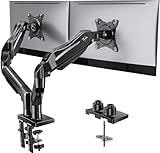
- Compatible with Wide Screens - To ensure compatibility with the dual monitor mount, your each monitor must meet three conditions at the same time: First, computer screens size range: 13 to 32 inches. Second, screen weight range: 4.4 to 19.8 lbs. Third, the back of the monitor screen must have VESA mounting holes with a pitch of 75x75mm or 100x100mm.
- Regarding the compatibility with desks - Your desk must meet three conditions at the same time: First, desk material: Only wooden desks are recommended, plastic or glass desks cannot be used. Second, desk thickness range: 0.59" - 3.54". Third, the bottom of the desk should not have any cross beams or panels, as this will interfere with installation. We recommend carefully checking that your desk and monitors meets all above conditions before purchasing.
- Dual C-Clamp Hold - Worried your dual monitors might wobble or slip? Our upgraded base uses a larger platform plus a dual C-clamp structure to lock the dual monitor arm firmly to your desk. Each arm safely keeps your screens steady while you type, click and game—no shaking, no sliding, just a clean and secure setup you can trust every day. It also provides Grommet Mounting installation choice, both options ensure stable and secure fixation for your 0.59" - 3.54" desk.
- Full-Motion Adjustment For Comfortable View - Pull the screen closer when you’re deep in a spreadsheet, push it back to watch videos, or rotate to portrait for coding — moving everything smoothly with just one hand. The monitor stand offers +85°/-50° tilt, ±90° swivel and 360° rotation. Raise your monitor up to 15.75″ to support a healthy sitting posture. Whether you’re working from home, gaming through the night, or switching between video calls and documents, getting the screens to your natural line of sight helps relieve neck, shoulder and back strain so you can stay focused longer with less fatigue.
- Keep Your Desk Organized: By lifting both screens off the desktop, this dual monitor stand opens up valuable space for your keyboard, notebook, docking station or a simple, clutter-free work area. Built-in cable management guides wires along the arms, keeping cords out of sight and out of the way. Enjoy a tidy, modern workstation that looks as good as it feels to use.
Letting a draft become an action
A generated message, build order, or purchase list is still a proposal. Keep sending, spending, publishing, deleting, and account changes behind explicit approval.
Trying to defeat prompt injection with wording alone
Tool-using systems can encounter instructions in web pages, files, chat messages, or game data that conflict with your goal. Use separate permissions, limited tools, reviewable plans, and a way to stop execution; do not treat a sentence in the prompt as a guarantee that hostile instructions will be ignored.
How can I evaluate an answer before relying on it?
Use a short acceptance checklist tailored to the consequence of being wrong:
- Does it answer the stated task rather than a nearby question?
- Did it use the supplied version, platform, inventory, and player preferences?
- Are important claims supported by supplied evidence or clearly marked as uncertain?
- Did it obey exclusions, length, format, and audience requirements?
- Did it expose assumptions and identify information that would change the result?
- Does the recommendation preserve the player’s stated values rather than silently substituting the model’s?
- For an action-capable assistant, is there a reviewed plan, limited permission, and a stop or rollback path?
The higher the risk, the more independent checking you need. A typo in a casual explanation is not equivalent to an incorrect recommendation that spends scarce resources, exposes an account, or affects another person.
How do I use AI as a tool while keeping my own judgment?
Write your preferences and non-negotiables before asking for options. Ask the model to show trade-offs and missing information, then choose using criteria you recognize as yours. This keeps AI useful for breadth and organization without making it the source of your values.
Anthropic’s April 9, 2026 article on trustworthy agents states: “An agent can only act on what users actually want if it knows when to stop and ask for clarification when it’s uncertain, or when it’s about to make a mistake.” Your prompt should therefore define when to stop, what question to ask, and which actions are never automatic.
What is a practical prompt-writing checklist?
- Write the desired outcome in one plain sentence.
- Add only context that changes the answer, including game version and audience when relevant.
- List constraints, exclusions, and priorities in a labeled section.
- Specify the output shape and the fields that must appear.
- Add one or two examples if the desired behavior is hard to describe.
- Tell the model how to handle missing or conflicting information.
- Split research, analysis, drafting, and execution when they have different risks.
- State which actions require your approval.
- Test normal, incomplete, conflicting, and edge-case inputs.
- Record failures, revise the smallest useful instruction, and retest.
- Verify consequential facts and review every proposed external action.
Clear prompts improve the odds of a useful response; they do not transfer responsibility for the decision. The reliable pattern is explicit objectives, focused context, inspectable outputs, iterative testing, and a human approval point wherever the consequences matter.
Frequently Asked Questions
How long should an AI prompt be?
There is no useful word-count target. Keep every fact that changes the answer, remove background that does not, and use headings so a long prompt remains scannable. A short prompt with a missing platform or patch can be less effective than a longer prompt with those decisive details.
Can a better prompt prevent AI hallucinations completely?
No. Asking the model to identify unknowns, use supplied evidence, and ask focused questions can reduce unsupported assertions, but it cannot guarantee correctness. Check mechanics, dates, compatibility, and other consequential claims against an authoritative source or your own test.
Should I reuse the same prompt on every AI model?
Reuse the task specification and acceptance criteria, but retest the wording on each model and major version. Models differ in instruction-following, context handling, formatting, and willingness to ask for clarification, so a prompt that worked once is not a portable guarantee.
Do these 3 things before closing this tab:
1Scan for outdated or missing drivers - takes under a minute2Clear out junk files and repair common Windows errors3Fix the driver behind crashes, sound loss and screen glitchesWhat should I log when an AI-assisted gaming workflow fails?
Save the prompt version, model or model version, supplied context, output, and the exact input that exposed the problem. Record whether the failure was a wrong task interpretation, missing context, unsupported claim, formatting error, or unsafe action; that classification tells you which instruction to change.
Quick Recap
Product prices and availability are accurate as of the date/time indicated and are subject to change. Any price and availability information displayed on Amazon at the time of purchase will apply.

