Recommended Free Tools
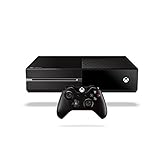
The Xbox One shown here is Microsoft’s original launch model, unveiled in Redmond on May 21, 2013. It was a large, glossy-black living-room console built around Blu-ray, online entertainment, HDMI pass-through, and the new Kinect sensor. Microsoft had not announced a price at that event.
This was a launch preview rather than a teardown or long-term review. The most revealing part was the rear panel: HDMI input and output, three USB 3.0 ports, Ethernet, optical audio, a dedicated Kinect connection, and an external power connection. Those details show how strongly Microsoft initially positioned Xbox One as an all-in-one home-entertainment hub.
As an Amazon Associate I earn from qualifying purchases.
What the original 2013 report showed
The original photo report documented Microsoft’s Xbox One unveiling at its Redmond campus on May 21, 2013. The hardware pictured was the first Xbox One design, not the later Xbox One S or Xbox One X.
The console had a broad, rectangular chassis with a glossy black finish, a horizontal orientation, a slot-loading Blu-ray drive, and prominent Xbox branding. Microsoft also showed the redesigned Xbox One Wireless Controller and the new Kinect sensor. The report’s emphasis on the backside was important: the ports made Microsoft’s intended living-room role unusually clear.
#1 Best Overall

- Experience the next generation in entertainment with the Microsoft Xbox One games console
- Powerful hardware provides stunning, true-to-life graphics
- Play with millions of other gamers across the web with Xbox Live
- Jump seamlessly between your favourite game, TV show or movie
- Includes a Wireless Controller
See the original GeekWire photo report and launch-event context.
The photographs establish what the launch hardware looked like. They do not, by themselves, establish final retail packaging, long-term reliability, noise, heat, loading times, or real-world performance.
The original Xbox One’s rear ports, explained
The rear panel is easiest to understand as a set of separate paths: one for sending the Xbox’s picture to a television, one for receiving another HDMI device, several for accessories and networking, and dedicated connections for Kinect, audio, and power.
| Connection | What it did | Important qualification |
|---|---|---|
| HDMI Out | Sent video and audio from Xbox One to a television or AV receiver. | The original model used HDMI 1.4b and was listed for output up to 1080p at 60Hz. |
| HDMI In | Accepted an external HDMI source, such as a cable or satellite box, for the Xbox TV interface. | It was not a general-purpose video-capture input or a replacement for a capture card. |
| Three USB 3.0 ports | Supported compatible accessories and, later, external storage. | USB support did not make every peripheral automatically compatible. |
| Ethernet | Provided a wired network connection for online play, updates, streaming, and other services. | Microsoft’s family specification sheet lists gigabit Ethernet. |
| Optical S/PDIF | Delivered digital audio to compatible home-theater equipment. | Useful for owners whose audio setup predated HDMI audio receivers. |
| Kinect port | Connected the original Kinect sensor directly to the console. | The dedicated port was removed from Xbox One S and Xbox One X. |
| IR-related hardware | Supported Microsoft’s living-room device-control strategy. | Do not treat this as a universal IR-blaster capability without identifying the exact hardware and configuration. |
| Power input | Connected the console to its external power supply. | The launch Xbox One used a large external power brick. |
HDMI In and HDMI Out are not interchangeable
HDMI Out goes to the television. HDMI In receives another HDMI device. The input supported Microsoft’s plan to place live television and other living-room sources inside the Xbox interface. It did not mean that the console could record, capture, or freely play every external source without compatibility, latency, or service limitations.
Rank #2

- Xbox One, 500GB HDD, 8GB RAM, HDMI, Blu-ray, Wireless Controller, Chat Headset
Original Xbox One specifications
The figures below apply to the original Xbox One. They should not be presented as generic “Xbox One” specifications because Microsoft later released materially different One S, One S All-Digital, and One X models.
| Component | Original Xbox One |
|---|---|
| CPU | Custom eight-core x86 processor; later family documentation identifies it as an eight-core custom Jaguar CPU at 1.75GHz. |
| GPU | Custom GPU with 12 compute units at 853MHz, approximately 1.3 teraflops. |
| Memory | 8GB DDR3 with 32MB of ESRAM. |
| Storage | 500GB internal hard disk drive. |
| Optical drive | Blu-ray. |
| Video | HDMI 1.4b input and output; listed output up to 1080p at 60Hz. |
| HDR | Not supported on the original model in Microsoft’s family comparison. |
| Networking | Dual-band Wi-Fi and gigabit Ethernet. |
| USB | Three USB 3.0 ports. |
| Audio | Optical S/PDIF plus HDMI audio. |
| Dimensions | 34.3 × 26.3 × 8 cm. |
| Weight | 7.8 lb. |
| Power | 220W external power supply. |
Microsoft’s Xbox One family specification sheet provides the later consolidated comparison for these figures.
Why Kinect was central to the launch
The first Xbox One presentation treated Kinect as a core part of the system’s living-room concept, not merely an optional webcam. Microsoft described a redesigned sensor with a 1080p camera, 30-frame-per-second video capture, active infrared, a wider field of view, time-of-flight sensing, and a noise-isolating microphone array.
Outdated Drivers Are Slowing You Down
One free scan finds every outdated or missing driver and matches the right update for your exact hardware.Free scan · exact hardware matchPC Slower Than It Used to Be?
A free scan shows the junk files, broken settings and background clutter dragging Windows down - then fixes them in one click.Free scan · Windows 10 & 11Those capabilities were intended to support voice commands, gesture recognition, and hands-free control. The sensor could also recognize the controller through its infrared LED, according to the launch coverage. Microsoft’s broader idea was that Xbox One would understand who was using it, respond to spoken commands, and coordinate television and entertainment equipment from one place.
Rank #3

- Color: Matte Black
- Storage: 500GB
- Model: XBox One Special Edition
- 90 day warranty
The original console therefore has a dedicated Kinect port on the rear. That connection is one of the clearest physical reminders of the launch strategy. Kinect later became less central to the Xbox One platform, and the newer console revisions removed the dedicated port.
What changed in Xbox One S and Xbox One X?
The 2013 console is only the first member of the Xbox One family. Later revisions changed the size, power design, display features, optical drive, and performance substantially.
| Feature | Original Xbox One | Xbox One S | Xbox One X |
|---|---|---|---|
| Dimensions | 34.3 × 26.3 × 8 cm | 29.5 × 23 × 6.5 cm | 30 × 24 × 6 cm |
| Weight | 7.8 lb | 6.4 lb | 8.4 lb |
| Internal storage | 500GB | 500GB, 1TB, or 2TB variants | 1TB |
| CPU | 1.75GHz custom Jaguar, eight cores | 1.75GHz custom Jaguar, eight cores | 2.3GHz custom CPU, eight cores |
| GPU | 1.3 teraflops | 1.4 teraflops | 6.0 teraflops |
| Optical drive | Blu-ray | 4K UHD Blu-ray on disc-equipped models | 4K UHD Blu-ray |
| HDR | No | Yes | Yes |
| Power supply | External | Internal | Internal |
| Kinect connection | Dedicated port | Adapter required | Adapter required |
Xbox One S
Xbox One S made the family smaller and moved the power supply inside the chassis. It added HDR support and, on disc-equipped versions, a 4K UHD Blu-ray drive. However, it removed the dedicated Kinect port. Using Kinect with an Xbox One S required the separate adapter route.
The Xbox One S All-Digital Edition is a separate buying trap: it does not play physical discs. A buyer who wants Blu-ray games or movies must choose a disc-equipped model.
Rank #4
- Note: Kinect sensor sold seperately.Check the CD format and file type Supported formats include: CD-DA CD-ROM CD-ROM XA CD-R, CD-RW CD-Extra.
- Supported file types include: WMA MP3 JPEG
- This item includes the Xbox One console, 1 wireless controller, HDMI cable, and power supply . For more troubleshooting steps please check the manufacturer's webiste
- Play games like Titanfall and Halo on a network powered by over 300,000 servers for maximum performance.
- Troubleshooting Steps: If the Xbox does not play the game or It turns on but screen goes black : Please power cycle the unit by unplugging it from the wall, waiting 10 seconds and plugging it back in and power on the device.
Microsoft’s Xbox One S launch announcement explains the smaller design and Kinect-adapter change. Microsoft’s Xbox One S product information identifies the All-Digital Edition’s disc limitation.
Xbox One X
Xbox One X remained part of the Xbox One generation but was a much more powerful machine. Its 6.0-teraflop GPU, faster CPU, HDR support, and 4K-oriented output made it the performance-focused revision. It also used an internal power supply and a 4K UHD Blu-ray drive, but it still required the adapter route for Kinect.
Independent reader supportYour contribution helps us test, update, and keep practical guides available for everyone.What happened after the launch?
Several features associated with the 2013 reveal changed in importance over the console’s life:
- Kinect dependence receded. The original launch design gave the sensor a dedicated connection and a prominent role, but ordinary Xbox One gaming did not remain dependent on Kinect.
- Television integration became less central. HDMI In was a distinctive part of the original living-room strategy, but it was never equivalent to a universal capture device.
- Backward compatibility arrived later. It was not an original launch specification. Xbox One eventually supported selected Xbox 360 and original Xbox games, not every title from those systems.
- Hardware revisions changed the value proposition. The S model addressed the original console’s size and external power brick, while the X model targeted substantially higher performance.
For compatible Xbox 360 and original Xbox games, the disc must remain inserted after the compatible game is downloaded. Digital titles appear in the Ready to Install area. Compatibility is selective and should be checked title by title using Microsoft’s support guidance and the Xbox backward-compatibility list.
Best Value

- BEST VALUE IN GAMING — Experience next-gen speed and performance in the smallest XBOX ever. The XBOX Series S delivers powerful all-digital gameplay in a sleek, compact design.
- UP TO 120 FPS GAMEPLAY — Enjoy smooth, responsive gaming with frame rates up to 120 FPS, powered by XBOX Velocity Architecture, a custom NVMe SSD, and DirectX Raytracing for a heightened level of realism.
- 512GB CUSTOM SSD AND XBOX VELOCITY ARCHITECTURE — Reduce load times dramatically with the custom 512GB NVMe SSD and XBOX Velocity Architecture, enabling lightning-fast performance and seamless world streaming.
- QUICK RESUME — Seamlessly switch between multiple games and resume exactly where you left off. No more waiting through title screens and loading bars.
- FOUR GENERATIONS OF DIGITAL GAMES — Play thousands of digital games from XBOX Series X|S, XBOX One, XBOX 360, and Original XBOX with backward compatibility. Many titles are enhanced for better visuals and performance. Smart Delivery ensures you always get the best version for your console.
Is the original Xbox One worth considering today?
That depends on what “worth it” means. The original model can still make sense as an inexpensive way to access the Xbox One library, play selected backward-compatible games, use physical Blu-ray media, or recreate the exact Kinect-centered setup shown in the 2013 photographs. Its dedicated Kinect port is simpler than the adapter arrangement on the S and X models.
It is a poor fit for buyers who want 4K gaming, HDR, 4K UHD Blu-ray, fast modern loading, or the best performance available in the Xbox One generation. The 500GB hard drive also fills quickly once games and updates are installed, and any used unit may have a worn optical drive, fan, hard drive, controller, or external power brick.
Used-console inspection checklist
- Confirm that the listing is for the original Xbox One, not an Xbox One S, One S All-Digital Edition, or Xbox One X.
- Check that the external power brick is included and works correctly.
- Test the optical drive with a disc if physical games or Blu-ray playback matter.
- Verify HDMI output, wired networking, Wi-Fi, USB ports, and controller pairing.
- Listen for abnormal fan noise and check for overheating or unexpected shutdowns.
- Confirm the hard drive’s condition and available capacity.
- If Kinect matters, verify that the Kinect sensor and its correct cable are included.
- Do not assume every Xbox 360 or original Xbox game is compatible.
Bottom line
The backside of the original Xbox One tells the story of Microsoft’s 2013 strategy: one large console connecting games, Blu-ray, television, voice control, Kinect, and home-theater equipment. The hardware pictured in the launch report had a 500GB hard drive, Blu-ray drive, 1080p-class HDMI output, three USB 3.0 ports, optical audio, a dedicated Kinect port, and an external power supply.
Quick wins for a faster PC:
Repair Windows errors before they cause bigger problemsFix Now →Scan for outdated or missing drivers - takes under a minuteDriver Scan →It is historically distinctive and still usable, but it should not be confused with the smaller, HDR-capable Xbox One S or the much faster Xbox One X. For a used buyer, the original model is mainly attractive for its low-cost Xbox One access, physical media, HDMI input, and built-in Kinect connection—not for modern resolution or performance.
Quick Recap
Product prices and availability are accurate as of the date/time indicated and are subject to change. Any price and availability information displayed on Amazon at the time of purchase will apply.




