
Outdated Drivers Are Slowing You Down
One free scan finds every outdated or missing driver and matches the right update for your exact hardware.Free scan · exact hardware matchPC Slower Than It Used to Be?
A free scan shows the junk files, broken settings and background clutter dragging Windows down - then fixes them in one click.Free scan · Windows 10 & 11Some links on this page are affiliate links: if you buy through them we may earn a commission, at no extra cost to you.
In game development, crunch means working overtime because a project deadline is approaching. It is more than an occasional busy week: the term usually describes sustained, deadline-driven overwork that can become unsustainable or coercive. Studios turn to crunch when schedules or scope are unrealistic, staffing is inadequate, expectations are unclear, or management fails to correct risks early. Surveys show that crunch is still common but not universal, and that some pushes reach 60- or 70-plus-hour weeks. Evidence summarized by the International Game Developers Association (IGDA) also indicates that prolonged overtime can reduce cognitive performance and erase its supposed productivity advantage. The practical alternative is to change scope, staffing, sequencing, or the deadline before excessive hours become the plan.
What does “crunch” mean in game development?
IGDA defines crunch as “the act of employees working overtime in order to meet a deadline in the development of a project.” That definition makes the deadline central: staying late to fix a launch-blocking bug is crunch when the extra hours are driven by the release date, while a single late evening caused by an unusual incident is not automatically a crunch period.
As an Amazon Associate I earn from qualifying purchases.
Recommended Free Tools
IGDA distinguishes ordinary deadline pressure from unsustainable work and management abuse. A team can be busy, ambitious, and occasionally asked for extra effort without operating a permanent crunch culture. The warning sign is a repeated system in which normal-hour work cannot meet the promised date and employees are expected to absorb the difference.
Crunch can occur during any phase, including pre-production, content creation, certification, and launch support. It often becomes visible near the end of a project because unfinished features, integration defects, and certification requirements converge, but the underlying causes may have been present months earlier.
#1 Best Overall

- BLUE LIGHT BLOCKING GLASSES: Our blue light glasses for women boast UV400 protection, blocking harmful blue rays from computer screens. With these bluelight glasses women, you can enjoy gaming, reading, or watching TV with no worries of eye strain.
- EYE RELIEF: Our blue light glasses are engineered to reduce blurry vision or strain caused by prolonged screen time. These womens blue light glasses aid in better sleep by preventing blue light from disrupting your natural sleep cycle, helping you fall asleep faster and enjoy a more restful night's sleep, making them the perfect christmas present.
- COMFORTABLE: Crafted from durable material, our trendy blue light glasses for woman or blue light glasses men ensure long-lasting comfort. The high-transmittance lenses accessories, gamer gifts for men, help keep your eyes relaxed. Perfect stocking stuffers, gifts for gamers men, christmas gifts for men, halloween costumes.
- LIGHTWEIGHT: These clear blue light glasses feature a lightweight frame, meaning they’ll stay comfy for long-term wear. Perfect as blue blockers glasses for women or mens blue light glasses, these non-prescription fake glasses for men can be worn throughout the day. The blue light blocking glasses women feature polycarbonate HD lenses, which are anti-reflective and restore true color.
- WORRY-FREE PURCHASE: If you experience any issues, our support team is ready to assist you quickly. These are the perfect costume glasses for cosplay dressing up.
It is also useful to separate the word from the way a studio handles overtime. Whether extra hours are paid, compensated with time off, genuinely voluntary, or backed by retaliation concerns changes the labor experience, even though all can be described as crunch when the work is deadline-driven.
Why do game studios make developers work crunch?
The strongest directly reported causes in IGDA’s 2019 Developer Satisfaction Survey point to planning and leadership problems rather than a mysterious requirement of creativity. Respondents could identify more than one cause, so the percentages are not a single causal ranking.
| Reported cause | Share of respondents | What it indicates |
|---|---|---|
| Poor or unrealistic scheduling | 62% | The promised date does not match the work remaining, dependencies, or production capacity. |
| Unclear expectations | 30% | Teams are discovering requirements, quality targets, or “done” criteria too late. |
| Not enough people on the team | 30% | Available staff cannot cover the planned feature set, technology, or testing load. |
| People doing it voluntarily | 30% | Individual or cultural pressure can turn optional extra effort into an informal norm. |
| Inexperienced management | 23% | Leaders may miss early warning signs or lack the authority and process to reset a plan. |
These are survey responses, not proof that every studio has the same profile. They do show why treating crunch as a personal stamina problem is inadequate. IGDA’s standards page says that when deadlines repeatedly cannot be met in normal hours, management should review processes, pipelines, communications, support networks, and expectations. In other words, the schedule is a management variable, not a fixed law of game production.
A schedule can become unrealistic through feature additions, underestimated technical risk, external licensing or platform dates, staff turnover, or a late change in quality expectations. If leaders preserve the date and scope while leaving staffing unchanged, overtime becomes the remaining adjustable input.
How common is crunch in the game industry?
Crunch is widespread in surveys, but it is not universal and its reported prevalence varies by role, year, sample, and question wording. The IGDA Developer Satisfaction Survey 2019 analyzed 1,116 responses, primarily from the United States and in English, so it should be read as an industry snapshot rather than a global census.
| Source and year | Finding | Qualification |
|---|---|---|
| IGDA Developer Satisfaction Survey, 2019 | 42% of the whole sample said crunch was expected as a normal part of the job; 45% said it was not; 13% were unsure. | Role breakdown: 44% of developers, 37% of managers, and 56% of QA/testing respondents answered yes. The QA sample was small. |
| IGDA release, 2017 | 51% said their job involved crunch time; 44% reported long or extended hours; 14% reported more than 70 hours per week during crunch. | These are separate reported measures from the 2017 release. |
| IGDA release, 2015 | 62% said their job involved crunch time. Among those experiencing it, nearly half worked more than 60 hours per week and 17% worked more than 70 hours. | The percentages describe that survey’s respondents and the subgroup experiencing crunch. |
| Gameworkers.org survey, 2023 | Half of surveyed workers said they had experienced crunch in the previous two years. | An online form collected responses from March through August 2023 and remains open for additional responses; treat it as a worker-survey snapshot. |
The differences do not mean one number is the permanent industry rate. They reflect different dates, samples, and wording. Taken together, they establish that many game workers encounter crunch and that a substantial minority do not report it as a normal part of their jobs.
What’s actually slowing this PC down?
Pick the symptom - the matching free tool is one click away.
Rank #2

- WINDEX GAMING WIPES: effortlessly clean all your gaming gear and gaming electronics in one easy step with our new Windex Gaming Wipes
- AMMONIA FREE: our ammonia-free formula is safe to use on all of your favorite gaming equipment like consoles, headsets, controllers, screens, keyboards, and more
- PRE-MOISTENED WIPES: each wipe instantly removes dust, dirt, and stubborn smudges and fingerprints leaving a streak-free shine
- ANTI-STATIC: great for cleaning and wiping down your gaming gear and electronics leaving behind no visible residue
- COMPACT RESEALABLE PACKAGE: store your pack of Windex Gaming Wipes anywhere in your home for whenever a quick and easy wipedown is needed
How many hours is considered crunch?
There is no universal hour threshold that turns overtime into crunch. The defining combination is deadline-driven overtime and a pattern that threatens sustainable work, not a particular time on a timesheet.
The available surveys document severe examples. IGDA’s 2017 release reported that 14% of developers worked more than 70 hours per week during crunch. In the 2015 release, among respondents who experienced crunch, nearly half worked more than 60 hours and 17% worked more than 70 hours. Those figures show the scale of reported episodes; they do not mean every crunch period reaches those levels.
IGDA’s standards page recommends aiming for weeks no longer than 40 hours and limiting exceptional overwork to no more than two weeks. That is a practical safeguard, not a legal definition. A studio that repeatedly schedules 50-hour weeks may have a serious crunch problem even if nobody crosses 60, while a rare, genuinely exceptional extension can be handled differently if workers are protected and the plan is corrected.
Duration matters because recovery is part of the workload. A short push followed by a real reset is materially different from a cycle in which each “temporary” extension rolls into the next milestone.
Does crunch produce better games or more output?
IGDA cites Evan Robinson’s white paper, “Why Crunch Mode Doesn’t Work: Six Lessons,” and summarizes more than a century of studies as finding that long-term useful output is maximized near a five-day, 40-hour week. In that summary, productivity drops when overtime begins; after roughly eight 60-hour weeks, the total useful work equals what eight 40-hour weeks would have produced.
IGDA also says cognitive function and decision-making are severely reduced during overwork. For game teams, that can affect debugging, level balance, code review, testing judgment, communication, and the ability to notice a flawed assumption before it spreads. The point is not that every late hour creates a defect, but that fatigue removes the cognitive margin teams rely on for complex, interdependent work.
Rank #3

- Ergonomic & Adjustable Design: Fight "text neck" and improve your posture. Designed for comfort, it offers an adjustable height (7.1in-8.5in) (1.4in adjustable range) and angle (5°-85°) Please note: cell phone stand is only 9 inches tall—the length of a standard pencil
- Without blocking subtitles Perfect for office desk Tiktok Face Time Zoom video—this is the ultimate kitchen desk essential for phones! Perfect viewing experience while reducing neck back strain, A must-have for gamers streamers desk, and anyone who values both style and support!
- Sleek & Stable Design fits Otterbox Case: Say goodbye to bent cables, tangles, and tip-overs! LISEN’s stylish adjustable desk phone holder features a built-in charging hole and smart cable management, keeping your phone secure and your workspace clutter-free cool gadgets for men
- ANTI-SLIP DESIGN free hands: The under 10.00 items easy gadgets back and the bottom of this kitchen essentials for women are fully covered by anti-skid silicone, which LISEN stand up desk decor can provide maximum protection device from any scratches and slides
- Your Perfect Viewing Companion:If your product arrives damaged or breaks within 365 days, reach out to LISEN for a quick and hassle-free solution. Struggling with assembly, like tightening the screw? We’ve got your back! Your experience matters to us. (Product including: phone Holder stand*1, screw*1, hexagon screwdriver*1, specification*1)
These findings are presented here as IGDA’s summary of Robinson’s work, not as a new experiment conducted for this article. They do, however, explain why adding hours can fail to add shippable progress. A team may see more time at desks while receiving less reliable decisions, more rework, and a greater chance that a late discovery forces another extension.
Quality risk is therefore a planning question. If overtime is being used to preserve an unchanged date and feature list, leaders should ask what work can be cut, deferred, simplified, or moved to a later update before assuming fatigue is the cheapest option.
Is crunch normal in game development?
Crunch is common enough to be recognized across the industry, but the 2019 IGDA results do not support calling it universal. Forty-two percent of the full sample said it was expected as a normal part of the job, while 45% said it was not and 13% were unsure. The role differences also matter: QA/testing respondents reported a higher “yes” share than developers or managers, although the QA sample was small.
Calling crunch “normal” can hide an important distinction between frequent and inevitable. A practice can be widespread and still be a preventable management choice. IGDA explicitly places responsibility for maintaining workers’ mental, physical, and emotional health on management and leadership.
Gameworkers.org’s 2023 survey similarly found that half of surveyed workers had experienced crunch in the previous two years and described it as excessive hours, usually near the end of a project and often without additional pay. Because that survey is an open online form, it should not be treated as a representative count of all game workers.
How can studios avoid or reduce crunch?
Prevention means changing the plan when risk appears instead of waiting until the deadline makes overtime the only visible response. The following controls address the causes identified in IGDA’s survey and standards guidance.
The Tool Desk
Outbyte Driver Updater FREEFix the driver behind crashes, sound loss and screen glitchesFind Drivers →Outbyte PC Repair FREERepair Windows errors before they cause bigger problemsFix Now →Rank #4

- Easy Installation: Our gaming lights have been designed to enhance your entertainment experience. Simply position the led light bar next to your TV or game console to create a game room environment with ease. They come with USB power and a 60 inch cord for direct mounting and mobility
- Audio Syncing & Extensive Mode: The built-in high-sensitivity music sensor allows you to sync the TV led lights to your favorite music. Lights react and move to the beat of music, film and game audio, creating an incredible immersive sound and light experience – and all without the need for an additional hub. You can choose from 64+ patterns, including strobe, illusion, jump, energy, gradient, running, chasing, fluttering mode etc. Each mode can be applied to different scenes
- 64+ Chasing IC+RGB & W Effect: The independent control design of IC+RGB and white all-in-one multifunctional rgbw led bar lights monitor backlight allows you to easily switch the led lights for desk between IC+RGB and white to enjoy a variety of lighting effects, you can choose white lighting mode with high brightness for better illumination when working, etc. Choose IC+RGB lighting mode when you need to create an entertaining atmosphere for the light show, 16 million colours of Color changing rgb light bar let you dance to the beat and create a dynamic party atmosphere
- Dynamic and Dimmable Lights: 1%-full brightness free brightness adjustment gives you the flexibility to adjust dimmable led light bar for room decorations or a variety of occasions
- USB Powered: USB light bars for room can be powered by powernank, usb charger, TV, Monitor, laptop PC mainframe, making behind TV led lighting bar easy to install in any location.TV led lights are powered by the TV usb interface / PC mainframe, can be turned on/off synchronously with TV / PC
Make scope and “done” criteria explicit
Write down the features, quality bar, platforms, languages, certification requirements, and launch-support obligations that the date includes. When an expectation changes, record the effect on time and staffing rather than letting the change remain invisible.
Track schedule risk early
Use milestone reviews to compare remaining work with actual throughput and unresolved dependencies. A missed internal target should trigger a choice among scope reduction, resequencing, additional qualified staff, or a date change—not an automatic instruction to work longer.
Staff for the work that is actually planned
IGDA respondents identified insufficient people as a cause in 30% of responses. Hiring, reallocating, or using contractors cannot remove every risk, but leaders should test whether the team has the skills and capacity for engineering, art, design, production, localization, certification, and QA at the same time.
Keep communication and support channels active
Teams need a way to report slipping work, fatigue, unclear requirements, and blocked dependencies without waiting for a crisis. IGDA specifically points to communications and support networks as areas management should review when normal hours are not enough.
Quick wins for a faster PC:
Repair Windows errors before they cause bigger problemsFix Now →Fix the driver behind crashes, sound loss and screen glitchesFind Drivers →Clear out junk files and repair common Windows errorsFree Scan →Set a hard limit for exceptional work
If an unusual push is unavoidable, define its start, end, staffing, compensation or time-off arrangement, and recovery plan in advance. IGDA’s practical recommendation is to keep exceptional overwork to no more than two weeks and to aim for weeks no longer than 40 hours.
Change the deadline when the evidence requires it
A revised date can be less damaging than shipping an unstable build after prolonged fatigue. The decision should be based on remaining work, defect trends, certification status, and team capacity rather than on how much unpaid or uncompensated effort people might be willing to donate.
Best Value
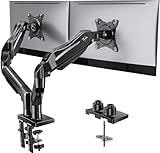
- Compatible with Wide Screens - To ensure compatibility with the dual monitor mount, your each monitor must meet three conditions at the same time: First, computer screens size range: 13 to 32 inches. Second, screen weight range: 4.4 to 19.8 lbs. Third, the back of the monitor screen must have VESA mounting holes with a pitch of 75x75mm or 100x100mm.
- Regarding the compatibility with desks - Your desk must meet three conditions at the same time: First, desk material: Only wooden desks are recommended, plastic or glass desks cannot be used. Second, desk thickness range: 0.59" - 3.54". Third, the bottom of the desk should not have any cross beams or panels, as this will interfere with installation. We recommend carefully checking that your desk and monitors meets all above conditions before purchasing.
- Dual C-Clamp Hold - Worried your dual monitors might wobble or slip? Our upgraded base uses a larger platform plus a dual C-clamp structure to lock the dual monitor arm firmly to your desk. Each arm safely keeps your screens steady while you type, click and game—no shaking, no sliding, just a clean and secure setup you can trust every day. It also provides Grommet Mounting installation choice, both options ensure stable and secure fixation for your 0.59" - 3.54" desk.
- Full-Motion Adjustment For Comfortable View - Pull the screen closer when you’re deep in a spreadsheet, push it back to watch videos, or rotate to portrait for coding — moving everything smoothly with just one hand. The monitor stand offers +85°/-50° tilt, ±90° swivel and 360° rotation. Raise your monitor up to 15.75″ to support a healthy sitting posture. Whether you’re working from home, gaming through the night, or switching between video calls and documents, getting the screens to your natural line of sight helps relieve neck, shoulder and back strain so you can stay focused longer with less fatigue.
- Keep Your Desk Organized: By lifting both screens off the desktop, this dual monitor stand opens up valuable space for your keyboard, notebook, docking station or a simple, clutter-free work area. Built-in cable management guides wires along the arms, keeping cords out of sight and out of the way. Enjoy a tidy, modern workstation that looks as good as it feels to use.
Use postmortems to alter the system
After a push, examine which estimates, dependencies, approvals, staffing assumptions, and scope decisions created the pressure. A postmortem that only praises endurance leaves the conditions for the next crunch unchanged.
Independent reader supportYour contribution helps us test, update, and keep practical guides available for everyone.How should you compare a studio’s approach to crunch?
Job seekers and current employees can evaluate policy by asking specific questions rather than relying on a studio’s claim that it has a “passion-driven” culture. The same questions help leadership audit its own production model.
| Comparison question | Healthier signal | Warning signal |
|---|---|---|
| Is overtime exceptional or expected? | Milestones are planned around normal hours, with rare exceptions explained. | Recruiting or team language treats long hours as proof of commitment. |
| What happens when risk appears? | Scope, staffing, sequencing, or the date can change. | The only approved response is adding hours. |
| How is extra work compensated? | Pay or time off is defined clearly and applied consistently. | Compensation is vague, discretionary, or absent. |
| Can workers refuse without retaliation? | People can raise capacity and health concerns safely. | “Voluntary” work is socially or professionally mandatory. |
| How long can a push last? | There is a written limit and a recovery plan. | Each extension is described as the final one. |
| How are staffing and contractors handled? | Capacity, onboarding time, and responsibilities are planned before the emergency. | New people are added too late without support or clear ownership. |
| Do postmortems change process? | Lessons alter estimates, scope control, and milestone decisions. | The outcome is celebrated as heroics and the plan remains the same. |
What can a developer do when a crunch period starts?
Individual workers cannot fix an unrealistic release plan alone, but they can make the risk visible and ask for concrete trade-offs.
- Record the plan and the actual hours. Note the milestone, requested overtime, changing requirements, and blocked work so the discussion is about observable capacity rather than personal endurance.
- Ask which variable will change. Request a decision about scope, staffing, sequencing, quality targets, or the deadline. If none can change, the team is being asked to carry the entire risk through time.
- Clarify what is genuinely optional. A “voluntary” late night is not meaningfully voluntary if refusing affects evaluations, promotion, scheduling, or team standing.
- Use available support networks. Raise health, safety, and workload concerns through a producer, manager, human-resources channel, worker representative, or other trusted support route available at the studio.
- Protect recovery. Ask when the push ends and how time off or reduced load will be scheduled. An undefined recovery period is a sign that the exception may become the baseline.
Local employment rules differ by jurisdiction, contract, and worker classification, so questions about legal entitlement to overtime pay or leave require local professional advice rather than an industry-wide assumption.
What should readers remember about crunch?
Crunch is deadline-driven overtime, not simply enthusiasm or a busy release week. Survey evidence links it most strongly to unrealistic schedules, unclear expectations, staffing gaps, voluntary-overwork norms, and inexperienced management. It remains common but varies by role and sample, and documented cases include 60- and 70-plus-hour weeks. IGDA’s summary of long-hours research indicates that cognitive performance and useful output can fall as overtime continues. The durable alternative is to correct scope, staffing, communication, and dates before excessive hours become the production strategy.
Frequently Asked Questions
How were the main crunch statistics collected?
The IGDA Developer Satisfaction Survey 2019 analyzed 1,116 responses, primarily from the United States and in English. The Gameworkers.org figure came from an online form collected from March through August 2023 that remains open, so neither source is a global census.
Free tools Windows power users keep installed
One-click scans. No signup required.
Can a studio have occasional overtime without having a crunch culture?
Yes. A short, exceptional extension can occur without making overwork the expected way to finish every milestone. The key questions are whether the event has a clear end, whether workers can decline safely, and whether leaders correct the underlying plan afterward.
Does buying better production software eliminate crunch?
No single tool resolves unrealistic scope, missing staff, unclear expectations, or a fixed date that the work cannot meet. Tools can improve visibility and coordination, but leadership still has to make a trade-off when the evidence shows the plan is slipping.
Why is QA often affected so heavily by crunch?
Testing frequently absorbs work that arrives late from multiple disciplines, leaving less time to verify fixes and complete certification checks. The 2019 IGDA role breakdown reported a higher share of QA/testing respondents saying crunch was expected, although IGDA cautioned that this QA sample was small.
Quick Recap
Product prices and availability are accurate as of the date/time indicated and are subject to change. Any price and availability information displayed on Amazon at the time of purchase will apply.

