
Quick wins for a faster PC:
Clear out junk files and repair common Windows errorsFree Scan →Fix the driver behind crashes, sound loss and screen glitchesFind Drivers →Weekly game releases are usually a distribution strategy, not a promise that a studio made a complete game in seven days. A team divides a project into modular episodes, prepares most of the content before launch, and then ships one finished unit at a time. That cadence lowers the risk of a single enormous launch, creates repeated opportunities for player feedback and promotion, and keeps a title visible for several weeks. It also creates severe production pressure if the pipeline is not sufficiently ahead of schedule.
What a “weekly game” actually is
In a weekly episodic model, the player receives a discrete chapter, mission set, level group or other deliberately bounded unit on a predictable day. The unit may have its own beginning and ending while still contributing to a larger story or campaign. “Weekly” describes when the studio distributes the work, not how long the work took to create.
As an Amazon Associate I earn from qualifying purchases.
Episodes are commonly produced in overlapping stages. One episode can be in final polish while another is being implemented and a third is being designed. That arrangement resembles a small assembly line, but each unit still needs writing, art, engineering, testing, platform certification and release preparation. The team must therefore begin well before the first public episode appears.
The Tool Desk
Outbyte Driver Updater FREEScan for outdated or missing drivers - takes under a minuteDriver Scan →Outbyte PC Repair FREEClear out junk files and repair common Windows errorsFree Scan →This distinction matters because a schedule that looks spontaneous to players can be heavily front-loaded. If an episode arrives every Friday, the studio may have spent months preparing the assets, tools, scripts and contingency plans that make Friday possible.
#1 Best Overall

- BLUE LIGHT BLOCKING GLASSES: Our blue light glasses for women boast UV400 protection, blocking harmful blue rays from computer screens. With these bluelight glasses women, you can enjoy gaming, reading, or watching TV with no worries of eye strain.
- EYE RELIEF: Our blue light glasses are engineered to reduce blurry vision or strain caused by prolonged screen time. These womens blue light glasses aid in better sleep by preventing blue light from disrupting your natural sleep cycle, helping you fall asleep faster and enjoy a more restful night's sleep, making them the perfect christmas present.
- COMFORTABLE: Crafted from durable material, our trendy blue light glasses for woman or blue light glasses men ensure long-lasting comfort. The high-transmittance lenses accessories, gamer gifts for men, help keep your eyes relaxed. Perfect stocking stuffers, gifts for gamers men, christmas gifts for men, halloween costumes.
- LIGHTWEIGHT: These clear blue light glasses feature a lightweight frame, meaning they’ll stay comfy for long-term wear. Perfect as blue blockers glasses for women or mens blue light glasses, these non-prescription fake glasses for men can be worn throughout the day. The blue light blocking glasses women feature polycarbonate HD lenses, which are anti-reflective and restore true color.
- WORRY-FREE PURCHASE: If you experience any issues, our support team is ready to assist you quickly. These are the perfect costume glasses for cosplay dressing up.
Why studios find the model attractive
Smaller units reduce scope and early risk
A complete game can contain thousands of interacting assets and systems. Dividing it into smaller releases gives a team a narrower problem to prototype and test. Designers can validate a mechanic or story structure without committing the entire project to it, while producers can estimate work in shorter, more comparable blocks.
Unity’s 2026 industry reporting illustrates the broader shift behind this choice: 52% of respondents said their strategies had moved toward smaller, more manageable projects. The same report found that 20% reported significantly shortened development cycles. Those figures describe survey responses, not a guarantee that an episodic project will be faster or safer, but they show why modular scope is appealing when budgets and schedules are under pressure.
Overlapping pipelines keep specialists productive
Weekly distribution is practical only when production stages overlap. Writers and designers can be outlining a later episode while engineers fix bugs in the next one and quality-assurance staff certify the episode about to ship. This reduces the idle time that would occur if every discipline waited for a single, all-at-once launch.
American McGee’s Grimm was publicly planned as “the world’s first weekly episodic game.” Its first episode was scheduled for release halfway through the overall development schedule. That timing required the team to build an overlapping pipeline rather than finish every episode in sequence. The example demonstrates the production logic of the format, but it is a case study, not evidence that every studio can maintain the same pace.
Each release supplies usable feedback
A conventional launch concentrates most player feedback after the entire product is finished. In an episodic schedule, the first unit can reveal where players are confused, which mechanics are being ignored, how long a chapter takes to complete and whether the story is holding attention. The team can use those observations to adjust later units.
Rank #2
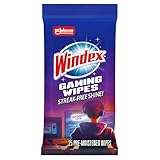
- WINDEX GAMING WIPES: effortlessly clean all your gaming gear and gaming electronics in one easy step with our new Windex Gaming Wipes
- AMMONIA FREE: our ammonia-free formula is safe to use on all of your favorite gaming equipment like consoles, headsets, controllers, screens, keyboards, and more
- PRE-MOISTENED WIPES: each wipe instantly removes dust, dirt, and stubborn smudges and fingerprints leaving a streak-free shine
- ANTI-STATIC: great for cleaning and wiping down your gaming gear and electronics leaving behind no visible residue
- COMPACT RESEALABLE PACKAGE: store your pack of Windex Gaming Wipes anywhere in your home for whenever a quick and easy wipedown is needed
An interview with mobile developer Wooga described the loop plainly: “Usually what we do is plan next week, we release, then we — based on metrics or feedback — we plan the next week.” This does not mean every episode is improvised. It means the order of priorities for upcoming work can respond to evidence from the episode that just shipped.
Feedback is useful only when the project is architected to absorb it. A tightly authored plot, locked voice recordings or platform certification deadlines may leave little room for major changes. Studios need clear boundaries between decisions that can change and content that must remain fixed.
Repeated launches create repeated attention
A single launch produces one major announcement, review cycle, streaming spike and store-feature opportunity. Weekly episodes create several smaller moments. Each chapter can give players a reason to return, discuss the game, watch a new stream or catch up before the next release.
Dispatch’s developers described another benefit: the short run between the first episode and the finale gives new players time to join while the conversation is still active. A player who discovers the game in week three may still be able to play the earlier chapters and participate in the buildup to the ending.
The effect is not automatic. Every episode must be understandable enough to attract attention while retaining a reason to continue. A weak chapter can interrupt the conversation instead of extending it.
Rank #3

- Ergonomic & Adjustable Design: Fight "text neck" and improve your posture. Designed for comfort, it offers an adjustable height (7.1in-8.5in) (1.4in adjustable range) and angle (5°-85°) Please note: cell phone stand is only 9 inches tall—the length of a standard pencil
- Without blocking subtitles Perfect for office desk Tiktok Face Time Zoom video—this is the ultimate kitchen desk essential for phones! Perfect viewing experience while reducing neck back strain, A must-have for gamers streamers desk, and anyone who values both style and support!
- Sleek & Stable Design fits Otterbox Case: Say goodbye to bent cables, tangles, and tip-overs! LISEN’s stylish adjustable desk phone holder features a built-in charging hole and smart cable management, keeping your phone secure and your workspace clutter-free cool gadgets for men
- ANTI-SLIP DESIGN free hands: The under 10.00 items easy gadgets back and the bottom of this kitchen essentials for women are fully covered by anti-skid silicone, which LISEN stand up desk decor can provide maximum protection device from any scratches and slides
- Your Perfect Viewing Companion:If your product arrives damaged or breaks within 365 days, reach out to LISEN for a quick and hassle-free solution. Struggling with assembly, like tightening the screw? We’ve got your back! Your experience matters to us. (Product including: phone Holder stand*1, screw*1, hexagon screwdriver*1, specification*1)
Staggered launches may spread commercial and editorial timing
Releasing units over several weeks can distribute a title’s store visibility, press coverage and promotional work instead of forcing every message into one launch window. It may also give a studio more than one opportunity to coordinate updates with events or platform calendars.
That is a possible incentive, not a measured universal revenue advantage. The available evidence does not establish that weekly episodes always sell more than a complete launch. Results depend on the game’s audience, pricing, platform placement, episode quality and the studio’s ability to maintain interest.
How the production pipeline is prepared
A reliable cadence is built before the first public release. The following pattern shows how work can be distributed; individual studios may combine or rename stages.
| Stage | Typical work | Why it matters for a weekly cadence |
|---|---|---|
| Format and scope | Define episode length, story beats, mechanics, asset reuse and release dates. | Creates units small enough to estimate and large enough to feel complete. |
| Pre-production | Interactive storyboards, scripts, prototypes, art tests and technical planning. | Finds structural problems before they are multiplied across episodes. |
| Upfront playtesting | Test early versions of episodes and the handoff between them. | Checks pacing, comprehension and continuity before a public deadline. |
| Implementation | Build levels, dialogue, systems, cinematics, UI and platform-specific features. | Lets several episodes occupy different production phases at once. |
| Polish and certification | Bug fixing, performance work, accessibility checks, localization and platform approval. | Provides a release candidate that is not dependent on work completed that same week. |
| Launch operations | Store scheduling, deployment, monitoring, support and communication. | Turns a finished episode into a predictable public release. |
Dispatch offers a concrete illustration of the preparation burden. Reporting on its production said roughly 90% of the game was complete before the first episode, with the remaining 10% spread across the month of launches. The team used interactive storyboards and extensive playtesting before release. In other words, the visible weekly work represented a small finishing and adjustment window, not four complete episodes made from scratch during that month.
Front-loading does not eliminate uncertainty. It shifts uncertainty toward the decisions that can still be changed late in the schedule: bug priorities, balance, presentation, accessibility fixes, support capacity and selected content informed by player behavior.
Recommended Free Tools
Rank #4

- Easy Installation: Our gaming lights have been designed to enhance your entertainment experience. Simply position the led light bar next to your TV or game console to create a game room environment with ease. They come with USB power and a 60 inch cord for direct mounting and mobility
- Audio Syncing & Extensive Mode: The built-in high-sensitivity music sensor allows you to sync the TV led lights to your favorite music. Lights react and move to the beat of music, film and game audio, creating an incredible immersive sound and light experience – and all without the need for an additional hub. You can choose from 64+ patterns, including strobe, illusion, jump, energy, gradient, running, chasing, fluttering mode etc. Each mode can be applied to different scenes
- 64+ Chasing IC+RGB & W Effect: The independent control design of IC+RGB and white all-in-one multifunctional rgbw led bar lights monitor backlight allows you to easily switch the led lights for desk between IC+RGB and white to enjoy a variety of lighting effects, you can choose white lighting mode with high brightness for better illumination when working, etc. Choose IC+RGB lighting mode when you need to create an entertaining atmosphere for the light show, 16 million colours of Color changing rgb light bar let you dance to the beat and create a dynamic party atmosphere
- Dynamic and Dimmable Lights: 1%-full brightness free brightness adjustment gives you the flexibility to adjust dimmable led light bar for room decorations or a variety of occasions
- USB Powered: USB light bars for room can be powered by powernank, usb charger, TV, Monitor, laptop PC mainframe, making behind TV led lighting bar easy to install in any location.TV led lights are powered by the TV usb interface / PC mainframe, can be turned on/off synchronously with TV / PC
Weekly episodic release versus a one-time launch
The two formats can use the same underlying development methods, but they expose different risks and opportunities to players and the studio.
| Decision area | Weekly episodic distribution | One-time launch |
|---|---|---|
| Production modularity | Content is designed as bounded units with handoffs between episodes. | Content is usually integrated and tested as one complete product. |
| Content completed before launch | Most or all critical material should be ready before episode one; later work may remain for polish or controlled changes. | The launch package is intended to be complete at release, although patches may follow. |
| Feedback speed | Metrics and player comments can influence later episodes when the design allows it. | Feedback mainly informs patches, expansions or a future project. |
| Marketing beats | Several release dates create recurring announcements, reviews and streams. | Attention is concentrated around one principal launch window. |
| Quality-control risk | Every deadline is a fresh deployment risk; a missed episode can disrupt the entire cadence. | There is one larger launch risk, followed by a less visibly fixed schedule. |
| Staffing cadence | Design, implementation, polish and support run concurrently across different episodes. | Teams can converge on one release, then move to patches or the next project. |
| Player commitment | Regular return visits and anticipation can build momentum, but some players dislike waiting or fear missing the conversation. | Players can complete the available experience immediately, with less scheduled anticipation. |
Neither format is inherently superior. Episodic distribution is most valuable when the content naturally separates into meaningful units and the team can protect quality at every handoff. A game whose systems only make sense after a long uninterrupted campaign may lose more than it gains from weekly breaks.
How this differs from LiveOps updates
Weekly episodes are a product format: the studio is delivering parts of a designed game, often with narrative or campaign continuity. LiveOps is an operating model for maintaining an ongoing service through events, balance changes, fixes and new content. A game can use both, but the terms are not interchangeable.
| Axis | Weekly episodic release | LiveOps process |
|---|---|---|
| Narrative completeness | Episodes usually contribute to a planned story or campaign and may have a defined ending. | Updates may be narrative, but can also be seasonal, competitive, cosmetic or purely technical. |
| Primary purpose | Distribute a pre-structured experience in installments. | Operate, balance and refresh a continuing service. |
| Typical cadence reported by InvestGame (2023) | Weekly distribution is the defining format. | Ideal production cadence was reported as weekly to biweekly; content updates were reported as biweekly to monthly. |
| Pre-launch completion | Most critical episodes and connective material generally need substantial preparation before episode one. | Future content can be planned continuously, often using telemetry from the live service. |
| Operational burden | Deadline pressure repeats for each episode, with continuity and certification requirements. | Burden includes persistent monitoring, incident response, balancing, community management and compatibility work. |
The cadence figures from InvestGame describe reported production norms, not rules. A weekly LiveOps deployment can consist of a small balance change, while a weekly narrative episode may require months of writing and testing. Comparing the calendar alone hides the difference in work per release.
What’s actually slowing this PC down?
Pick the symptom - the matching free tool is one click away.
Where the schedule breaks down
Late work turns every release into a gamble
If an episode is still being built when its public slot arrives, testing, certification and localization are compressed together. Producer Dante Falcone warned that “Down-to-the-wire releases are prone to live deployment issues and live bugs which lead to team crunch and larger project issues.” The danger compounds: a rushed fix can destabilize the next episode, and a missed date can leave players waiting without a clear explanation.
Best Value
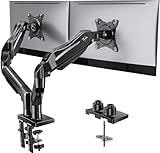
- Compatible with Wide Screens - To ensure compatibility with the dual monitor mount, your each monitor must meet three conditions at the same time: First, computer screens size range: 13 to 32 inches. Second, screen weight range: 4.4 to 19.8 lbs. Third, the back of the monitor screen must have VESA mounting holes with a pitch of 75x75mm or 100x100mm.
- Regarding the compatibility with desks - Your desk must meet three conditions at the same time: First, desk material: Only wooden desks are recommended, plastic or glass desks cannot be used. Second, desk thickness range: 0.59" - 3.54". Third, the bottom of the desk should not have any cross beams or panels, as this will interfere with installation. We recommend carefully checking that your desk and monitors meets all above conditions before purchasing.
- Dual C-Clamp Hold - Worried your dual monitors might wobble or slip? Our upgraded base uses a larger platform plus a dual C-clamp structure to lock the dual monitor arm firmly to your desk. Each arm safely keeps your screens steady while you type, click and game—no shaking, no sliding, just a clean and secure setup you can trust every day. It also provides Grommet Mounting installation choice, both options ensure stable and secure fixation for your 0.59" - 3.54" desk.
- Full-Motion Adjustment For Comfortable View - Pull the screen closer when you’re deep in a spreadsheet, push it back to watch videos, or rotate to portrait for coding — moving everything smoothly with just one hand. The monitor stand offers +85°/-50° tilt, ±90° swivel and 360° rotation. Raise your monitor up to 15.75″ to support a healthy sitting posture. Whether you’re working from home, gaming through the night, or switching between video calls and documents, getting the screens to your natural line of sight helps relieve neck, shoulder and back strain so you can stay focused longer with less fatigue.
- Keep Your Desk Organized: By lifting both screens off the desktop, this dual monitor stand opens up valuable space for your keyboard, notebook, docking station or a simple, clutter-free work area. Built-in cable management guides wires along the arms, keeping cords out of sight and out of the way. Enjoy a tidy, modern workstation that looks as good as it feels to use.
Front-loaded content can limit meaningful adaptation
Preparing most of a game before launch makes the schedule dependable, but it also means later episodes may be too far along to respond to every complaint. Teams should identify adjustable elements early, such as encounter tuning, hints, accessibility options, optional dialogue or ordering of nonessential tasks.
Continuity errors become public immediately
Episodes share characters, saves, progression systems and assumptions about what the player has seen. A bug in one chapter can invalidate a later choice or make a subsequent release difficult to understand. Shared narrative documents, automated save-state tests and regression testing are especially important when episodes ship close together.
Players may not want a subscription-like commitment
Some players prefer to wait for the complete season, while others enjoy discussing each installment as it arrives. A studio can reduce friction by stating the schedule, explaining how access to earlier episodes works and preserving save compatibility for people who join late. The format should not imply that a player must be online every release day unless that is genuinely required.
When a weekly cadence is a good fit
A studio should consider the model when most of the following conditions are true:
- The project divides naturally into chapters, missions or similarly sized units.
- Each unit can provide a satisfying short-term payoff without spoiling the larger arc.
- Tools, assets and pipelines support reuse across episodes.
- Critical content can be completed and tested well before its public date.
- The team has separate capacity for development, quality assurance, certification and launch support.
- Later episodes contain decisions that can still respond to player evidence.
- Marketing and community staff can sustain several launch moments without misleading promises.
A one-time launch is generally safer when the game’s value depends on uninterrupted progression, when episodes cannot be tested independently, or when the studio lacks the people needed to maintain overlapping production and support. A short schedule should not be chosen merely because weekly announcements sound active.
What players should look for
Players evaluating a weekly release should ask whether the studio has explained the episode count, release dates, access to the complete story, pricing and what happens if a date slips. A credible plan distinguishes finished content from future promises and states whether later chapters can change in response to feedback.
It is also useful to separate a true episode from a routine patch. An episode normally adds a bounded piece of the designed experience; a patch may fix crashes, rebalance systems or add a small event without advancing a campaign. Both can arrive weekly, but they demand different expectations about preparation, story continuity and the amount of new material.
The practical reason some studios release smaller titles every week is therefore a combination of manageable scope, overlapping production, faster learning and repeated audience touchpoints. The approach works when the studio treats weekly distribution as the visible end of a long, carefully staged pipeline—not as an attempt to make a full game between two Fridays.
Quick Recap
Product prices and availability are accurate as of the date/time indicated and are subject to change. Any price and availability information displayed on Amazon at the time of purchase will apply.

